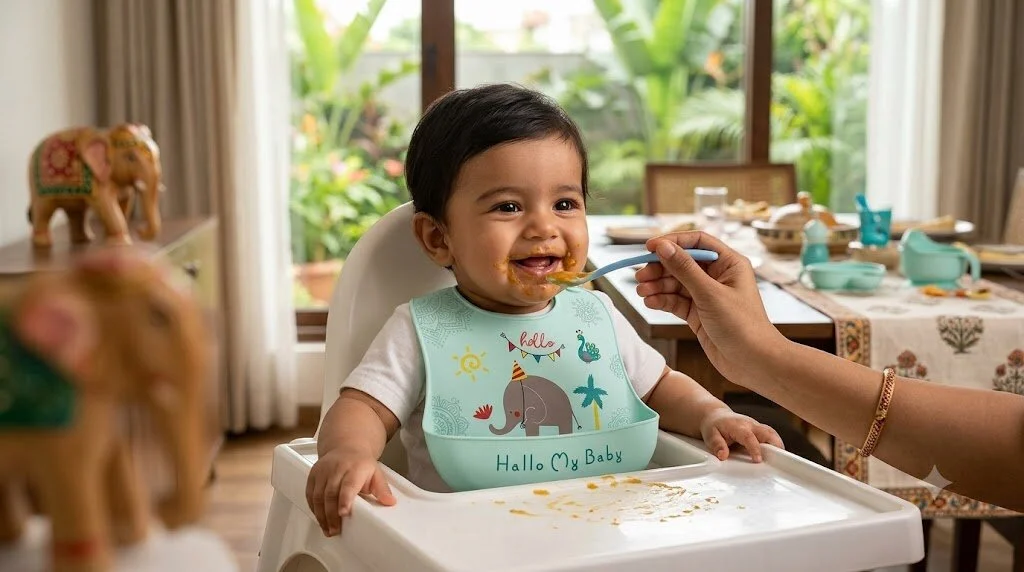
Silicone bibs offer a modern, stress-free alternative to traditional cloth bibs during your baby’s weaning journey. Feeding time with a 6-month-old exploring solids is naturally messy, but standard cotton bibs soak through, trap tough food stains, and take hours to dry, especially in humid weather. High-grade silicone bibs provide a fully waterproof, flexible, and easy-to-clean solution with built-in spill pockets to keep meals tidy and fun.
Table of Contents
The Science of Food-Grade Silicone Bibs
Silicone bibs stand out from other types of material due to several structural and safety benefits:
- Non-Porous Surface Structure: Silicone has no tiny openings in which bacteria can accumulate, thus preventing the growth of mold and unpleasant smells.
- Water-Repellent Hydrophobic Effect: Liquid is immediately repelled from the surface, allowing the bib to quickly dry even after being washed.
- Ergonomic Shape: Molded silicone will fit comfortably on a baby’s chest without irritating the delicate skin of the neck area.
Comparing Silicone, Cloth, and Plastic Bibs
The following table details how food-grade silicone bibs compare with traditional options:
| Feature | Food-Grade Silicone Bib | Traditional Cloth Bib | Thin Plastic Bib |
| Cleaning Effort | Wipe or rinse clean under water | Requires machine washing | Wipeable, but cracks over time |
| Drying Time | Dries in minutes | Hours (can smell in humidity) | Fast drying |
| Spill Protection | Deep 3D stay-open pocket | Flat surface (no pocket) | Pocket often collapses |
| Durability | Long-lasting & tear-resistant | Frays, shrinks, and stains | Cracks & splits at edges |
| Stain Resistance | High (easy sun-dry protocol for turmeric) | Low (curry/dal stains permanently) | Medium (discolors over time) |
How to Clean and Maintain Silicone Bibs
Parents love how quickly silicone bibs rinses clean under warm running water. Follow these steps:
- Rinse Daily: Clean the bib using a mild soap in warm water after meals to rid the stains of oil and food residues.
- Clean the Pocket: Take out all food residue trapped inside the 3D pocket after each meal to ensure cleanliness.
- Turmeric Stain Removal: For stubborn stains from yellow dal, wash off the stain using detergent and put it in the sun for 3-4 hours.
- Sterilize Occasionally: Being detergent-safe and heat-resistant, the material allows boiling and sterilizing. You can also use liquid dishwasher for cleaning the bibs.
- Dry Naturally: Hang the bib up, and its hydrophobic nature dries it in no time.
Sustainability and Eco-Friendly Benefits of Silicone Bibs
Some of the environmental benefits of food-grade silicone used in baby bibs are described below:
- Waste Reduction: Silicone bibs serve as an alternative to countless disposable plastic bibs that ultimately find themselves in landfills.
- Conserves Water & Energy: Cleaning a bib by rinsing under the faucet requires much less water and energy compared to regular washes of reusable cloth bibs.
- Durable Material: Durable silicone is resistant to tears and deterioration, ensuring that a bib will remain useful from babyhood till toddler age, and perhaps even be handed down from one child to another.
- Recyclable Material: While mixed plastic cannot be recycled, food-grade silicone can be transformed back into industrial material.
Health & Safety Risks Prevented by Pure Silicone
Choosing pure silicone bibs ensures your child is safe from BPA and harsh plastic fillers.
- Bacterial and Mold Buildup: Prevents damp fabric odors and bacterial growth that thrive on wet cloth bibs in warm climates.
- Chemical Leaching: Eliminates exposure to BPA, phthalates, and PVC fillers found in cheap, low-quality plastic bibs.
- Skin Rashes: Smooth, rounded adjustment buttons prevent neck chafing, red marks, and friction rashes.
- Choking Hazards: Durable 3D-molded buttons resist toddler pulling so small plastic fasteners don’t snap off.
Precautions
Follow these measures:
- Do the “Pinch Test”: Pinch or twist the silicone firmly. The appearance of white lines on the crease indicates the use of plastic filler, while pure silicone remains uniformly colored.
- Fit Neck Fastenings Properly: Fit the neck band with enough room to have a space of two fingers between the neck band and the baby’s neck.
- Protect From Sharp Objects: Avoid coming into contact with sharp objects like blades or scissors, which may damage the silicone.
Final Thoughts
Upgrading to silicone bibs simplifies the weaning journey for both parents and toddlers. By replacing high-maintenance cloth bibs with a waterproof, stay-open silicone design, you cut down on laundry and keep mealtime mess under control. Investing in pure food-grade silicone ensures a safe, hygienic, eco-friendly, and long-lasting tool that grows alongside your child.
Partnering with Quality Material Suppliers
Are you a baby products brand or industrial manufacturer looking to produce premium, filler-free silicone products? Partner with Biopol Chemicals to source durable, high-grade silicone raw materials engineered to meet strict international quality and safety standards.
Frequently Asked Questions (FAQs)
1. At what age can my baby wear silicone bibs?
A baby can wear silicone bibs starting at 6 months, since at this age babies eat solids and practice feeding themselves.
2. How can I get rid of turmeric stains on silicone bibs?
You can clean a bib in warm, soapy water to eliminate grease residue and then leave it under direct sunlight for about 3 to 4 hours. Direct sunlight destroys the yellow pigments of turmeric without harming silicone.
3. Can food-grade silicone be used in products for babies?
Yes, food-grade silicone is 100 percent non-toxic, non-porous, hypoallergenic, and contains no BPA, phthalates, or PVC. It does not react with food even when heated.