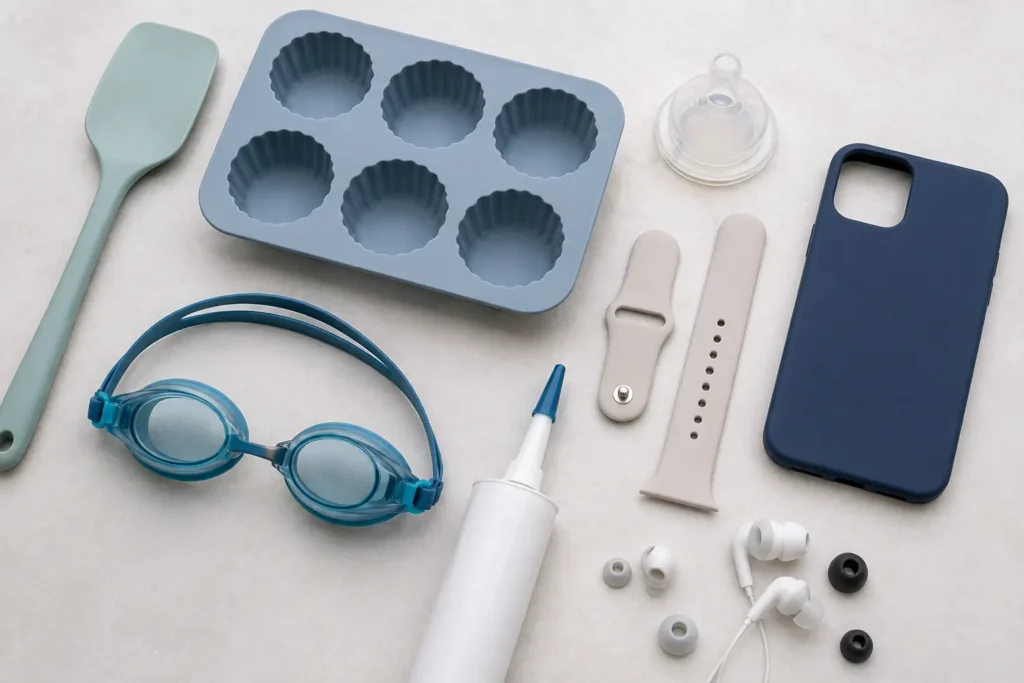
Look around the room you’re in right now. There’s a good chance you’ll spot several silicone uses without even trying: the sealant along a window frame, the spatula in a kitchen drawer, the case on your phone, the soft tips on your earbuds. Silicone does its job quietly, which is why most of us never give it a second thought.
This guide covers the main uses of silicone, from homes and hospitals to cars, solar panels and skincare. It also explains why the material suits so many jobs, where it falls short, and what to know about safety before you buy silicone products for your kitchen or your baby.
Key Takeaways
- Silicone is a synthetic polymer built on a silicon-oxygen backbone. It is not the same thing as silicon (the element) or silica (sand).
- The most common silicone uses include sealants and adhesives, kitchenware, medical devices, automotive seals, electronics protection and personal care ingredients.
- It’s popular because it stays flexible in extreme heat and cold, repels water, resists sunlight and insulates against electricity.
- Food-grade and medical-grade silicone is made to stricter standards than general-purpose products. The two aren’t interchangeable.
- Silicone has limits too: modest tear strength, a higher price than many rubbers and difficult recycling.
What Makes Silicone So Useful?
Silicone is a synthetic polymer with a backbone of alternating silicon and oxygen atoms. Organic groups, most often methyl groups, hang off the silicon atoms. Ordinary plastics are different because their backbones are made of carbon. The silicon-oxygen backbone is very stable, and it explains most of what silicone is known for, including its tolerance of heat, sunlight and weather.
It also comes in several forms. Silicone can be a fluid, a grease, a gel, a resin or a rubbery solid called an elastomer. The chemistry is related, but the feel is completely different. The silicone oil in a hair serum and the silicone gasket in an engine are cousins, not twins.
Here’s how the main properties translate into real-world silicone applications:
| Property | What it means in practice | Where it matters |
| Wide temperature range | Many silicone rubbers stay usable from about -60°C to 200°C or more, depending on the formulation | Oven mitts, engine seals, freezer trays |
| Water repellence | Sheds water and doesn’t swell or soak it up | Bathroom sealant, swim goggles, outdoor coatings |
| UV and ozone resistance | Resists cracking and aging outdoors | Window glazing, exterior paint, solar panels |
| Electrical insulation | High dielectric strength, and it can be made conductive with fillers | Cable accessories, keypads, circuit potting |
| Chemical inertness | Doesn’t react with many substances and gives microbes little to feed on | Food-contact and medical products |
| Biocompatibility (medical grades) | Approved grades are tolerated well by body tissue | Catheters, wound care, implants |
One clarification worth making about silicone uses: the material is inert and easy to clean, but that doesn’t make it antibacterial. It simply doesn’t feed microbes. Washing and sanitizing it still matter.
Silicone Uses at Home and in the Kitchen
The kitchen is where most people meet silicone first. Baking molds, spatulas, muffin trays, oven mitts, freezer trays and pot lids all rely on the fact that silicone handles both an oven and a freezer without going brittle.
Baby products are another big category of silicone uses. Bottle nipples, pacifiers, teething rings and reusable food pouches are commonly made from silicone because it’s soft, durable and can usually be sterilized by boiling.
So what is silicone used for around the house beyond cookware? It also turns up in less obvious places:
- Sealing rings in water bottles, pressure cookers and food containers
- Phone cases, watch straps and earbud tips
- Sealant around tubs, sinks and worktops
- Swim goggles, diving masks and snorkel skirts, which seal comfortably against skin and don’t break down in water
A note on food-grade silicone. Not every silicone product is made to the same standard. Look for a statement that the item meets food-contact rules, such as FDA requirements in the US or the German LFGB standard in Europe. You may have heard of the “pinch test,” where you twist the silicone and see whether it turns white as a sign of cheap fillers. It’s a popular home check, but it isn’t a validated test. A clear compliance claim from a reputable brand is a better guide.
Silicone Uses in Medicine and Healthcare
Healthcare is where silicone’s stability and flexibility matter most. Medical-grade silicone is used in catheters, tubing, respiratory masks, drug-delivery components, surgical drains, prosthetics and the skin-contact parts of wearable devices. It can be sterilized, it’s flexible enough to be comfortable, and approved grades are tolerated well by body tissue.
Some specific examples of the uses of silicone in this field:
- Eye care: silicone hydrogel contact lenses are widely worn, and silicone oil is used inside the eye during some retinal detachment surgeries.
- Wound and scar care: silicone adhesive dressings tend to peel off more gently than many traditional adhesives. Silicone gel sheets are also popular for scars, but a Cochrane review judged the evidence for preventing or treating problem scars to be of low quality, so the benefit is uncertain.
- Implants: silicone is used in breast implants and other devices. These are regulated medical devices with known risks, such as rupture and scar tissue tightening, so anyone considering one should go through the details with a surgeon.
- Digestive health: simethicone, a silicone-based ingredient in many gas-relief products, is thought to work by breaking up gas bubbles in the gut rather than by being absorbed.
Manufacturers often choose platinum-cured silicone for these applications because the curing process leaves fewer by-products behind. More on that in the types section below.
Silicone Uses in Construction and Building
If you only remember one entry from this list, make it sealants. Silicone caulk is one of the most familiar silicone uses in any home, and construction is the reason. The uses of silicone in buildings start with joints: it seals gaps around windows, bathtubs, sinks and worktops, and it stays flexible as buildings expand, contract and settle.
On larger projects, structural silicone glazing bonds glass panels to building frames, which is how many modern glass façades get their seamless look. Silicone-based water repellents are applied to brick, stone and concrete to keep moisture out. Silicone resins also go into exterior paints that need to survive freezing and thawing without cracking.
Two practical tips for DIY jobs. First, many general-purpose silicone sealants give off a vinegar-like smell while curing, and that acetic acid can corrode some metals, so “neutral cure” versions are often the better choice for metal and natural stone. Second, cured silicone is very hard to paint, so pick the color you want before you squeeze the tube.
Silicone Uses in Cars, Trains and Aircraft
Vehicles put materials through heat, vibration, oil and weather every day, which suits silicone well. In cars you’ll find it in gaskets, O-rings, coolant and turbo hoses, spark plug boots, wire insulation and sensor housings. Silicone-coated fabrics are also used in airbags.
Electric vehicles have added a newer role. Silicone gap fillers and potting compounds help move heat away from battery modules and protect electronics from moisture and vibration. Aerospace silicone applications are similar in spirit: seals, sealants and insulation have to cope with huge temperature swings. Fluorosilicone, a variant with better fuel and oil resistance, is chosen where jet fuel or hydraulic fluids are a concern.
Silicone Uses in Electronics and Solar Energy
Electronics need materials that insulate, seal and shrug off heat, and most silicone uses in this field come down to protection. Silicone is used to pot or encapsulate circuit boards, coat components against moisture and dust, make soft keypads and buttons, and form thermal pads and pastes that carry heat away from chips. Outdoors, silicone rubber housings are used on many high-voltage line insulators because they shed water and resist sunlight.
Solar power is where the silicon-versus-silicone mix-up is most common, so here’s the distinction. The cells in most solar panels are made of silicon, the element. Silicone protects them. Depending on the module design, silicone appears in frame adhesives, edge seals and junction-box potting, and it serves as the encapsulant in some specialized panels. Many standard panels use other encapsulant materials such as EVA instead, so silicone isn’t universal here.
Silicone Uses in Personal Care and Cosmetics
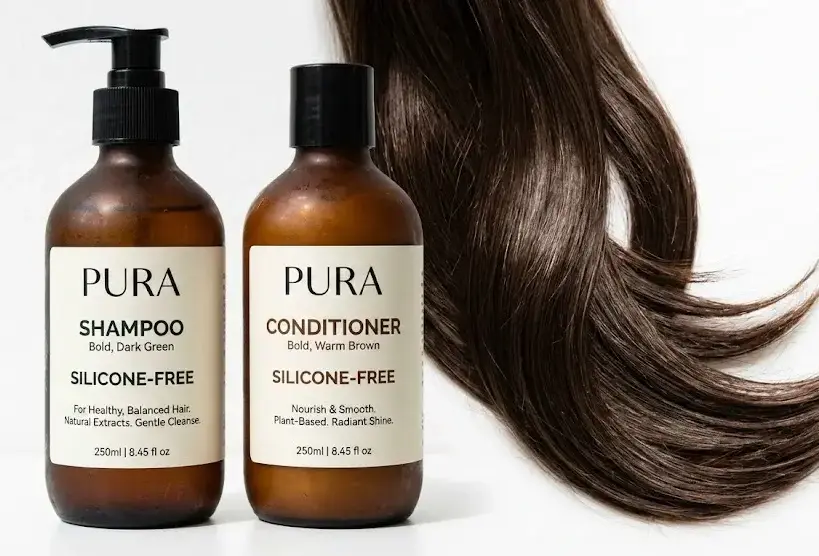
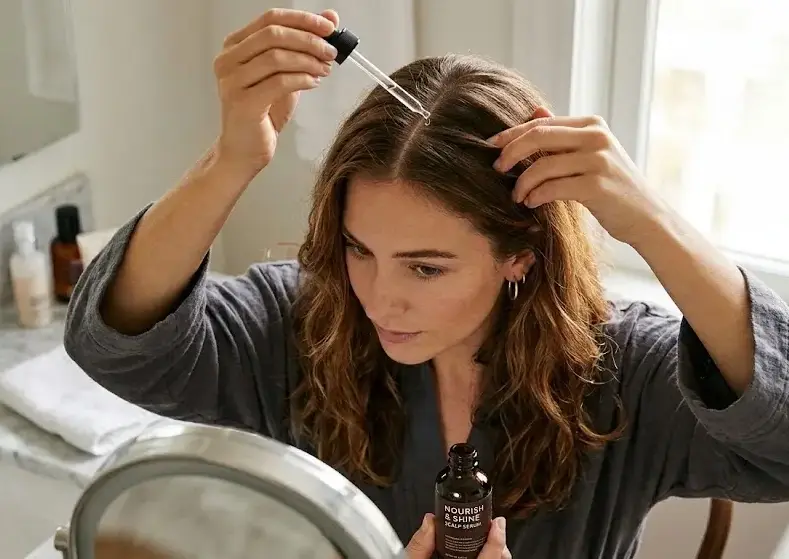
What is silicone used for in cosmetics? Check the ingredient list on a hair serum, foundation primer or moisturizer and you’ll often see names like dimethicone, cyclopentasiloxane or amodimethicone. These ingredients account for many cosmetic silicone uses. They give products a smooth, silky glide and leave a light film on skin or hair. Volatile silicones evaporate quickly, which is why some primers and deodorants feel dry rather than greasy.
On safety, reviews of common cosmetic silicones such as dimethicone have generally found them low in irritation. The live debate is environmental: the EU has restricted certain cyclic siloxanes, including D4 and D5, in some cosmetic products because of concerns about how long they persist in the environment. The popular idea that silicones “suffocate” skin is mostly a beauty-community claim rather than a well-established finding. They can, however, build up on hair, which is why some people use a clarifying shampoo now and then.

Industrial and Manufacturing Silicone Applications
The uses of silicone away from consumer goods are just as broad, and they quietly support a lot of manufacturing:
- Molds: RTV silicone molds are used to cast resin, polyurethane, concrete, candles and chocolate. In urethane casting a silicone mold typically lasts only a few dozen shots, but it’s far cheaper and faster to make than metal tooling.
- Antifoam agents: tiny amounts of silicone fluid stop foam forming in food processing, chemical plants and wastewater treatment.
- Release liners: the slippery backing on stickers, labels and tapes is usually silicone-coated paper or film.
- Lubricants and fluids: silicone greases and oils lubricate rubber seals, plastic parts and equipment, and some serve as heat-transfer or hydraulic fluids.
- Textiles: water-repellent finishes, fabric softeners and coated fabrics.
- Marine coatings: foul-release silicone coatings make it harder for barnacles and algae to cling to ship hulls.
- Emerging technology: silicone can now be 3D printed, and it’s a common material in soft robotics.
One warning from workshops: uncured silicone sprays and fluids can contaminate surfaces and stop paint or glue from sticking, which is why many body shops keep silicone products out of their paint areas.
Types of Silicone and What Each Is Used For
“Silicone” is a family, not a single product. When you’re matching silicone uses to a job, the type matters. Picking the wrong member is the most common mistake with silicone products, because the tube that seals a bathtub is not what belongs in a baby bottle.
| Type | How it’s made or cured | Typical uses |
| RTV (room-temperature vulcanizing) | Cures at room temperature, as a one-part (moisture-cured) or two-part system | Sealants, adhesives, molds, casting |
| LSR (liquid silicone rubber) | Injection molded, usually heat-cured | Medical parts, baby products, seals, wearables |
| HCR (high-consistency rubber) | Putty-like; compression molded or extruded | Gaskets, tubing, sheets, keypads |
| Fluorosilicone | Silicone with fluorine added to the structure | Seals exposed to fuel and oil |
Curing chemistry matters too. Platinum-cured silicone doesn’t release by-products, so it’s cleaner and common in medical and food-contact parts. Peroxide-cured silicone costs less and is used for tubing, O-rings and some dishware. Condensation-cured silicone uses tin catalysts and releases by-products such as alcohol or acetic acid as it cures. It shows up in molds, sealants and architectural parts.
What Silicone Isn’t Good At
Silicone is versatile, not perfect. Knowing the limits of silicone applications helps you pick the right material:
- Tear and abrasion resistance: standard silicone rubber tears more easily than tougher elastomers such as polyurethane.
- Fuels and solvents: general-purpose silicone can swell in some oils and fuels, which is why fluorosilicone exists.
- Gas permeability: great for contact lenses, poor if you need an airtight barrier.
- Cost: it’s usually pricier than commodity rubbers.
- Bonding and painting: the same slick surface that makes silicone useful makes it hard to paint or glue without primers.
- End of life: silicone isn’t biodegradable, and most curbside programs don’t accept it, though specialized recycling and take-back options exist.
Are Silicone Uses Safe? What the Evidence Says
Most everyday silicone uses are safe when the product is properly made, with a few caveats. Here’s how confidence breaks down:
- Well established: food-grade and medical-grade silicones are widely used, regulated in many countries and generally low in toxicity. Regulators such as the FDA review food-contact materials and medical devices.
- From individual studies: laboratory tests have detected small amounts of low-molecular-weight siloxanes migrating out of some silicone products, especially when heated or in contact with fatty foods. Levels in many tested items are low, but results vary between products.
- Still uncertain: the long-term environmental effects of certain cyclic siloxanes, and how implanted devices affect individual patients over many years.
- Practical advice: buy from brands that state compliance, stay under the stated temperature limit, and replace items that turn sticky, torn or smell chemical.
This isn’t medical advice. If you’re weighing an implant or you have a known allergy, talk to your doctor.
A Brief History of Silicone
The story of silicone begins in the early 1900s, when English chemist Frederic Kipping studied organosilicon compounds and coined the word “silicone”. For decades it remained mostly a laboratory curiosity. Commercial development took off in the 1930s and 1940s, when researchers at Corning Glass Works explored silicone resins and fluids, and chemist Eugene Rochow at General Electric developed a practical method for producing the key silicone building blocks at scale. Richard Müller in Germany found a similar route independently.
Dow Corning was founded in 1943, partly to meet wartime demand. Silicones were valued for insulating aircraft ignition systems, sealing equipment against moisture and coping with extreme temperatures. After the war, the same properties carried silicone into sealants, medical devices, kitchenware and personal care products, which is why it now turns up in so many everyday places.
Faqs
What are the most common silicone uses?
The most common silicone uses are sealants and adhesives, kitchenware, medical devices, automotive seals and hoses, electronics protection, personal care ingredients, and industrial molds and lubricants. Sealants and adhesives are among the most familiar examples.
What is silicone used for in everyday life?
You’ll find it in bakeware, spatulas, baby bottle nipples, phone cases, watch straps, goggles, bathroom caulk, hair serums and cosmetics. It also hides inside appliances, cars and electronics as seals and insulation.
What is the difference between silicone and silicon?
Silicon is a chemical element used in computer chips and solar cells. Silicone is a synthetic polymer with a silicon-oxygen backbone, used in sealants, rubber, fluids and medical parts. They’re different materials despite the near-identical name.
Is silicone safe for cooking and baby products?
Food-grade silicone that meets recognized standards is considered safe for its intended use, including baby products. Use it within its temperature rating, wash it well and check the label, since low-quality or non-food-grade items may not meet the same standards. If you have doubts about a specific product, ask the manufacturer for compliance documentation.
Is silicone a plastic?
Not in the usual sense. Silicone is a synthetic polymer, but its backbone is silicon and oxygen rather than carbon, so it’s typically classed as an elastomer or rubber instead of a conventional plastic. In casual conversation the two are often lumped together.
Bottom Line
Silicone uses stretch across almost every part of modern life, from the sealant around your bathtub to the seals in an engine, the tubing in a hospital and the potting inside your phone charger. The reason is consistent: silicone stays flexible across a huge temperature range, repels water, shrugs off sunlight and insulates against electricity.
What’s well established is that food-grade and medical-grade silicones are widely used and regulated, and that quality varies from product to product. What’s less settled are the long-term environmental questions around some ingredients and the benefit of certain treatments, such as scar sheets. The practical takeaway is to match the type of silicone to the job, check for compliance when it touches food or skin, and treat the word “silicone” on a label as the start of the question rather than the answer.