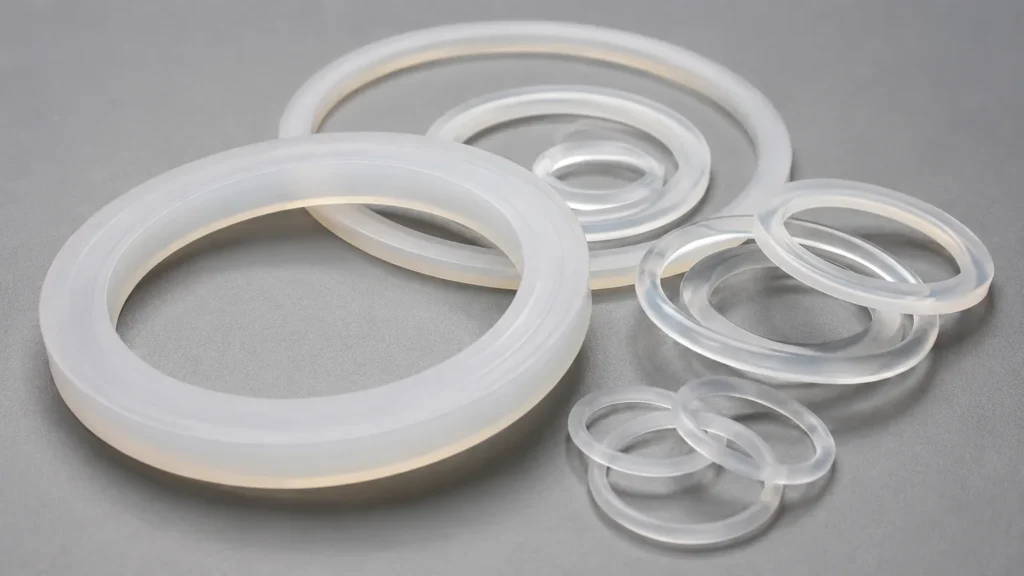
A silicone gasket does a quiet job that most people never notice until it fails. It sits between two surfaces, fills the tiny gaps, and keeps liquids, air, dust and heat where they belong. From a car engine bay to a hospital pump to the lid on a baby bottle, this humble ring or sheet of rubber protects far more than it costs.
Choosing the right one is not as simple as picking silicone because it sounds premium. Grade, hardness, cure system and shape all change how a gasket behaves in real life. This guide explains how these seals work, where they shine, where they struggle, and how to pick one that will not leak six months from now.
Key Takeaways
- A silicone gasket is a seal made from silicone elastomer. It closes the gap between two mating surfaces.
- General-purpose grades typically work from about −60 °C to 200 °C (−76 °F to 392 °F), and special grades go higher.
- Silicone recovers well after long compression, so a good silicone seal stays tight for years.
- Food and medical uses are common, but the certificate must match the exact grade you buy.
- Standard silicone is weak against petroleum oils and fuels. Fluorosilicone or another elastomer is safer there.
What Is a Silicone Gasket and How Does It Work?
A silicone gasket is a sealing part made from silicone elastomer, a rubber-like material built on a backbone of silicon and oxygen atoms. Many people call it a silicone rubber gasket. Whatever the name, the job is the same. It is squeezed between two surfaces so it can fill the small gaps that metal, plastic or glass cannot close on their own.
The seal works because silicone is soft and springy. When you tighten the joint, the gasket compresses and pushes back against both faces. That steady pressure blocks the path for water, gas, dust and other contaminants.
5 Proven Benefits of a Silicone Gasket
1. A Silicone Gasket Handles a Very Wide Temperature Range
General-purpose silicone typically stays flexible from about −60 °C to 200 °C (−76 °F to 392 °F). Some heat-stabilized grades handle even more. Natural rubber, by comparison, starts to break down at far lower temperatures.
That is why a silicone seal is a common choice for ovens, engine bays, lighting and outdoor equipment that swings between freezing nights and hot afternoons. Ratings change with grade and exposure time, so check the supplier’s data sheet.
2. It Keeps Sealing After Long Compression
Engineers measure this with compression set, which is the share of thickness a material fails to recover after being squeezed. A lower number is better. Silicone generally scores well, so a gasket that has been clamped for years still springs back enough to hold its seal.
Cheaper rubbers can flatten over time and start to weep. That slow failure is one of the main reasons buyers move to a silicone seal.
3. It Stands Up to Sun, Ozone and Weather
Silicone does not crack easily under UV light or ozone, two things that age many other rubbers quickly. It also repels water. That combination makes a silicone rubber gasket a reliable pick for outdoor lighting, solar equipment, window and door seals, and rooftop HVAC units.
4. A Silicone Gasket Suits Food and Medical Settings
Silicone is chemically stable and adds no taste or odor. That is why food-grade silicone appears in appliance seals, container lids and processing equipment. In medical devices it is valued for its biocompatibility and its ability to survive repeated cleaning and sterilization.
A quick note on wording. Product pages often say “FDA approved,” but the FDA does not usually approve a rubber compound as such. In the US, food-contact rubber is covered by rules such as 21 CFR 177.2600, while Germany and the EU use their own frameworks, including LFGB. For medical parts, look for ISO 10993 biocompatibility testing or USP Class VI results.
5. It Insulates Electricity and Resists Fire
Silicone is a good electrical insulator, so it protects circuits and connectors. Mixing in conductive fillers such as nickel, carbon or silver-plated particles turns it into an EMI shielding gasket for electronics. Many compounds can also be made flame retardant and rated to UL 94 levels, which matters in transport and telecom equipment.
Main Types of Silicone Gaskets
Not every silicone rubber gasket is the same. The form you choose changes how much clamping force you need and how well the seal copes with uneven surfaces.
| Type | Best for | Watch out for |
| Solid | Tight, waterproof seals, including IP67-rated housings | Firm, so it needs more clamping force |
| Sponge | Cushioning and sealing uneven joints | Open-cell versions can pass air and water when lightly compressed |
| Foam | Soft, lightweight seals and gap filling | Lower tear strength than solid silicone |
| Conductive | EMI and RFI shielding in electronics | Higher cost, performance depends on the filler |
| Fluorosilicone | Exposure to fuel, oil and solvents | Costs more than standard silicone |
| Die-cut | Flat shapes in large volumes | Flat parts only |
| Molded | Complex shapes and precise profiles | Tooling cost up front |
Two manufacturing routes are worth knowing. Die cutting stamps flat shapes from sheet and keeps the cost per part low on big runs. Compression and liquid injection molding create three-dimensional shapes with tighter tolerances, but they need tooling. If you need a custom silicone gasket, volume and geometry usually decide which route makes sense.
Cure chemistry matters too. Platinum-cured silicone is generally cleaner and leaves fewer by-products, so it is common for food-grade silicone parts and medical work. Peroxide-cured silicone is widely used for general industrial parts. It is worth asking your supplier which system they use.
Silicone Gasket vs Silicone Gasket Maker (RTV Sealant)
Some people who search this term actually want a tube of gasket maker. The two are related, but they are not the same thing.
A gasket is a pre-formed part. It has a fixed shape and thickness, and it seals by being compressed. Gasket maker, often sold as RTV silicone, is a paste. You apply it as a bead, and it cures into a rubbery seal that takes the shape of the joint.
- Pre-formed gasket: best for repeat assembly, controlled compression and easy replacement.
- Gasket maker: best for irregular flanges, one-off repairs and cases where no cut part exists.
Read the label before you buy a tube. Products differ in temperature rating, oil resistance and whether they are safe around sensors, and not every tube is meant for food contact. A paste is also harder to apply evenly than a die-cut part, so a badly laid bead can be the cause of a leak.
Where a Silicone Gasket Is Used
- Automotive and transport: connector and sensor seals, battery packs and radiators, where heat and vibration are constant.
- Aerospace: parts that face huge temperature swings, UV and ozone.
- Electronics: waterproofing and dust sealing in phones, wearables and control units, plus EMI shielding. Many are supplied as a custom silicone gasket cut or molded to the housing.
- Medical and laboratory: respirators, pumps and sampling equipment that are cleaned and sterilized again and again.
- Food and drink: processing machinery, oven doors, container lids and baby products made with food-grade silicone.
- Building and industry: HVAC systems, windows, pumps, valves and solar panels.
Silicone Gasket vs Other Gasket Materials
Silicone is rarely the only option, so a side-by-side view helps. The temperature ranges below are rough, typical figures.
| Material | Typical range | Strong points | Weak points |
| Silicone | −60 to 200 °C | Heat, cold, sunlight, clean and neutral | Poor with oils and fuels, lower tear strength, higher price |
| EPDM | −50 to 150 °C | Water, steam and weather | Swells in oil and fuel |
| Nitrile (NBR) | −30 to 100 °C | Oil and fuel resistance, low cost | Weak against ozone and sunlight |
| Natural rubber / SBR | −50 to 80 °C | Low cost, good elasticity | Ages in heat, sun and ozone |
In short, silicone wins where temperature extremes, sunlight or cleanliness matter most. It loses where the seal touches oil or fuel, or where price is the first priority.
Where a Silicone Gasket Falls Short
- Oils and fuels: petroleum products and many non-polar solvents make standard silicone swell. Fluorosilicone is the usual fix.
- Tear and abrasion: it is weaker than tougher elastomers, so it is a poor match for sliding seals with sharp edges.
- Gas permeability: gases pass through silicone more easily than through many rubbers, which matters in vacuum or gas-tight designs.
- Hot pressurized steam: prolonged exposure can shorten the life of some grades, and EPDM is often preferred there.
How to Choose the Right Silicone Gasket
- Define the temperature range, including short spikes.
- List every fluid the seal will touch, from cleaning agents to fuel, steam and sterilization gases.
- Pick the form: solid, sponge, foam, die-cut or molded.
- Match hardness and compression. Softer grades around 30 to 40 Shore A follow rough surfaces, while firmer grades around 60 to 70 hold more pressure. Solid silicone is commonly compressed by roughly 15 to 25 percent, and sponge or foam is designed to compress more. Follow the manufacturer’s guidance.
- Confirm the paperwork for the exact grade, such as 21 CFR 177.2600, LFGB, ISO 10993, USP Class VI or UL 94.
- Test a sample of the silicone rubber gasket in the real application before ordering in volume.
That last step is the one people skip most often. A gasket that passes on paper can still fail because of a rough surface, a harsh cleaner or an over-tightened bolt. If you are ordering a custom silicone gasket, share the drawing, the operating temperature and every fluid involved so the supplier can recommend the right grade.
How to Install and Care for a Silicone Gasket
Even a good seal can fail if it is fitted badly. A few simple habits make a big difference.
- Clean both faces: remove old material, oil and dust so the surfaces are smooth and dry.
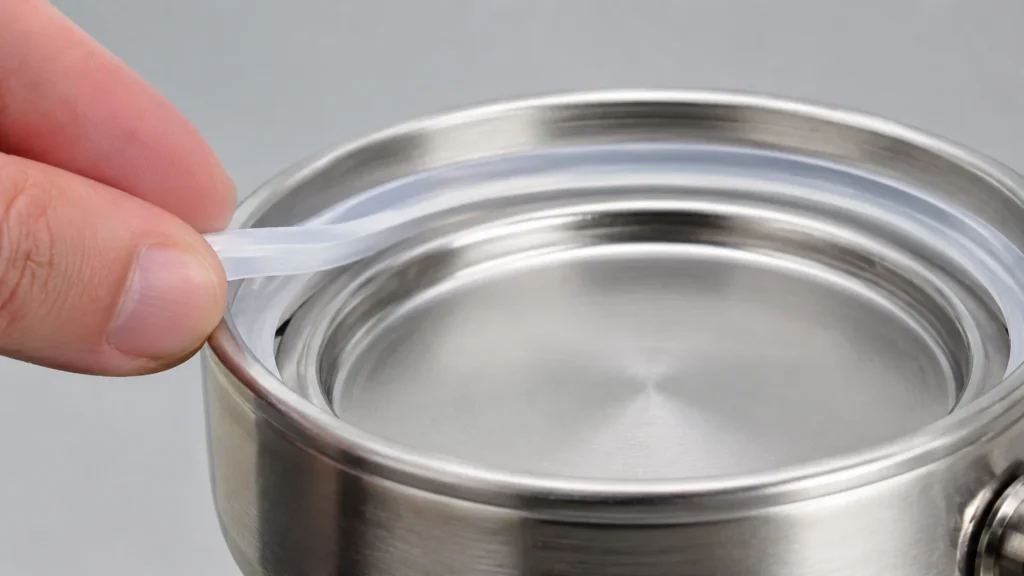
- Seat it evenly: make sure the gasket sits flat in its groove without twisting or stretching.
- Tighten in stages: work in a cross pattern and stop at the specified torque, because over-tightening squeezes the gasket beyond its design compression.
- Avoid the wrong chemicals: fuels, oils and some solvents, such as hexane or toluene, can swell silicone.
- Inspect regularly: replace a gasket that is flattened, cracked, torn or permanently deformed.
Faqs
What is a silicone gasket used for?
It seals the gap between two surfaces to stop leaks and keep out dust, moisture and contaminants. It is used in vehicles, electronics, medical equipment, food machinery, HVAC systems and outdoor lighting, especially where heat, cold or weather would damage other rubbers.
Is a silicone gasket food safe?
It can be, but only if the compound is food-grade silicone that has been made and tested for food contact. Look for compliance with rules such as 21 CFR 177.2600 or LFGB, and ask the supplier for documents covering the exact grade. Plain industrial silicone is not automatically food safe.
What temperature can a silicone gasket withstand?
General-purpose grades typically handle about −60 °C to 200 °C (−76 °F to 392 °F). Specialty high-temperature grades can go higher, sometimes for short periods only. Always check the data sheet, because the limit depends on the grade and how long the heat lasts.
Is a silicone gasket better than other rubber gaskets?
It depends on the job. Silicone beats natural rubber, SBR and nitrile on temperature range and on resistance to sunlight and ozone. Nitrile handles oil and fuel far better, though, and EPDM often works better in hot steam and water. Choose based on what the seal will touch.
Can a silicone gasket be used with oil or fuel?
Standard silicone is not a good choice. Petroleum oils and fuels can make it swell and soften. Fluorosilicone, nitrile or FKM are generally used instead, depending on the temperature and the fluid.
How long does a silicone gasket last?
There is no single number. Life depends on temperature, compression, chemicals and movement. In stable conditions a well-designed silicone seal can last for many years, while over-compression, harsh cleaners or constant heat cycling will shorten it.
Bottom Line
A silicone gasket earns its place wherever a seal must handle heat, cold, sunlight or strict hygiene. Its five main strengths are a wide temperature range, lasting compression recovery, weather resistance, suitability for food and medical use, and electrical insulation. All five are well established material properties.
It is not a universal answer, though. Oil and fuel exposure, hot steam and tight budgets can all point to another material. Match the grade to the real conditions, check the certificates, test a sample, and a silicone gasket will quietly do its job for years.