A silicone gel bed promises a lot: gentler pressure on your hips and shoulders, a surface that wipes clean, and a mattress that never seems to wear out. It’s an appealing pitch, especially if you wake up sore or care for someone who spends long hours in bed.
The trouble is that much online advice mixes solid research with plain sales talk. This guide separates the two. You’ll see what studies actually found, where the evidence runs thin, and what to check before you spend money.
Key Takeaways
- A silicone gel bed uses real silicone gel layers or pads, and the term covers everything from hospital mattresses to home sleep surfaces.
- Pressure spreading is its best-supported benefit, but the strongest evidence is low certainty and comes mainly from medical settings.
- Cooling, back pain relief and long lifespan claims mostly come from sellers, not independent testing.
- Silicone is easy to wipe clean, yet “non-toxic” and “hypoallergenic” should be backed by certificates.
- No bed replaces repositioning or medical advice if you’re at risk of bed sores.
What Is a Silicone Gel Bed?
Silicone gel is a soft, rubbery material. Technically, it’s a lightly cross-linked silicone elastomer swollen with silicone fluid. Changing the amount of cross-linking or fluid changes how firm the gel feels.
Silicone is also a man-made polymer. It isn’t the same as silicon, the natural element found in sand, even though the names look alike.
In bedding, the term usually points to one of three products:
- A hospital or home-care mattress built with silicone gel pads
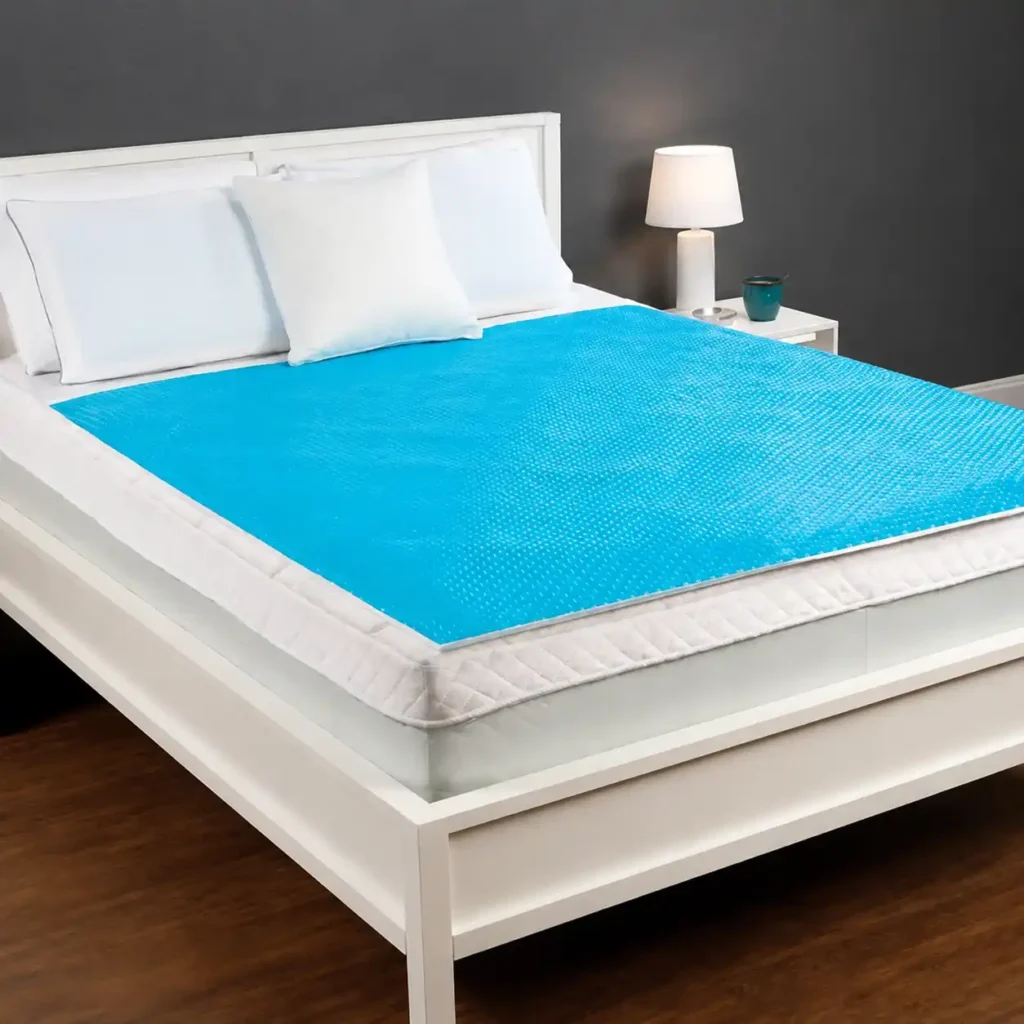
- A gel overlay that sits on top of an existing mattress
- A home mattress with a silicone gel comfort layer
Be careful with labels, though. Many “gel mattresses” are simply memory foam mixed with gel beads. That’s a different product from a true silicone gel mattress, and the two don’t behave the same way.
Silicone Gel Topper or Full Bed: Which Fits Better?
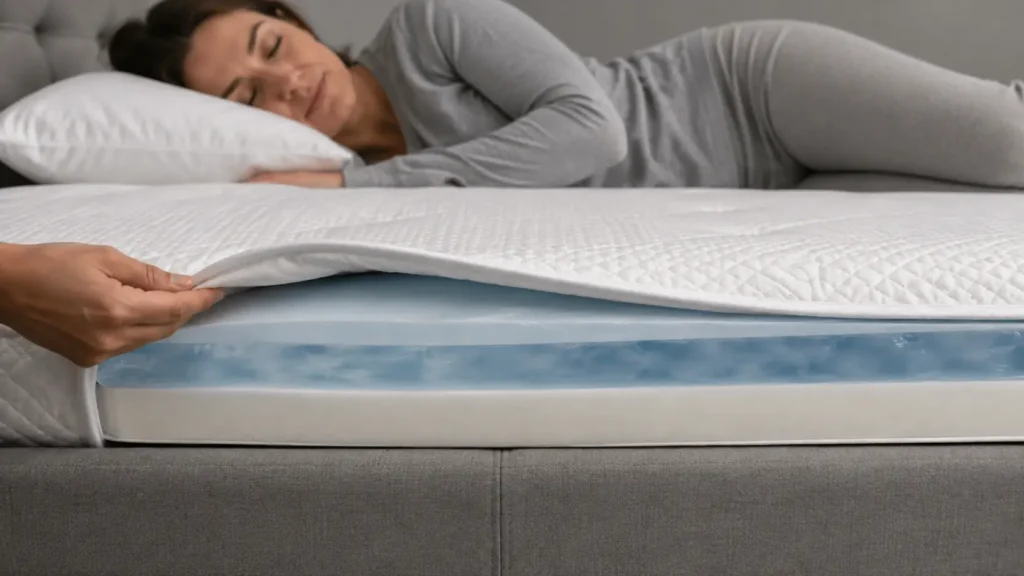
You don’t always need a whole new bed. A silicone gel topper, also sold as an overlay, adds a gel layer on top of the mattress you already own.
A topper usually costs less, is easier to try, and suits you if your current mattress is still in good shape. It can’t fix a sagging base, though, and it may slide or raise the height of your bed.
A full silicone gel bed builds the gel into the structure. That can feel more integrated, but it’s a bigger purchase and harder to return. Much of the pressure research below involves thin overlays and pads rather than complete beds.
If you’re unsure, a silicone gel topper is the lower-risk way to find out whether you like the feel.
Pros and Cons at a Glance
Here’s how a silicone gel bed balances out when you weigh the evidence against the sales pitch.
| Pros | Cons |
| Spreads pressure, with some supporting evidence (low certainty) | Cooling is unproven in independent testing |
| Non-porous surface wipes clean | Can be heavy, since gel is denser than foam |
| Reactive design needs no pump or motor | May cost more than basic foam, depending on the build |
| Gel firmness can be adjusted during manufacturing | Little independent evidence for lifespan or back pain relief |
| Silicone is widely used in medical products | Labels vary, so “gel” may mean gel-infused foam |
Fact 1: A Silicone Gel Bed Can Spread Pressure
Gel is known as a reactive surface, a common design in a pressure relief mattress. It has no motor or pump. It simply deforms under your body and shares the load across a wider area.
The best evidence comes from a Cochrane overview of support surfaces. Compared with standard foam, reactive gel surfaces had a risk ratio of 0.47 for pressure ulcers. That points to roughly half the risk. However, the confidence interval (0.22 to 1.01) touches “no difference,” and the certainty was rated low.
The authors concluded that gel surfaces may reduce risk, particularly in operating rooms and long-term care. Notice the setting. Most of that evidence involves gel pads on operating tables, not bedroom mattresses.
A smaller 2020 experimental study tested a thin silicone gel overlay on an X-ray table. Peak pressure under the head dropped from about 205 mmHg to about 160 mmHg, roughly 22 percent. That study measured pressure on a sensor mat, not actual wounds.
So lower pressure is an encouraging sign, not proof of fewer sores. It’s also not proof that a silicone mattress will ease everyday back pain.
Fact 2: Cooling Claims Need a Closer Look
Sellers often say a silicone gel mattress sleeps cool because the material releases body heat. That’s plausible, but independent head-to-head temperature testing of silicone gel is hard to find.
The closest comparison comes from gel memory foam. Sleep Foundation’s testing found it unclear whether the gel made any difference. Gel foam models scored “fair” or “good” for temperature, much like standard memory foam. Hybrids with metal coils generally slept cooler because air moves through them.
In short, a silicone bed’s gel layer isn’t a guaranteed cooling system. If you sleep hot, airflow through the whole mattress matters more than a gel label. A sleep trial is the most honest test.
Fact 3: Durability and Hygiene Come With Fine Print
Silicone is non-porous, so spills sit on the surface and wipe off. That’s a genuine advantage for a silicone bed in a home-care setup or a house with kids and pets.
Lifespan is murkier. Marketing pages mention a decade or more, sometimes double the life of foam. Independent durability data is scarce, so treat those numbers as sales claims. The warranty is a better guide. Read what it covers, especially body impressions and the cover.
Allergy claims also deserve care. Silicone is widely used in medical products and is generally regarded as biocompatible. Even so, skin reactions to silicone products are documented in scar care, and gel formulations differ. Some medical gels are swollen with mineral oil rather than silicone fluid. If you have sensitive skin, use a breathable cover.
Fact 4: Safety Labels Matter More Than Buzzwords
In the United States, every mattress must meet the federal flammability rules in 16 CFR Parts 1632 and 1633. That’s a legal requirement for any silicone gel bed, not a bonus feature. A seller who advertises “no flame retardants” should still be able to show how the mattress passes.
Be equally cautious with phrases like “zero VOCs” or “fully non-toxic.” Ask for independent emissions or chemical-safety certificates that name the exact product.
The same goes for “FDA approved.” Ordinary household mattresses, silicone mattress models included, are not FDA approved. A medical pressure relief mattress may be regulated as a device, so ask for the paperwork and check that it covers the exact model you’re buying.
Fact 5: A Silicone Gel Bed Isn’t Right for Everyone
Gel is one option among several pressure relief mattress choices. This table shows how other support surfaces compared with foam in the same Cochrane overview.
| Surface type | Risk vs. foam (95% CI) | What to know |
| Reactive air (e.g., static air overlay) | RR 0.46 (0.29–0.75) | Low certainty; may also improve ulcer healing |
| Alternating pressure air | RR 0.63 (0.42–0.93) | Low certainty; probably more cost-effective for prevention |
| Reactive gel | RR 0.47 (0.22–1.01) | Low certainty; interval touches “no difference” |
An RR below 1 means fewer pressure ulcers than foam. All three options may help, yet evidence on ulcer healing remains uncertain.
A silicone gel bed is a weaker fit if you sleep very hot, need a bed that’s easy to move, or want proven back pain relief. And if you already have a pressure sore or limited mobility, clinical advice matters more than any mattress choice.
Silicone Gel Beds and Bed Sore Risk: What You Should Know
Pressure ulcers, also called bed sores or pressure injuries, develop when sustained pressure and friction damage the skin and the tissue beneath it. A support surface is only one piece of prevention.
- Higher risk: People with limited mobility, long periods of bed or chair rest, fragile or damp skin, or poor nutrition.
- What helps: Clinical guidance, including the 2019 international pressure ulcer guideline, treats surfaces as one measure alongside repositioning, skin checks and nutrition.
- When to get help: Persistently red skin, blisters, an open sore, a spinal injury, or being unable to change position alone all call for prompt clinical advice.
Medical surfaces are chosen after a clinical assessment, not by material alone. A consumer mattress isn’t assessed that way, even when a silicone gel bed uses the same gel, which is why documentation matters.
This article is general information, not medical advice. A clinician can recommend the right surface for your situation.
Silicone Gel vs Memory Foam, Latex and Hybrid Mattresses
How does a silicone gel mattress compare with more familiar options? This table shows general characteristics, not lab results.
| Type | Typical feel | Temperature | Watch out for |
| Silicone gel | Soft and elastic; varies by gel formulation | Unclear in independent tests | Weight; labels that blur gel and gel foam |
| Memory foam | Deep, slow contouring | Often sleeps warm; gel versions show unclear benefit | Heat buildup |
| Latex | Responsive and bouncy | Generally more breathable than memory foam | Latex allergy; weight |
| Hybrid | Coils plus foam or gel layers | Coil airflow generally sleeps cooler | Price varies widely |
No single type wins for everyone. Pressure spreading, temperature and budget pull in different directions, so decide which matters most to you first.
What to Check Before You Buy
Beyond the material itself, a few practical details decide whether you’ll be happy with a silicone gel bed.
- Price: Costs vary widely with gel thickness, cover quality and whether the product is medical or domestic. Compare cost per year of warranty, not just the sticker price.
- Weight: Gel is denser than foam, so a gel-heavy build can be heavy. Check the listed weight if you’ll rotate it, climb stairs or use an adjustable base.
- Firmness and feel: Gel firmness can be tuned in manufacturing, so two products can feel quite different. Rely on trial terms, not firmness labels.
- Sleeping position: This is general mattress guidance, not silicone-specific research. Side sleepers usually want more give at the hips and shoulders, while back and stomach sleepers usually need firmer support.
- Frame and base: Some brands state compatibility with platforms and adjustable bases. Ask the seller to confirm yours in writing.
Then run through this checklist:
- Confirm whether the silicone gel mattress uses real silicone gel or gel-infused foam.
- Ask how thick the gel layer is and where it sits.
- Check that the cover is removable, breathable and easy to clean.
- Look for the flammability label and any independent certificates.
- Read the sleep trial, return and warranty terms.
Cleaning and Care
Silicone’s non-porous surface makes everyday care of a silicone gel bed simple. Follow the manufacturer’s instructions first, then use these basics:
- Wipe spills promptly with a damp cloth and mild soap.
- Dry the surface and cover before remaking the bed.
- Avoid harsh solvents and abrasive scrubbers unless the maker approves them, since they can damage covers.
- Wash removable covers as the care label directs.
- In care settings, follow the manufacturer’s disinfection guidance for medical mattresses.
- If a new product has a noticeable smell, air it out. Contact the seller if it lingers.
Silicone Gel Bed Claims: What’s Proven and What Isn’t
| Claim | Where it stands |
| Spreads pressure | Supported by small studies and a Cochrane overview; low certainty, mostly medical settings |
| Lowers pressure ulcer risk | “May” reduce risk versus foam; the confidence interval touches no difference |
| Sleeps cooler | Unclear; independent testing is limited, and coil airflow seems to matter more |
| Relieves back pain | No direct evidence found; mostly seller claims |
| Lasts a decade or more | Manufacturer claim; no independent data found |
| Hypoallergenic and non-toxic | Material is generally biocompatible; product-specific claims need certificates |
Faqs
What is a silicone gel bed?
A silicone gel bed is a sleeping surface built with silicone gel layers or pads that spread body weight. It can be a medical mattress, an overlay or a home mattress with a gel comfort layer. Check the product details, because some “gel” beds only contain gel-infused foam.
Is a silicone gel bed good for bed sores?
It may help prevent them. A Cochrane overview found reactive gel surfaces may reduce pressure ulcer risk compared with foam, mainly in operating rooms and long-term care, though certainty was low. It doesn’t replace repositioning, skin checks or clinical advice.
Is a silicone gel bed good for back pain?
There’s no direct evidence that it relieves back pain. Pressure spreading may feel comfortable for some sleepers, but that’s different from proven pain relief. Firmness and body type matter, so use a sleep trial.
Is a silicone mattress safe?
Silicone is widely used in medical products and generally regarded as biocompatible. For a mattress, though, safety depends on the full build. Look for the federal flammability label, independent chemical-safety certificates and a cover that suits sensitive skin.
Does a silicone gel bed sleep cool?
Not necessarily. Cooling claims mostly come from sellers. Related testing of gel memory foam found it unclear whether gel changes sleep temperature, and coil hybrids generally slept cooler.
How long does a silicone gel bed last?
Some sellers claim a silicone bed lasts a decade or more, but independent durability data is scarce. Treat the warranty as the safer guide, and check what it says about sagging and the cover.
Bottom Line
A silicone gel bed is a reasonable choice if you want a wipe-clean surface and extra pressure spreading. The research behind any pressure relief mattress is encouraging but low in certainty, and it comes mostly from hospital settings.
Cooling, back pain relief and long lifespan remain largely seller claims. Check the construction, the certificates and the warranty, and try before you commit. If you’re at risk of bed sores, talk to a clinician first. A silicone gel bed can support good care, but it can’t replace it.