A silicone liner for airfryer baskets looks like the easiest upgrade you can make. You drop it in, cook dinner, and wash one flexible mat instead of scrubbing baked-on grease out of the basket. Plenty of people love it. Others notice their fries come out softer than before.
Both groups are right, which is why it helps to know what a liner actually does. This guide covers safety, cooking results, sizing, cleaning, and the situations where you are better off leaving it out.
Key Takeaways
- A silicone liner for airfryer baskets makes cleanup easier and protects non-stick coatings, but it can soften foods that should be crispy.
- Food-grade silicone is generally considered safe at air fryer temperatures, though quality varies a lot from one product to another.
- Fit and airflow matter more than any other feature, so measure your basket and look for ridges or vent holes.
- Use a liner for saucy, sticky or marinated food, and skip it for fries, breaded items and anything you want extra crisp.
- Wash it before first use, keep it away from the heating element, and replace it once it turns sticky, cracked or discolored.
What Is a Silicone Liner for Airfryer Cooking?
It is a flexible, heat-resistant mat or tray that sits inside the basket. Your food rests on the liner instead of directly on the basket. Grease and sauce collect on the silicone, and you wash the liner rather than the basket.
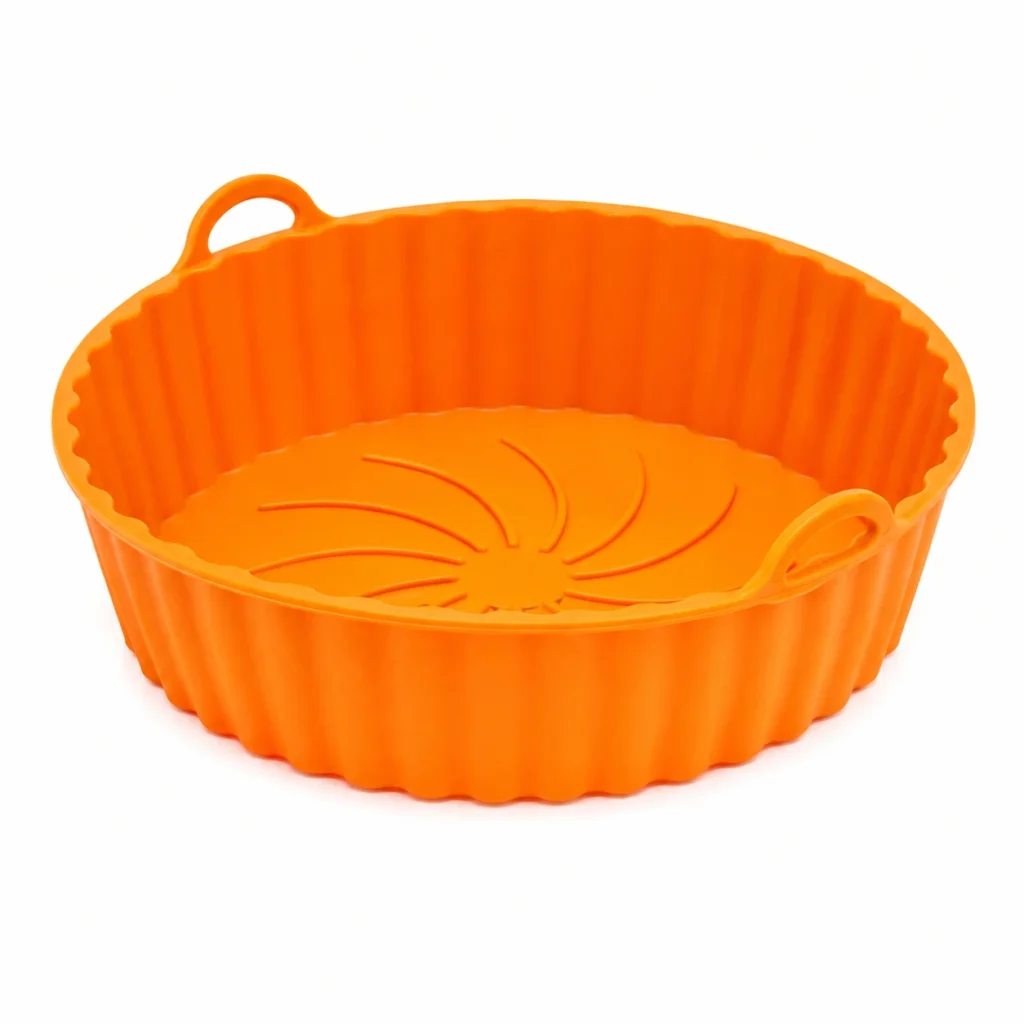
Most designs come in two styles. Some are flat mats with raised ridges. Others are shallow trays with low sides, often with vent holes. The ridges and holes exist for one reason: hot air needs a way to reach the underside of your food.
You will see the same product called a silicone air fryer liner, an air fryer silicone liner or a reusable air fryer liner. The names are interchangeable. What sets them apart from paper options is that you wash and reuse them instead of throwing them away.
Is a Silicone Liner for Airfryer Use Safe?
For most people, yes, as long as the silicone is genuinely food-grade. Silicone is a stable material that is widely used in baking mats, spatulas and bakeware, and air fryer temperatures usually sit well inside its working range.
Here is what is reasonably well established, and what is less certain.
What we know
- It is regulated as a food-contact material. In the United States, silicone rubber made for repeated food contact falls under FDA rules for rubber articles. In the European Union, food-contact materials must comply with Regulation (EC) No 1935/2004.
- Heat ratings leave a margin. Most liners are rated to roughly 230°C (450°F), while air fryers commonly cook between about 160°C and 200°C (320°F to 400°F). Always check the rating printed on your own product.
- Quality is where problems start. Research on silicone cookware has detected small silicone compounds called siloxanes migrating into food in trace amounts, particularly from products that were not cured properly.
What we do not know
The long-term health effects of those trace amounts are not well established. Current evidence does not show harm from normal use of good-quality silicone, but studies focused on air fryer silicone liners specifically are limited. That is a reason to buy carefully, not a reason to panic.
How to lower the risk
- Buy from a brand that states the material is food-grade silicone and can point to test reports, such as FDA or LFGB compliance.
- Prefer platinum-cured silicone, which is usually considered the cleaner option compared with peroxide-cured versions.
- Try the pinch test: twist or fold a flat section. If it turns white, the product may contain fillers. This is a popular home check rather than a lab test, so treat it as a clue, not proof.
- Wash it before the first use and let it air out. A faint smell from a new liner is common and normally fades.
- Stay under the stated temperature and keep the liner clear of the heating element.
What a Silicone Liner for Airfryer Baskets Does Well
- Easier cleanup. Grease, marinade and melted cheese land on the liner. Rinse it off and the basket underneath stays far cleaner.
- Basket protection. Tongs and abrasive scrubbing slowly wear down non-stick coatings. A silicone liner for airfryer baskets takes that wear instead.
- Less waste. A reusable air fryer liner can replace dozens of sheets of parchment over its life.
- Better for messy food. Marinated chicken, sticky wings, stuffed peppers and baked dishes are where a liner earns its place.
The Downsides Nobody Mentions Enough
A silicone liner for airfryer cooking comes with trade-offs. Knowing them early saves disappointment.
- Less crispness. An air fryer works by moving hot air around food. Anything that blocks the base of the basket reduces that flow, so the underside can stay softer.
- Grease film and odors. Silicone can hold on to oily residue. If it feels slick or smells stale after washing, it needs a deeper clean.
- Poor fit. A liner that is too big can bunch up, lift at the edges or cover the vents. One that is too small leaves part of the basket exposed.
- Not right for every job. Solid, thick liners trap steam under food. That suits casseroles and baked dishes, but not fries.
Silicone Liner vs Parchment Paper vs Foil
Here is how a silicone liner for airfryer baskets compares with the other common options in everyday use.
| Option | Cleanup | Airflow | Reusable | Best for |
| Silicone liner | Very easy | Moderate; better with vents | Yes | Saucy, sticky or baked dishes |
| Perforated parchment | Easy | Good | No | Quick snacks, light mess |
| Aluminum foil | Easy, but can tear | Poor if it covers the base | Sometimes | Wrapping fish or vegetables |
| No liner | Hardest | Best | Not applicable | Maximum crispness |
A quick note on foil: acidic foods such as tomatoes and citrus can react with aluminum, and loose foil can lift into the heating element. Whichever option you choose, read your air fryer manual first.
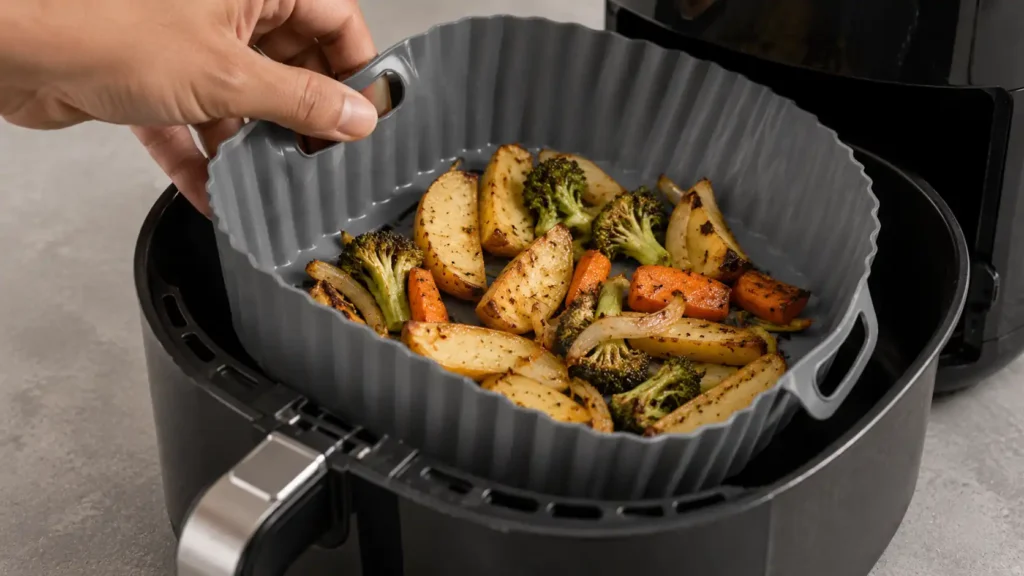
How to Choose the Right Silicone Liner for Airfryer Baskets
- Measure first. Measure the inside base of your basket and pick a liner slightly smaller, so air can move around the edges. Dual-drawer models often need separately sized liners.
- Look for airflow features. Raised ridges or perforations help hot air reach the underside of the food.
- Check the temperature rating and care label. The rating should sit comfortably above the temperature you cook at. If you want to use the dishwasher, confirm the liner is dishwasher-safe.
- Pick the right rigidity. Soft mats are easy to store. Sturdier trays hold their shape, and handles make it easier to lift out hot food.
- Verify the material claims. Look for food-grade wording, test reports and a brand that answers questions about its silicone.
How to Use and Care for Your Liner
Wash your silicone liner for airfryer baskets before first use. Place it flat in the basket and spread the food in a single layer so air can circulate. Keep it well away from the heating element.
Preheating and hot-liner handling. Never preheat the air fryer with the liner inside. A light, empty liner can lift in the airflow and touch the heating element, so preheat the basket empty, then add the liner and food. Once cooking is done, treat the liner as hot: it holds heat and any pooled grease or sauce. Lift it out with oven mitts or tongs, keep it level, and let it cool before washing.
Food cooked on a liner can take a minute or two longer, so check early rather than assuming the usual time. Many air fryer silicone liners also change how heat reaches the food, which is worth remembering when you adapt recipes.
For cleaning, warm soapy water does most of the work. For a greasy film, soak the liner or scrub gently with a paste of baking soda and water. Avoid cutting food on it with sharp knives.
Replace it when it turns sticky, cracks, changes color, or keeps a smell after washing. If a liner is slightly too big, trimming with scissors is possible, but clean edges are hard to get and frayed edges wear faster. Buying the right size is easier.
When to Skip the Liner
Leave it out when crisp edges are the goal, such as fries, breaded chicken and nuggets. Those foods rely on airflow around every side. Cook them straight on the basket, then use a silicone liner for airfryer recipes that are saucy, sticky or baked.
Decide on Ceramic Liners
Ceramic liners and dishes are a rigid, non-flexible alternative to silicone. They are heavy, slow to heat and block more airflow, so they suit baked dishes better than crisp food. Check that the piece is rated for air fryer or oven use and leaves a gap around the sides for air to move, and avoid sudden temperature changes that can crack it.
Faqs
Is a silicone liner for airfryer use safe?
Yes, when it is made from food-grade silicone and used within its temperature rating. Quality varies, so choose a brand that shares its material details and test reports.
Do silicone air fryer liners make food less crispy?
They can. The liner blocks some airflow under the food, so the underside may be softer. Liners with ridges or vent holes reduce the effect, and skipping the liner for crisp foods avoids it.
Can I use a silicone liner for airfryer models of any type?
Most basket and drawer models accept one, provided the size is right. For oven-style air fryers with shelves, check the manufacturer guidance, because a liner may not suit every rack.
Are silicone liners better than parchment paper?
It depends on the job. Silicone is a reusable air fryer liner that handles saucy food well. Perforated parchment allows better airflow and is convenient for quick snacks, but it is single-use.
Are silicone air fryer liners dishwasher safe?
Many are, usually on the top rack, but check the label on your product. Hand washing in warm soapy water works well too.
How long does a silicone liner last?
There is no fixed lifespan. A good liner can last for a long time with normal care. Replace it when it cracks, turns sticky or discolors, or keeps a smell after washing.
Bottom Line
A silicone liner for airfryer cooking is worth buying if you often cook saucy, sticky or messy food and would rather not scrub the basket. Choose food-grade silicone from a brand that backs up its claims, pick a size that leaves room for air to move, and keep it clear of the heating element.
If crispiness matters most, use the liner selectively and cook crisp foods straight on the basket. Used that way, the right liner makes air frying cleaner with very little compromise.