Silicone earring backs look like the easy fix for almost every earring problem. They’re soft, they’re cheap, and they almost disappear behind the lobe. That’s why so many people grab a big pack the moment a metal back starts to itch or a butterfly back goes missing.
But “soft and comfortable” isn’t the same as “safe in every situation.” A widely shared warning about clear backs sticking to earrings has made plenty of people think twice, and product listings that promise “hypoallergenic” or “medical-grade” silicone don’t always say much.
So here’s what is actually known, what is only anecdotal, and how to use silicone earring backs without regrets.
Key Takeaways
- Silicone earring backs can reduce metal contact behind the lobe, but they do nothing about a nickel-containing post.
- Labels like “hypoallergenic earring backs” are marketing claims, not proof that a product won’t irritate you.
- The main practical concern is trapped sweat, oil and product residue, so clean the backs often and don’t leave them on for weeks.
- Reports of backs sticking to earrings are anecdotal. I couldn’t find studies that measure how often it happens.
- Silicone backs grip by friction and don’t lock, so use a locking back for valuable earrings.
- If a back gets stuck, or your ear turns red, swollen or painful, stop and get help instead of forcing it.
What Are Silicone Earring Backs?
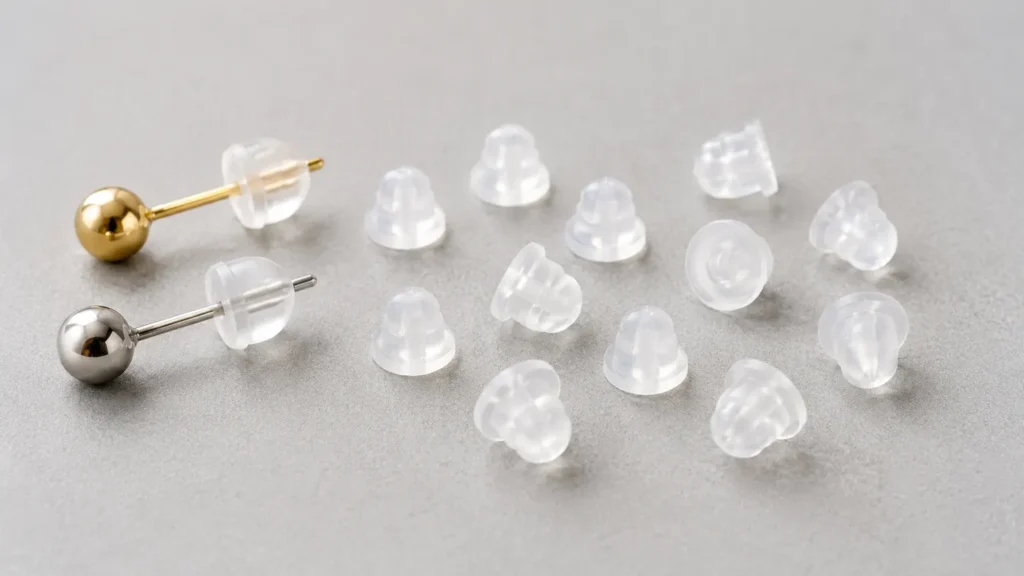
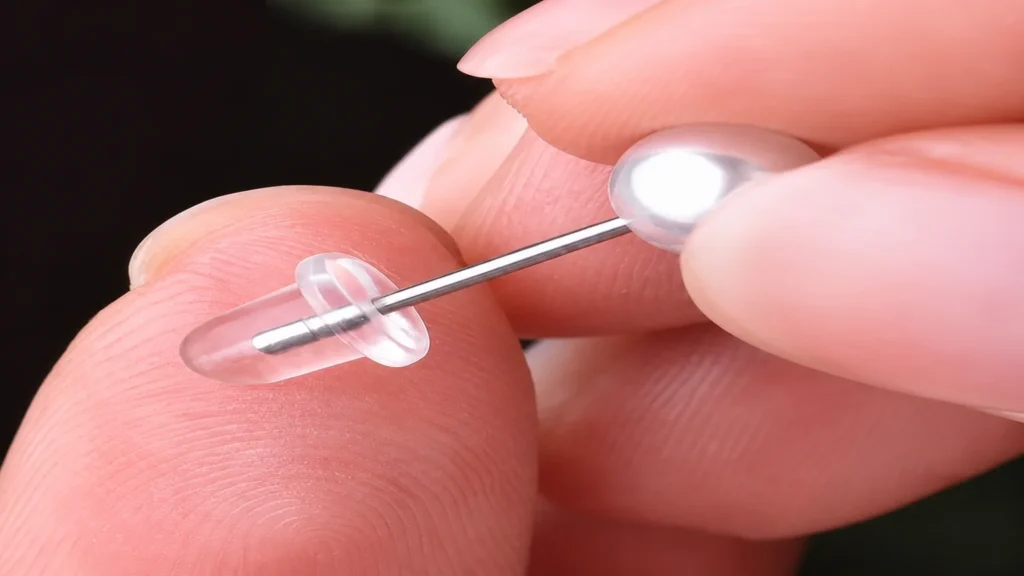
Silicone earring backs are small, soft stoppers that slide onto the post of a stud or the wire of a hook earring and hold it in place with friction. You’ll find them as clear bullet-shaped tips, flat discs, full-cover caps, and versions with a thin metal core inside a soft outer layer.
Some shops call them rubber earring backs or earring stoppers, so don’t be thrown by the different names. The idea is the same: a soft cushion between the metal and the skin behind your ear.
That cushioning explains their popularity, especially as earring backs for sensitive ears. Whether that reputation holds up is what the rest of this guide checks.
Silicone vs Rubber vs Plastic: What’s the Real Difference?
Sellers use these words loosely, which is why shopping for backs gets confusing. Here’s a rough guide:
- Silicone: a soft, flexible synthetic material. It’s the most common choice for clear “comfort” backs.
- Rubber: feels similar, but natural rubber can contain latex, a known allergen for some people. If you have a latex allergy, check that a rubber back is latex-free.
- Plastic: stiffer and usually used for flat discs and stabilizers. It’s less cushioned and can crack over time.
Many listings use “rubber” and “silicone” interchangeably, and few say which material you’re actually getting. If the material matters for your skin, ask the seller before you buy.
Pros and Cons of Silicone Earring Backs
| Pros | Cons |
| Soft against the skin behind the lobe | Hold by friction only, so they can loosen or stretch |
| Cheap and easy to replace | Can trap sweat, oil and product residue |
| Nearly invisible when worn | Wear out, cloud or discolor over time |
| Keep metal off the skin behind the ear | Don’t fix a nickel-containing post |
| Handy spare when a metal back goes missing | Not secure enough for valuable earrings |
Why the Earring Post Matters More Than the Back
If your earlobes itch, nickel is the usual suspect. The American Academy of Dermatology estimates that more than 18 percent of people in North America are allergic to it, and it names earrings and earring backs among the biggest culprits.
That’s a good reason to swap a metal back for a silicone one. It takes one possible source of nickel off your skin.
The catch is the post. It runs straight through your piercing, and a silicone back doesn’t change what the post is made of. If the post releases nickel, you may keep reacting, and the new back can take the blame unfairly.
The Mayo Clinic says the best way to prevent a reaction, once you have a nickel allergy, is to avoid contact with the metal. That means checking the whole earring, not only the back.
For a first pair, the American Osteopathic College of Dermatology suggests stainless steel or 18-karat gold studs. A dermatologist can also confirm a nickel allergy with a patch test.
Does “Hypoallergenic” Really Mean Allergy-Proof?
Browse any listing for silicone or rubber earring backs and you’ll see the same words again and again: hypoallergenic, medical-grade, skin-safe, food-grade. They sound reassuring. On their own, they don’t tell you much.
“Hypoallergenic” means a product is designed to be less likely to cause a reaction. It doesn’t mean a reaction is impossible. Even hypoallergenic earring backs can bother you if the rest of the earring isn’t nickel-free.
“Medical-grade” and “food-grade” are used loosely on many consumer listings, and few of them say which standard the material was tested against.
Silicone is generally considered a low-reactivity material, which is a fair reason to try it. But I couldn’t find reliable figures on how often people react to silicone backs specifically, so treat that as unknown rather than “never.”
A few habits help. For earring backs for sensitive ears, plain clear silicone is a safer starting point than colored or plated versions. If a back has a metal core or rim, ask the seller what the metal is. And stop using anything that itches, burns or leaves a rash.
The Hidden Problem: Trapped Moisture and Buildup
Silicone doesn’t breathe. In theory, that means sweat, skin oil, hair products and makeup can collect in the small gap behind the lobe, and a snug back keeps it all there.
Health sources support the general worry. Ochsner Health lists lying on a healing piercing for long periods as a way moisture and bacteria get trapped. The Cleveland Clinic adds that skipping daily cleaning of a new piercing, or taking earrings out before it heals, raises infection risk.
Neither source is about silicone. Still, the logic carries over to any tight back left on for too long.
Then there’s the story that spread in early 2026. The Daily Dot reported on a woman whose clear silicone backs were painful to remove after long wear. Her piercer explained that oil, sweat, makeup and hair grease can build up and act like glue, so the back fuses to the earring.
That’s one person’s experience plus one piercer’s professional opinion. It’s a useful warning, but it isn’t a measured risk. Nobody has shown how often this happens.
How strong is the evidence?
| Level of evidence | What it covers |
| Reasonably established | Nickel is a common contact allergen, and earrings and earring backs are a common source. Poor cleaning and trapped moisture raise infection risk for piercings in general. |
| Reported, not measured | Silicone backs sticking to posts after long wear (one widely shared account, plus a piercer’s opinion). Advice to limit wear to a night or two. |
| Not established | How often silicone earring backs cause reactions or infections. Any “safe” wear-time limit. Whether silicone is better than other materials for everyone. |
Comfort or Security? What Silicone Backs Do Best
Silicone earring backs hold by friction, not by locking. That’s fine for a lightweight stud you wear to the office. It isn’t the same level of protection as a screw back or a spring-loaded locking back.
A silicone back can also stretch over time, and it can slip off if it catches on a towel or a scarf. If the earring is valuable or sentimental, use a locking back and keep the silicone ones as spares.
Where they do work well: cushioning the skin behind the lobe, acting as earring stoppers that keep fish-hook earrings from sliding around, and filling in when a metal back goes missing.
Silicone Earring Backs vs Other Backs: Which Should You Use?
| Back type | How it holds | Best for | Keep in mind |
| Silicone | Friction, soft | Light studs, hook earrings, spares | Can stretch; needs regular cleaning |
| Metal butterfly | Friction, metal | Everyday studs | Can loosen; check the metal if you’re nickel-sensitive |
| Screw back | Threads onto the post | Valuable or sentimental studs | Slower to put on; threads need cleaning |
| Locking back | Spring-loaded catch on a notched post | Diamond and other valuable studs | Costs more; must match the post |
| Flat-back stud | Flat disc sits flush | Sleeping and sensitive ears | You usually buy the whole stud, not only the back |
Which Earrings Suit Silicone Earring Backs?
Silicone earring backs suit some earrings better than others.
- Fish-hook earrings: a small silicone stopper on the wire keeps the earring from slipping out.
- Light studs: a good match for everyday wear, as long as you clean the backs regularly.
- Heavy or dangle earrings: friction may not be enough. Some sellers pitch large silicone discs for heavy earrings. Treat that as a comfort feature, not a security one, and use a lever, screw or locking back.
- Valuable earrings: stick with a locking or screw back.
How to Get the Perfect Fit: Post Length and Tightness
A good fit does more for comfort than the material does.
Check the post first. If it sticks out far past the back, the tip can snag. If it’s too short, the back can’t grip properly.
Then check tightness. The back should be snug enough that the earring doesn’t slide or spin, but not so tight that it squeezes the lobe. A dent or pinched-looking skin means it’s too tight.
If your piercing is new, swelling needs room. Ask your piercer which fit is right while it heals.
How Long Can You Wear Them? Habits That Protect Your Ears
No official rule says how long silicone earring backs can stay on. The piercer in that viral story suggested a night or two at most, but that’s one professional’s view, not a standard.
A cautious habit, not a proven rule, is to take them off regularly, wash the back and the post, and let both dry completely. If your ears get irritated easily, skip sleeping in them.
Replace a back when it turns cloudy, sticky, torn or loose, or whenever you’ve had irritation. Rubber earring backs and silicone ones are inexpensive, so replacing early costs very little.
If your piercing is new, leave the jewelry your piercer fitted in place and ask before swapping backs. The Cleveland Clinic lists removing earrings too early as a risk factor for infection.
Common Mistakes With Silicone Earring Backs
- Sleeping in the same backs night after night without cleaning them
- Swapping backs on a fresh piercing without asking your piercer
- Reusing a back that is stretched, cloudy or sticky
- Trusting a “hypoallergenic” label and ignoring the metal in the post
- Using friction-only backs on valuable earrings
- Pulling hard on a back that won’t come off
Alternatives to Silicone Earring Backs
If silicone doesn’t work for you, there are other routes.
- Nickel-free metal: posts and backs in titanium, surgical stainless steel or 18-karat gold are the usual choices for sensitive skin.
- Locking or screw backs: better for valuable earrings.
- Flat-back studs: they sit flush and are often suggested for sleeping.
- Hypoallergenic earring backs from a clear source: choose sellers who state the exact material.
If irritation keeps coming back, a dermatologist can run a patch test and tell you what you’re actually reacting to.
Warning Signs: When to Stop and Get Help
Take the back off and get advice if you notice any of these:
- Redness, warmth or swelling around the piercing
- Discharge or pus
- A rash that spreads, blisters or keeps coming back
- A painful bump, or a fever or chills
If a back is stuck or won’t budge, don’t force it. Ochsner Health advises against trying to remove a stuck earring clasp on your own. See a doctor or a professional piercer instead.
Faqs
Are silicone earring backs safe to wear?
For most people, yes, when they’re worn for reasonable periods and kept clean. Silicone is generally considered a low-reactivity material, but I couldn’t find studies that measure the risks of silicone earring backs specifically. In practice, and especially with earring backs for sensitive ears, safety depends more on the metal in the post, how clean the back stays, how snugly it fits and how long it’s left on.
Can I sleep in silicone earring backs?
Many people do, but it isn’t risk-free. Ochsner Health notes that lying on a healing piercing can trap moisture and bacteria. If your ears get irritated easily, or the piercing is still healing, take them out at night, or ask your piercer about a flat-back stud, which sits flush against the ear.
Are silicone earring backs hypoallergenic?
Silicone is a low-reactivity material, and many sellers label their backs hypoallergenic. That label isn’t a guarantee, and it says nothing about the earring post. If you have a nickel allergy, check the post and any metal core too, and look for hypoallergenic earring backs from sellers who state the exact material.
Can silicone earring backs get stuck on the earring?
There are reports of it, including a widely shared account from early 2026 in which a piercer blamed buildup of oil, sweat and product. It’s anecdotal, and no data show how often it happens. Removing and cleaning them regularly is the sensible precaution. If one is stuck, don’t force it. See a doctor or a professional piercer.
How often should I replace silicone earring backs?
There’s no official schedule. Replace them when they turn cloudy, sticky, torn or loose, or whenever you notice irritation. Earring stoppers are cheap, so replacing them early is an easy call.
How do you clean silicone earring backs?
Wash your hands first, then wash the back with mild soap and warm water, rinse well and let it dry completely before wearing it again. Clean the earring post at the same time, because residue can build up on both. If a back looks stained, feels sticky or has lost its grip, replace it.
Bottom Line
Silicone earring backs are a sensible, low-cost way to add comfort and cut down on metal contact, as long as you treat them as something to check and clean, not something to forget behind your ear for weeks. They suit light everyday earrings and make handy spares. They’re a poor match for valuable earrings.
What’s well established is the nickel and piercing-hygiene guidance from dermatology and health sources. What’s said about silicone specifically, from sticking backs to “safe” wear times, rests mostly on anecdote and marketing.
So check the post as well as the back, choose a locking back for valuable earrings, clean regularly, and never force anything that sticks. If your ears stay red, swollen or painful, talk to a doctor. This article is general information, not medical advice.