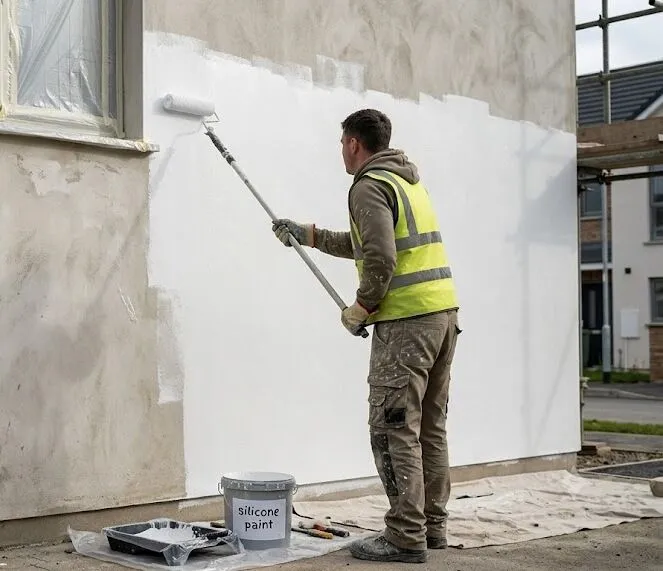
Silicone paint is a water-based coating built around silicone resin, and it has become a go-to choice for damp walls, weathered facades and even rubber products. Most paints either block moisture or let it through. This one does something smarter: it sheds liquid water while letting vapour escape.
In this guide, you will learn how it works, where it performs best, where it disappoints, and how to choose a good one without overspending.
Key Takeaways
- It repels water but lets moisture vapour escape.
- Its smooth surface resists dirt and grime.
- It can bridge hairline cracks without splitting.
- It costs more upfront but may need repainting less often.
- Silicone-based paint will not fix leaks or rising damp.
- Rubber products need a coating made specifically for silicone.
What Is Silicone Paint and How Does It Work?
At its core, this paint is an emulsion in which silicone resin acts as the binder, the part that holds pigment to the wall. Many products blend the resin with acrylic to balance cost and performance, so a can labelled silicone resin paint is not always pure silicone.
The resin gives the dried film a water-hating surface. Rain beads up and rolls away. At the same time, the film stays microscopically open, so moisture trapped inside a wall can slowly escape as vapour.
That two-way behaviour is the whole secret. It is also why this type of coating is usually chosen for masonry rather than, say, a bedroom door.
Key Benefits of Silicone Paint
Here is what you actually gain when you switch to it.
It repels water without trapping moisture
Rain runs off the surface instead of soaking in, which protects plaster and brick from freeze-thaw damage.
Because vapour can still pass through, the wall dries out from within instead of blistering the paint from behind.
It stays cleaner for longer
A water-shedding surface gives dust and soot very little to grip. Rain washes away much of what lands there, so walls finished with silicone facade paint tend to look fresher between cleans.
It copes with hairline cracks
The dried film has some elasticity, so it can bridge fine cracks that would show through a harder coating.
Wider or moving cracks still need proper repair first.
It handles sun, frost and heat
A good silicone resin paint stays stable under UV light and big temperature swings. That helps colours hold and keeps the film from turning brittle.
Makers often quote a lifespan of 20 to 25 years, though this figure traces mostly to marketing material rather than independent testing.
Technical data sheets from paint manufacturers rarely commit to a specific number, and the one third-party-verifiable figure found was a guaranteed 10-year service life on a branded product, with other sources citing roughly 8 to 10 years before a coating begins losing its protective properties.
Check the technical data sheet for the specific product you are considering rather than relying on a general industry number. Your prep work and local climate will also decide what you really get.
It is low in odour and easy to live with
The carrier is water rather than harsh solvent, so the smell is mild and drying is reasonably quick. Still, open a window while you work, especially in bedrooms and nurseries.
Best Uses: From Exterior Walls to Industrial Coatings
Silicone coatings turn up in more places than most people expect.
- Exterior walls: concrete, brick, stone and mineral render, where silicone facade paint stands up to weather and dirt.
- Humid rooms: kitchens and bathrooms, where moisture and mould are common.
- Hot surfaces: stoves, chimneys and exhausts, using products specifically rated for heat.
- Ships: fouling-release hull coatings that make it harder for marine growth to stick.
- Textiles and leather: soft-touch and protective finishes on fabric, synthetic leather and outdoor furniture.
- Industrial parts: release coatings on paper, film and tyre moulds.
Silicone Paint vs Acrylic Paint: Key Differences
Acrylic is the everyday benchmark, so it helps to compare the two honestly.
| Feature | Silicone-based paint | Acrylic paint |
| Water repellence | Very high | Moderate |
| Breathability | High | Usually lower |
| Dirt pickup | Low | Higher |
| Upfront cost | Higher | Lower |
| Repainting | Needs a compatible coat | Easy |
For a quick interior refresh, acrylic is usually enough. For a damp-prone or weather-exposed wall, a silicone facade paint is much easier to justify.
Silicone Paint vs Mineral and Elastomeric Paints
Acrylic is not the only alternative. Two other options come up often on exterior walls.
Mineral (silicate) paint uses a potassium silicate binder that bonds chemically with mineral surfaces such as lime plaster and masonry. It is extremely breathable and long-lasting, with a natural matt look. The trade-offs are a narrower colour range, trickier application, and poor suitability over old painted surfaces.
Elastomeric paint is a thick, stretchy coating, usually acrylic-based, made to bridge wider cracks. It resists water strongly, but it breathes less, so it can trap moisture in a damp wall.
| Paint type | Best for | Main limitation |
| Silicone-based paint | Exposed, damp-prone walls that need water repellence and breathability | Higher cost, harder to repaint |
| Mineral (silicate) paint | Lime plaster, old masonry, heritage buildings | Limited colours, poor over painted surfaces |
| Elastomeric paint | Walls with wider or recurring cracks | Low breathability, can trap moisture |
In short, silicone sits in the middle. It repels water better than mineral paint and breathes better than elastomeric coatings.
Drawbacks to Know Before You Buy
- Price: it costs noticeably more per litre, which adds up on large areas.
- Not a damp cure: it will not stop leaks, rising damp or condensation, so fix the source first.
- Repainting: later coats of other paints may not stick well, so plan on staying with a compatible system.
- Bare metal: pipes and radiators need a rust-inhibiting primer, because a breathable film does not block air and moisture.
How to Apply It the Right Way
- Fix leaks and damp patches, and remove loose or flaking old paint.
- Clean the surface, then let it dry completely.
- Fill holes and cracks, and sand the repairs smooth.
- Apply the primer the manufacturer recommends, especially on porous or chalky walls.
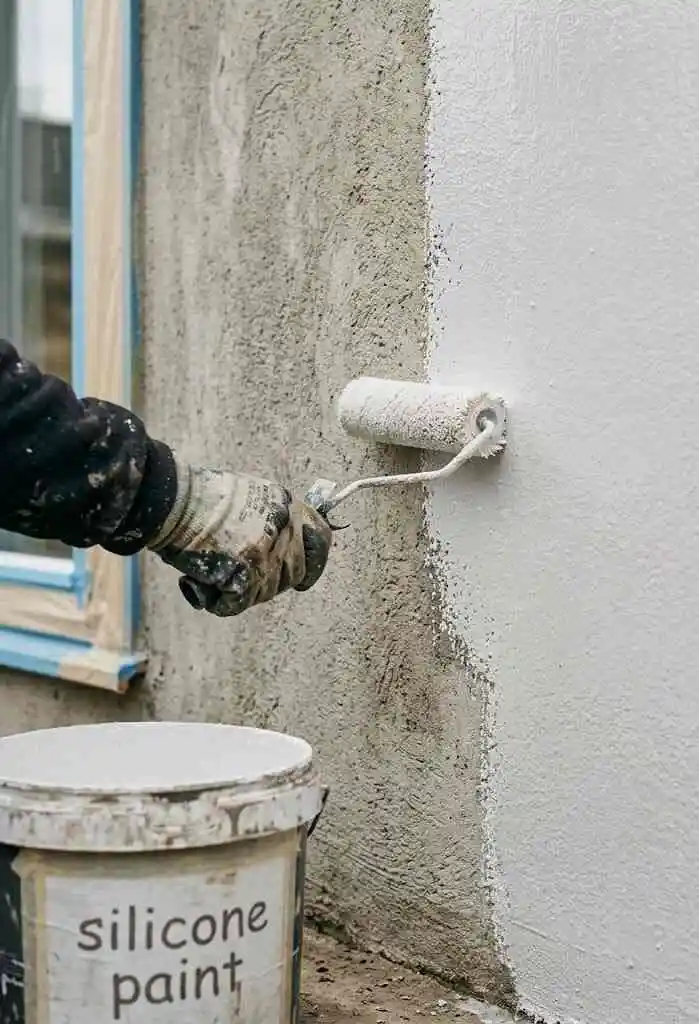
- Stir well, then apply thin, even coats with a roller, brush or sprayer, working from top to bottom.
- Let the first coat dry before adding a second, and avoid painting in rain or extreme cold.
Always follow the technical data sheet. Drying times and temperature limits vary between brands.
How to Choose the Right Silicone Paint
- Check the binder. A genuine silicone resin paint should state its silicone content, not just say “silicone-enhanced”.
- Read the data sheet for vapour permeability and water absorption figures.
- Match the product to the surface: interior or exterior, masonry or metal.
- Compare coverage per litre, since a pricier tin that covers more can cost less overall.
- Test a small patch before committing to the whole wall.
Can You Paint Silicone Rubber Products?
Yes, but ordinary paint will usually peel. Cured silicone is slick and flexible, so coatings struggle to grip it.
Look for silicone-based paint or ink made for silicone rubber, clean the surface with isopropyl alcohol, and use the recommended primer. Test adhesion on a spare piece and flex it before you commit.
Avoid painting anything that touches food or skin unless the coating is explicitly rated safe for that use.
Faqs
What is silicone paint used for?
It is mostly used on exterior walls and damp-prone interiors. The same chemistry also appears in heat-resistant, marine and textile coatings.
Is silicone paint waterproof?
It is water-repellent rather than fully waterproof. Liquid water beads off, yet vapour still passes through. It will not seal a leak.
Is silicone paint better than acrylic paint?
For wet, exposed walls, usually yes. It sheds water, breathes and stays cleaner. For low-traffic interior rooms on a tight budget, acrylic works well.
Does silicone paint need a primer?
Often yes, particularly on porous, chalky or patched surfaces. Some products are designed for minimal prep, so check the label. When in doubt, use a primer from the same range.
How long does silicone paint last?
Makers often claim 20 to 25 years on exteriors. In practice, expect less if the wall was damp, dirty or poorly prepared when painted.
Bottom Line
Silicone paint earns its higher price on surfaces that face rain, damp and sun. It repels water, breathes and stays clean, but it cannot repair leaks or replace good preparation.
Choose a product with a clear data sheet, prepare the surface properly, and it should serve you well for years.