Scars have a way of catching the eye, even when the injury behind them is long forgotten. If you want something gentle that you can use at home, a silicone patch for scar care is one of the few options doctors still suggest first. It is a thin, flexible sheet that you stick over a healed scar and leave there for hours at a time. There are no needles, no downtime and no creams to rub in twice a day.
This guide explains how these patches work, which scars they suit, how to wear them properly, and where the evidence is stronger or weaker than the packaging suggests.
Key Takeaways
- Silicone works best on raised, red or thick scars.
- Start only after the wound has fully closed.
- Wear the patch 12 to 24 hours a day for at least two to three months.
- Sunken acne scars rarely respond, and large keloids often need a doctor’s help.
- Wash both the skin and the patch daily to avoid irritation.
- Patches can also help prevent thick scars after surgery, once the wound has closed.
- Check with a doctor first for children and for fresh C-section scars.
- See a doctor if a scar grows fast, hurts, or looks infected.
- Expect a softer, flatter, paler scar, not a scar that disappears.
What Is a Silicone Patch for Scar Care?
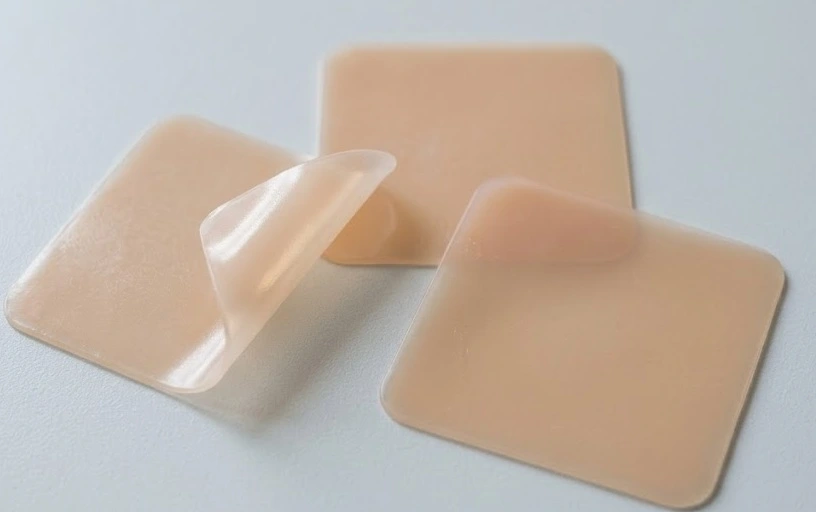
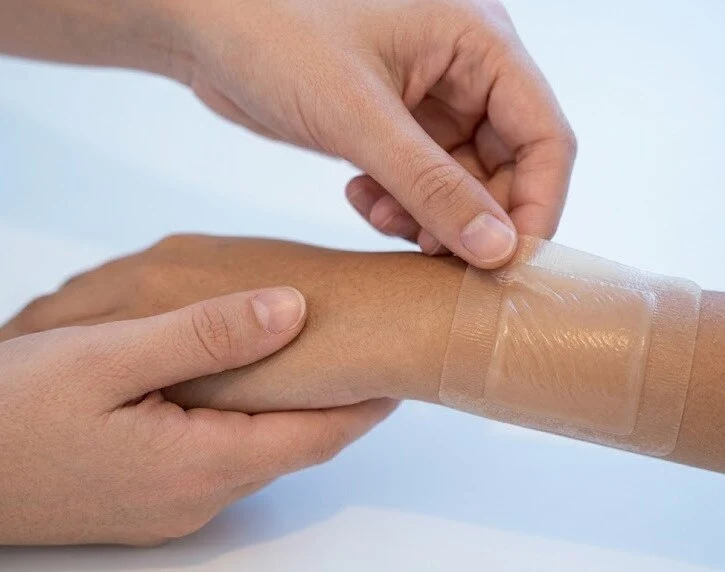
A silicone patch for scar care is a soft, self-adhesive sheet made from medical-grade silicone. You place it directly over a closed scar, where it sits like a second skin.
You will see it sold under different names, such as silicone scar sheets, silicone gel sheets or silicone scar tape. They follow the same idea in different shapes. Some come as narrow strips for straight surgical lines, some as large pads for burns or chest scars, and some as small circles for minor marks.
Most are reusable. You peel the patch off, rinse it with mild soap, let it dry and put it back on. Silicone has been used this way for more than thirty years, which is a long track record for a home treatment.
How Does a Silicone Patch for Scar Work?
Nobody has pinned down the exact mechanism, and honest sources admit that. Still, a few explanations have good support.
The first is hydration. Newly healed skin loses water quickly because its outer layer is still immature. That dryness seems to nudge the skin into making extra collagen, and too much collagen is what turns a scar thick and raised. A patch traps moisture, so the skin stays hydrated and collagen production settles down.
The second is protection. The sheet shields a vulnerable scar from rubbing, dirt and sunlight while it matures.
The third is tension. Some researchers believe the patch takes a little pulling force off the wound edges, which may matter for scars that tend to widen or thicken. Extra warmth under the sheet is another suggested factor, though that part is less settled.
Which Scars Respond Best to Silicone Patches?
Silicone scar sheets do best on scars that are raised, thick, red or itchy. That includes surgical scars, burn scars, and the two overgrown types people worry about most: hypertrophic scars and keloids.
A hypertrophic scar stays inside the borders of the original wound. A keloid grows beyond them and can keep expanding for months. Silicone can soften and flatten both, but a keloid often needs more than a patch. Doctors commonly pair it with steroid injections or other treatment.
Flat scars and sunken ones are a different story. Pitted acne scars sit below the surrounding skin, so a silicone patch for scar flattening has nothing to flatten. Stretch marks are similar, and the claims online are bolder than the research behind them.
Older scars can still improve, but progress is usually slower than with a scar that is only a few weeks old.
Silicone Patch for Scar Prevention After Surgery
Many people reach for silicone only after a scar has turned thick, but it is also used to stop that from happening. Starting early, as soon as the incision has sealed, can make sense for scars that are likely to overgrow.
That mostly applies to cuts across areas that stretch a lot, such as the chest, shoulders and upper back, and to anyone who has had a thick or keloid scar before. Your surgeon can tell you whether prevention is worth the effort in your case.
Silicone Patches for C-Section Scars and Children
A C-section scar is one of the most common reasons people look for a silicone patch for scar care. The rule is the same as for any surgery: wait until the incision is fully closed and your doctor says the skin is ready. Soft, flexible strips sit comfortably below the waistband and can be worn under loose clothing.
Silicone is also used on children, including for burn scars. Their skin is more delicate, though, so ask a doctor before starting, check the skin often, and keep small cut-off pieces away from little hands and mouths.
Silicone Patch, Gel or Tape: Which Should You Pick?
All three work on the same principle, so the choice comes down to where the scar is and how you live.
- Sheets and patches suit flat areas such as the abdomen, chest and limbs. They stay put under clothes and give steady coverage.
- Gels dry into a thin, invisible film. They are easier on the face, elbows and knees, though you need to reapply them.
- Scar tape, a narrow strip, is handy for long, straight incisions.
One 2020 trial in people with grafted hand burns found that gel and sheets performed about the same, and both beat pressure garments alone. So choose the form you will actually keep using.
How to Use a Silicone Patch for Scar Healing, Step by Step
Timing and consistency matter more than the brand of silicone scar patch you buy. Here is a simple routine.
- Wait until the wound has closed completely, with no scabs, stitches or open spots. Many doctors suggest starting about two weeks after healing, but check with your surgeon.
- Wash the skin with mild soap and water, then dry it fully. Keep oils and creams out from under the patch.
- Trim the patch so it overlaps the scar by about a centimetre on every side. Round the corners so they do not lift.
- Press it on smoothly, without wrinkles or air bubbles.
- Wear it 12 to 24 hours a day. Many people wear it overnight and for part of the day.
- Once a day, take it off, wash the skin and the patch, let both dry, then reapply. Replace it when the edges curl or it stops sticking, which is usually every week or two depending on the brand.
Daily Life With a Silicone Patch for Scar Care
The routine is easier than it sounds once you know a few tricks.
- Showering: some reusable patches tolerate water, but the adhesive weakens. Most people take the patch off, wash, pat dry and reapply afterwards. Check the label for your brand.
- Swimming: chlorine and salt water can loosen the edges, so remove the patch first or follow the maker’s advice.
- Face and joints: sheets tend to lift where skin folds and moves. A gel is usually the easier choice there.
- Removal: peel slowly, low and flat against the skin, while holding the skin down with your other hand. Warm water helps with stubborn edges.
- Storage: put the clean, dry patch back on its plastic backing and keep it in a clean place, away from dust and pet hair.
How Long Does a Silicone Scar Patch Take to Work?
Patience is the hard part. Most people need at least two to three months of daily use before they see a clear difference, and some scars need six months or longer.
Early signs are usually less itching and tenderness. A softer feel and fading redness follow, and flattening tends to come last.
Take a photo once a month in the same light. Progress is slow enough that it is easy to miss from one day to the next.
Is a Silicone Patch for Scar Treatment Backed by Research?
Silicone gel sheets are widely regarded as a first-line, non-invasive option for raised scars. Several clinical trials support it, particularly for thickness, redness and discomfort.
The evidence is not perfect, though. Some studies found only small or inconsistent benefits when silicone was compared with placebo or pressure therapy, and trial quality varies. That is why dermatologists call silicone helpful rather than miraculous.
Researchers are also trying to improve the patches themselves. A 2024 rabbit-ear study tested a silicone patch infused with a metal-organic framework, and the treated scars ended up flatter and less thickened than those under a plain patch. It is early, animal-based work and nothing you can buy today, but it shows where the field is heading.
Silicone Patch vs Other Scar Treatments
A silicone patch for scar care is usually the first thing to try because it is cheap, painless and low risk. If a scar is stubborn, large or still growing, a doctor may suggest another option, or combine it with silicone. This table shows how they compare.
| Treatment | Best for | What to expect | Who does it | Main drawbacks |
| Silicone patch, sheet or tape | Raised, red or itchy scars; preventing thick scars after surgery | Worn daily for months; softer, flatter, paler scar | You, at home | Needs steady daily use; weak on sunken scars |
| Silicone gel | Face, joints and small scars | Thin, invisible film; reapplied through the day | You, at home | Needs reapplying; sun protection is essential |
| Steroid injections | Keloids and thick, raised scars | Injected into the scar to shrink it and ease itching and redness; usually several sessions spaced weeks apart | Doctor | Needs clinic visits; not a one-off fix |
| Pressure garments | Burn scars and large areas | Tight garments worn many hours a day | Usually prescribed by a burns or surgical team | Uncomfortable, hot and long-term |
| Laser treatment | Redness, discolouration and texture, especially in older scars | Often several sessions, with results showing over months | Dermatologist or specialist | Costly; needs strict sun protection before and after |
| Dermabrasion | Burn scars, acne scars and very large scars | Scar tissue is sanded down so the scar blends in; healing takes around two weeks | Dermatologist or surgeon | Won’t remove the scar; bleeding and downtime |
| Low-dose radiation | Very large keloids, or ones that don’t respond to steroids or silicone | Short, painless sessions, often after a keloid is cut out to stop regrowth | Specialist | Skin redness and sensitivity afterwards; specialist care only |
| Surgery | Scars that are wide, tight or badly placed | Replaces the old scar with a new one | Surgeon | Leaves a new scar; keloids can grow back, so it is usually combined with other treatment |
| Natural extracts (aloe, onion) | Mild itching | May ease symptoms | You, at home | Little evidence for lasting benefit |
Which should you choose? Start with silicone for any raised or red scar, as long as the skin has fully closed. If you see no improvement after a few months, or the scar is a growing keloid, see a dermatologist. They will often add steroid injections or laser treatment rather than replace the patch.
Side Effects and Safety
A silicone patch for scar care is generally safe, and serious problems are rare. The usual complaints are mild: itching, a rash, redness, or skin that turns soggy and sore under the sheet. Heat and sweat make this worse, so people in hot climates often need extra breaks.
Most of it is avoidable. Wash the skin and silicone scar sheets every day, never apply a patch to an open or oozing wound, and stop if the skin starts to break down. If a rash does not settle, see a doctor, because it could be an adhesive allergy.
If your skin is sensitive, test first. Stick a small piece on a patch of healthy skin for a few hours and watch for redness or itching before you cover the scar.
Get medical advice quickly if you notice any of these:
- A scar that grows fast or spreads beyond the original wound
- Spreading redness, warmth, pus or a bad smell
- Severe or increasing pain
- A wound that reopens or has not fully closed
Inconsistent use is also one of the main reasons results disappoint. The daily washing routine feels like a chore, especially on the face, and many people quietly give up.
Myths About a Silicone Patch for Scar Healing
- Myth: it erases scars. Truth: it improves how a scar looks and feels, but it never removes it completely.
- Myth: it only works on new scars. Truth: older scars can respond too, only more slowly.
- Myth: it must be on for a full 24 hours. Truth: 12 hours a day is the usual minimum, and more is better.
- Myth: a higher price means better results. Truth: what matters is medical-grade silicone, a good fit and steady use.
- Myth: it fixes every kind of scar. Truth: sunken scars and stretch marks respond poorly.
Tips to Get More From a Silicone Patch for Scar Care
- Protect the scar from the sun with SPF 30 or higher, or keep it covered. Fresh scars darken easily.
- Do not pick or scratch the area, even when it itches.
- Avoid smoking and eat well, since both affect how skin heals.
- Ask your doctor about gentle scar massage once the skin is fully healed.
- See a dermatologist if the scar keeps growing, hurts, or has not improved after a few months.
How to Choose a Silicone Patch for Scar Treatment
Whether you choose sheets or silicone scar tape, look for medical-grade silicone, a gentle adhesive and a breathable, washable design. Reusable silicone gel sheets usually give better value than single-use ones.
Pick a size that fits your scar with a little overlap, and check that the brand gives clear wearing and cleaning instructions. Be wary of any product that promises to erase scars completely, because none can.
Think about cost per week, not just the price on the box. Reusable sheets cost more upfront but last a week or two each, while single-use ones add up quickly if you need months of coverage.
Faqs
Does a silicone patch for scar healing really work?
For raised, red or thick scars, yes, it usually helps. It will not remove a scar, but it can make it softer, flatter and less noticeable when used consistently.
How long should you wear a silicone scar patch each day?
Aim for 12 to 24 hours a day. Take it off once daily to wash your skin and the patch, then put it back on.
Can you use silicone scar tape on old scars?
Yes, they can still help, especially if the scar is raised or itchy. Results are generally slower and smaller than on a new scar.
When can you start using a silicone patch after surgery?
Wait until the incision has fully closed and any stitches or scabs are gone. Your surgeon can confirm the right moment for you.
Can silicone patches treat keloids?
They can soften and flatten a keloid, but large or growing keloids usually need medical treatment as well. Speak to a dermatologist before relying on a patch alone.
Can you sleep with a silicone patch for scar care on?
Yes. Wearing it overnight is one of the easiest ways to reach the 12 to 24 hours a day you need. Make sure the skin is clean and dry, press the edges down firmly, and stop if you notice a rash or soreness. In the morning, take it off, wash the skin and the patch, then reapply.
Does a silicone patch for scar care work on stretch marks or wrinkles?
Not reliably. Stretch marks are flat or slightly sunken, so a patch has little to flatten, and the research is much weaker than the claims online. Wrinkles are a different problem from scars. Some facial silicone pads are sold for fine lines and may smooth the look while worn, but evidence for lasting results is limited.
Conclusion
The bottom line is that a silicone patch for scar care is a safe, affordable and low-effort way to improve a raised or discoloured scar. Start once the skin has closed, wear it daily for several months, and keep the area clean and sun-protected. Expect improvement rather than erasure, and see a doctor if the scar is a keloid, keeps growing, or refuses to settle.