Silicone hot pads are one of those small kitchen buys that quietly earn their place. They sit under a bubbling pot, grip a slippery lid, open a stubborn jar and wipe clean in seconds. But the market is crowded, and not every pad labelled “silicone” will protect your table or your hands. This guide explains how silicone hot pads work, how hot they can really go, and what to check before you buy. You’ll also find safe-use tips, cleaning advice and an honest look at where the marketing runs ahead of the evidence.
Key Takeaways
- Good pads insulate and grip, which makes them handy as trivets, jar openers and pot holders.
- Heat ratings of about 230°C (446°F) are common, but they come from manufacturers and vary by product.
- Thickness matters as much as the rating, because a thin pad can survive the heat and still pass it through.
- Low-grade pads may contain fillers, so check the label, the smell and how the pad behaves when you pinch it.
- Keep pads dry, off open flames and clean, and replace them once they warp, crack or turn sticky.
How to Choose Silicone Hot Pads That Are Actually Safe
Most of what separates a good pad from a poor one is visible before you ever use it. Run through these checks in the shop, or as soon as the parcel arrives.
Read the material and the label
Look for pads described as food-grade silicone, ideally with an FDA or LFGB compliance statement. Be wary of vague wording such as “silicone-style” or “rubber blend”.
These compliance claims are usually self-declared by the seller. A reputable brand should be happy to share test details if you ask.
Platinum-cured or peroxide-cured silicone?
Ask how the silicone was cured, because it is one of the clearest quality markers. Platinum-cured silicone is generally cleaner, with little odour and no leftover curing by-products.
Peroxide-cured silicone can still be food-safe, but it often needs extra post-curing to drive off residue. If a seller doesn’t say, treat that as a small warning sign.
Also look for named standards, such as FDA food-contact rules (21 CFR 177.2600) or LFGB, and a clear BPA-free statement. A bare “food-safe” sticker on its own tells you very little.
Judge thickness and size
A pad needs real body to insulate. Wafer-thin sheets may tolerate the temperature but still pass heat straight to the surface below.
Pick a size that extends past the base of your heaviest pot. Go thicker if you often serve from cast iron or an enamelled casserole.
Match the style to the job
- Flat mats and trivets: best for setting hot pots on the dining table
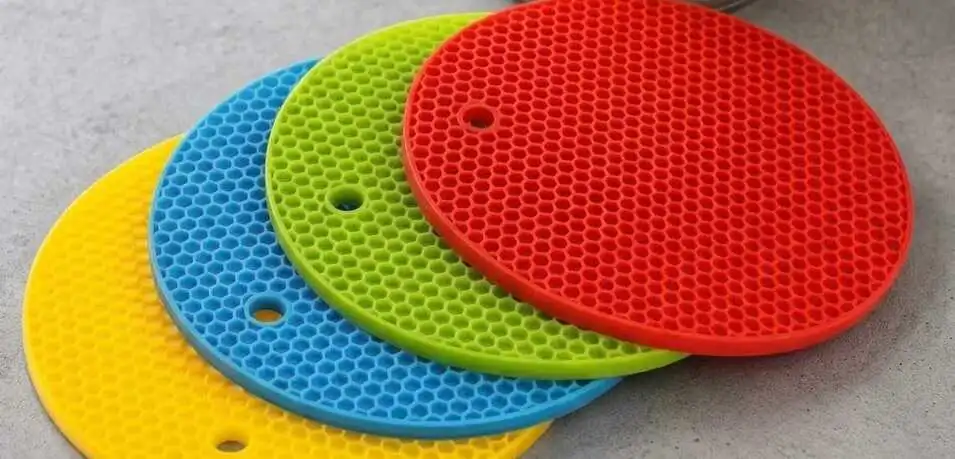
- Textured or honeycomb pads: extra grip for pots, lids and jars
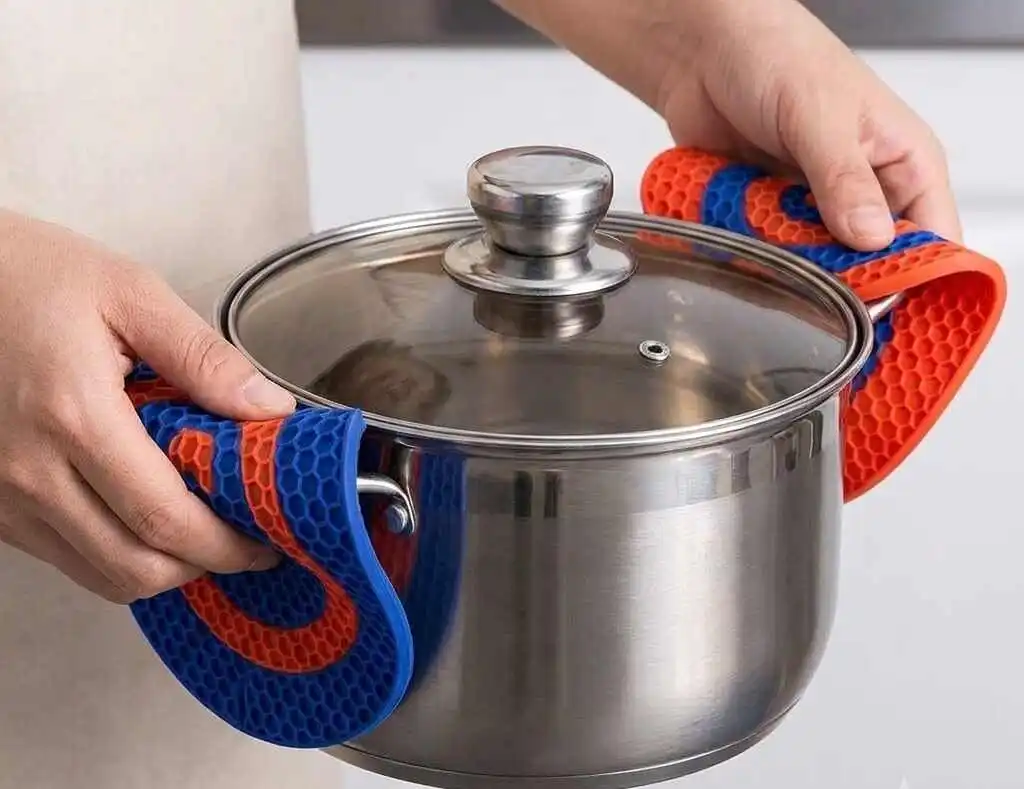
- Silicone pot holders with a fabric lining or pocket: useful when you need to lift as well as rest
- Small round pads: handy under teapots and air fryer baskets
Features and set sizes worth comparing
A hanging loop or hole makes storage easy and keeps the pad dry between uses. Multi-packs usually cost less per pad, and mixing one large and one small pad covers most kitchens.
Price tends to follow thickness and material quality, so a very cheap pad is worth a closer look before you buy.
Test it the day it arrives
Smell it first. Good silicone is nearly odourless, while a strong chemical smell may point to lower-grade material.
Then bend and pinch it. A popular home check is that quality silicone springs back and keeps its colour, whereas filled silicone can turn white at the stress point. It’s a rule of thumb rather than a lab test, but a pad that fails it isn’t worth keeping.
What Are Silicone Hot Pads and How Do They Work?
Silicone hot pads are heat-resistant mats made from silicone rubber, a polymer built on a chain of alternating silicon and oxygen atoms. That bond stays stable at temperatures where many other rubbers break down, which is why silicone turns up in everything from bakeware to industrial heating equipment.
In the kitchen, a pad does two jobs. It slows the heat travelling from your cookware to the countertop, and its soft, textured surface stops the pot sliding around. Many also work as silicone trivets, jar grippers or drying mats, so one pad often replaces several single-purpose tools.
Not every pad is pure silicone, either. Some silicone pot holders add a quilted fabric lining or a pocket for your hand, so you can pick up a hot dish as well as set it down.
It helps to know which type you are buying. A pure silicone pad is one solid piece and is easy to wash. A silicone-coated or fabric-lined pad, with fibreglass or cotton inside, can hold water and take longer to dry, so check the care label before soaking it.
How Hot Can Silicone Hot Pads Get?
Silicone rubber is commonly rated for continuous use up to about 230°C (446°F), and that’s the figure printed on most kitchen products. A few makers advertise higher numbers, such as 260°C (500°F), but those are manufacturer claims rather than a shared standard. Treat the label on your own pad as your guide.
A heat rating tells you when the pad itself would start to suffer. It doesn’t tell you how much heat gets through to what’s underneath. Thickness, how long the pot sits there and the finish on your table all play a part. A thin pad under a roasting dish fresh from the oven can still leave a mark on a delicate wood finish.
A few limits are worth remembering:
- Keep silicone hot pads away from gas flames, electric coils, broiler elements and grill grates
- Don’t use a flat pad in place of oven mitts when you lift hot handles
- Keep the pad dry, since steam and water can carry heat to your hand quickly
Oven, microwave and freezer use
Within its heat rating, a good pad can sit in the oven or microwave, for example under a dish on a rack. Most silicone also stays flexible in the cold, often down to about -40°C (-40°F), so many pads are fine in the freezer. Always confirm this on the label of your own pad.
Which surfaces need the most protection?
Polished wood, laminate and glass tabletops mark or crack most easily. Quartz and granite counters can also be damaged by a sudden jolt of heat, even though they feel tough. Use a thick pad under anything straight from the oven.
Can you put a silicone hot pad on a stovetop?
Rest a pad on a cooled cooktop if you like, but never place it on a burner or element that is on or still hot. Glass and induction tops stay hot after the pot is gone, and a pad left there can warp or stick.
Are Silicone Hot Pads Safe?
Safety for you and your food
Genuine food-grade silicone is stable and non-reactive, which is why it’s trusted in baby products, bakeware and food-industry tubing. With hot pads, food contact is usually incidental, so the bigger safety question is quality and use rather than chemistry.
Keep in mind that most safety and heat claims in this category come from the sellers themselves, and independent testing is limited. A well-known brand with clear labelling is a safer bet than an unbranded bargain.
The problem with filled silicone
Cheap pads are sometimes made with fillers to cut costs, a practice often reported in low-grade silicone products. Filled material tends to feel stiff, may smell, and can crack or turn sticky sooner.
A pad in that state no longer insulates well, which is exactly when tables get marked. If a price looks too good to be true, thickness and smell will usually tell you why.
Heat, steam and handling
Most kitchen burns linked to hot pads don’t come from the silicone itself. They come from using a thin pad as a hand guard, grabbing a pot over a wet pad, or lifting cookware by bare metal handles. Use dedicated silicone pot holders or mitts for lifting.
Silicone Hot Pads vs Cork, Wood, Metal and Ceramic Trivets
Silicone isn’t the only way to protect a table. The right pick depends on how you cook and how much care you want to give.
| Material | Strengths | Watch-outs |
| Silicone | Flexible, non-slip, wipes clean, often dishwasher safe | Quality varies; textured designs can hold water |
| Cork | Natural insulator and lightweight | Can absorb liquid, then crumble or stain over time |
| Wood or bamboo | Attractive and sturdy | Can scorch or dent under very hot pots |
| Metal | Very durable | Conducts heat, can scratch tables, usually needs feet to lift the pot |
| Ceramic or stone | Decorative and heat tolerant | Heavy and breakable |
For busy everyday kitchens, silicone trivets tend to win on convenience. Wood and cork suit people who prefer a natural look and don’t mind handling them gently.
Smart Ways to Use Silicone Hot Pads Beyond the Table
The grippy, heat-tolerant surface makes a pad useful well beyond protecting the dining table. Popular uses include:
- A grip pad for opening tight jars and bottles
- A base under a kettle, slow cooker, toaster oven or countertop air fryer
- A resting spot for a hot spoon or ladle beside the stove
- A coaster for hot mugs and teapots
- A drying mat for bottles and dishes
Check each use against the pad’s heat rating, and never let a pad block an appliance’s vents.
How to Use Silicone Hot Pads Safely
- Wash a new pad before first use to remove manufacturing dust
- Set it on a clean, dry, flat surface before putting down cookware
- Use one pad per pot, and pick one at least as wide as the pot base
- Keep it off open flames, broiler elements and hot grill grates
- Let it cool before storing it
- Keep hot pads out of reach of children and pets until they have fully cooled
- Under an air fryer, keep the pad clear of the vents so airflow isn’t blocked
How to Clean and Care for Silicone Hot Pads
Most pads are dishwasher safe, but check the label first. If not, warm soapy water does the job. Textured and honeycomb designs trap water, so shake them out and dry them fully.
For a greasy film, dish soap and a soft brush work better than harsh scrubbers, which can scuff the surface. Store pads flat, rolled or hung up, and avoid cutting on them.
Food stains and smells can cling to silicone. Tomato, curry and turmeric are the usual culprits. Scrub gently with a baking soda paste, rinse well and leave the pad to dry in the sun. That often lifts both the colour and the odour.
Why has my pad turned white or sticky?
A chalky film is often just soap or hard-water residue, and a rinse in diluted white vinegar usually clears it. A pad that turns white when flexed, or feels tacky after months of use, is a different story. Both can point to filler content or ageing material, and it’s time to replace it.
When to replace a pad
Retire any pad that is warped, cracked, bubbled, sticky or chalky white. A damaged pad insulates poorly, and replacing it costs far less than refinishing a scorched table.
Do You Still Need Oven Mitts?
Yes, in most kitchens. A flat pad protects surfaces, while mitts protect hands. The two jobs overlap only when a product is designed for both, such as lined pot-holder styles with a hand pocket.
If you want one tool to do both, look for a pad with a lined hand pocket and a textured grip. For anything coming straight out of a very hot oven, a full mitt still gives you more coverage.
Downsides of Silicone Hot Pads Worth Knowing
- They can attract lint, dust and pet hair
- Thin or low-quality versions let heat through
- Textured designs take longer to dry
- Silicone can be hard to recycle in many curbside programs
- A flat pad is not a replacement for oven mitts
Faqs
Are silicone hot pads safe?
Yes, when they’re made from food-grade silicone and used within their heat rating. Choose a thick, odourless pad from a clearly labelled brand, and keep it away from open flames.
What temperature can silicone hot pads withstand?
Most are rated up to about 230°C (446°F), though some brands claim higher. The rating on your own pad’s label is the number to trust.
Do silicone hot pads melt?
Good silicone doesn’t melt at normal cooking temperatures. Low-grade pads containing fillers can warp, bubble or crack, so thickness and quality matter.
Are silicone trivets better than wood or cork?
For grip, easy cleaning and flexibility, usually yes. Wood and cork can look more natural, but they scorch or absorb moisture more easily and need gentler care.
Can silicone hot pads go in the dishwasher?
Most can, which is one of their big advantages. Check the label, and shake out textured pads afterwards because the patterns hold water.
The Bottom Line
Silicone hot pads are practical, easy to clean and kind to your table, as long as you buy well and use them sensibly. The material is rarely the problem. Cheap, thin or filled pads, or pushing a pad past its heat limit, are where things go wrong.
Choose food-grade silicone, favour thicker pads from clearly labelled brands, and retire any pad that warps, cracks or turns sticky. Treat manufacturer heat ratings as a starting point, and use proper silicone pot holders for lifting. Do that, and a small, inexpensive pad will protect your counters for years.