If you have a raised, itchy scar that keeps growing, someone has probably told you to try silicone gel for keloids. It is one of the most commonly suggested starting points, it is easy to buy, and it carries few risks. The catch is that the marketing around it often runs well ahead of the research.
This guide explains what the studies actually show, where the evidence runs thin, and how to use silicone products sensibly. It is general information, not a substitute for a dermatologist’s advice, especially if your keloid is large, painful or spreading.
Key Takeaways
- Silicone gel for keloids softens and flattens keloid scars but rarely cures them.
- The research is encouraging, but small and short-term.
- Pooled trials show the clearest gain is in scar softness.
- It helps people with a history of keloids the most.
- Use it on fully healed skin for at least 12 hours a day.
- Gel is easier to stick with, and sheets can be reused.
- Side effects are uncommon and usually mild skin irritation.
- Keloids often return, so doctors usually combine treatments.
Silicone Gel for Keloids Is a Recognised First Step, Not a Cure
Start with the basics. A keloid is a scar that grows beyond the edges of the original wound and can become lobular. A hypertrophic scar is also raised, but it stays inside the wound boundary. Keloids are the tougher problem because they are more likely to come back after treatment.
Silicone sheeting was first used on burn scars in 1981, and doctors gradually began trying it on keloids and other raised scars. In 2001, an international advisory panel called silicone gel sheeting a viable first-line option for hypertrophic scars and keloids. A 2014 update to those recommendations again listed topical silicone among the leading choices.
Here is what silicone gel sheeting can realistically do. Reviews describe gradual improvement, with texture usually changing first, then colour, then height. Itching and tenderness often ease as well. Pooled trial data are less consistent on colour and height, as the next section explains.
What it does not do is erase a keloid. One evidence review states plainly that silicone gel sheeting does not tend to resolve keloids completely, although it can reduce their thickness and firmness.
The Research on Silicone Gel for Keloids Is Promising but Limited
A 1989 report in the British Journal of Plastic Surgery followed 18 patients with 22 keloid scars for six months. It noted better texture, colour and height. That was a small study, and its abstract describes no comparison group, so it points toward benefit without proving it.
Later reviewers have been cautious. One review that graded the keloid literature placed studies of topical silicone at level 2 on the Oxford evidence scale, a category that includes lower-quality randomised trials. It found no level 1 trials for keloid treatment at all. Studies of steroid injections sat lower, at level 4, which mostly means case studies and non-randomised work.
Follow-up time is the other weak spot. Most trials track patients for six months to a year, yet keloids can appear anywhere from six months to two years after an injury. A study that stops early can miss a recurrence.
The table below shows how much weight each kind of source deserves.
| Type of source | What it says | How much weight it carries |
| Small early studies | Improved texture, colour and height at six months | Suggestive, but limited by size and design |
| Guideline panels (2001, 2014) | Silicone is a reasonable first-line option | Expert consensus built on the studies available |
| Evidence-graded reviews | Level 2 evidence, no level 1 trials, short follow-up | Moderate-to-low confidence in the results |
| Pooled analyses of randomised trials | Clearest benefit is scar softness; other results are mixed | Stronger design, but few and small trials |
| Practitioner articles | Enthusiastic reports on newer products | Opinion; may involve industry ties |
What Do the Latest Pooled Trials on Silicone Gel for Keloids Show?
The most recent systematic review pooled eight randomised trials involving 464 people. Half of the trials looked at burn scars and half at surgical scars, and none was described as being specifically about keloids. Treatment lasted from two to six months.
Overall scar ratings, whether scored by doctors or by patients, did not differ significantly between silicone and comparison groups, and results varied widely from trial to trial. Height, colour and redness showed no clear difference either.
The clearest gain was in pliability, meaning how soft and flexible the scar feels. Scores for this were better with silicone gel, although only two trials measured it. Silicone also did better than doing nothing and than an onion-extract product in small subgroup comparisons. In two trials, adverse events were less frequent with silicone than with the comparison treatments.
Earlier pooled analyses paint a slightly different picture. One reported gains in height, colour and pliability, mostly in studies lasting longer than six months. Another found benefit but noted that most of its trials carried a high risk of bias. Taken together, silicone appears to help most with how a scar feels, treatment length probably matters, and the trial evidence remains small and short-term.
How Does Silicone Gel for Keloids Work?
Honestly, nobody knows for certain. The leading idea is hydration. Silicone forms a barrier that holds moisture in the outer skin layer, and that extra moisture may change the chemical signals passing between skin cells and the fibroblasts that build scar tissue. One laboratory study found that hydration alone lowered two of those signalling molecules, while silicone lowered only one.
Earlier work found no link between silicone’s effect and temperature, pressure, oxygen levels or silicone absorbing into the skin. Treat hydration as a working theory rather than settled science.
Who Gets the Most From Silicone Gel for Keloids
Reviews report that people with a history of hypertrophic scars or keloids respond to silicone, while people who scar normally get no benefit, not even faster healing. Silicone gel for keloids is not a general-purpose scar product for every cut or graze.
Keloids are more common in people of African, Hispanic and Asian ancestry. They favour high-tension areas such as the chest, back and shoulders, and the earlobes are another frequent site, particularly after piercing.
Timing matters too. Silicone should go on only after the skin has fully closed over. One review states that applying it straight after surgery, before the wound has healed, is ineffective. At the other end, the 2014 update to the international recommendations concluded that treating raised scars early beats waiting, whichever method is chosen.
Silicone Gel for Keloids: Gels, Sheets and Newer Products
- Silicone gel sheets: this is the form with the most research behind it, and the only one named in the 2001 panel recommendation. Sheets can be washed and reused, which keeps costs down over a two to three month course. The covering effect can irritate some skin.
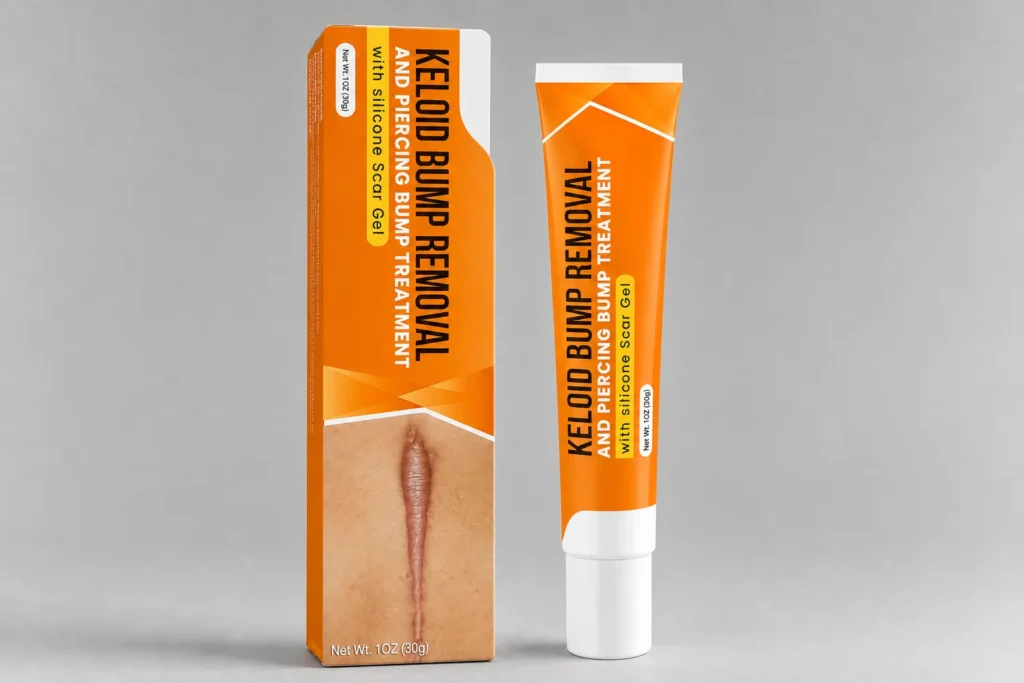
- Silicone gel: studies comparing the two suggest people stick with gel better because it is easier and more convenient to use. A few studies found no significant difference in results between gel and sheets. It dries clear within minutes.
- Film-forming and combination products: newer formulas dry into a thin film and are designed for fresh surgical wounds or skin treated with a laser. One dermatologist also describes a silicone oil and hypochlorous acid gel. These are practitioner reports, and the author discloses consulting work for a company that makes such products, so independent trials would be reassuring.
- Silicone with hydrocortisone: in a small comparison of 30 people, 7 of the 12 using one such lotion improved on the investigator’s assessment. That is an encouraging signal, but far too small to draw firm conclusions.
How Silicone Gel for Keloids Compares With Other Treatments
Because keloids often return, many clinicians combine more than one keloid treatment. The 2001 panel suggested pairing steroid injections with silicone for up to 12 months and, for keloids that resist treatment, surgical removal followed by silicone sheeting. The table summarises how the main options stack up.
| Treatment | What reviews report | Evidence notes |
| Silicone gel or sheeting | Softens and flattens scars, may ease itching, and has few side effects | Level 2 evidence; trials small and short |
| Corticosteroid injections | The most widely used keloid treatment in dermatology. They usually soften and flatten the scar and ease pain and itch. Skin thinning, visible tiny blood vessels and lighter patches were reported in up to 63 percent of treated lesions in one review | Level 4 evidence, mostly case studies |
| Cryotherapy with a steroid | One review suggested this pairing was the most effective at preventing recurrence | Suggestion from a single review |
| Surgical removal | Used for keloids that resist other treatment, usually followed by silicone or another therapy | Panel recommendation |
| Superficial radiation after removal | One dermatologist reports recurrence under 10 percent at one year | Conference abstract; preliminary |
| Fractional CO2 laser | One dermatologist reports flattening, with better results when treated early | Practitioner report |
| Other options (bleomycin, verapamil, imiquimod, pressure dressings) | Used in clinical practice | Few randomised trials |
The main advantage of silicone gel for keloids is its gentle safety profile. Side effects are few, and one review describes it as a good option for children who may not tolerate injections. Its main limit is that it works slowly and rarely finishes the job alone.
Silicone Gel for Keloids in Common Situations
Ear Keloids After Piercing
The earlobes are one of the most common keloid sites, especially after piercing. If you know you scar badly, silicone gel for keloids can be tried once the skin has fully closed. Pressure-based options are also sometimes used on ears, so ask a clinician which combination suits you. Treating early tends to work better than waiting, so it is worth seeking advice while the scar is still new.
Darker Skin Tones
Because keloids are more common in people of African, Hispanic and Asian ancestry, this group is a main audience for scar treatments such as silicone. Colour change is a frequent worry, but the evidence is mixed. One review credited silicone with helping pigmentation changes, while the latest pooled trials found no clear difference. It is best not to expect silicone alone to even out colour.
Children
One review calls silicone gel for keloids a suitable option for children who may not tolerate steroid injections, and one trial in the latest pooled analysis involved children with burn scars. A paediatrician or dermatologist should guide use.
How to Choose Silicone Gel for Keloids
Research cannot rank brands of silicone gel for keloids, and the shelves are crowded. These points are more useful than a brand name:
- Check the active ingredient: look for silicone itself. Products that add extras such as hydrocortisone, vitamin E or onion extract have less supporting evidence, and in trial comparisons silicone gel did better than an onion-extract product.
- Match the form to your routine: gel dries clear within minutes and many people find it easier to wear, while sheets are reusable but must stay in place.
- Think about the full course: treatment runs for months, so compare the cost over two to three months. Reusable sheets can lower it.
- Treat big promises with caution: nothing in the research supports claims that silicone will remove a keloid.
- Ask about film-forming gels after procedures: these newer products are designed for use after surgery or laser treatment, but the reports so far come from practitioners. Follow your clinician’s advice on timing.
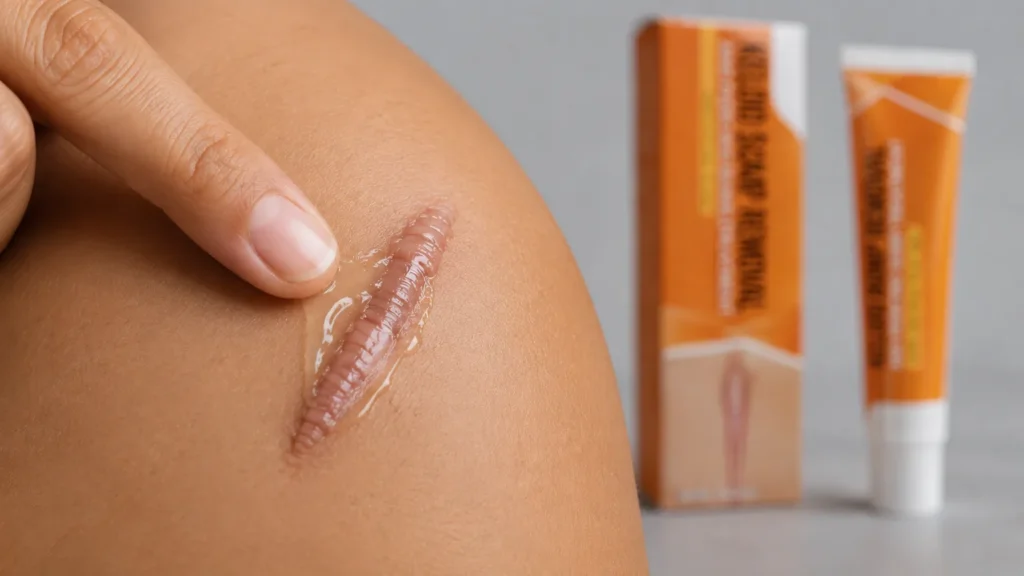
How to Use Silicone Gel for Keloids Safely
Here is a simple routine for using silicone gel for keloids at home.
- Check that the skin is fully closed, with no scab, open area or oozing.
- Clean the area gently and let it dry completely.
- Apply a thin layer of gel, or place a sheet, following the product directions.
- Aim for at least 12 hours a day. Regular daily use matters, because the benefit depends on consistency.
- Continue for around two to three months, then review progress with your doctor. Some treatment plans run longer.
- Wash reusable sheets as the instructions say, and replace them when they wear out.
- Stop and speak to a clinician if you develop a rash, blistering or worsening skin.
Is Silicone Gel for Keloids Safe? Side Effects and Precautions
For most people, yes. Reviews describe very few side effects, and the main one reported is mild local irritation caused by the covering effect of sheets. Even so, a few sensible precautions are worth following.
- Intact skin only: do not apply silicone to a scab, open wound or infected area. It is also ineffective until the skin has fully closed.
- Check the label: look through the ingredient list if you have allergies or sensitive skin, and try a small patch first.
- Watch for reactions: stop using it and speak to a clinician if you notice a rash, blistering, increasing redness or worsening itch.
- Take extra care in special cases: if you are pregnant or breastfeeding, or you are treating a child, ask your doctor or pharmacist first.
- Keep sheets clean: wash and dry reusable sheets as the instructions direct, and replace them once they wear out.
Silicone is not a substitute for a medical check. See a dermatologist sooner if your keloid is growing quickly, hurting, bleeding, breaking down or limiting movement near a joint.
Faqs
Does silicone gel for keloids really work?
It can help, mainly by making scars softer, flatter and less itchy. Pooled trials show the clearest gain is in softness. The research is limited and short-term, though, and silicone does not usually remove a keloid entirely.
How long does silicone gel take to work on keloids?
Reviews of silicone gel for keloids describe a regimen of about two to three months of daily wear, and the trials in the latest pooled analysis ran for two to six months. Texture tends to improve first. Individual results vary, and some plans continue for up to a year.
Can silicone gel shrink an old keloid?
It may reduce thickness and firmness, but complete resolution is uncommon. Older, mature keloids usually need a combined approach, and recurrence is more common than full clearance with every treatment.
Are silicone gel sheets or silicone gel better for keloid scars?
Neither has been shown to be clearly better. Silicone gel sheeting has more research behind it and can be reused, while gel appears easier to use consistently. The better choice is the one you will actually wear.
Can silicone gel prevent keloids after surgery or piercing?
Evidence suggests it helps in people who already have a history of keloids or raised scars, once the skin has fully closed. It offers no clear benefit if you scar normally. Ask your surgeon or doctor about timing first.
Does silicone gel have side effects?
Side effects of silicone gel for keloids are uncommon. Mild local irritation from the covering effect is the main one reported. Stop using it and ask a clinician if your skin becomes sore, blistered or rashy.
Bottom Line
Silicone gel for keloids is a low-risk, widely recommended first step, backed by guideline panels and decades of clinical use. It can soften, flatten and calm a scar, and the clearest trial evidence points to improved softness. The research behind it is modest in quality and short in duration, and it does not reliably clear a keloid on its own.
For most people the sensible approach is to start early on healed skin, use it consistently for several months, and talk to a dermatologist about adding another keloid treatment if progress stalls. This article is for general information and is not medical advice.