An EVA mould release agent is a coating applied to the mould surface so that parts made from ethylene-vinyl acetate (EVA) come out without sticking. The suppliers we reviewed mostly sell it as a water-based silicone emulsion that you dilute with water before use. This guide explains what the product does, the main types, how to choose one, how to dilute and apply it, and how to store it, so you can make a confident choice for your own process.
Key Takeaways
- A good EVA mould release agent forms a thin barrier film so cured parts leave the mould without tearing.
- Water-based silicone emulsions are widely used for EVA because they dilute with water.
- Dilution ratios vary by supplier and process, so always run a small trial before full production.
- Ask your supplier whether the product affects later gluing, painting or printing, and test it.
- Choose by mould temperature, mould type and finishing needs, not by price alone.
What an EVA Mould Release Agent Actually Does
Ethylene-vinyl acetate (EVA) is a copolymer of ethylene and vinyl acetate, and its softness and flexibility depend largely on the vinyl acetate content. That flexibility suits a shoe midsole, but soft material can cling to a hot tool.
EVA foam is usually made by blending the resin with a crosslinking agent, such as dicumyl peroxide, and a foaming system. The compound is then heated in a mould so it cures and expands. As it swells, the foam presses against every surface of the cavity, and that is where sticking starts.
An EVA mould release agent keeps the polymer from bonding to the mould. The aim is easier demoulding with fewer torn edges.
Where an EVA Mould Release Agent Is Used
EVA turns up in many everyday products, including flip-flop soles, yoga blocks and mats, foam sheets and children’s play mats. Moulded items such as soles depend on dependable demoulding, and that is why the right EVA mould release agent is rarely identical in every plant.
In footwear production, an EVA foam release agent has to work at production speed without marking the surface. In sheet and block foaming, the same EVA foam release agent also decides how clean the tool stays. Each setting may suit a different EVA mold release agent, which is why testing matters.
Main Types of Release Agent for EVA
The suppliers we reviewed all lead with water-based silicone emulsions for EVA, so these are the products you will meet most often. One supplier datasheet we reviewed describes a non-ionic, milky-white emulsion with a pH of 7 and an active content of ≥30%. Another EVA mold release agent listing describes a similar water-based silicone emulsion for EVA and general rubber moulding.
- Water-based silicone emulsion: a concentrate you dilute with water. It is the most common EVA mould release agent for foam and sole production.
- Water-based EVA series: one listing describes a range that mixes with ionized water and is meant to work across a wide range of mould temperatures and mould types.
How to Choose the Right EVA Mould Release Agent
Price matters, but fit matters more when you pick a release agent for EVA. Work through this checklist before you order drums of anything.
- Mould temperature: confirm the product suits your working range, as printed on its technical data sheet.
- Process: compression-moulded foam, injection-moulded parts and thin sheets may call for different dilutions.
- Finishing: if parts are glued, painted or printed afterwards, ask the supplier and run your own test.
- Surface look: if transparency or colour matters, check for whitening or marks on a test part.
- Cleanliness: look for an EVA foam release agent that keeps mould contamination low, and check this during your trial.
- Documents: request the technical data sheet and safety data sheet before buying.
- Samples: some suppliers offer them, so test before committing.
How to Dilute and Apply It, Step by Step
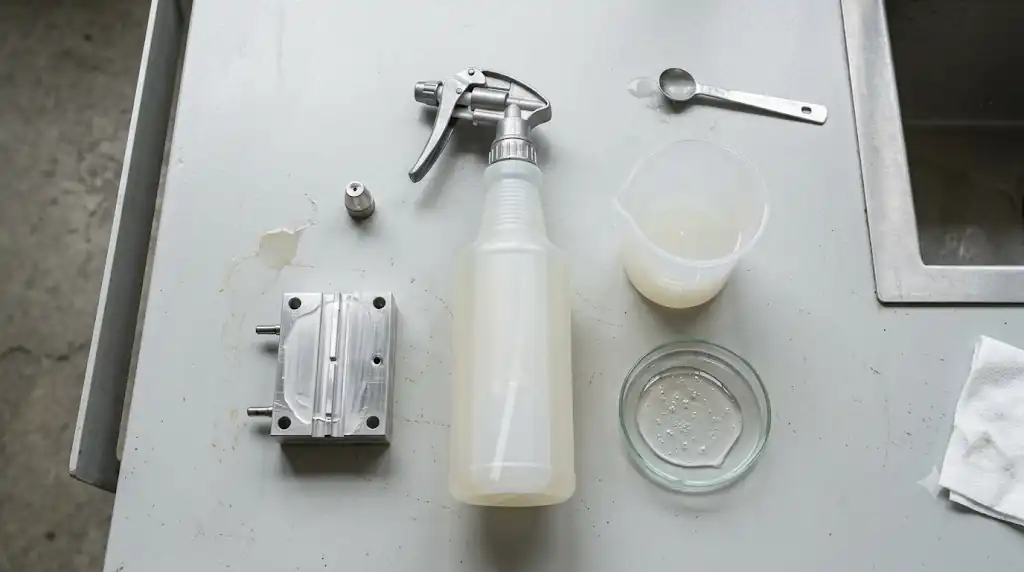
Dilution is where most trouble starts. One supplier suggests mixing its concentrate with water 10 to 25 times for EVA products leaving the mould, and 30 to 60 times for EVA foaming products. Other products differ, so treat those figures as an example, not a rule.
- Read the technical data sheet and the safety data sheet for your product.
- Dilute the concentrate with clean water at the recommended ratio, then shake gently.
- Test on a small batch first, as the supplier advises, before running full production.
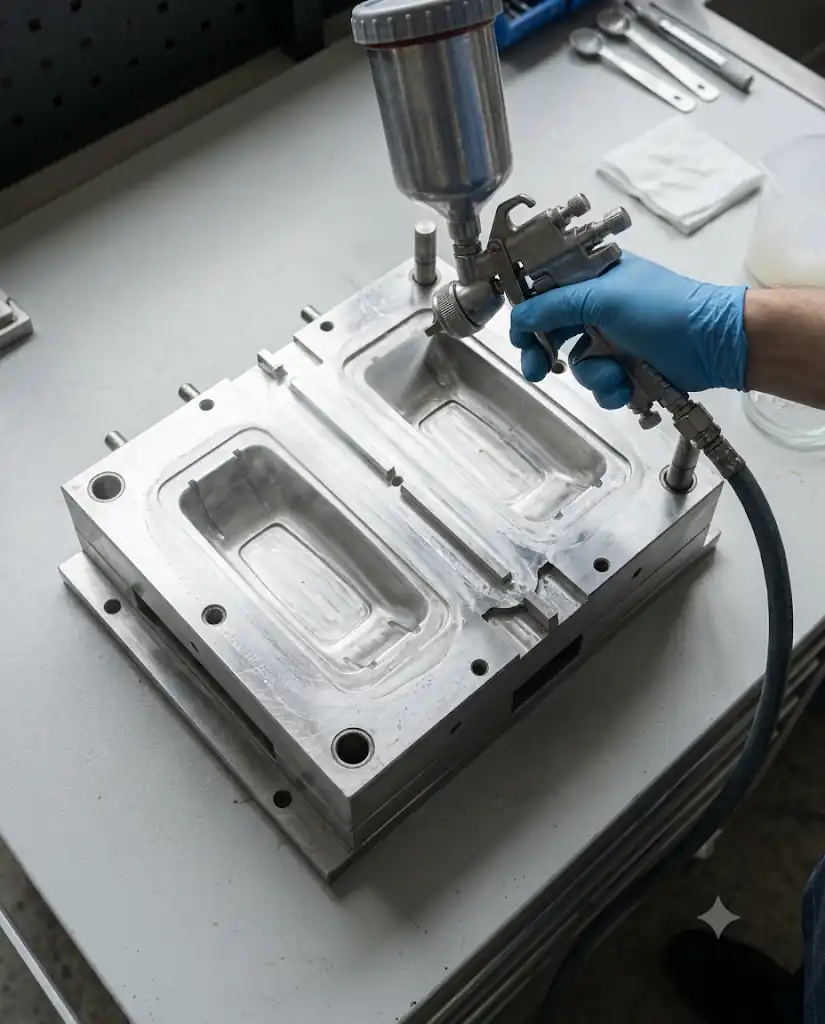
- Apply the diluted product evenly to the mould.
- Inspect the first parts for sticking and surface marks.
- Adjust the dilution in small steps and record what works.
Troubleshooting Checks
If parts still stick or show marks, work through these checks one at a time.
| Problem | What to check |
| Parts still stick | Compare your dilution with the data sheet, and confirm the mould is evenly coated |
| Marks or build-up on parts or tool | Review how much product you apply and how clean the mould is |
| Later gluing or printing fails | Run a bonding or printing test and speak to your supplier |
Change one thing at a time so you can see which adjustment actually helped.
Storage and Safety Basics
Storage advice for any release agent for EVA differs between suppliers. One lists a sealed storage range of 5 to 45°C with an 18-month shelf life, while another lists 0 to 40°C and one year. Follow the label on your product, keep containers sealed to avoid contamination, and keep them out of direct sun. Read the safety data sheet before handling the product.
Frequently Asked Questions
What is an EVA mould release agent used for?
It is a coating applied to the mould so cured EVA parts, such as foam soles and sheets, come out without sticking or tearing.
Can I use a silicone-based EVA mould release agent?
Yes. The suppliers we reviewed sell water-based silicone emulsions as a release agent for EVA. If parts are glued, painted or printed afterwards, ask your supplier and test first.
How much water should I add to an EVA mould release agent?
It depends on the product and process. One supplier suggests 10 to 25 times dilution for EVA demoulding and 30 to 60 times for foaming, but follow your own data sheet and run a small trial.
Why does EVA still stick after spraying?
There is no single cause. Check your dilution against the data sheet, make sure the coating is even, and test again on a small batch.
How should I store a water-based EVA mold release agent?
Keep it sealed and out of direct sunlight, within the temperature range on the label. Ranges and shelf life differ between suppliers, so the label is the final word.
Bottom Line
The right EVA mould release agent comes down to a few practical choices: a product that suits your mould temperature, a dilution you have tested, and a clean, thin application. Start with a sample, keep notes, and test how it affects any finishing you do afterwards. Do that, and demoulding gets faster, cleaner and far less frustrating.