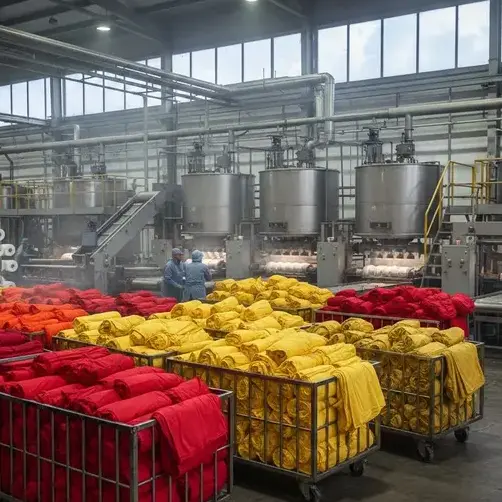
Red listed chemicals in textiles are hazardous substances identified by international sustainability standards and regulatory bodies as harmful to humans and the environment. These include toxic dyes, heavy metals, and persistent organic pollutants used in textile production. Why are these substances under such strict scrutiny?
Key Takeaways
- Red listed chemicals in textiles are restricted for safety and sustainability.
- Global frameworks like LBC, ZDHC, and REACH regulate their use.
- Common examples include azo dyes, phthalates, and PFCs.
- Compliance requires certified suppliers, testing, and process transparency.
- India is adopting global standards to achieve eco-friendly textile production.
What are red listed chemicals in textiles and why are they restricted?
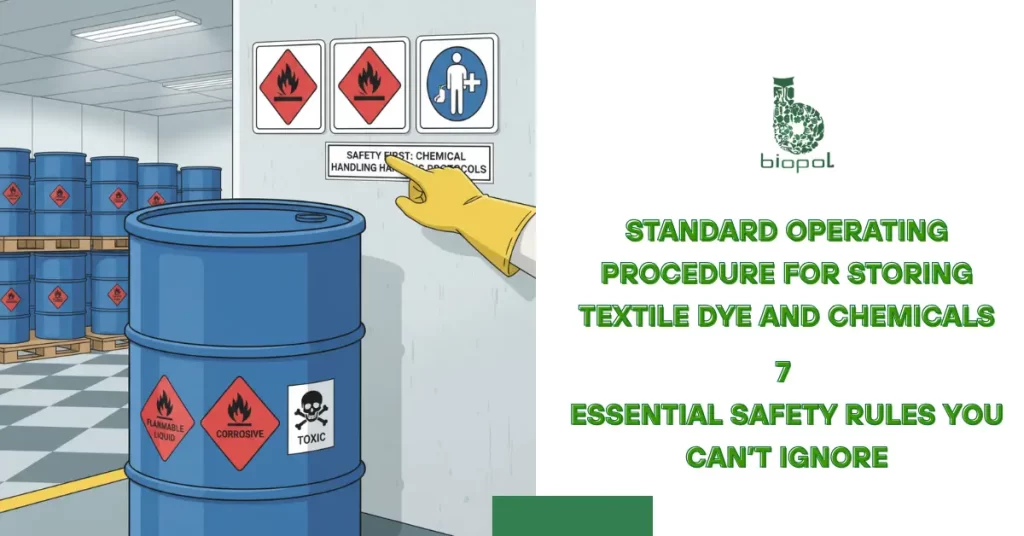
Red listed chemicals in textiles are substances classified as toxic, bioaccumulative, or environmentally persistent. They are restricted to minimize exposure risks and ecological damage.
Commonly restricted groups include:
- Azo dyes releasing carcinogenic amines
- Phthalates used in PVC coatings
- Perfluorinated compounds (PFCs) in water repellents
- Anti-crease finishing agents formulated with formaldehyde
- Restricted elements such as mercury, lead, and cadmium
Global frameworks such as the Living Building Challenge (LBC) Red List and the Zero Discharge of Hazardous Chemicals MRSL identify and regulate these substances.
How are red listed chemicals in textiles identified and categorized?
Regulatory bodies and environmental organizations categorize red listed chemicals based on toxicity, persistence, and bioaccumulation potential.
Key classification criteria:
- Human health risk: Carcinogenic, mutagenic, or endocrine-disrupting
- Ecotoxicity: Long-term aquatic or soil contamination
- Persistence: Slow degradation or bioaccumulation in organisms
Examples of classification sources:
| Framework | Purpose | Example Chemicals |
| LBC Red List | Construction & textiles | Lead, arsenic, PVC |
| ZDHC MRSL | Manufacturing restrictions | APEOs, PFCs, azo dyes |
| REACH SVHC | European regulation | Chromium VI, formaldehyde |
What are the key regulatory frameworks controlling red listed chemicals in textiles?
The following frameworks define and manage restricted chemicals across the global textile industry:
- LBC Red List (Living Future Institute): Outlines compounds harmful to both human safety and environmental balance.
- ZDHC MRSL: Lists banned substances for textile manufacturing to achieve zero discharge.
- REACH (European Union Regulation 1907/2006): Controls and limits the application of high-risk SVHCs across manufacturing industries.
- BIS along with CPCB: Ensure adherence to India’s environmental and product safety standards.
People also search for eco-certified textile standards such as OEKO-TEX®, GOTS, and bluesign®, which incorporate similar chemical restrictions.
Which red listed chemicals are most common in textile processing?
Key red listed chemicals found in textile manufacturing include:
- Azo dyes: Linked to carcinogenic aromatic amines
- Nonylphenol ethoxylates (NPEs): Harmful surfactants used in detergents
- Perfluorinated compounds (PFCs): Found in stain-resistant finishes
- Chlorinated solvents: Used in cleaning and degreasing processes
- Heavy metals: Employed in pigments and mordants
These substances persist through wastewater, posing health and environmental hazards.
How can textile manufacturers comply with red list chemical restrictions?
To ensure compliance, manufacturers can follow these best practices:
- Adopt chemical management systems aligned with ZDHC MRSL.
- Source certified inputs from chemical suppliers with transparent Safety Data Sheets (SDS).
- Conduct regular testing for restricted substances using accredited labs.
- Transition to eco-alternatives, such as water-based coatings and biodegradable surfactants.
- Maintain supplier traceability through digital compliance platforms.
What are the impacts of red listed chemicals on human health and the environment?
Exposure to red listed chemicals can cause:
- Skin allergies and respiratory issues from formaldehyde or azo dyes
- Reproductive toxicity due to phthalates
- Aquatic contamination from PFCs and surfactants
- Soil and water pollution from heavy metals
These stable substances disrupt environmental harmony and enter the food chain through ongoing accumulation.
What steps are being taken in India to eliminate red listed chemicals in textiles?
India’s textile industry is adopting global sustainability benchmarks through:
- Implementation of BIS eco-labeling schemes
- Participation in ZDHC and REACH-aligned programs
- Encouragement of green chemistry research and cleaner production technologies
Government-supported clusters and textile research institutes like Ahmedabad Textile Industry’s Research Association (ATIRA) promote sustainable dyeing, finishing, and wastewater treatment.
Conclusion
The elimination of red listed chemicals in textiles is essential for achieving safe, transparent, and sustainable production. As global frameworks evolve, manufacturers must align with zero-discharge initiatives and explore innovations such as nano chemicals for textiles for cleaner performance finishes and safer alternatives.
FAQ
What are the red listed chemicals?
They are toxic, persistent, or bioaccumulative substances restricted in manufacturing due to health and environmental hazards.
Which chemical is used in the textile industry?
Common chemicals include dyes, surfactants, resins, and finishing agents such as formaldehyde and softeners.
Which dyes are banned in textile?
Certain azo dyes releasing carcinogenic aromatic amines are banned under REACH and ZDHC guidelines.
What are the 12 technical textiles?
They include Agrotech, Buildtech, Clothtech, Geotech, Hometech, Indutech, Meditech, Mobiltech, Packtech, Protech, Sportech, and Oekotech.
Sources
https://atira.in/red-listed-textile-dyes/
https://living-future.org/red-list/
https://mrsl.roadmaptozero.com/MRSL1_1/index.php
https://textilefocus.com/restricted-substances-in-textile-processing-an-overview-of-toxicity-regulatory-frameworks-risk-management/