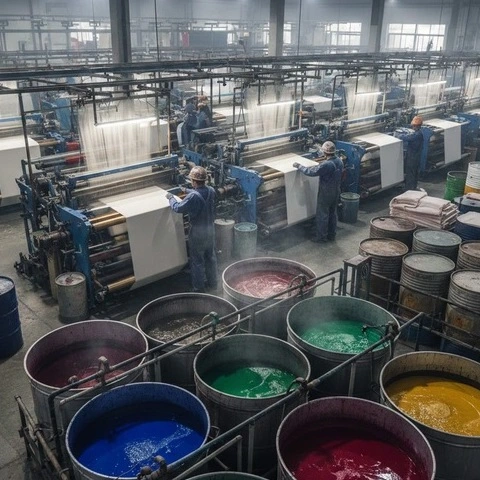
Textile Chemical Association India is an industrial organization that unites manufacturers, formulators, and users of textile chemicals to ensure standardized, sustainable production processes. It fosters technical exchange, regulatory compliance, and innovation in dyeing, finishing, and processing applications. Why is such an association essential? Because textile chemicals significantly influence fabric performance, environmental safety, and export competitiveness in India’s rapidly modernizing textile sector.
Key Takeaways
- Textile Chemical Association India promotes safe and sustainable textile chemical use.
- Membership includes corporate, institutional, and individual categories.
- It aligns Indian practices with global standards like REACH and ZDHC.
- Major bodies include TAI, ITTA, ISCMA, and regional associations.
- It drives innovation in smart and eco-friendly textile chemicals.
What is the role of Textile Chemical Association India in the textile ecosystem?
The Textile Chemical Association India acts as a bridge between chemical manufacturers, textile processors, and regulatory authorities.
Key roles include:
- Developing standardized practices for dyeing, printing, and finishing chemicals.
- Supporting eco-compliance through training on ZDHC Foundation and REACH frameworks.
- Facilitating R&D collaboration across academia and industry.
- Representing members in policy formulation and safety regulation committees.
How is Textile Chemical Association India structured and who can become a member?
Membership is open to chemical producers, textile processors, research institutions, and educational bodies.
Structure Overview:
| Category | Eligibility | Key Benefits |
| Corporate Members | Chemical & textile companies | Policy representation, networking |
| Institutional Members | Universities & R&D centers | Access to research, collaboration |
| Individual Members | Chemists, engineers | Certification programs, seminars |
To join, members must complete a formal registration process through the official website and pay applicable membership fees annually.
Which major textile chemical associations operate across India?
India hosts multiple organizations supporting the chemical-textile interface, including:
- Textile Association (India) (TAI) – India’s oldest textile professional body.
- Indian Speciality Chemical Manufacturers Association (ISCMA): A professional body emphasizing advancements in high-performance and specialty chemicals.
- Indian Technical Textile Association (ITTA): Focused on fostering development and collaboration in technical textile production.
- SRTEPC: Serves as India’s leading organization for promoting the export of synthetic and rayon textiles to global destinations.
A related context: textile chemical associations are often discussed alongside textile auxiliaries associations and industrial dye manufacturers’ forums.
What functions and key objectives define the operations of the Textile Chemical Association India?
Its primary objective is to maintain conformity of textile chemical products with international benchmarks and Indian industrial regulations.
Core objectives include:
- Encouraging sustainable manufacturing and reduced effluent discharge.
- Promoting research on eco-friendly dyes, finishing agents, and processing chemicals.
- Hosting technical seminars and certification workshops.
- Supporting testing laboratories to certify chemical formulations for safe use.
How does Textile Chemical Association India contribute to global compliance and sustainability?
The association actively supports members in aligning with international chemical and environmental norms such as:
- REACH (EU): A comprehensive chemical safety regulation overseeing registration and restriction to protect people and the environment.
- ZDHC: A collaborative framework helping manufacturers and brands adopt safer chemical practices and minimize environmental contamination.
- BIS (Bureau of Indian Standards) and MoT (Ministry of Textiles) guidelines.
It also provides training on eco-label certifications and wastewater management practices, helping industries improve sustainability scores and market reputation.
Where can companies find registration, membership, and contact information?
Most associations maintain online directories and digital registration systems.
Quick Access Points:
- Regional Directory: Surat Textile Association for localized industry collaboration.
- Membership Enquiry: Details about membership fees, forms, and contact numbers are provided under the “Join Us” or “Membership” sections of respective sites.
How does Textile Chemical Association India support industry innovation and digital transformation?
The association promotes R&D in smart textiles, bio-based chemical formulations, and digital coloration systems.
It collaborates with textile parks and innovation clusters to integrate advanced technologies like:
- AI-based color prediction tools.
- Smart chemical dosing systems.
- Digital traceability for chemical sourcing and compliance.

Conclusion
Textile Chemical Association India is central to modernizing India’s textile chemical sector through sustainability, compliance, and innovation. Its collaborative structure enhances knowledge sharing and quality benchmarking across the industry. For detailed insight into downstream processes, explore the operation sequence of textile chemical processing, which complements the association’s objectives.
FAQ
Which is the no. 1 textile industry in India?
Tamil Nadu is recognized as India’s leading textile manufacturing state, contributing the largest share to production and exports.
What are the 7 textile parks in India?
They include parks in Gujarat, Maharashtra, Tamil Nadu, Andhra Pradesh, Telangana, Madhya Pradesh, and Uttar Pradesh under the PM MITRA initiative.
What are the 12 types of technical textile?
Technical textiles are broadly grouped into twelve specialized sectors: Agrotech, Buildtech, Clothtech, Geotech, Hometech, Indutech, Meditech, Mobiltech, Oekotech, Packtech, Protech, and Sportech.
How can companies become members of the Textile Chemical Association India?
Through online registration and payment of membership fees as specified on the official website.
What benefits do members receive?
Access to industrial reports, networking events, compliance updates, and technical certification programs.
Sources
https://www.textileassociationindia.org/
https://ittaindia.org/
https://textileassociationindia.com/tai-2/
https://iscma.in/
https://www.pib.gov.in/PressReleaseIframePage.aspx?PRID=1812490
http://rtma.in/all-india-textiles-and-related-organisations.asp