The textile chemical manufacturers association is an organized body that governs, supports, and represents producers of textile processing chemicals and auxiliaries. It ensures alignment with international standards, sustainability frameworks, and industrial policy compliance. How does it influence India’s global textile leadership?
Key Takeaways
- The textile chemical manufacturers association is central to industry governance.
- Key associations include ISCMA, DMAI, and the Textile Association (India).
- Membership ensures compliance, training, and trade opportunities.
- Sustainability, green chemistry, and digital transformation are future priorities.
- India’s associations position it as a leader in global textile chemical manufacturing.
What Is the Role of the Textile Chemical Manufacturers Association in India?
The association serves as the coordinating entity for companies involved in textile chemicals, dyes, and auxiliaries. Its key functions include:
- Promoting industrial growth through technical and trade collaborations
- Facilitating dialogue between government agencies and manufacturers
- Setting safety, environmental, and quality standards
- Organizing training, symposiums, and research initiatives
Major organizations include the Indian Speciality Chemical Manufacturers’ Association (ISCMA) and the Textile Association (India).
Which Are the Main Textile Chemical Manufacturers Associations in India?
India has several associations governing various chemical segments:
| Association Name | Primary Focus | Location |
| Indian Speciality Chemical Manufacturers’ Association (ISCMA) | Specialty and performance chemicals | Mumbai |
| The Textile Association (India) | Textile education, technology, and chemistry | Mumbai |
| Dyestuffs Manufacturers Association of India (DMAI) | Dyes and intermediates | Mumbai |
| Convention on Colorants (India) | Sustainable colorant and pigment practices | Gujarat |
These associations form a collaborative framework ensuring regulatory, environmental, and technological advancement.
Who Are the Key Members of the Textile Chemical Manufacturers Association?
Typical members include:
- Producers of textile auxiliaries (e.g., Fineotex Chemical Ltd., NCTexchem)
- Dye manufacturers (e.g., Bodal Chemicals, Kiri Industries)
- Specialty chemical suppliers (e.g., Pure Chemicals Co.)
- Research and testing institutes
Membership provides access to industry data, R&D collaborations, and regulatory compliance updates.
How Does the Association Support Sustainability and Compliance?
Associations drive eco-friendly production and compliance through:
- Promoting zero-discharge manufacturing practices
- Encouraging use of biodegradable auxiliaries and non-toxic dyes
- Adhering to REACH, ZDHC, and BIS standards
- Conducting audits to ensure wastewater and effluent control
These efforts align with India’s sustainability goals under the National Textile Policy.
What Are the Benefits of Joining a Textile Chemical Manufacturers Association?
Membership offers both technical and commercial advantages:
- Access to policy updates and global trade forums
- Networking with allied industries and academic institutions
- Participation in national conferences and exhibitions
- Joint research opportunities in color chemistry and process innovation
- Recognition under government certification programs
How Do These Associations Influence the Indian Textile Chemicals Market?
They act as catalysts for growth by improving standardization and export competitiveness. For instance:
- Standardizing product formulations for international markets
- Enhancing visibility in global exhibitions like ITMA and Techtextil
- Assisting members in obtaining export licenses and eco-certifications
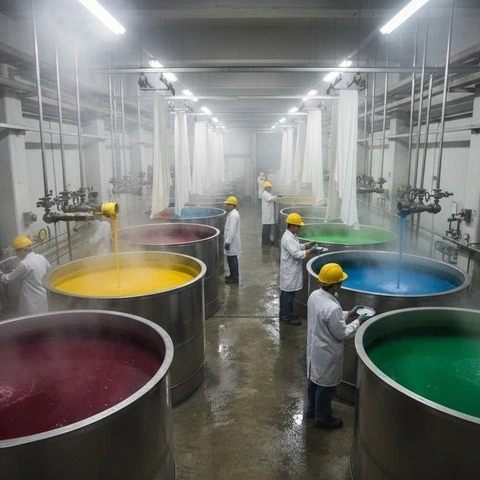
Textile chemical liquid compounds are often discussed alongside textile auxiliaries, finishing agents, and performance polymers used in dyeing and printing.
What Is the Future Outlook for Textile Chemical Associations in India?
Associations are expected to focus on digital certification, AI-based process monitoring, and green chemistry. With increasing foreign investment and government support for technical textiles, collaborative initiatives will become more data-driven and sustainability-focused.
Conclusion
The textile chemical manufacturers association ecosystem in India functions as the backbone of innovation, compliance, and industrial growth. These networks ensure alignment between manufacturing standards, sustainability goals, and export competitiveness. For detailed classification frameworks and regulatory documentation, refer to hsn code india for textile chemicals.
FAQ
What is the main purpose of a textile chemical manufacturers association?
To coordinate policy, technology, and quality standards among textile chemical producers.
Which associations represent textile chemical manufacturers in India?
Major ones include ISCMA, DMAI, and the Textile Association (India).
How do associations help in environmental compliance?
They enforce zero-discharge norms, promote eco-friendly materials, and conduct audits.
Who can become a member of such associations?
Manufacturers, exporters, researchers, and academic organizations related to textile chemistry.
What benefits do members receive?
Networking, access to technical training, government representation, and market data.
Sources
https://www.textileassociationindia.org/
https://iscma.in/
https://fineotex.com/textile-chemicals/
https://nctexchem.com/
https://www.marknteladvisors.com/research-library/india-textile-chemicals-market-analysis.html
https://conventiononcolorants.org/dpmai/
https://www.pure-chemical.com/performance-chemicals/textile-chemicals
https://www.techsciresearch.com/report/india-textile-chemicals-market/3746.html