A floor needs to handle regular foot traffic, furniture, moisture, stains, and impact. In factories and warehouses, floors may also face heavy machinery, chemicals, and constant movement. The quality of the flooring material is important, but the materials used for fixing, preparing, repairing, and protecting the floor also affect its performance. This is where construction chemicals for flooring are used.
4 Key Takeaways
- Tile adhesives provide strong bonding between tiles and prepared surfaces.
- Waterproofing chemicals help protect floors from moisture and water damage.
- Epoxy and polyurethane coatings protect floors from wear, chemicals, and heavy use.
- Proper surface preparation is essential for durable and long-lasting flooring.
These products help prepare the base, fix tiles, control moisture, repair damaged surfaces, fill joints, and protect floors from wear. They are used in residential buildings, offices, hospitals, commercial spaces, warehouses, factories, garages, and other construction projects.
What Are Construction Chemicals for Flooring?
Construction chemicals for flooring are specially prepared materials used at different stages of floor installation and maintenance. They are available for concrete, tiles, stone, industrial floors, and other surfaces.
Common products include:
- Tile adhesives
- Waterproofing materials
- Epoxy floor coatings
- Polyurethane coatings
- Floor repair compounds
- Grouts
- Joint sealants
- Concrete surface hardeners
- Bonding agents
- Curing compounds
Each product has a specific use. Selecting the correct material depends on the type of flooring, surface condition, location, and expected level of use.
Also Read:Construction Chemicals
Types of Construction Chemicals for Flooring
1. Tile Adhesives
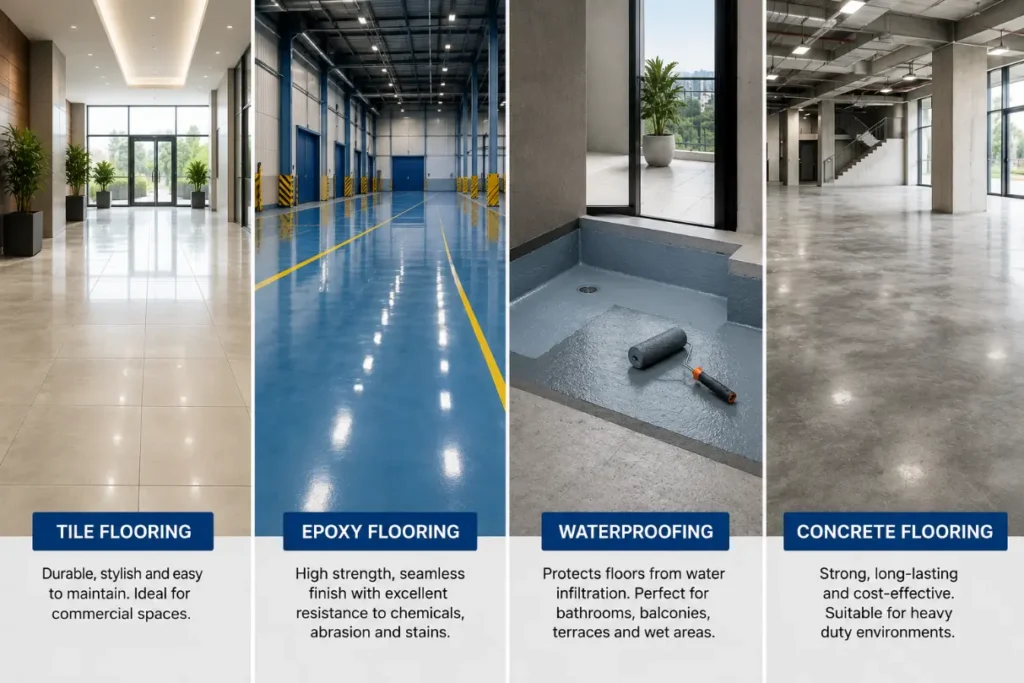
Tile adhesives are used to fix ceramic, porcelain, vitrified, and stone tiles to a prepared surface. They provide a strong connection between the tile and the floor.The right adhesive should be selected according to the tile size, tile material, substrate, and location. For example, floors in bathrooms and kitchens may require an adhesive suitable for areas exposed to moisture.
2. Floor Waterproofing Chemicals
Water is one of the common causes of flooring problems. Moisture can enter the floor through cracks, joints, or porous surfaces and may damage the flooring system over time.Waterproofing chemicals are used in bathrooms, kitchens, balconies, basements, terraces, and other areas where floors are exposed to water.These materials help reduce water penetration and protect the floor and the surface below it.
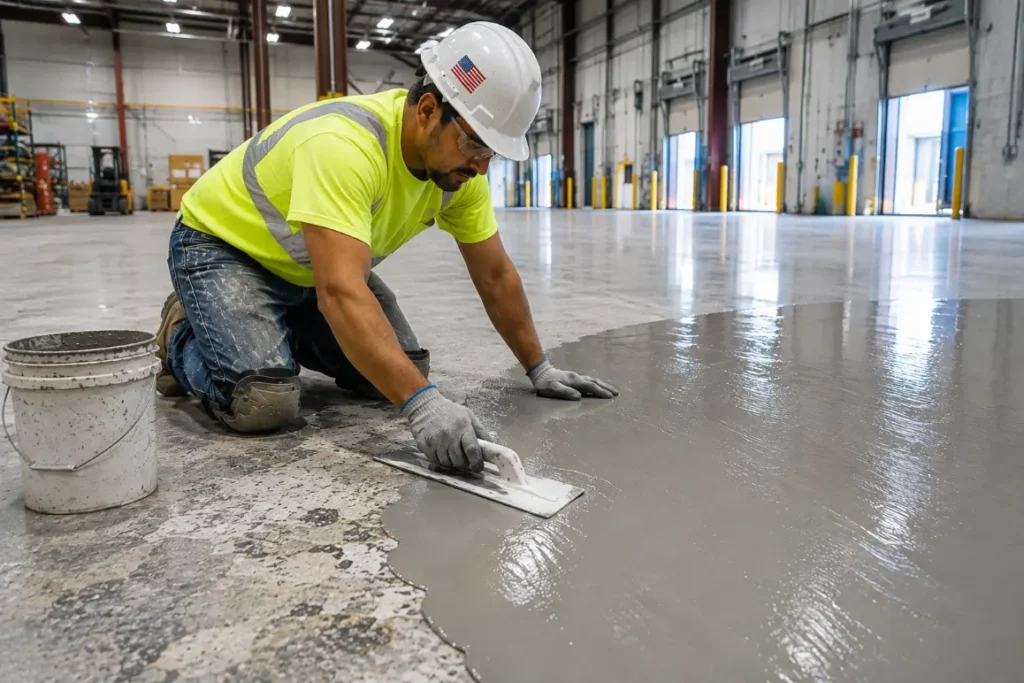
3. Epoxy Flooring Materials
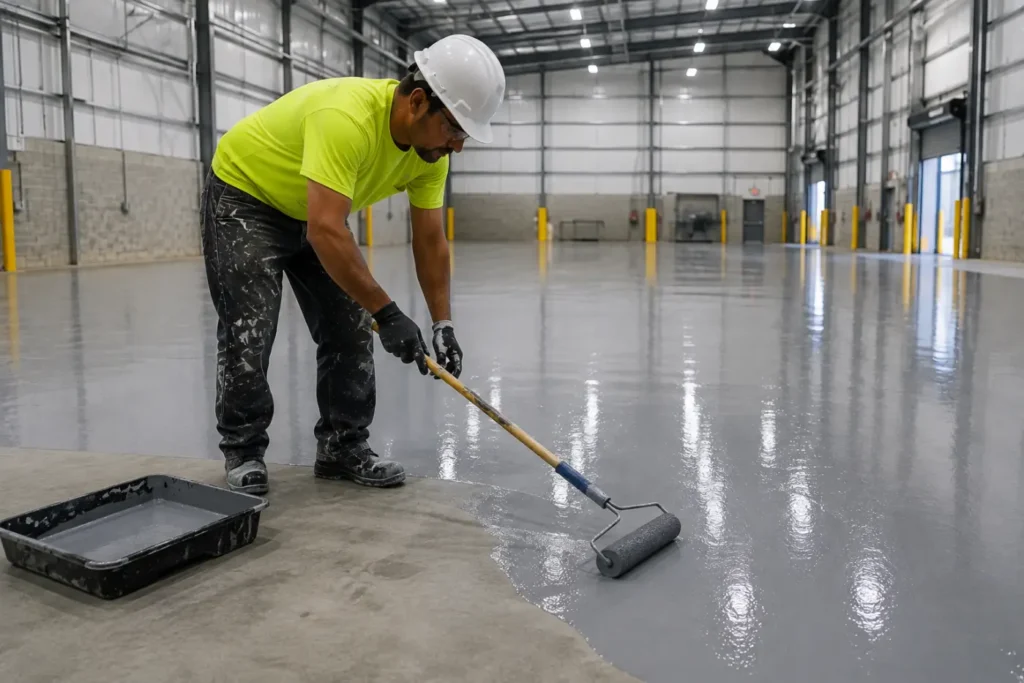
Epoxy coatings are often used for concrete floors in areas that receive heavy traffic or need resistance to chemicals and abrasion. After application and curing, epoxy forms a hard surface that can be cleaned easily.Epoxy flooring is commonly found in:
- Factories
- Warehouses
- Garages
- Workshops
- Laboratories
- Commercial kitchens
- Parking areas
The surface must be properly cleaned and prepared before applying epoxy.
4. Polyurethane Coatings
Polyurethane coatings are used to protect floors from wear, impact, and certain chemical exposures. They can also be suitable for areas where the floor experiences regular movement or changes in temperature. These coatings are used in industrial buildings, commercial spaces, workshops, parking areas, and other locations where concrete floors need additional protection.
5. Grouts and Joint Sealants
Grout fills the spaces between tiles and helps prevent dirt and moisture from collecting in the joints. Different types of grout are available for different flooring conditions. Joint sealants are used in gaps and joints where movement or moisture may be a concern. They can help protect these areas from water and surface damage.
6. Floor Repair and Leveling Compounds
The floor surface should be even and stable before installing tiles or applying a coating. Cracks, holes, uneven sections, and damaged concrete can affect the final flooring. Floor repair and leveling compounds are used to correct these problems. Proper surface preparation can help prevent cracking, tile movement, and coating failure.
Benefits of Construction Chemicals for Flooring
Using suitable construction chemicals can improve the condition and service life of a floor.
- Better tile bonding: Tile adhesives provide a firm connection between tiles and the substrate.
- Moisture control: Waterproofing materials help reduce damage caused by water and dampness.
- Surface protection: Epoxy and polyurethane coatings protect floors from regular wear, abrasion, and some chemical exposure.
- Easy cleaning: Smooth and properly finished floors are easier to clean.
- Repair support: Repair compounds can restore damaged or uneven surfaces before the final flooring is installed.
- Reduced maintenance: Proper preparation and protection can help reduce frequent repairs.
How to Select the Right Flooring Chemicals
- Choosing a flooring chemical should be based on the actual conditions of the project. Consider the type of flooring, substrate condition, indoor or outdoor location, moisture exposure, traffic level, and expected load.
- For tile installation, the adhesive should be compatible with the tile and surface. For industrial floors, resistance to abrasion and chemicals may be important. In bathrooms and other wet areas, waterproofing and suitable joint materials should be considered.
- Application instructions should also be followed carefully. Surface preparation, mixing, application thickness, drying time, and curing conditions can affect the final result.
Conclusion
Construction chemicals for flooring have an important role in floor installation, repair, and protection. Tile adhesives, waterproofing materials, epoxy coatings, polyurethane coatings, grouts, sealants, and repair compounds are used for different flooring requirements.
Choosing the correct product and applying it properly can help prevent common problems such as tile debonding, cracking, dampness, peeling, and surface wear. Whether it is a home, office, warehouse, factory, or commercial building, the right flooring chemicals can help create a floor that remains useful and durable for a longer period.
Also Read: Construction Chemical Products
Frequently Asked Questions
1. What are construction chemicals used for flooring?
Construction Chemicals for Flooring are used for tile fixing, waterproofing, floor repair, joint filling, surface protection, and preparation before installing flooring materials.
2. Which chemical is used for tile flooring?
Tile adhesive is commonly used to fix tiles. The suitable type depends on the tile material, size, substrate, and installation location.
3. Are construction chemicals useful for concrete floors?
Yes. for Construction Chemicals for Flooring epoxy coatings, polyurethane coatings, surface hardeners, repair compounds, and other materials can be used to protect and repair concrete floors.
4. Why is waterproofing important for floors?
Waterproofing helps reduce water penetration and can protect floors from dampness and moisture-related damage, especially in bathrooms, kitchens, balconies, and basements.
5. How do I choose flooring construction chemicals?
Construction Chemicals for Flooring consider the flooring type, substrate, location, moisture exposure, traffic, load, and expected environmental conditions before selecting a product.