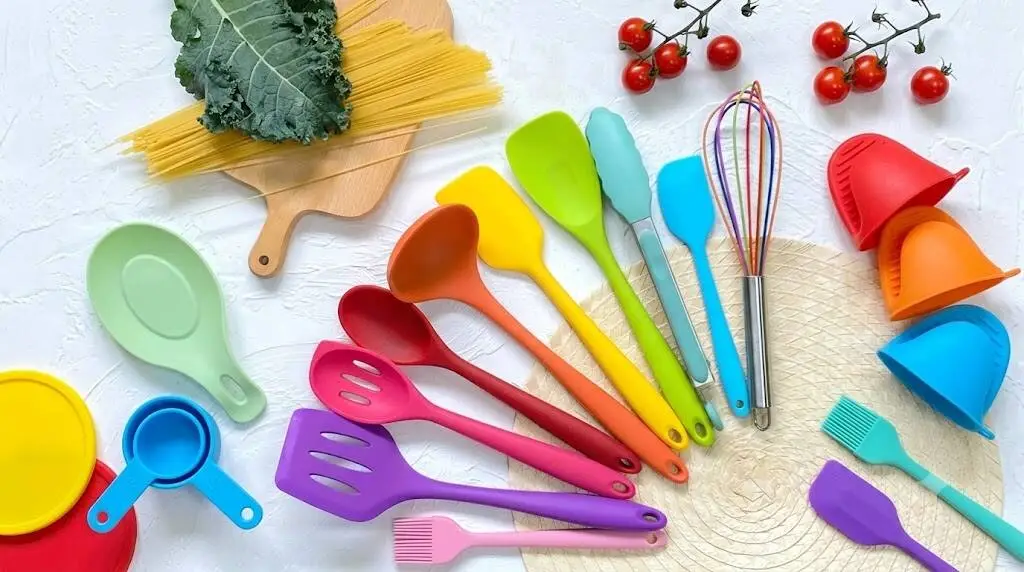
Silicone kitchen utensils are essential tools in modern home and professional kitchens, offering a safe, flexible, and heat-resistant alternative to traditional plastic or wooden cookware. The modern kitchen no longer uses the traditional wooden spoon and heat-sensitive plastic spatula due to advancements in the kitchen industry, where most utensils used are made of heat-resistant materials. A silicone kitchen utensil is a device used in cooking that is made of food-grade silicone, which is a man-made substance formed by natural elements like silicon, oxygen, carbon, and hydrogen. Replacing plastic tools with a certified silicone kitchen utensil helps eliminate the risk of harmful plasticizers leaching into meals.
Table of Contents
Performance Edge of Silicone Kitchen Utensils
Chemical Stability and Non-Reactive Nature
In molecular terms, silicone has an extremely strong backbone made up of silicon-oxygen bonds. The structure makes the substance resistant to chemicals; as such, it does not react with either acidic or alkaline substances, nor does it hold on to bad smells and stains. Silicone is flexible, and as a result, using the silicone kitchen tool will not damage your pans because of scratching or abrasion. Using food-grade silicone kitchen utensils provides a flexible, durable, and non-stick solution for everyday stirring, baking, and flipping.
Comparing Kitchen Utensil Materials
Some of the different types of common kitchen utensil materials are discussed here:
| Material Type | Heat Resistance | Surface Safety | Chemical Leaching Risk | Lifespan & Durability |
| Food-Grade Silicone | Very High (-40°C to 230°C+) | 100% Non-Scratch | Extremely Low (BPA & Phthalate-Free) | High (Does not warp or crack) |
| Thermoplastic / Plastic | Low to Moderate (Melts easily) | Non-Scratch | High (Risk of leaching under high heat) | Low (Prone to melting and cracking) |
| Hardwood / Bamboo | High (Thermal resistant) | Non-Scratch | Low (Natural material) | Moderate (Absorbs moisture; can crack) |
| Stainless Steel | Highest (Heatproof) | Can Scratch Non-Stick | Zero Leaching | Highest (Indestructible) |
Precautions & Guidelines for Safe Practice
Understanding the material science behind silicone kitchen utensils explain why they resists chemical degradation under extreme heat.
In order to achieve utmost safety and prolong the life of your tools, be aware of the following safety measures:
- Choose Certified Food-Grade Silicone: Make sure that your utensils conform to regulatory requirements as far as food contact goes (FDA or LFGB).
- Do Not Expose to Open Flames: Never subject silicone kitchen tools to direct flame exposure from gas, red-hot heating elements, or broilers.
- Keep Safe Temperature Limits: Consider safe temperatures provided by manufacturers in order to avoid degradation of tools due to high temperatures while frying.
- Clean Before Using First Time: Clean your new utensils thoroughly with warm soap solution before using them for the first time in order to get rid of manufacturing residue.
- Check for Damage: Do not use utensils that have significant cuts, tears on the surface or degradation that may enable food contamination.
Hygiene & Cooking Applications
The use of food-grade silicone utensils aids in maintaining kitchen sanitation and food safety. Since high-quality silicone is not porous, it does not harbor microbes that normally thrive in scratchy plastic and broken wood utensils. Also, its heat resistance makes it impossible for chemicals to leach out when using it for hot baking and acidic sauce making. Investing in high-quality silicone kitchen utensils protects delicate cookware while ensuring heat-safe food preparation.
Final Thoughts
For manufacturers and industrial producers looking to craft top-tier kitchen tools, choosing high-purity raw materials is vital for safety, compliance, and long-term product success. High-performance food-grade silicone polymers ensure high thermal resistance, chemical stability, and complete safety compliance.
As a trusted silicone manufacturer and supplier, Biopol Chemicals delivers premium-grade raw silicone materials and custom polymer formulations tailored for high-grade cookware, industrial tools, and specialty applications. Partner with Biopol Chemicals today to enhance your product durability, meet international food-contact compliance standards, and deliver reliable solutions to consumer markets.
Frequently Asked Questions
1. Can silicone kitchen utensils withstand high temperatures when cooking?
Yes, quality food-grade silicone utensils are made to withstand continuous cooking temperatures up to 230°C-250°C, without getting melted, warped, or emitting smoke.
2. How do I know that my silicone utensils contain low-quality fillers?
Just conduct the basic “pinch and twist” test – pinch any flat surface of your utensil and twist it a bit. If the stretched place gets white-colored, then your silicone has plastic fillers; otherwise, the product will keep its natural color.
3. Is it safe to put silicone cookware into a dishwasher?
Yes, the material is water-resistant, and the products are dishwasher safe for hundreds of washing cycles.
Also Read here