Silicone phone cases are popular protective accessories because silicone combines flexibility, grip, durability, and resistance to moisture and temperature variations.
From a chemical manufacturing perspective, silicone cases are engineered products whose performance depends on polymer structure, crosslinking, fillers, pigments, additives, and curing conditions.
Table of Contents
What Are Silicone Phone Cases?
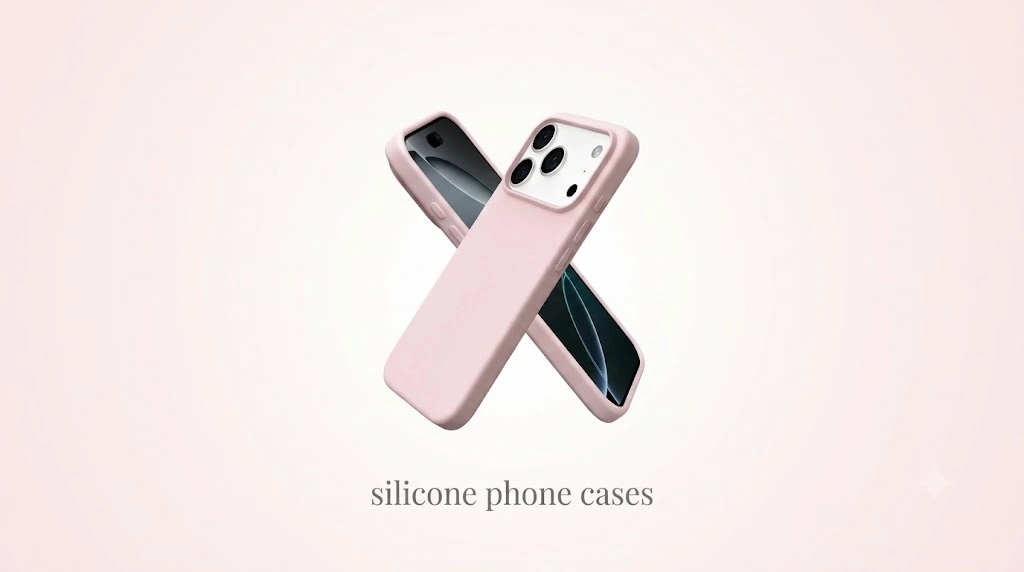
Silicone phone cases are protective covers manufactured from silicone elastomers and moulded according to the dimensions and features of individual smartphone models.
A commonly used silicone polymer is polydimethylsiloxane (PDMS), which contains a repeating silicon-oxygen backbone with organic groups attached to silicon atoms.
This molecular structure gives silicone its characteristic flexibility, elasticity, low surface energy, and useful environmental resistance.
Chemistry of Silicone Phone Cases
The basic repeating structure of PDMS can be represented as [–Si(CH₃)₂–O–]ₙ, although commercial phone-case compounds contain several additional ingredients.
Silicone elastomers form a three-dimensional polymer network through cross-linking during the curing process, which imparts mechanical strength and elasticity to the finished product.
Silica or other reinforcement fillers may be added for mechanical strength, and colours can be provided by pigmentation.
| Component | Primary Function |
| Silicone polymer | Forms the elastomeric matrix |
| Crosslinker | Creates the cured polymer network |
| Catalyst | Supports the curing reaction |
| Silica filler | Improves reinforcement and strength |
| Pigments | Provides colour |
| Additives | Modifies selected performance characteristics |
The final performance depends on the interaction between these components rather than silicone polymer alone.
Benefits of Silicone Phone Cases
1. Flexibility
Silicone elastomers can deform under pressure and recover their shape, allowing cases to fit closely around smartphones.
2. Comfortable Grip
The soft touch of silicone may lead to a comfortable grip and reduction in undesirable motion while handling.
3. Impact Protection
An adequately engineered silicone case may absorb some energy from normal impacts.
4. Resistance to Moisture
Silicones tend to be moisture-resistant and have low moisture absorption rates.
5. Temperature Resistance
Silicones offer good performance at varying temperatures in comparison to most flexible polymers.
6. Chemical Resistance
Most silicone-based formulas are resistant to environmental exposure and some selected chemicals; however, performance will depend on the particular formula.
7. Flexibility in Design
Silicones are available in different hardness grades, colors, textures, finishes, and geometry shapes.
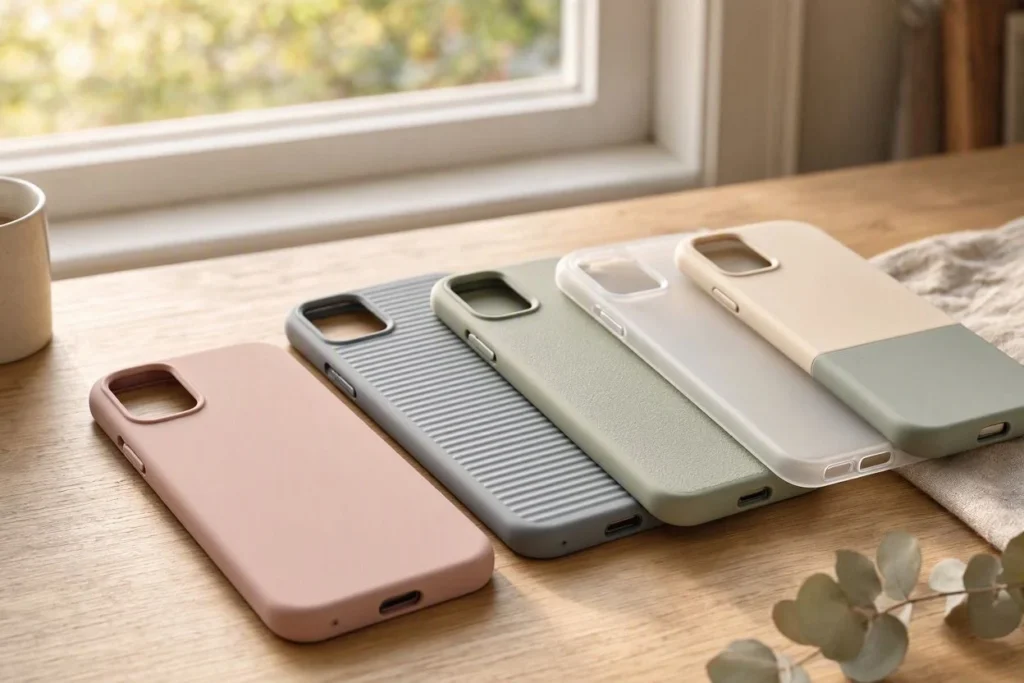
Silicone Phone Cases for Different Phone Models
Different smartphones require model-specific case designs because camera systems, buttons, charging ports, dimensions, and wireless charging features vary considerably.
| Phone Model Category | Design Considerations | Material Considerations |
| iPhone | Camera module and MagSafe compatibility | Flexibility and dimensional stability |
| Samsung Galaxy | Camera layout and selected S Pen features | Elasticity and precise moulding |
| Google Pixel | Distinctive camera bar design | Accurate fit and tear resistance |
| OnePlus | Model-specific camera arrangements | Flexible fit and durability |
| Xiaomi/Redmi | Multiple camera configurations | Cost efficiency and colour consistency |
| Motorola | Varying frame and camera designs | Elasticity and moulding precision |
A silicone manufacturer must therefore balance hardness, elasticity, tear resistance, dimensional stability, surface feel, and processing behaviour for each application.
Silicone vs Other Phone-Case Materials
| Property | Silicone | TPU | Hard Plastic | Rubber |
| Flexibility | High | High | Low–Medium | High |
| Grip | High | Moderate–High | Moderate | High |
| Soft-touch feel | Excellent | Good | Limited | Good |
| Elastic recovery | High | Moderate–High | Low | High |
| Impact cushioning | Good | Good | Variable | Good |
| Customization | High | High | High | Moderate |
The actual performance of every material depends on its grade, formulation, thickness, processing method, and final product design.
What Makes a High-Quality Silicone Phone Case?
The properties of hardness, flexibility, tear resistance, dimensional stability, surface quality, color dispersion, and processing of a good silicone rubber will be consistent.
Factors such as the molding process, thickness of the case, environmental effects, design specifications, and service conditions will also be considered by manufacturers.
Chemical companies will need to formulate their products due to the small changes in polymers, fillers, and additives that may affect the end product.
Conclusion
Silicone phone cases are an example of the synergy between polymer chemistry and engineering that is required to produce flexible, functional smartphone accessories.
In the case of the chemical manufacturer, the key to developing a consistent silicone composition is to control the polymers, fillers, cross-linking systems, pigments, additives, and process.
Proper selection of silicone can assist in producing a phone case that meets all the requirements of the customer.
Frequently Asked Questions
1. What type of silicone is used for phone cases?
Phone cases can use silicone elastomer systems based on polymers such as PDMS combined with crosslinkers, fillers, pigments, catalysts, and additives.
2. Can silicone formulations be customized for phone cases?
Yes, manufacturers can modify silicone formulations to achieve different hardness, elasticity, strength, surface characteristics, colours, and processing requirements.
4. How are your silicone raw materials optimized for high-volume manufacturing?
Our silicone compounds feature optimized cure catalysts designed for rapid cycle times and low shrinkage during injection or compression molding, ensuring tight dimensional tolerances and high tear resistance.
5. How do your raw formulations prevent dust accumulation and sticky degradation over time?
We incorporate specialized anti-static compounds and soft-touch surface additives during polymer synthesis to lower surface energy and eliminate lint attraction.
Also read: Silicone Lube