If you have ever stood by the microwave sniffing for the scent of burnt kernels, you already understand the appeal of a silicone popcorn popper. It is a small, collapsible silicone bowl with a fitted lid that pops loose kernels in the microwave without a bag, without added oil, and without the coatings found on many pre-packaged popcorn bags. Home cooks reach for it as a simple swap that cuts packaging waste, gives more control over ingredients, and turns plain kernels into a snack in a couple of minutes.
Key Takeaways
- This silicone popcorn popper uses trapped heat and steam to pop kernels without oil, a paper bag, or added coatings.
- Lid fit is the single biggest factor separating a reliable popper from a disappointing one.
- Compared with bagged microwave popcorn, this reusable bowl produces less packaging waste and gives you full control over oil and seasoning.
- Burnt kernels and unpopped duds are almost always caused by overfilling the bowl or using the wrong microwave time, not a defective product.
What Is a Silicone Popcorn Popper?
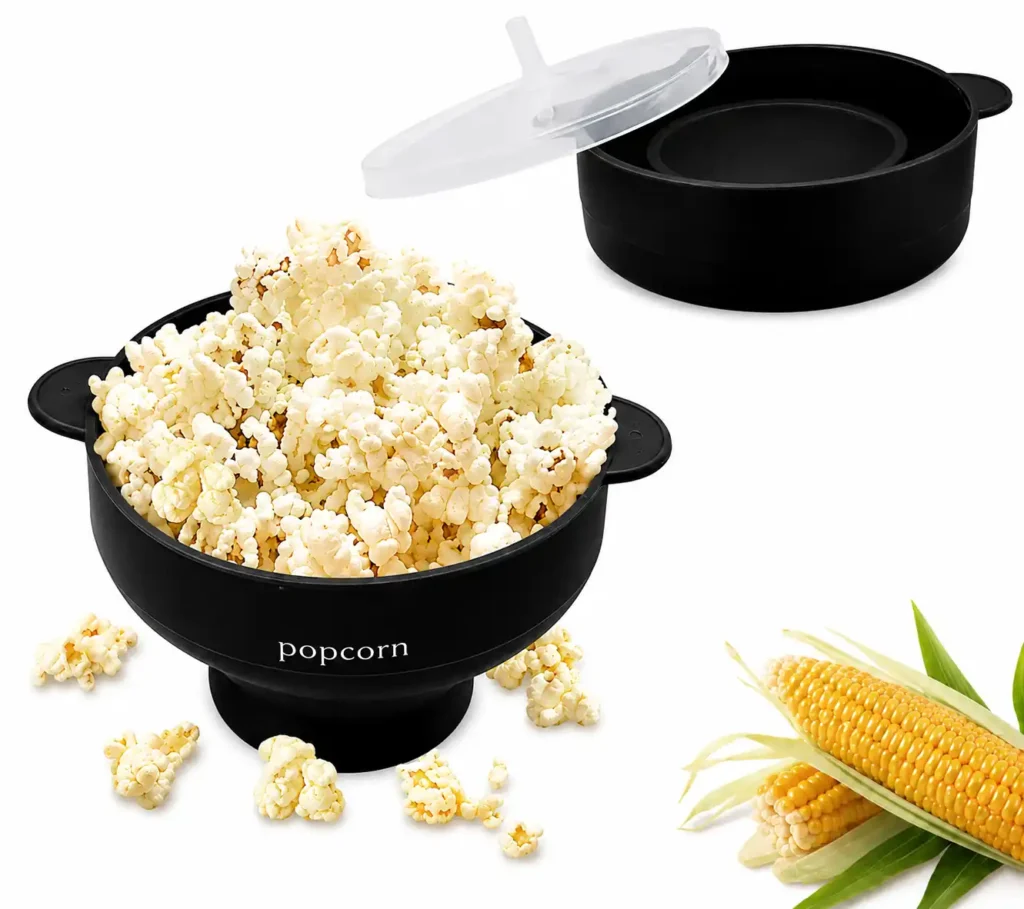
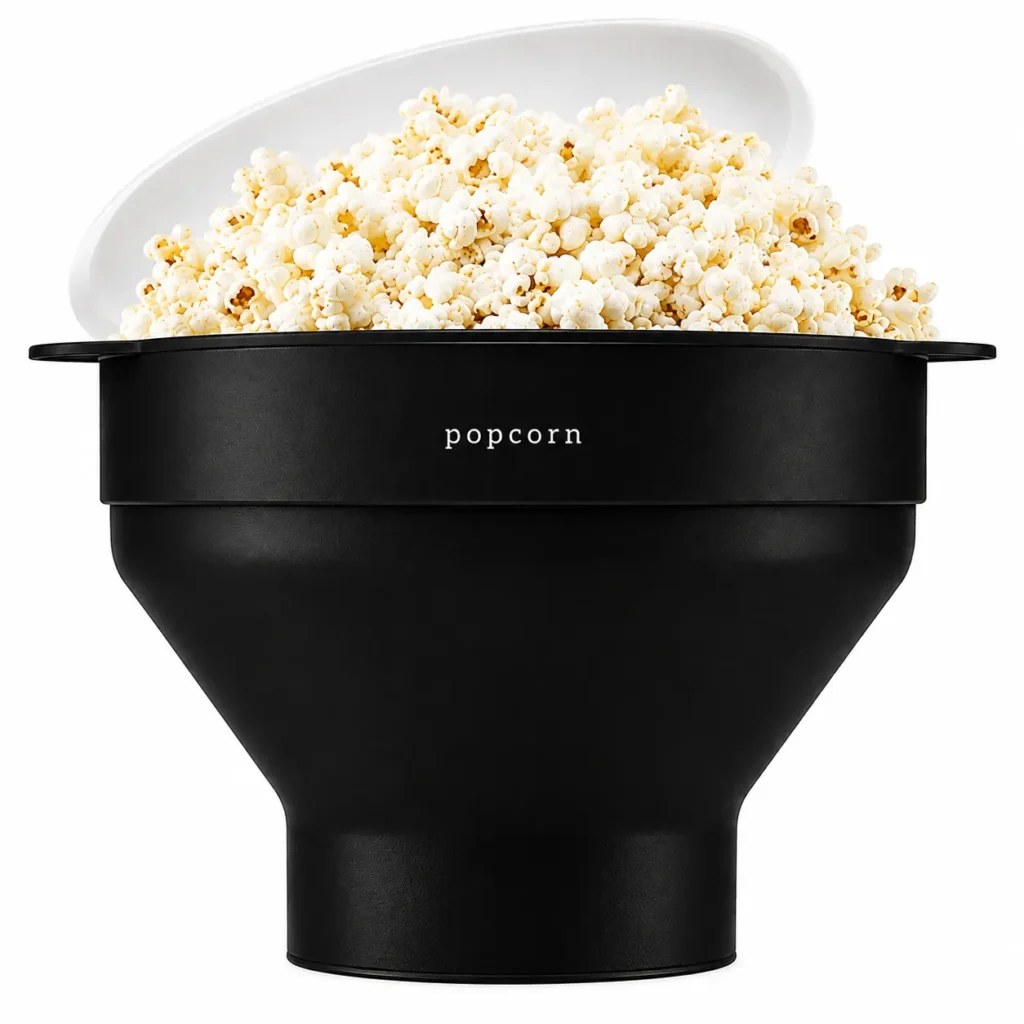
This silicone popcorn popper is a reusable, food-grade silicone bowl built specifically for popping loose kernels in a microwave. Unlike a paper popcorn bag, it has no coating, no pre-added oil, and no single-use packaging to throw away. Most designs collapse flat when empty, so they take up far less cabinet space than a rigid electric air popper.
The silicone popcorn popper bowl usually has measuring lines molded into the base, so you can portion kernels without a measuring cup, and it comes with a matching lid, either silicone or vented plastic, that traps steam while letting some pressure escape. That balance of trapped heat and controlled venting is what allows kernels to pop evenly instead of scorching in one spot.
How the Popper Works
The mechanism is straightforward physics rather than anything proprietary. Microwave energy heats the moisture inside each kernel until it turns to steam. Pressure builds inside the kernel’s hard shell until it ruptures, flipping the starchy interior inside out, which creates the familiar fluffy shape.
The bowl’s job is simply to hold the kernels in one layer, contain heat evenly, and give the popped corn room to expand without flying around the microwave. Silicone is heat-resistant and considered microwave-safe at typical popping temperatures, so the bowl needs no oil coating to function, unlike a stovetop pot.
How to Use the Silicone Popper
Getting good results on the first try is easy if you follow a few basic steps.
- Uncollapse the popper and set it on a flat, microwave-safe surface.
- Add loose kernels up to the fill line printed inside the bowl. Most models call for roughly a quarter to a third cup, which expands into several cups of popped corn.
- Place the lid on top. Skip oil or butter for now; that comes after popping.
- Microwave on full power for around two to three minutes, adjusting for your specific microwave’s wattage.
- Listen for popping to slow to about one pop every two to three seconds, then stop. Waiting for complete silence usually means burnt kernels.
- Remove it with oven mitts, since both the bowl and the trapped steam are hot.
- Season immediately while the popcorn is warm, since butter, oil, or spices stick better to hot kernels.
7 Benefits of a Silicone Popper
Reviewers and everyday users consistently point to the same handful of advantages.
Less packaging waste. A reusable bowl removes the need for a fresh paper bag every time you want a snack, appealing to households trying to cut single-use packaging.
No required oil or coating. Bagged microwave popcorn often relies on oils and non-stick coatings to work properly. This device pops kernels with heat and steam alone, so you decide afterward whether to add anything at all.
Full control over ingredients and portions. Buying loose kernels in bulk and portioning them yourself is usually cheaper per serving than individual bags, and it lets you adjust salt and seasoning to taste.
Compact storage. Because most collapse flat, they take up a fraction of the space of a rigid air popper or stovetop kettle.
Easy cleanup. With no oil baked onto the surface and no bag to discard, these bowls wipe clean quickly and most are dishwasher safe.
Doubles as a serving bowl. The same vessel you pop the corn in typically becomes the serving bowl, cutting down on dishes.
More consistent results over time. Once you learn your microwave’s ideal timing, this method tends to produce more evenly popped batches than a paper bag, which often burns unevenly at the corners.
Popper vs. Bagged Microwave Popcorn
| Factor | Silicone Popper | Bagged Microwave Popcorn |
| Packaging waste | Reusable bowl, minimal waste | New bag discarded every use |
| Added oils or coatings | None required | Often included |
| Ingredient control | Full control | Fixed by manufacturer |
| Cost per serving | Generally lower in bulk | Generally higher per bag |
| Prep time | About 2-3 minutes plus seasoning | About 2-3 minutes, ready to eat |
| Storage | Collapses flat | Boxes take pantry space |
Popper vs. Air Popper
An electric air popper and a silicone popper both skip the oil-heavy approach of stovetop or bagged popcorn, but the experience differs. An air popper typically will not let you add oil before popping, so seasoning happens entirely afterward, and some people find air-popped kernels chewier or drier.
The silicone version is usually small enough for a drawer, needs no dedicated countertop appliance, and lets you add a bit of oil directly to the kernels beforehand if you want richer flavor.
Neither is objectively better across the board. A dedicated air popper may suit someone who pops corn daily, while the collapsible option suits someone who wants an occasional snack without another appliance taking up counter space.
What to Look for When Buying One
Not every model on the market performs the same way, and the difference usually comes down to a short list of construction details.
Lid fit. This is the most frequently mentioned factor separating a reliable popper from a frustrating one. A loose lid lets too much steam escape, leading to uneven or burnt batches, while a snug lid traps heat consistently.
Wall thickness. Thin, flimsy silicone can sag or partially collapse under the pressure of popping kernels, especially in a full microwave. Sturdier material holds its shape through repeated use.
Size and capacity. Family-size models handle a larger batch at once, while smaller versions suit a single serving. Check the stated kernel capacity against how many people you typically feed.
Food-grade certification. Look for silicone explicitly labeled food-grade and BPA-free, the material standard reputable manufacturers use for anything that contacts food directly.
Common Problems and How to Fix Them
Even a well-made popper can disappoint if a few basic variables are off.
Burnt popcorn. Almost always caused by microwaving too long relative to your microwave’s wattage, which varies widely between kitchens. Start at the low end of the recommended time and adjust based on how quickly the popping slows next time.
Unpopped kernels at the bottom. This can come from overfilling past the fill line, stale kernels that have lost internal moisture, or stopping the microwave too early. Try a smaller batch and fresher kernels from a recently opened container.
A collapsing or sagging bowl. This points to thin walls being pushed past their limit, often from overfilling. Sticking to the recommended fill line resolves it in most cases.
Lid popping off mid-cook. A loose-fitting lid is again the likely culprit. If steam is visibly escaping around the edges rather than through a designed vent, the lid and bowl may not be well matched.
Is Silicone Safe for Microwave Use?
Food-grade silicone is widely used in bakeware and microwave-safe cookware because it tolerates typical home-cooking temperatures without melting or releasing the coatings found in some packaging materials. It is inert, meaning it does not react with food, and it needs no oil to prevent sticking the way metal cookware often does.
That said, silicone is not one single regulated material with a universal quality standard, so durability and safety depend on the specific product and manufacturer.
Choosing a model labeled food-grade and BPA-free, avoiding scorched or damaged bowls, and following the manufacturer’s stated time and temperature guidance are reasonable precautions rather than signs that silicone cookware is inherently risky.
Cleaning and Maintenance Tips
Since no oil is required to function, cleanup is typically far easier than scrubbing a stovetop pot. A quick rinse with warm soapy water removes most residue, and most models are labeled dishwasher safe for a deeper clean. Let it dry fully before collapsing it flat for storage, since trapped moisture in a folded bowl can lead to a musty smell over time. If greasy residue remains after seasoning with butter, a short soak in warm water before washing usually loosens it.
Faqs
How long do you microwave a silicone popcorn popper?
Most models need roughly two to three minutes on full power, though the exact time depends on your microwave’s wattage. Listen for the popping to slow down rather than relying on a fixed timer, since ovens vary.
Do you need oil in a silicone popper?
No. It is designed to pop kernels using heat and steam alone. Oil is optional and can be added to the kernels beforehand for flavor, or left out entirely and added afterward.
Is a silicone popcorn popper healthier than bagged microwave popcorn?
It lets you control exactly what goes into your popcorn, avoiding the oils, salt levels, and coatings pre-mixed into many bagged products. Whether the result is “healthier” depends on what you choose to add yourself, but it does offer more control than a pre-packaged bag.
How much popcorn does a silicone popcorn popper make?
Most standard models are designed for about a quarter to a third cup of kernels per batch, which typically expands into eight to twelve cups of popped corn, enough for two to four servings depending on portion size.
Why does my silicone popper burn the popcorn?
Burning almost always results from microwaving too long for your specific microwave’s power level. Start with a shorter cook time than the package suggests, listen for popping to slow to roughly one pop every two to three seconds, and adjust on the next batch.
Can you put butter in a silicone popper before microwaving?
Most manufacturers recommend popping the kernels first and adding butter or oil afterward, since butter can affect how evenly kernels heat and pop. Check your specific product’s instructions, as guidance varies between brands.
Is a silicone popper dishwasher safe?
Most are labeled dishwasher safe, though it is worth checking the manufacturer’s care instructions for your specific model, since lid materials can vary between silicone and vented plastic.
What is the difference between a silicone popcorn popper and an air popper?
One is a compact, collapsible silicone bowl used in the microwave, while an air popper is a standalone electric appliance that pops kernels using hot air on the countertop. The silicone version generally allows oil before popping and stores more compactly, while an air popper is oil-free by design and dedicated to one task.
Conclusion
A silicone popcorn popper is a genuinely practical upgrade for anyone who wants freshly popped, additive-free popcorn without buying a bag every time or investing in a dedicated countertop appliance. The mechanism is simple: contained heat and steam pop the kernels, and a well-fitted lid is what separates a satisfying batch from a burnt or uneven one. Most common complaints, from scorched kernels to a handful of unpopped duds, trace back to overfilling the bowl or misjudging microwave power rather than any flaw in the concept itself. When choosing a model, prioritize a snug lid, food-grade certification, and a capacity that matches how much popcorn you actually eat in one sitting, and this small silicone bowl should earn a permanent spot in your kitchen.