Not all silicone spatula sets are created equal, and if you’ve ever had one crack, peel, or go floppy after a year of use, you already know that. Most articles on this topic read like an ad for one specific brand — all upside, no downsides, no real explanation of what separates a set that lasts from one that falls apart. Here’s the honest version: what actually matters, what tends to go wrong, and how to pick a set you won’t be replacing next year.
What’s Actually in a “Set”?
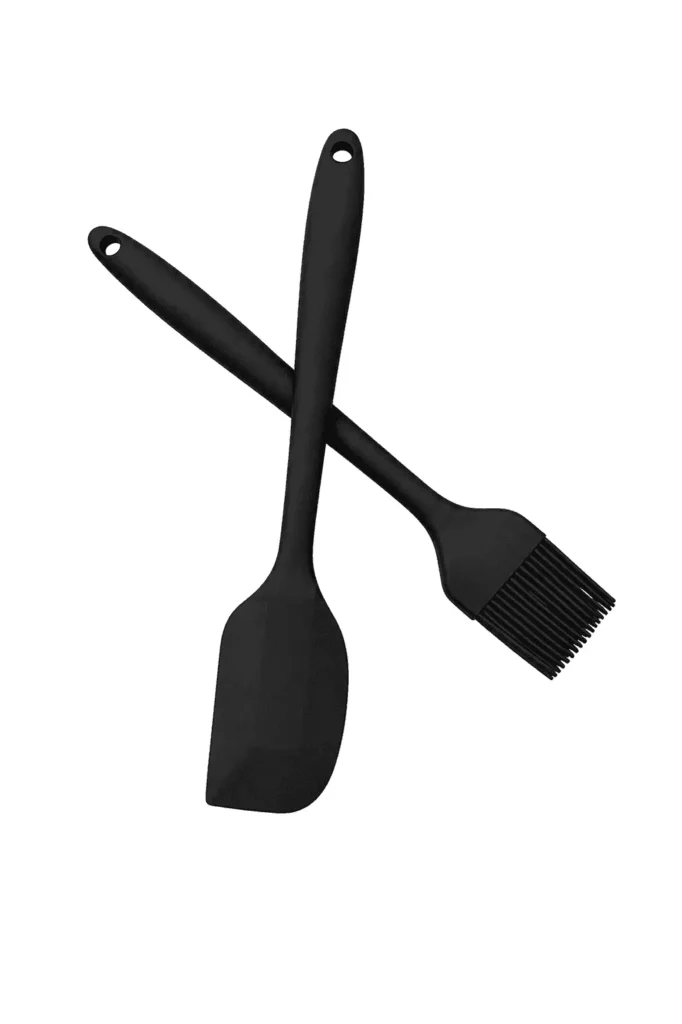
A silicone spatula set usually bundles a few different tools that each do a different job, and knowing the difference helps you judge whether a set actually covers what you need:
- Spatulas are straight-edged, built for baking and scraping — getting batter out of a bowl, cleaning the sides of a jar, folding ingredients together.
- Turners have an angled head, made for flipping food in a pan — eggs, pancakes, burgers.
- Scrapers are small and narrow, meant for getting into tight spaces like jar necks and bottle bottoms.
A lot of “sets” are really just spatulas in a few different sizes. If you cook on the stovetop regularly, make sure your set includes at least one real turner — a flat spatula edge won’t slide under a fried egg nearly as well as an angled one will.
Why Silicone Is Genuinely a Good Choice
- Handles serious heat. Quality silicone typically tolerates a wide range — often -40°F up to 450–600°F depending on the grade — without melting or warping, well beyond what most plastic utensils can survive.
- Won’t scratch cookware. Soft enough to glide over non-stick coatings, cast iron, and delicate pans without damaging the surface.
- Flexes to actually scrape clean. Where a rigid tool leaves batter behind, a flexible silicone edge conforms to the curve of a bowl or pan.
- Resists stains and odors. Unlike wood, it doesn’t hold onto the smell or color of whatever you cooked last.
- Genuinely low-maintenance. Dishwasher safe, and it doesn’t wear down the way plastic can with repeated washing.
Where Cheap Sets Actually Go Wrong
This is the part most articles about silicone spatulas skip entirely — and it’s the part that actually determines whether your set lasts.
Silicone quality varies a lot, and you often can’t tell from a photo. Lower-grade silicone can start cracking, bubbling, or peeling away from its core within a year or two of normal use, sometimes with no obvious sign of misuse. This is one of the most common complaints once a set has been in daily rotation for a while.
Too flexible is its own problem. It sounds counterintuitive, but some budget sets over-prioritize softness to feel “gentle.” In practice, a head that’s too floppy can’t support anything with real weight — it bends and lets a pancake or a thick piece of dough slide right off instead of flipping it cleanly.
Thicker isn’t automatically better. A thicker head is sturdier, but it’s also harder to slide cleanly underneath food. Thinner edges work better for delicate flipping; thicker ones hold up better under heavy scraping. A well-designed set balances the two rather than maximizing either.
A missing heat rating is worth noticing. If a listing or the packaging doesn’t state a specific heat tolerance, that’s often a sign the manufacturer either hasn’t tested it or doesn’t want to commit to a number.
Watch out for review inflation. Kitchen tools on marketplaces are a common target for incentivized reviews — free or discounted products exchanged for five-star ratings. A product with an unusually high rating and thousands of glowing reviews isn’t automatically reliable. Reviews that describe months of actual use are worth more than ones describing a first impression.
What to Look for When Buying a Set
- A seamless, one-piece design. No seam between the head and handle means nowhere for food or moisture to get trapped — better hygiene, better durability.
- A clearly published heat rating, ideally 450°F or higher, stated by the manufacturer rather than implied.
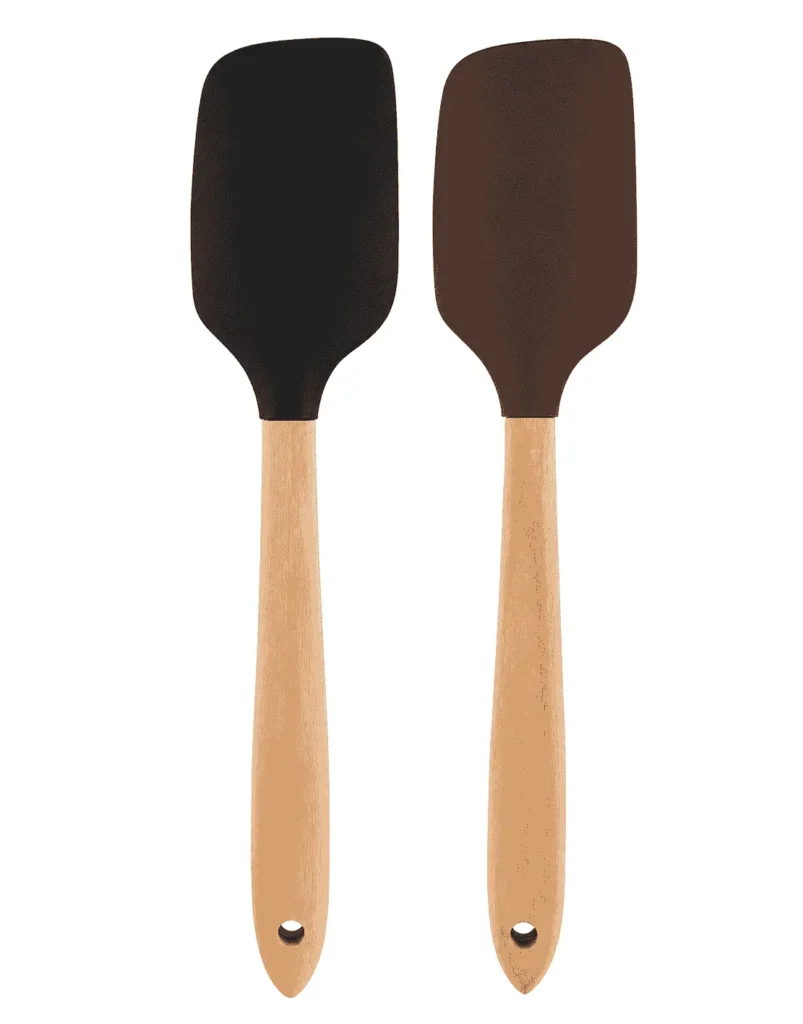
- A rigid core inside the silicone, often stainless steel, if you plan to use it for flipping — it gives the head enough backbone to support real weight without losing flexibility where it matters.
- A genuine variety of piece shapes, not just the same spatula in three sizes — at least one angled turner if you cook on the stovetop often.
- Food-grade or platinum-cured silicone. These are the standard safety designations to look for; platinum-cured is the higher, medical-grade standard and generally reflects a cleaner manufacturing process.
How Silicone Compares to Plastic and Wood
| Silicone | Plastic | Wood | |
| Heat tolerance | High (up to 450–600°F, grade-dependent) | Low–moderate, can soften or melt | Moderate, can scorch |
| Scratches cookware | No | Rarely, but lower-quality plastic can | No |
| Absorbs odors/stains | Minimal | Can discolor over time | Yes, over time |
| Dishwasher safe | Yes | Usually | Often hand-wash only |
| Typical lifespan | Long, if good quality | Shorter, prone to warping/cracking | Long, but needs periodic oiling |
Caring for Your Set
- Hand wash or dishwasher — either works fine for genuinely seamless, one-piece silicone.
- Avoid leaving a spatula resting directly inside a hot pan for extended periods, even within its rated heat range, since prolonged direct contact accelerates wear.
- Check occasionally for separation at the head-handle junction — early cracking usually starts there.
Who Actually Needs a Full Set vs. Just a Couple of Pieces
A full set makes sense if: you both bake and cook on the stovetop regularly, since you’ll want spatulas, a turner, and probably a small scraper on hand.
Just one or two pieces is enough if: you mostly bake and rarely flip food in a pan — in that case, a couple of well-made spatulas will cover nearly everything you do, and there’s little reason to pay for a bigger set you won’t use.
Faqs
What’s the difference between a silicone spatula and a turner?
A spatula is straight-edged and made for baking and scraping bowls; a turner has an angled head designed for flipping food in a pan.
Why did my silicone spatula crack or peel?
Usually lower-grade silicone breaking down after months of heat and washing cycles — it’s a quality issue rather than something you did wrong.
Is silicone safe to cook with?
Food-grade and platinum-cured silicone are considered safe for cooking and are non-reactive with food; the “platinum-cured” label indicates a higher manufacturing standard.
How hot can a silicone spatula get before it’s damaged?
It depends on the grade — many quality spatulas are rated between 450°F and 600°F, but always check the manufacturer’s stated limit rather than assuming.
Why is my silicone spatula too floppy to flip food?
Some budget sets prioritize softness over structure; a spatula meant for flipping needs a firmer core, often reinforced with stainless steel, to support real weight.
How many pieces do I actually need in a spatula set?
It depends on how you cook — bakers mainly need a couple of spatulas, while anyone who also cooks on the stovetop regularly should include at least one turner.
Can silicone spatulas go in the dishwasher?
Yes, as long as the design is genuinely seamless and one-piece; sets with a separate handle material may have different care instructions.
How do I know if a silicone spatula set is good quality before buying?
Look for a stated heat rating, food-grade or platinum-cured silicone, a seamless one-piece build, and reviews that describe months of actual use rather than just first impressions.
The Bottom Line
A good silicone spatula set comes down to a few concrete things: real silicone quality, a construction that balances flexibility with enough structure to actually flip food, and a set that includes the right mix of spatulas and turners for how you actually cook. The benefits — heat resistance, gentleness on cookware, easy cleaning — are genuine, but they only hold up if the silicone itself is decent quality. Skip the vague “eco-friendly and versatile” pitch, check for a published heat rating and seamless construction, and you’ll end up with a set that’s still doing its job years from now