Silicone Roof Coating
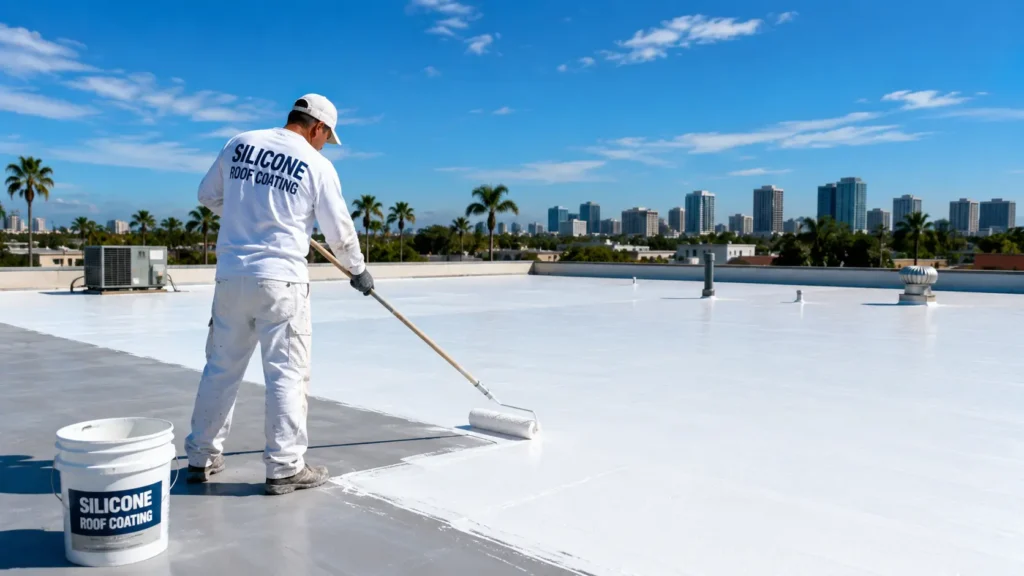
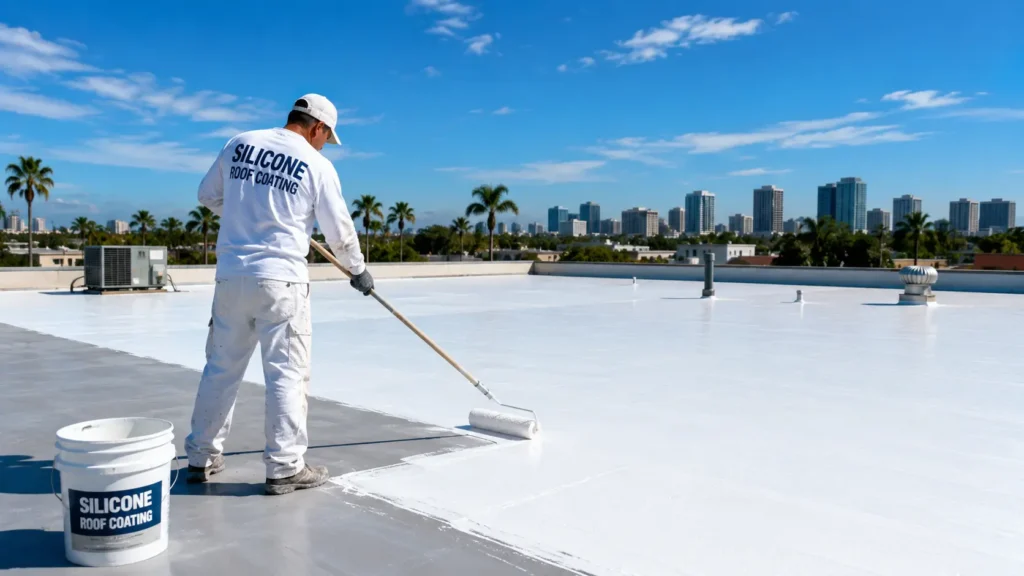
Silicone roof coating is becoming an increasingly popular solution for construction businesses. With the current trend towards sustainable and cost-effective practices in commercial roofing, contractors are turning to options other than tearing off old roofs and replacing them. The owners would want a long-lasting and eco-friendly roofing solution, but the contractor needs efficient products that will save time on application and reduce chances of callbacks.
A roof is exposed to such environmental stress factors as sunlight, moisture, heat, cold, and rain. With time, these factors can lead to cracks, leaks, roof deterioration, and reduced efficiency of the roofing system. One of the products that may be used to extend the life of your roof is a silicone roof coating.
The coatings are usually applied as liquids and form a waterproof and seamless membrane when cured. They are popular due to their resistance to standing water and UV light.
Types of Roof Coatings
| Type | Main Characteristics | Common Applications |
| Silicone coating | Flexible, highly water-resistant and UV-resistant | Commercial and low-slope roofs |
| Acrylic coating | Reflective, flexible and generally economical | Roofs requiring solar reflectivity |
| Polyurethane coating | Strong, durable and abrasion-resistant | Areas exposed to mechanical stress |
| Asphaltic coating | Bitumen-based protection | Asphaltic and compatible roofing systems |
Among these options, silicone is particularly useful where roofs experience prolonged moisture or ponding water. However, the existing roof condition and substrate should always be assessed before application.
Benefits of Silicone Roof Coating
Several technologies are available for commercial roof coating.
| Benefit | How It Helps |
| Water resistance | Creates a continuous protective layer that helps limit water penetration. |
| UV protection | Helps shield the underlying roof from prolonged sunlight exposure. |
| Flexibility | Accommodates normal expansion and contraction caused by temperature changes. |
| Extended roof life | Can provide additional years of service when applied to a suitable, sound roof. Roof restoration can reduce the disruption associated with complete replacement. |
| Seamless protection | Forms a continuous coating that can cover minor surface imperfections and seams. |
| Cost efficiency | Roof restoration may be less disruptive and less expensive than replacing an otherwise serviceable roof. |
| Versatility | Can be used on several roofing substrates when properly prepared and compatible. Silicone is widely usee for industrial roof coating |
Silicone coatings can also be applied without heat-based installation methods. Depending on the formulation, coating thickness, substrate, and installation quality, manufacturers may offer extended protection periods.
Silicone Roof Coating Maintenance
Proper maintenance is a critical factor for ensuring coating efficiency. Such a maintenance regime would involve:
- Roof examination regularly: Check for cracks, splits, blisters, exposures, and damaged joints.
- Keep the surface clean: Get rid of leaves, dirt, branches, and other debris.
- Drainage system checking: Ensure that no drainage problems occur and that the drains and outlets remain free from obstructions.
- Ponding areas need monitoring: Even though silicone is highly resistant to standing water, this issue needs investigation if it occurs.
- Flashing and joint checks: Any damage that might occur needs to be repaired. For industrial roof coating, checking is a must.
- Adhesion inspection prior to re-coating: The old coatings need to be checked and their compatibility determined before recoating.
- Professional repair should be done: Roof surfaces become slippery in the event of wetness; therefore, safety becomes important. Consider professional roof restoration.
- Surface preparation is very crucial since contamination could affect adhesion. In some cases, primers and reinforcement might also be required.
Final Thoughts
The Silicone Roof Coating would serve as a good roofing material when it comes to protection against water damage, ultraviolet rays, and other types of weather damage of an already existing roof that is still in good condition. The flexibility and waterproofing qualities of the coating make it quite desirable for several roof coating projects. But coating is not the same as roof repair, and a professional examination is needed first. Silicone is widely used for commercial roof coating.
Construction companies looking for commercial roof coating and high-quality silicone and chemicals should consider Biopol Chemicals products and services, which are available on an industrial scale. Contact Biopol Chemicals to find the right silicone products for your needs.
FAQs
1. What is silicone roof coating?
It is a waterproof material that consists of silicone, applied in liquid state, that forms a waterproof coating on the appropriate surface of the roof.
2. Is silicone roof coating waterproof?
Silicone roof coating shows high resistance to water, and the main feature of such a coating is its resistance to standing water.
3. How long does silicone roof coating last?
The lifetime of the material depends on many factors, such as the thickness of the coating, the type of material, the condition of the roof, etc.
4. Is it possible to apply silicone coating to all roofs?
No. Depending on the substrate and the condition of the roof, some additional measures may be needed, such as cleaning, repairing, etc. Silicone is widely used for roof restoration.