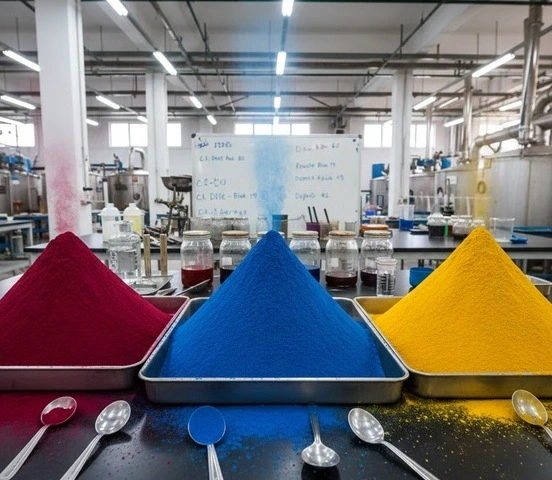
The term nitred chemical used in textile dyeing refers to nitrate-based compounds such as sodium nitrate, copper nitrate, and magnesium nitrate that act as oxidizing and mordanting agents during coloration processes. These chemicals improve dye uptake, reduce uneven shades, and stabilize reactive dyes in aqueous systems. How do these compounds optimize both traditional and modern textile dyeing operations?
Key Takeaways
- Nitred chemicals optimize oxidation, leveling, and fixation in textile dyeing.
- Sodium, copper, and magnesium nitrates are the most widely used.
- Controlled nitrate management supports compliance with environmental standards.
- Emerging bio-mordants and enzymatic oxidizers are future-ready alternatives
What Is a Nitred Chemical Used in Textile Dyeing?
Nitred chemicals are nitrate salts that assist in dye oxidation, fixation, and levelling. Common examples include:
- Sodium nitrate (NaNO₃): Used in vat and sulfur dye baths as an oxidizing agent.
- Copper nitrate (Cu(NO₃)₂): Functions as a mordant for complexing dyes with fiber.
- Magnesium nitrate (Mg(NO₃)₂): Promotes uniform dye penetration and reduces patchiness.
These nitrates enhance dye solubility and ensure stable dye-fiber bonding, especially during high-temperature operations.
How Do Nitred Chemicals Function in the Dyeing Process?
In textile dyeing, nitred chemicals function by:
- Oxidizing leuco dyes in vat dyeing to produce the final color form.
- Acting as mordants that bind dye molecules to fiber reactive sites.
- Improving ionic strength of dye solutions for better exhaustion.
- Reducing metal contamination during reactive or direct dyeing processes.
For instance, sodium nitrate maintains oxidation balance during indigo dyeing, preventing color degradation.
What Are the Main Types of Nitred Chemicals Used?
| Chemical Name | Formula | Primary Function | Application Area |
| Sodium Nitrate | NaNO₃ | Oxidizer | Vat, Sulfur dyes |
| Copper Nitrate | Cu(NO₃)₂ | Mordant | Protein fibers |
| Magnesium Nitrate | Mg(NO₃)₂ | Leveling agent | Reactive dyes |
| Ferric Nitrate | Fe(NO₃)₃ | Oxidizer & Catalyst | Wool, Nylon |
| Calcium Nitrate | Ca(NO₃)₂ | Wetting promoter | Yarn scouring |
Why Are Nitred Chemicals Important for Color Uniformity?
Color uniformity in dyeing depends on even dye uptake and oxidation. Nitred chemicals:
- Regulate redox potential in dye baths.
- Improve migration and leveling.
- Prevent premature dye precipitation.
For example, magnesium nitrate stabilizes pH and ion concentration during reactive dyeing, ensuring consistent tone and brightness across batches.
What Are the Safety and Environmental Considerations?
Nitrate compounds are water-soluble and can contribute to eutrophication if discharged untreated. To mitigate this:
- Effluent treatment with biological denitrification is used.
- Closed-loop dye systems recycle nitrate-rich water.
- Green alternatives such as enzyme-based oxidizers are under study.
Compliance with Zero Liquid Discharge (ZLD) standards is becoming mandatory in major textile hubs like Gujarat and Tamil Nadu.
How Are Nitred Chemicals Compared with Other Textile Auxiliaries?
Nitred chemicals are often discussed alongside textile auxiliaries, modifiers, and finishing agents that influence fiber-dye interactions. However, nitrates are distinct in their redox and mordant roles, whereas auxiliaries mainly affect wetting, dispersion, or fixation enhancement.
What Are the Emerging Alternatives to Nitred Chemicals?
- Enzymatic oxidants for sulfur and vat dyes.
- Bio-based mordants like tannins or citrates.
- Photocatalytic oxidizers using titanium dioxide under UV light.
These alternatives aim to maintain dye efficiency while reducing nitrate load in effluent systems.

Conclusion
Nitred chemicals used in textile dyeing—particularly sodium, copper, and magnesium nitrates—remain central to achieving consistent, high-quality dye results across multiple fiber types. With sustainability regulations tightening, the industry is adopting controlled usage and eco-alternatives. For a deeper look into broader applications, see the related overview on chemicals used in textile composites for structural fabric treatments.
FAQ
What chemicals are used in fabric dyes?
Common chemicals include nitrates, sulfates, alkalis, and organic solvents that aid in dye fixation and shade stability.
What is nitric acid used for in the textile industry?
Nitric acid is primarily used for surface modification, fiber oxidation, and preparing nitrate salts used in dyeing auxiliaries.
What is copper nitrate used for?
Copper nitrate acts as a mordant, forming coordination complexes with dye molecules to improve color fastness on protein fibers.
Are nitred chemicals eco-friendly?
Not inherently; however, controlled dosing and effluent treatment can minimize environmental impact.
Can magnesium nitrate replace sodium nitrate?
Yes, magnesium nitrate offers similar oxidizing properties with better solubility control in reactive dye baths.
Sources
https://archemco.com/2023/11/03/sodium-nitrate-for-dyes/
https://trademarknitrogen.com/Products/Industrial/Copper-Nitrate-Solution
https://www.scielo.br/j/jbchs/a/xw8rWWfBzBwsgPwbDgL8wTt/
https://eureka.patsnap.com/report-investigating-magnesium-nitrate-s-role-in-textile-dye-processes
https://ebooks.inflibnet.ac.in/hsp09/chapter/auxiliaries-for-printing/
https://www.mdpi.com/2076-3417/11/14/6255
https://www.tradeindia.com/products/ferric-nitrate-nonahydrate-98-ar-acs-c6683497.html
https://pmc.ncbi.nlm.nih.gov/articles/PMC9030370/