Textile chemicals name plays a crucial role in textile manufacturing, influencing fabric quality, color, and performance. Understanding these chemicals is essential for manufacturers, designers, and suppliers alike. This article explores key types, uses, and sourcing tips, providing a comprehensive guide to make informed decisions in textile production.
Table of Contents
Textile Chemicals Name & Industry Relevance
The textile chemicals name carries significant weight in textile manufacturing. Using an incorrect name can result in the wrong product reaching the factory floor, leading to production delays, increased costs, and compromised quality. Conversely, accurate identification ensures smooth operations and consistent output. Proper attention to chemical names is essential for clear communication between manufacturers, suppliers, and quality teams.
In textile production, every stage relies on precision. The correct textile chemicals name conveys the chemical composition, intended function, and compatibility with other materials. Without this clarity, processes may be mismatched, dye uptake may suffer, and safety hazards can arise. For instance, ordering “soda ash” when “caustic soda” is required can create costly disruptions.
| Stage of Production | Why the Chemical Name Matters |
| Pre-treatment | Ensures accurate cleaning and fabric preparation |
| Dyeing | Determines shade accuracy, colorfastness, and process consistency |
| Finishing | Affects fabric feel, durability, and special properties |
| Compliance & Safety | Aligns with environmental regulations and workplace safety |
Knowing the correct textile chemicals name also facilitates communication with suppliers, reducing misunderstandings, saving time, and building trust. Accurate naming can prevent weeks of delays that often arise from vague or incorrect descriptions. The textile chemicals name is more than a label—it is key to efficient production, smooth transactions, and safer workplaces.
Core Pre-Treatment Agents
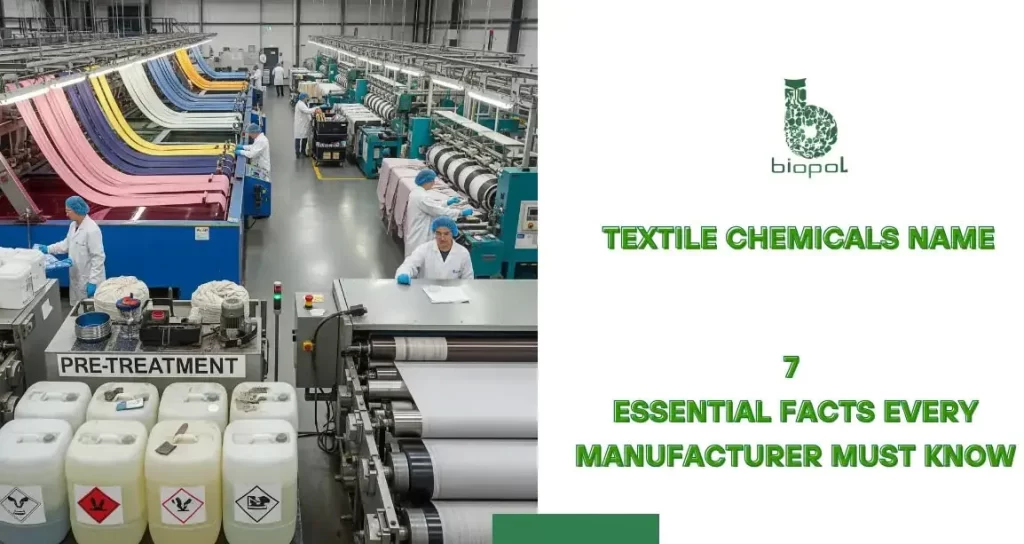
Pre-treatment relies heavily on the correct textile chemicals name, which is critical for fabric quality. Errors at this stage can compromise the entire production line. Pre-treatment chemicals are used for scouring, bleaching, and pH adjustment, and the precise chemical name ensures each step is performed correctly.
Scouring removes natural waxes, oils, and dirt, with caustic soda acting as the primary agent. Bleaching typically employs hydrogen peroxide to brighten fibers without causing damage. Stabilizers maintain peroxide activity, and neutralizing acids restore pH balance after alkaline scouring.
| Function | Common Chemical Name | Purpose |
| Scouring | Caustic Soda (NaOH) | Removes impurities and oils |
| Bleaching | Hydrogen Peroxide | Whitens fabric before dyeing |
| Stabilizing | Sodium Silicate | Controls peroxide decomposition |
| Neutralizing | Acetic Acid | Balances pH post-scouring |
Each textile chemicals name in this phase has a direct impact on results. Misuse of stabilizers or neutralizers can compromise bleaching or the next dye bath. Pre-treatment chemicals act as silent guardians of fabric quality, ensuring the subsequent processes function optimally.
Key Dye Bath Additives
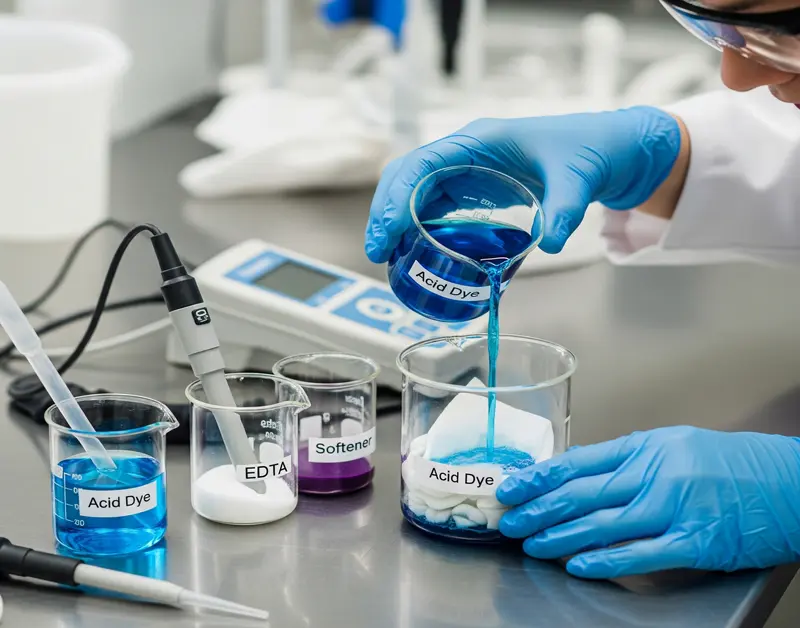
In a dye bath, the textile chemicals name serves as a blueprint for achieving uniform, lasting color. Incorrect chemicals can result in uneven shades or rapid fading. Salts, alkalis, leveling agents, and sequestering compounds are essential for proper dye fixation.
Salts like sodium chloride or sodium sulfate promote dye penetration. Alkalis, such as soda ash, facilitate bonding of reactive dyes to cellulose fibers. Leveling agents regulate absorption rates for uniform coloration, while sequestering agents remove calcium or magnesium ions that could cause blotches.
| Additive Type | Common Chemical Name | Function |
| Salt | Sodium Chloride | Enhances dye penetration |
| Alkali | Soda Ash (Na₂CO₃) | Fixes reactive dyes to fibers |
| Leveling Agent | Ethoxylated Fatty Alcohols | Controls dye uptake rate |
| Sequestering Agent | EDTA (Ethylenediaminetetraacetic Acid) | Removes hardness ions from water |
Each textile chemicals name is a strategic choice. Selecting the wrong additive alters dyeing outcomes, while correct application ensures consistent, vibrant results across all fabrics.
For a deeper look at recent innovations and advanced compounds shaping fabric performance, see our detailed guide on new textile chemicals.
Popular Dye Types & Uses
The textile chemicals name associated with a dye indicates its fiber compatibility, bonding mechanism, and washfastness. Understanding these names saves time, reduces errors, and ensures desired results.
Reactive dyes are ideal for cotton and cellulose fibers, forming strong chemical bonds for bright, long-lasting colors. Acid dyes are suited for protein fibers like wool and silk, delivering deep, rich shades. Disperse dyes are used for synthetic fibers, embedding under heat, while direct dyes offer straightforward application for cellulose fibers but may require additional treatment for washfastness.
| Dye Type | Works Best On | Key Traits |
| Reactive | Cotton, Linen, Rayon | Bright, washfast, chemical bonding |
| Acid | Wool, Silk, Nylon | Vibrant, requires acidic bath |
| Disperse | Polyester, Acetate | Heat-applied, good lightfastness |
| Direct | Cotton, Rayon | Easy application, moderate fastness |
Correct textile chemicals names are essential in dye selection. The right choice guarantees vibrant, durable shades, while the wrong one can result in fading and inconsistent results.
Finishing & Functional Enhancers
Finishing determines whether fabrics feel soft, resist creasing, repel water, or remain fresh. The correct textile chemicals name is critical to achieving the desired performance and aesthetic.
Softness is achieved with cationic or silicone-based softeners. Wrinkle resistance relies on resins such as DMDHEU, which crosslink fibers. Water repellence uses fluorocarbon or C6-based finishes, causing liquids to bead and roll off. Antimicrobial finishes, including silver compounds or quaternary ammonium salts, inhibit odor-causing bacteria.
| Function | Common Chemical Name | Benefit |
| Softness | Silicone Softener | Smooth feel, enhanced drape |
| Wrinkle Resistance | DMDHEU Resin | Reduces creasing, improves shape retention |
| Water Repellence | C6 Fluorocarbon Finish | Resists water penetration |
| Antimicrobial Finish | Silver Nitrate | Controls bacterial growth and odor |
Every textile chemicals name in finishing influences performance. Selecting inappropriate chemicals can compromise fabric comfort, durability, or hygiene. Proper selection ensures fabrics meet both functional and consumer expectations.
Sourcing & Compliance Tips
Correct identification of the textile chemicals name is crucial when sourcing to avoid miscommunication and production delays. Verifying certifications and reviewing technical data sheets ensures that chemicals meet specifications and regulatory standards.
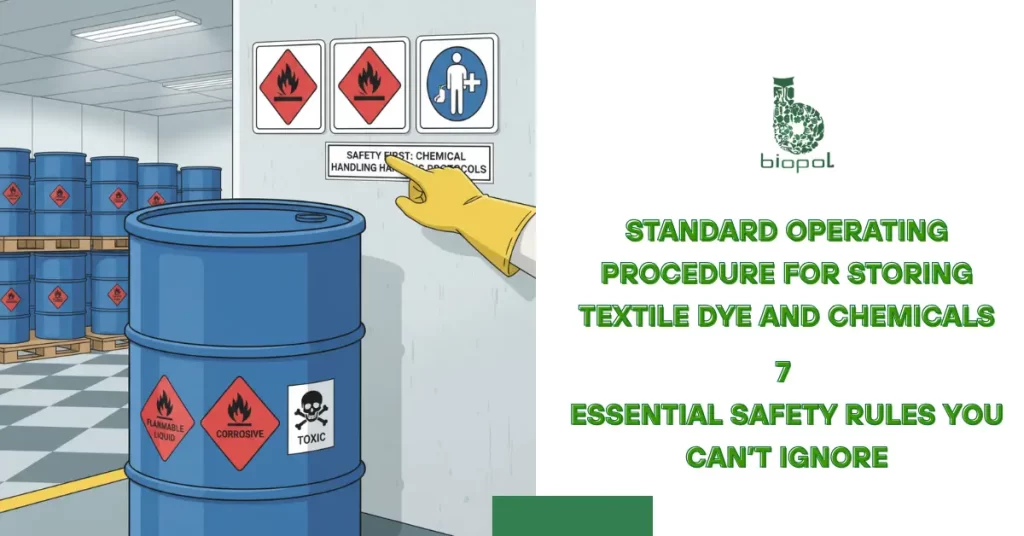
Testing small batches before full-scale use confirms that the chemical performs as expected in actual production conditions. Safe storage and handling, following safety data sheets and regulatory guidelines, prevent accidents and ensure workplace safety.
Practical sourcing checklist:
- Confirm correct textile chemicals name and CAS number
- Review supplier certifications and lab reports
- Match specifications with production requirements
- Test small batches before bulk orders
- Store according to safety and MSDS guidelines
Proper sourcing and compliance build a reliable, safe, and efficient supply chain. The right textile chemicals name forms the foundation of trust, performance, and regulatory adherence.
Frequently Asked Questions
Which chemical is used in textiles?
Various chemicals are used depending on the stage of production. Pre-treatment may use caustic soda and hydrogen peroxide, while finishing often involves softeners, resins, or water-repellent agents. Knowing the correct textile chemicals name ensures proper application and consistent fabric quality.
What chemicals are in clothes?
Clothes may contain residues from scouring, bleaching, dyeing, and finishing processes. These include salts, alkalis, dyes (reactive, acid, disperse), softeners, and antimicrobial agents. Each chemical serves a functional purpose, whether improving texture, colorfastness, or durability.
Why are chemicals used in textiles?
Chemicals enhance fabric performance, appearance, and longevity. They remove impurities, fix dyes, soften fibers, provide wrinkle resistance, repel water, or inhibit microbial growth. Correctly identifying the textile chemicals name is critical for achieving the desired outcome safely and efficiently.
Which chemicals are used in dyeing?
Dyeing relies on salts (sodium chloride, sodium sulfate), alkalis (soda ash), leveling agents, and sequestering agents. Each plays a role in uniform color distribution, fiber bonding, and preventing water hardness interference. Accurate knowledge of the textile chemicals name ensures vibrant, consistent shades.