
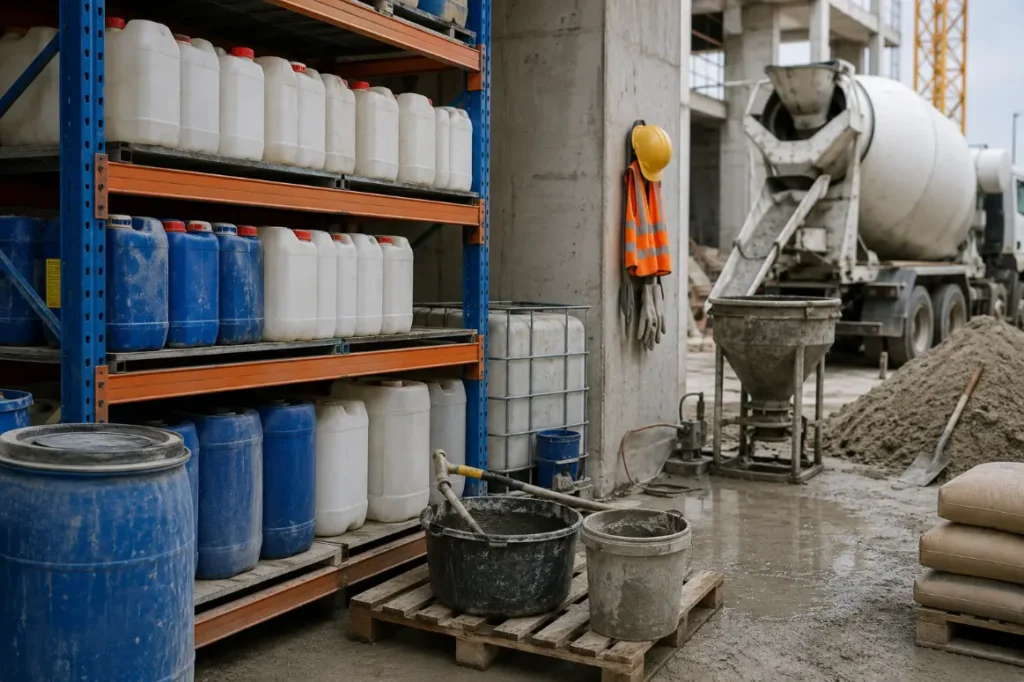
Concrete needs to perform differently depending on where and how it is used. A mix suitable for a house may not be ideal for a bridge, high-rise building, road, or underground structure. Factors such as workability, setting time, strength, temperature, and exposure to water can all affect concrete performance.
Key Takeaways
- Admixtures modify specific properties of concrete.
- They can improve workability and reduce water demand.
- Different admixtures control setting, strength, and durability.
- Proper dosage and compatibility testing are essential.
An admixture is one way to adjust concrete to meet these different requirements. It is added to the concrete mix in a measured quantity to improve or control a particular property. When selected and used correctly, an admixture can make concrete easier to handle and help it perform better after hardening.
Also Read:Construction Chemical Additives: Types, Uses, Benefits, and Applications
What Is an Admixture?
An admixture is a material added to concrete before or during mixing, in addition to its main ingredients, which include cement, water, and aggregates. Most admixtures are used in relatively small quantities, but they can have a noticeable effect on the behavior of concrete.
The type of mixture used depends on what the project requires. For example, one product may help reduce water consumption, while another may extend the working time of fresh concrete.
They are commonly used in:
- Residential and commercial construction
- Ready-mix concrete
- Precast concrete
- Roads and bridges
- High-rise buildings
- Industrial structures
- Tunnels and underground projects
- Water-retaining structures
Why Do Construction Projects Use Admixtures?
Concrete does not always behave the same way under different site conditions. Hot temperatures can cause concrete to lose workability quickly, while cold weather can slow setting and strength development. Large projects may also require concrete to travel long distances before it is placed.
This can help address some of these challenges.
Depending on the product, it may be used to:
- Improve the workability of fresh concrete
- Reduce the amount of water needed
- Control setting time
- Develop strength more quickly
- Improve resistance to water penetration
- Increase durability
- Make concrete easier to pump
- Reduce certain forms of shrinkage
- Improve performance under specific environmental conditions
The desired result depends on the type and dosage of the product.
Common Types of Admixture
Water-Reducing Admixture
This type reduces the amount of water required to achieve the desired consistency. With an appropriate mix design, reducing unnecessary water can help improve concrete strength and durability.
Superplasticizer
Superplasticizers provide a stronger water-reducing effect while keeping concrete highly workable. They are often used for high-strength concrete, precast products, pumped concrete, and structures with dense reinforcement.
Accelerating Admixture
An accelerating mixture is used when faster setting or early strength development is needed. It may be useful in certain cold-weather applications or projects where construction needs to progress quickly.
Retarding Admixture
A retarding admixture delays the setting of concrete. This gives workers more time for transportation, placement, and finishing. It can be particularly helpful during hot weather or large concrete pours.
Air-Entraining Admixture
This admixture introduces a controlled amount of tiny air bubbles into concrete. It can improve workability and is particularly useful where concrete is exposed to freeze-thaw conditions.
Waterproofing Admixture
Waterproofing or permeability-reducing admixtures can help limit water movement through concrete. They are used in applications such as basements, foundations, tanks, tunnels, and other moisture-exposed structures.
Benefits of Using Admixtures
| Benefit | How It Helps |
|---|---|
| Improved workability | Makes fresh concrete easier to place and finish |
| Water reduction | Helps achieve required consistency with less water |
| Setting control | Provides more flexibility during construction |
| Faster strength development | Can help shorten waiting periods in suitable applications |
| Better durability | Helps concrete withstand certain exposure conditions |
| Reduced permeability | Limits water movement through the concrete |
| Improved pumpability | Makes concrete easier to transport through pumping systems |
How to Select the Right kind of mixture
There is no single one that works best for every concrete mix. Selection should be based on the materials, project requirements, and site conditions.
Before choosing a product, consider:
- Required performance: Decide whether the main need is water reduction, workability, setting control, strength, or durability.
- Concrete ingredients: Cement, aggregates, supplementary materials, and other additives can influence performance.
- Weather conditions: Temperature and humidity can affect setting and workability.
- Compatibility: Make sure the product is compatible with the cement and other mixtures.
- Dosage: Follow the manufacturer’s recommended dosage rather than assuming more will produce better results.
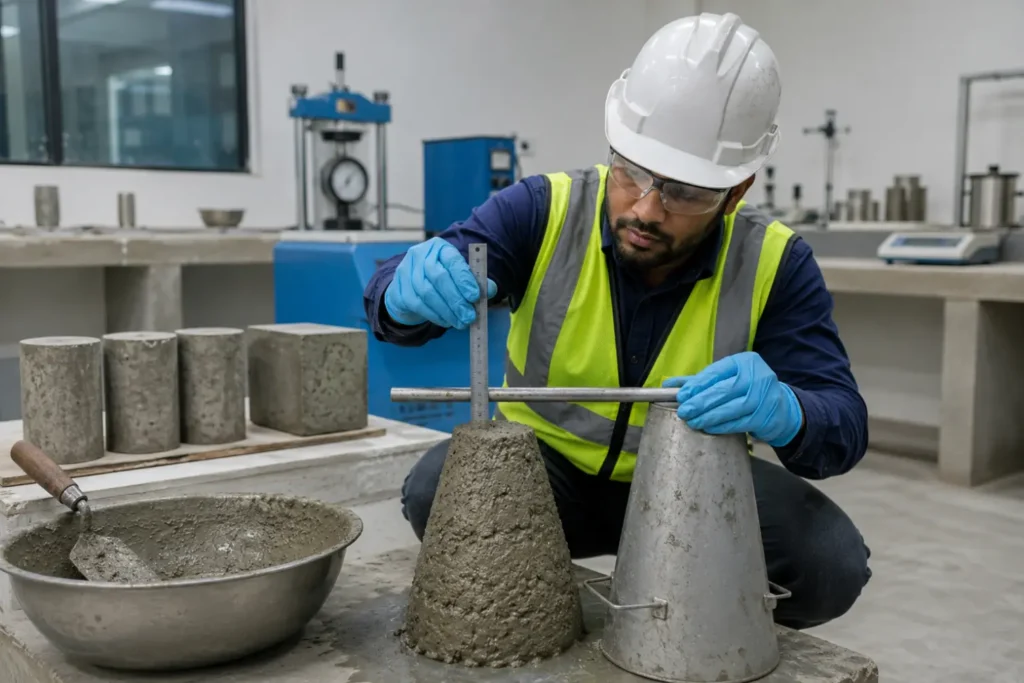
- Trial testing: Test the proposed mix before using it for large-scale construction.
Where Are Admixtures Used?
This can be found in many areas of modern construction. Ready-mix plants use admixtures to control concrete properties during transportation and placement. Precast manufacturers may use them to improve production efficiency and early strength.
They are also used in:
- Bridges and highways
- High-rise buildings
- Industrial floors
- Dams
- Tunnels
- Foundations
- Precast components
- Commercial buildings
- Water-related structures
Also Read: Chemicals Used in Road Construction
Conclusion
An admixture gives concrete professionals greater control over how a concrete mix behaves during construction and after it hardens. From reducing water demand and improving workability to controlling setting and reducing permeability, different types serve different purposes.
The best results depend on more than simply adding an admixture. Correct product selection, dosage, compatibility testing, mixing, placement, and curing all need to be considered. When these factors are properly managed, This can help produce concrete that is better suited to the demands of a particular construction project.
Frequently Asked Questions
What does an admixture do?
This changes one or more properties of concrete. Depending on the type, it can affect workability, water demand, setting time, strength development, permeability, or durability.
Can it replace proper concrete curing?
No. it cannot replace proper mixing, placement, compaction, or curing. All of these factors contribute to concrete quality.
Are admixtures safe to use in concrete?
When an appropriate product is selected and used according to its technical specifications, it can be safely incorporated into concrete. Proper handling and accurate dosing are important.
Can more than one admixture be used?
Yes, multiple mixtures may be used in the same mix, but their compatibility should be checked through technical guidance and trial testing.
How is the correct dosage determined?
Dosage depends on the product, concrete composition, environmental conditions, and desired performance. Trial mixes are generally used to establish the appropriate amount.