Metal is strong, but it is not immune to its surroundings. When steel or other metals are exposed to moisture, oxygen, chemicals, salt, or pollutants for long periods, corrosion can begin. Rust may start as a small surface problem, but if it is ignored, it can gradually affect the strength and service life of the metal.
Key Takeaways
- Anticorrosive coatings protect metal from moisture, oxygen, chemicals, and salt.
- Epoxy, polyurethane, zinc-rich, acrylic, and powder coatings serve different purposes.
- Proper surface preparation is essential for strong adhesion and lasting protection.
- The right coating can extend metal service life and reduce maintenance costs.
This is where anticorrosive coating becomes important. It forms a protective layer over the metal surface and helps limit contact with substances that cause corrosion. These coatings are widely used in construction, manufacturing, marine infrastructure, pipelines, storage tanks, and industrial equipment.
What Is Anticorrosive Coating?
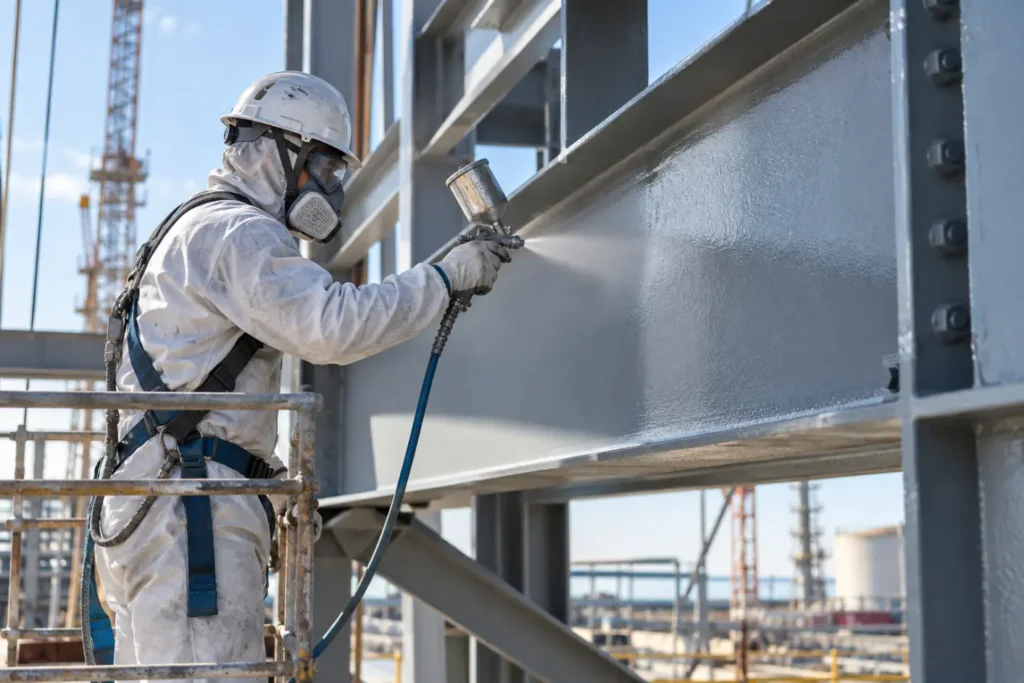
Anticorrosive coating is a specially formulated protective material applied to metal surfaces to reduce corrosion. Depending on the product, it can work by creating a physical barrier, providing chemical resistance, or offering sacrificial protection.
The choice of coating depends on where the metal will be used. A steel structure exposed to rain and sunlight may need a different coating system from a pipeline exposed to chemicals or a marine structure surrounded by saltwater.
Also Read: Waterproofing Admixture
Why Is Anticorrosive Coating Important?
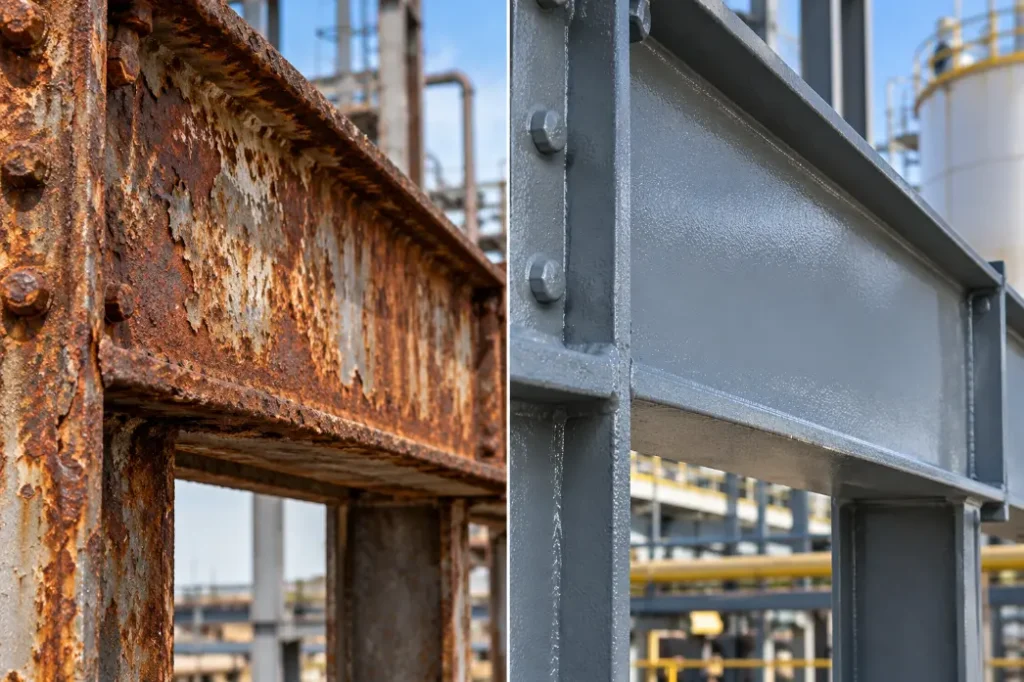
Corrosion can cause more than an unattractive appearance. Over time, it may lead to surface deterioration, loss of material, equipment damage, and costly repairs.
A suitable coating can help:
- Reduce exposure to water, oxygen, and corrosive substances
- Slow down the formation and spread of rust
- Protect metal from harsh industrial environments
- Increase the usable life of metal components
- Reduce frequent maintenance and repainting
- Improve the overall appearance of exposed metal surfaces
- Protect important infrastructure and equipment from premature deterioration
Common Types of Anticorrosive Coatings
Different coating materials provide different levels of protection. Some of the commonly used options include:
| Coating Type | Main Feature | Typical Applications |
|---|---|---|
| Epoxy Coating | Strong adhesion and chemical resistance | Tanks, pipelines, machinery |
| Polyurethane Coating | Good weather and UV resistance | Outdoor steel structures |
| Zinc-Rich Coating | Provides sacrificial protection | Bridges, towers, structural steel |
| Acrylic Coating | Quick drying and weather resistance | General metal surfaces |
| Alkyd Coating | Easy application and economical | General industrial use |
| Powder Coating | Hard, uniform protective finish | Metal components and equipment |
The best choice depends on the exposure conditions, surface type, required durability, and application method.
Where Are Anticorrosive Coatings Used?
Anticorrosive coatings are used in many industries because metal is found in almost every type of infrastructure.
Construction and Structural Steel
Steel beams, columns, bridges, towers, and railings can be exposed to rain, humidity, and pollution. Protective coatings help reduce corrosion and preserve these structures.
Pipelines and Storage Tanks
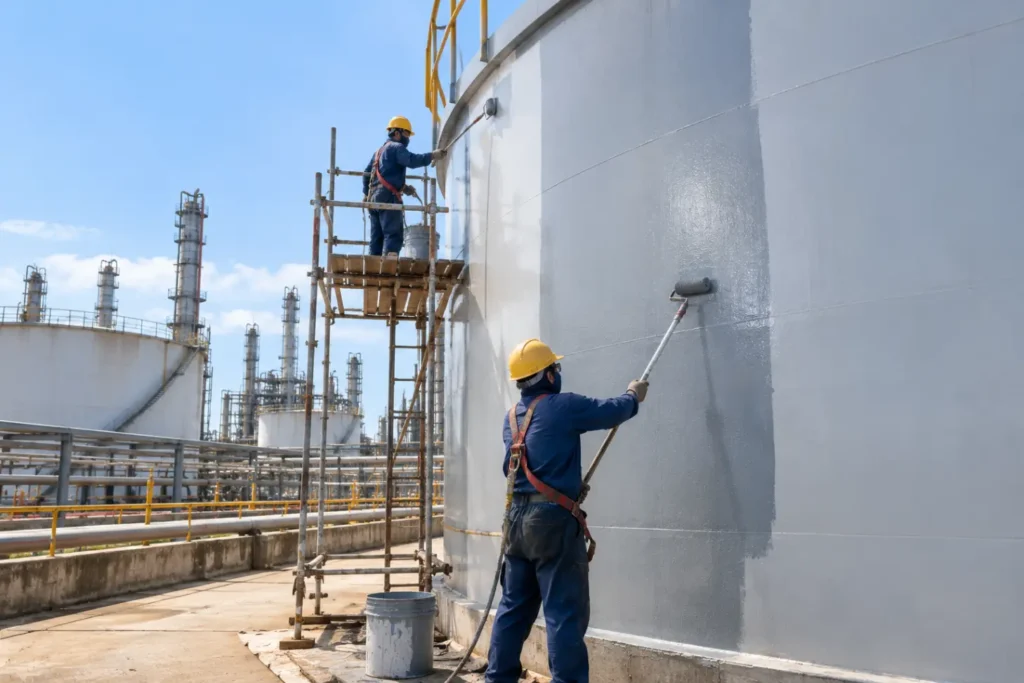
Pipelines and tanks may come into contact with water, chemicals, fuels, or other aggressive substances. Coatings can protect the metal surface from these conditions when the correct system is selected.
Marine Infrastructure
Ships, offshore structures, docks, and other marine equipment face constant exposure to moisture and salt. This makes corrosion protection particularly important.
Industrial Machinery
Manufacturing equipment can encounter water, chemicals, oils, and changing temperatures. An appropriate coating can help protect exposed metal components and reduce deterioration.
How Is Anticorrosive Coating Applied?
Good preparation is just as important as the coating itself. A typical application involves:
- Surface inspection: The metal is checked for rust, damage, grease, and existing coatings.
- Cleaning: Dirt, oil, grease, and other contaminants are removed.
- Surface preparation: Loose rust and old coating are removed using suitable mechanical or abrasive methods.
- Primer application: A compatible primer may be applied to improve adhesion and corrosion protection.
- Intermediate and top coats: Additional layers are applied according to the coating specification.
- Curing and inspection: The coating is allowed to cure properly before the finished surface is inspected.
Poor surface preparation or incorrect application can reduce the coating’s performance, even when a high-quality product is used.
How to Choose the Right Anticorrosive Coating
Before selecting a product, consider:
- Type and condition of the metal
- Indoor or outdoor exposure
- Contact with water or salt
- Chemical exposure
- Temperature conditions
- Expected service life
- Application method
- Surface preparation requirements
- Maintenance and recoating needs
It is also important to follow the manufacturer’s technical data and recommended application conditions.
Also Read: Anti-Termite Chemicals for Construction
Conclusion
Anticorrosive coating is an important part of protecting metal against rust and environmental damage. The right coating can help extend the service life of equipment and structures while reducing maintenance requirements. However, choosing the right product is only one part of the process. Proper surface preparation, application, curing, and regular inspection are equally important for dependable long-term protection.
Frequently Asked Questions
1. What does anticorrosive coating do?
It protects metal from corrosion by reducing its exposure to moisture, oxygen, chemicals, salts, and other corrosive elements.
2. Which anticorrosive coating is best?
There is no single coating that works best for every situation. Epoxy, polyurethane, zinc-rich, acrylic, and other coatings are suitable for different environments and requirements.
3. Can anticorrosive coating prevent rust completely?
A properly selected and applied coating can provide strong protection against rust, but no coating should be considered permanently maintenance-free. Damage, aging, and harsh exposure can eventually affect the protective layer.
4. Why is surface preparation important?
Surface preparation removes contaminants and unstable material while creating a suitable surface for coating adhesion. Without proper preparation, peeling, blistering, or premature corrosion can occur.
5. Where are anticorrosive coatings commonly used?
They are commonly used on structural steel, pipelines, storage tanks, bridges, marine equipment, industrial machinery, towers, and various metal components.