
Construction workers are exposed to a wide range of chemicals every day, from cement and paints to solvents and welding fumes. While these materials are essential for building projects, improper handling or prolonged exposure can cause serious health problems. Understanding chemical hazards in construction helps employers and workers take the right precautions to create a safer workplace.
This article highlights the most common chemical hazards, their potential health effects, and practical ways to reduce exposure.
Key Takeaways
- Identify common chemical hazards like silica dust, cement, solvents, and welding fumes.
- Use proper PPE and ventilation to minimize chemical exposure risks.
- Follow Safety Data Sheets (SDS) for safe handling and emergency response.
- Regular training and hazard assessments improve construction site safety.
Common Chemical Hazards in Construction
The table below summarizes some of the most frequently encountered hazardous substances on construction sites.
| Chemical Hazard | Common Sources | Possible Health Effects |
| Silica Dust | Concrete cutting, drilling, grinding | Silicosis, lung disease, respiratory irritation |
| Cement | Concrete mixing, masonry work | Skin burns, dermatitis, eye irritation |
| Paints & Coatings | Interior and exterior painting | Headache, dizziness, respiratory irritation |
| Solvents | Cleaning agents, thinners, adhesives | Nausea, skin irritation, nervous system effects |
| Welding Fumes | Welding and metal fabrication | Lung irritation, metal fume fever |
| Asbestos | Demolition of older buildings | Lung cancer, asbestosis, mesothelioma |
| Lead | Old paint, pipes, metal structures | Kidney damage, nervous system disorders |
| Diesel Exhaust | Construction vehicles and generators | Respiratory problems, long-term lung disease |
How Chemical Exposure Happens
Workers can be exposed to hazardous chemicals in several ways:
· Inhalation of dust, fumes, vapors, or gases
· Skin contact with wet cement, solvents, or chemicals
· Eye contact from chemical splashes or airborne particles
· Accidental ingestion due to poor hygiene practices
Even low levels of exposure over time can increase the risk of chronic health conditions.
Also Read: Biochemicals
Common Health Effects
Chemical exposure may cause immediate or long-term health problems depending on the substance and duration of exposure.
Short-Term Effects
- Skin irritation or chemical burns
- Eye redness and irritation
- Headaches and dizziness
- Nausea
- Difficulty breathing
Long-Term Effects
- Chronic respiratory diseases
- Occupational asthma
- Lung cancer
- Kidney or liver damage
- Neurological disorders
- Skin allergies and dermatitis
Prevention Measures
Preventing chemical hazards requires a combination of safe work practices, proper equipment, and worker awareness.
| Control Measure | Purpose |
| Risk Assessment | Identify hazardous chemicals before work begins |
| Safety Data Sheets (SDS) | Provide handling, storage, and emergency information |
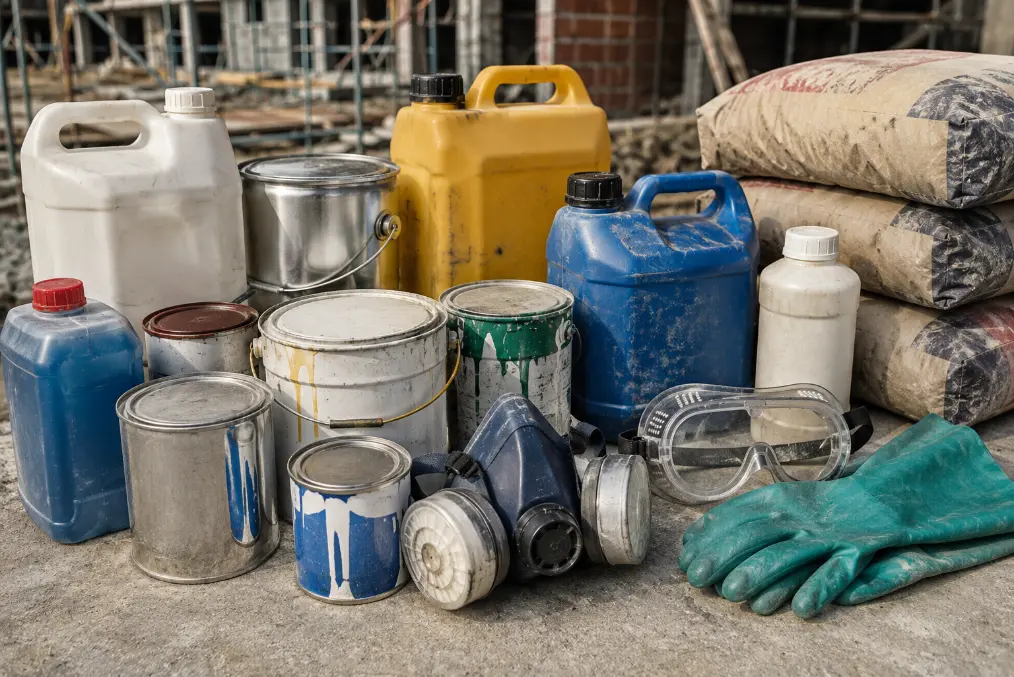
| Personal Protective Equipment (PPE) | Reduce direct exposure to hazardous substances |
| Ventilation Systems | Remove harmful dust, fumes, and vapors |
| Dust Suppression | Minimize airborne silica during cutting and drilling |
| Safe Chemical Storage | Prevent leaks, spills, and accidental mixing |
| Worker Training | Improve awareness of hazards and emergency procedures |
Recommended PPE for Chemical Hazards
Different construction activities require different types of personal protective equipment.
| Task | Recommended PPE |
| Concrete Mixing | Chemical-resistant gloves, goggles, boots |
| Painting | Respirator, gloves, eye protection |
| Welding | Welding helmet, respirator, protective clothing |
| Demolition | Respirator, goggles, gloves |
| Solvent Handling | Chemical-resistant gloves, face shield, respirator |
Best Practices for Workers
Simple safety habits can significantly reduce chemical exposure.
- Read Safety Data Sheets before using any chemical.
- Wear the correct PPE for the task.
- Keep work areas well ventilated.
- Use wet-cutting or dust extraction systems when working with concrete.
- Wash hands before eating, drinking, or smoking.
- Store chemicals in labeled containers.
- Clean spills immediately using approved procedures.
- Report damaged containers or leaks without delay.
Employer Responsibilities
Employers play a key role in protecting workers from chemical hazards. They should:
- Conduct regular workplace risk assessments.
- Maintain an inventory of hazardous chemicals.
- Ensure chemicals are correctly labeled and stored.
- Train workers on safe handling procedures.
- Monitor exposure where necessary.
- Establish emergency response procedures for spills and accidental exposure.

Conclusion
Chemical hazards are a routine part of construction work, but they do not have to result in illness or injury. Identifying hazardous substances, using proper protective equipment, following safe handling procedures, and providing regular training can significantly reduce risks. A proactive approach to chemical safety not only protects workers but also improves productivity, regulatory compliance, and overall site safety.
Also Read:Silicones
Frequently Asked Questions
1. What are the most common chemical hazards in construction?
The most common chemical hazards in construction include silica dust, cement, paints, solvents, welding fumes, asbestos, lead, and diesel exhaust. Identifying these hazards helps reduce workplace injuries and long-term health risks.
2. How can construction workers protect themselves from chemical hazards in construction?
Workers can reduce chemical hazards in construction by wearing appropriate PPE, following Safety Data Sheets (SDS), using proper ventilation, maintaining good hygiene, and handling chemicals according to safety guidelines.
3. Why is silica dust considered one of the most serious chemical hazards in construction?
Silica dust is one of the most dangerous chemical hazards in construction because fine particles can penetrate deep into the lungs, increasing the risk of silicosis, chronic respiratory disease, and lung cancer after prolonged exposure.
4. What is the role of Safety Data Sheets (SDS) in managing chemical hazards in construction?
Safety Data Sheets (SDS) provide detailed information about chemical hazards in construction, including safe handling, storage, first aid measures, emergency response procedures, and recommended personal protective equipment.