Properties of silicone rubber refer to the physical, chemical, thermal, and mechanical characteristics that determine its behavior in various applications. These features make silicone rubber ideal for demanding conditions where other elastomers lose effectiveness. What allows it to preserve flexibility and stability across varying temperatures?
Key Takeaways
- Properties of silicone rubber include high thermal and chemical stability
- Maintains flexibility across extreme temperatures
- Suitable for medical and food-grade applications
- Offers moderate mechanical strength with high elasticity
- Available in multiple forms including LSR and HCR
- Meets global regulatory standards for safety and performance
What are the key thermal properties of silicone rubber?
Properties of silicone rubber include exceptional thermal stability, enabling performance in extreme temperatures.
Typical temperature range:
- Continuous use: -60°C to +200°C
- Short-term exposure: up to +300°C
Key thermal characteristics:
- مقاistant to thermal degradation
- Maintains elasticity across temperature extremes
- Low thermal conductivity
Industry example:
Used in automotive engine seals and aerospace insulation where temperature fluctuations are significant.
What are the chemical properties of silicone rubber?
Properties of silicone rubber include strong resistance to environmental and chemical degradation.
Key chemical characteristics:
- مقاistant to:
- UV radiation
- Ozone and oxidation
- Moisture and weathering
- Inert behavior with many chemicals
Limitations:
- Poor resistance to strong acids, alkalis, and hydrocarbon fuels
Regulatory relevance:
- Meets FDA and EU food safety standards for specific grades
What are the mechanical properties of silicone rubber?
Properties of silicone rubber include moderate mechanical strength combined with high flexibility.
| Property | Typical Range |
| Tensile strength | 5–12 MPa |
| Elongation at break | 200–700% |
| Hardness (Shore A) | 10–80 |
Performance insights:
- High elasticity and flexibility
- Good compression set resistance
- Lower tear strength compared to natural rubber
Applications:
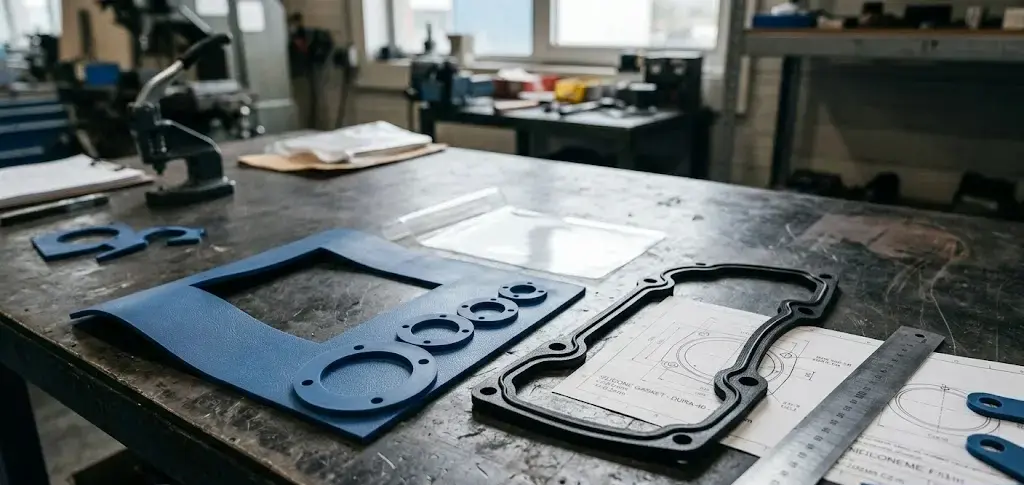
- Gaskets, seals, vibration dampers
What is the density and structural composition of silicone rubber?
Properties of silicone rubber stem from its strong and stable silicon-oxygen bond structure.
Density:
- Typically 1.1–1.3 g/cm³
Composition:
- Backbone: Si–O–Si (siloxane chain)
- Elements: silicon, oxygen, carbon, hydrogen
Implication:
- High thermal and oxidative stability compared to carbon-based rubbers
How do liquid silicone rubber properties differ?
Properties of silicone rubber vary when processed as liquid silicone rubber (LSR).
LSR characteristics:
- Low viscosity before curing
- उत्कृष्ट moldability for precision parts
- High purity and transparency
Industrial uses:
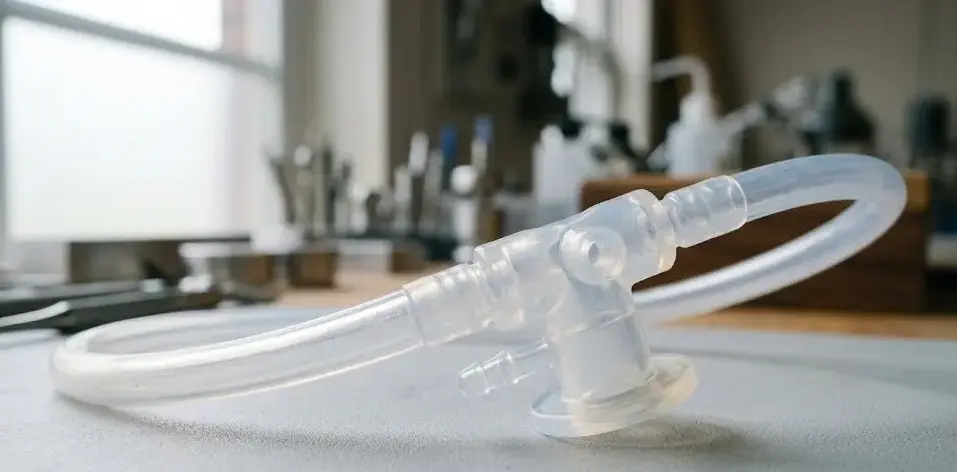
- Medical devices (catheters, implants)
- Food-grade molds
- इलेक्ट्रॉनिक insulation components
What are the common uses of silicone rubber across industries?
Properties of silicone rubber directly influence its wide industrial adoption.
Major application sectors:
- Medical: tubing, implants, seals
- Food processing: baking molds, conveyor belts
- Electronics: insulation, encapsulation
- Automotive: gaskets, hoses
A silicone rubber material is often discussed alongside silicone elastomers, high-temperature rubber materials, and flexible polymer sealing compounds.
How do standards and classifications define silicone rubber properties?
Properties of silicone rubber are validated through industry standards.
Key standards:
- FDA 21 CFR 177.2600 – food contact compliance
- ISO 10993 – biocompatibility
- ASTM D2000 – rubber classification
Classification types:
- High-consistency rubber (HCR)
- Liquid silicone rubber (LSR)
- Fluorosilicone rubber (FVMQ)
Conclusion
Properties of silicone rubber establish it as a high-performance elastomer suitable for regulated and extreme environments. Understanding its classifications and performance metrics ensures accurate material selection for specific applications. This becomes especially relevant when evaluating applications such as food grade silicone rubber products for safety-critical use.
FAQ
What are the key properties of silicon rubber?
Silicone rubber combines thermal resistance, chemical inertness, flexibility, and effective electrical insulation across diverse temperature conditions.
Is silicon rubber food safe?
Yes, food-grade silicone rubber complies with FDA and EU regulations for non-toxic and inert material use.
What are the properties and uses of silicones?
Silicones combine high temperature resistance, hydrophobic properties, and durability, enabling use in medical, automotive, and food applications.
What is the temperature range of silicone rubber?
It typically operates between -60°C and +200°C, with short-term resistance up to 300°C.
What is the density of silicone rubber?
Silicone rubber density generally ranges from 1.1 to 1.3 g/cm³ depending on formulation.
Sources
https://www.azom.com/properties.aspx?ArticleID=920
https://en.wikipedia.org/wiki/Silicone_rubber
https://lakeerierubber.com/what-is-silicone-rubber-properties-applications-uses/
https://www.specialchem.com/plastics/guide/silicone-rubber-elastomer
https://www.sinosil.com/the-three-major-properties-of-silicone-rubber-products.html
https://www.simtec-silicone.com/blogs/liquid-silicone-rubber-properties/
https://www.etiroltec.com/blog/general-properties-applications-of-silicone-rubber/
https://www.vikingextrusions.co.uk/blog/what-environments-is-silicone-best-suited-to/