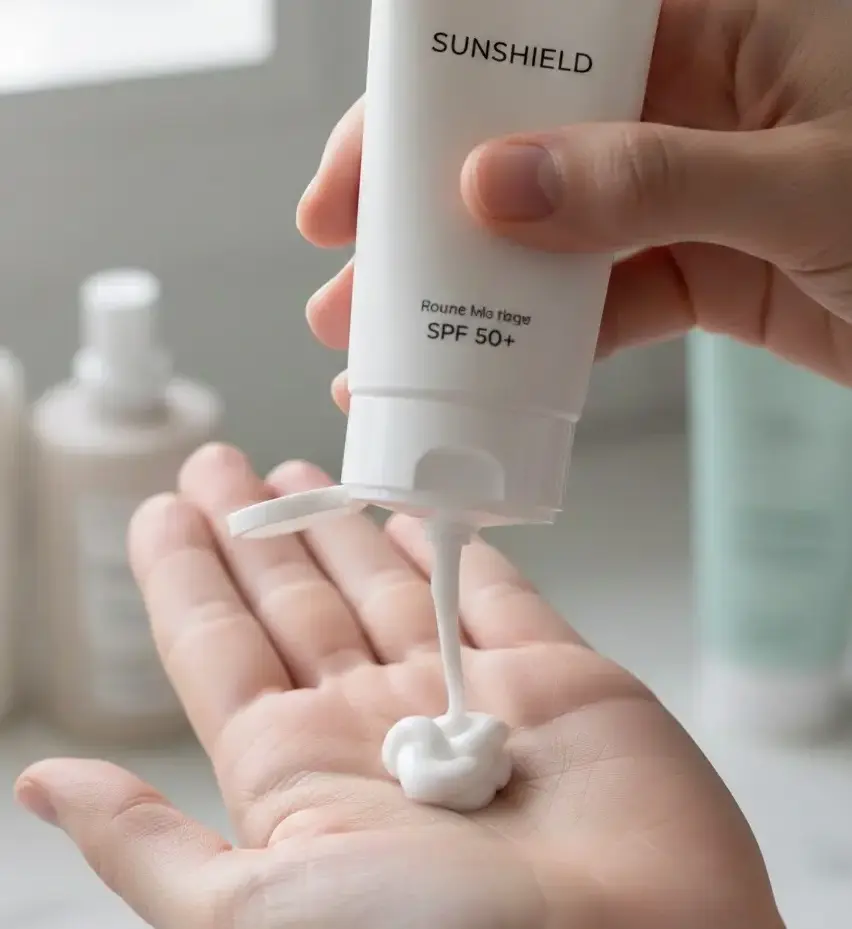
Silicones in sunscreen are synthetic polymer-based ingredients added to sun protection formulas to improve application, stability, and sensory performance. These compounds form breathable films on the skin that help distribute UV filters evenly and enhance water resistance. Because sunscreen must remain stable under sunlight, heat, and moisture, silicones are often incorporated into formulations to maintain protective performance.
Key Takeaways
- Silicones in sunscreen improve spreadability and skin feel.
- They help distribute UV filters evenly across the skin.
- Film-forming silicones enhance water and sweat resistance.
- Many cosmetic silicones are considered safe by regulatory authorities.
- Silicone-based sunscreens are commonly used for lightweight facial protection.
Why Are Silicones Used in Sunscreen Formulations?
Silicones in sunscreen are primarily used to enhance formulation stability, spreadability, and durability on the skin. Cosmetic chemists rely on these ingredients to create sunscreens that apply smoothly and remain effective during outdoor exposure.
Common functional roles include:
- Improved texture: Provides a smooth, non-sticky finish.
- Uniform UV filter distribution: Helps active ingredients spread evenly.
- Water resistance: Forms a protective film that resists sweat and moisture.
- Enhanced skin feel: Reduces greasiness compared with traditional oils.
Common silicone types used in sunscreen formulations include:
| Silicone Ingredient | Function in Sunscreen |
| Dimethicone | Skin smoothing and barrier support |
| Cyclopentasiloxane | Lightweight spreading agent |
| Dimethicone crosspolymer | Thickening and texture improvement |
| Trimethylsiloxysilicate | Film formation and water resistance |
Regulatory authorities such as the U.S. Food and Drug Administration (FDA) and European Chemicals Agency (ECHA) classify many cosmetic silicones as safe when used within approved formulation limits
Are Silicones in Sunscreen Safe for Skin?
Silicones in sunscreen are considered safe for cosmetic use when formulated according to regulatory standards. Dermatological studies indicate that most cosmetic silicones are non-reactive and non-sensitizing.
Safety characteristics include:
- Low skin absorption: Large molecular structure limits penetration.
- Non-comedogenic properties: Many silicone formulations do not clog pores.
- Chemical stability: Resistant to oxidation and UV degradation.
- Compatibility with sensitive skin: Frequently used in dermatological products.
Research published in dermatology journals shows that silicones function primarily as surface conditioners rather than active skin-penetrating chemicals.
How Do Silicones Improve Sunscreen Performance?
Silicones in sunscreen play an important role in maintaining product performance during real-world conditions such as heat, sweat, and sunlight exposure.
Key formulation benefits include:
- Film formation
Creates an even protective layer over the skin. - Enhanced water resistance
Helps sunscreen remain effective during swimming or sweating. - Improved UV filter stability
Protects active ingredients from rapid breakdown. - Better spreadability
Ensures consistent SPF coverage across the skin surface.
These properties help sunscreen maintain labeled protection levels when applied correctly.
Are Silicones in Sunscreen Suitable for Oily or Acne-Prone Skin?
Silicones in sunscreen are often beneficial for oily or acne-prone skin because they create lightweight, breathable layers instead of heavy oil films.
Benefits for oily skin include:
- Lightweight matte finish
- Reduced shine and greasiness
- Smooth primer-like skin texture
- Lower risk of clogged pores in many formulations
Silicone-based sunscreen gels are particularly common in humid climates because they provide SPF protection without heavy cream textures.
Do Silicone-Based Sunscreens Have Side Effects?
Silicones in sunscreen rarely cause side effects because they are chemically stable and inert. However, formulation type and individual skin sensitivity can influence user experience.
Possible concerns include:
- Occlusive feeling: Some people perceive a sealed skin sensation.
- Layering issues: Silicone products may pill when mixed with incompatible skincare.
- Removal requirements: Film-forming formulas may require thorough cleansing.
These effects depend more on product formulation than on silicone chemistry itself
What Types of Sunscreens Commonly Contain Silicones?
Silicones in sunscreen are most commonly found in modern lightweight formulations designed for daily use.
Examples include:
- Gel sunscreens
- Matte finish sunscreens
- Water-resistant sports sunscreens
- Primer-style face sunscreens
Silicone-rich formulas are especially popular in facial sunscreens where smooth application and makeup compatibility are important.
Many consumers exploring sunscreen ingredients also compare mineral sunscreens, chemical UV filters, and silicone-based sunscreen textures.
Conclusion
Silicones in sunscreen serve essential formulation roles, including improved spreadability, stability, and water resistance. When used within regulated cosmetic standards, they provide a safe and effective way to enhance sunscreen performance and user experience. Understanding how these ingredients function also supports broader knowledge about silicones in skincare, where they are widely used for texture, protection, and formulation stability.
FAQ
Why do sunscreens have silicones?
Silicones improve sunscreen texture, help distribute UV filters evenly, and create water-resistant protective films on the skin.
Is 100% silicone safe for skin?
Pure cosmetic silicones such as dimethicone are generally considered safe and non-reactive when used in regulated skincare formulations.
Why avoid silicone in skincare?
Some people avoid silicones because they prefer oil-free or minimalist formulations, though most cosmetic silicones are considered non-comedogenic.
How to know if sunscreen has silicone?
Check the ingredient list for names like dimethicone, cyclopentasiloxane, trimethylsiloxysilicate, or dimethicone crosspolymer.
Is silicone sunscreen good for oily skin?
Yes. Many silicone-based sunscreens provide lightweight, matte finishes that suit oily or combination skin types.
Sources
https://www.healthline.com/health/beauty-skin-care/silicones
https://www.reddit.com/r/IndianSkincareAddicts/comments/wtrkc1/guys_do_you_prefer_silicone_based_sunscreen_or/
https://magazine.elkem.com/personal-care-and-consumer-goods/why-should-you-choose-silicones-for-sun-protection-products/
https://www.xjysilicone.com/why-to-add-silicone-in-sunscreen.html
https://pmc.ncbi.nlm.nih.gov/articles/PMC10298615/
https://www.clinikally.com/collections/silicon-sunscreens?srsltid=AfmBOopZPN5MZvK5x0qJgu8YEoVKAik1AUIxJE4cbn6NLtlDeHgIB5ZU
https://www.amazon.in/Sunscreen-Comedogenic-Resistant-Clinically-Dermatologist/dp/B01FS8F19S
https://skininspired.in/products/ultra-armour-silicone-sunscreen-gel-spf-50?srsltid=AfmBOoq-yFPlhugEkPebAGHJwpZw5MmuTVzc1zdvSUdIA_sIfve6GRzb