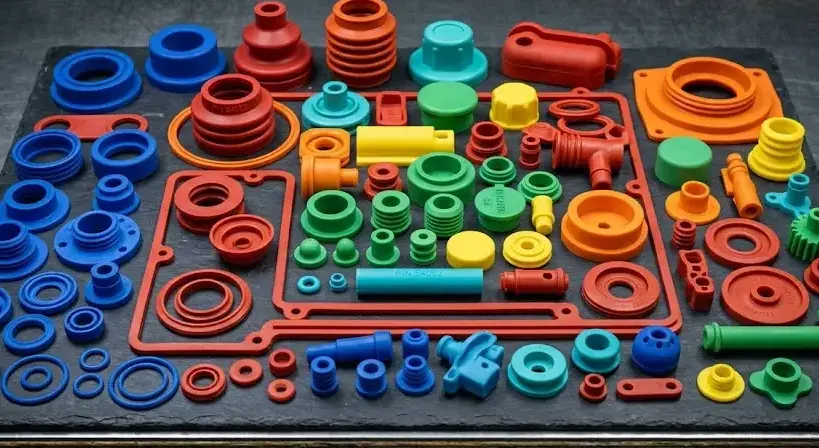
Custom silicone rubber parts are precision-crafted components developed from silicone elastomers to align with defined dimensional and operational requirements. The ability to tolerate harsh temperatures, chemical environments, and UV exposure allows for broad industrial adoption. How do these properties translate into real-world applications and manufacturing processes?
Key Takeaways
- Custom silicone rubber parts are tailored for precision and durability
- Manufacturing methods include compression, injection, and transfer molding
- Material selection depends on temperature, chemical exposure, and application
- Pricing varies based on tooling, volume, and specifications
- Compliance with ISO and FDA standards is critical for quality assurance
What are custom silicone rubber parts and where are they used?
Custom silicone rubber parts are designed components tailored to exact specifications for performance-critical environments.
Common applications include:
- Medical devices (catheters, seals)
- Automotive components (gaskets, O-rings)
- Electronics (insulators, keypads)
- Food-grade equipment (seals, tubing)
Key standards:
- FDA compliance for food and medical use
- ISO 10993 for biocompatibility
- ASTM D2000 for rubber classification
How are custom silicone rubber parts manufactured?
Custom silicone rubber parts are produced using specialized molding techniques to achieve precise shapes and tolerances.
Primary manufacturing methods:
- Compression Molding – Suitable for high-strength parts
- Injection Molding – Ideal for high-volume precision components
- Transfer Molding – Used for complex geometries
Typical process steps:
- Material selection (LSR or HCR silicone)
- Mold design and tooling
- Curing under controlled heat and pressure
- Finishing and quality inspection
What materials and grades are used in custom silicone rubber parts?
Custom silicone rubber parts utilize different silicone formulations depending on application requirements.
| Material Type | Key Properties | Applications |
| Liquid Silicone Rubber (LSR) | High purity, flexible | Medical, electronics |
| High Consistency Rubber (HCR) | मजबूत mechanical strength | Automotive, industrial |
| Fluorosilicone | Fuel and oil resistance | Aerospace |
Material characteristics:
- Temperature range: -60°C to 230°C
- उत्कृष्ट electrical insulation
- Resistance to ozone and UV
What factors influence custom silicone rubber parts price?
Custom silicone rubber parts pricing depends on multiple technical and production variables.
Cost drivers:
- Tooling complexity and mold design
- Material grade (medical vs industrial)
- Production volume
- Tolerance and finishing requirements
Indicative price range (India):
- Low volume prototypes: ₹50–₹500 per piece
- High-volume production: ₹5–₹50 per piece
How do manufacturers ensure quality and compliance?
Custom silicone rubber parts must meet strict quality and regulatory benchmarks.
Quality assurance practices:
- Dimensional inspection using precision instruments
- Material testing (tensile strength, elongation)
- Batch traceability and documentation
Certifications:
- ISO 9001 (quality management)
- ISO 13485 (medical devices)
- RoHS and REACH compliance
How to choose the right custom silicone rubber parts manufacturer?
Collaborating with an experienced manufacturer ensures dependable performance and alignment with industry standards.
Evaluation criteria:
- Experience in silicone rubber molding
- In-house tooling and design capability
- Certifications and testing infrastructure
- Proven industry applications
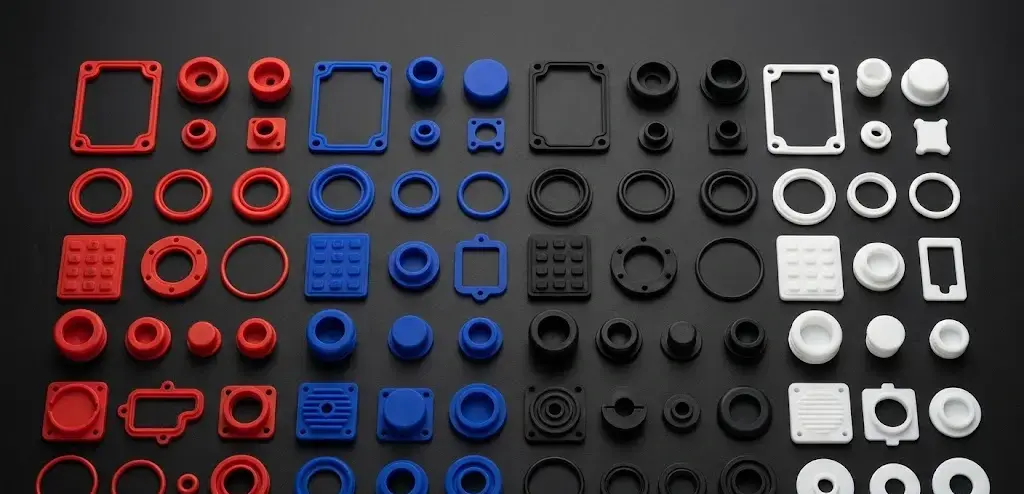
Custom silicone rubber parts are often discussed alongside silicone products list, silicone rubber molding, and custom silicone mold manufacturer options for broader sourcing clarity.
Conclusion
Custom silicone rubber parts provide reliable performance across industries due to their adaptable material properties and precision manufacturing processes. Understanding material selection, molding methods, and compliance standards ensures optimal results. For broader applications, these components are closely related to molded silicone rubber products used in standardized production environments.
FAQs
How to customize silicone products?
Customization involves defining material type, dimensions, hardness, and application-specific requirements before mold design and production.
How much does it cost to make a custom silicone mold?
A custom silicone mold typically costs between ₹10,000 and ₹1,00,000 depending on complexity and size.
What are the components of silicone rubber?
The composition of silicone rubber includes silicon, oxygen, carbon, and hydrogen, which together create a stable polymer framework.
Can I make my own silicone molds?
Yes, basic silicone molds can be made using liquid silicone kits, but industrial-grade molds require specialized equipment.
Sources
https://dir.indiamart.com/impcat/silicone-rubber-products.html
https://www.advancedprototype.com/services/rubber-and-silicone-parts/
https://www.horiaki.co.in/silicone-rubbers-parts.html
https://upmold.com/service/silicone-rubber-parts-manufacturing-services/
https://filcomps.com/silicone-rubber-parts-manufacturer-in-india/
https://kpmrubber.com/custom-rubber-parts/
https://www.simtec-silicone.com/
https://www.rubberconcept.com/custom-molded-rubber-parts.php
https://www.tradeindia.com/products/silicone-molded-parts-243362.html
https://pluxindustry.en.made-in-china.com/product/tQwRPIAbVapq/China-Custom-Silicone-Rubber-Parts-for-Unique-Functional-Designs.html