
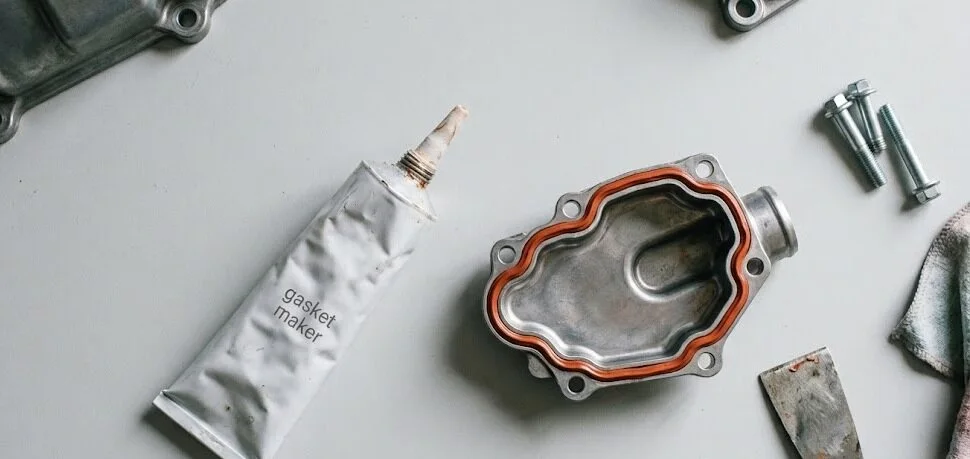
A silicone gasket maker is a paste that turns into a flexible rubber seal right on the part. Mechanics use it on oil pans, covers and housings where a cut gasket is missing, awkward or simply not enough. Used well, it stops leaks for years. Used badly, it causes the very leaks it was meant to fix.
This guide explains how it cures, how to choose a type, how to apply it and where it should never go.
Key Takeaways
- This sealant cures with moisture from the air.
- Clean, oil-free metal matters more than the brand you buy.
- A thin, continuous bead beats a thick one.
- Full cure takes about 24 hours, longer in cold or dry air.
- Choose a sensor-safe product near oxygen sensors and electronics.
- Never use it as a head gasket or in pure fuel.
What Is a Silicone Gasket Maker?
A silicone gasket maker is a single-component sealant. You squeeze it from a tube, join the parts and let it cure into rubber.
Many tubes are sold as an RTV gasket maker. RTV is short for room temperature vulcanizing. No oven or hardener is needed. The paste reacts with moisture in the air, so it starts at the outer edge and cures inward.
That is why it is called a form-in-place gasket, and why a form-in-place gasket can seal flanges that a cut gasket would not. It fills small machining marks and gaps that a pre-cut gasket can miss. Many products are rated from about -50°C up to roughly 300°C, though often only for short spells at the top end.
Types of Silicone Gasket Maker
Most RTV silicone tubes use an acetoxy cure. These products release acetic acid as they set, which smells like vinegar. The fumes irritate the eyes, nose and throat, and they can corrode electronics.
That is why many tubes carry a sensor-safe label. It means the maker formulated the product not to harm oxygen sensors. Choose one whenever the repair sits near the intake, crankcase or electrical parts.
The cure chemistry matters most near sensors and electronics. Here is how the two common types compare.
| Feature | Acetoxy cure | Neutral cure |
| Smell | Sharp, vinegar-like | Mild or low odour |
| Cure by-product | Acetic acid | Non-acidic by-product |
| Corrosion risk | Can attack electronics and some metals | Much lower |
| Sensor-safe | Only if the tube says so | Many are labelled sensor-safe |
| Best for | General covers and flanges away from electronics | Joints near oxygen sensors, intake and wiring |
Colour is a rough guide only. Red often means high heat, while grey and black are common for oil-contact covers. Colours are not standardised across brands, so read the tube.
This quick guide shows what each colour is usually sold for. Brands differ, so treat it as a starting point and check the tube.
| Colour | Typical use | What to check |
| Red | High-heat and heavy-duty joints, such as towing | Peak and intermittent temperature rating |
| Black | Oil pans, valve covers and other oil-contact covers | Oil resistance and sensor-safe label |
| Blue | General-purpose joints, water and coolant housings | Coolant or water-glycol resistance |
| Grey | Gearbox, differential and timing covers | Oil resistance and flexibility |
Resistance varies too. Many RTV gasket makers handle oil, water and antifreeze, but petrol resistance is often short-term only. Check the data sheet against the fluid your joint will meet.
Anaerobic gasket makers are a different product from RTV silicone. They cure between tight metal faces when air is shut out, so they suit rigid flanges rather than flexible covers.
People often mix up three products that look alike on the shelf. This table shows where each one fits.
| Feature | RTV silicone gasket maker | Anaerobic gasket maker | Non-hardening sealant |
| How it cures | Reacts with moisture in the air | Cures between tight metal faces without air | Stays soft and tacky |
| Finished seal | Flexible rubber | Rigid plastic-like layer | Soft film |
| Gap it can fill | Small to moderate gaps | Tight, machined gaps only | Small gaps |
| Best for | Stamped covers, oil pans, flexible joints | Rigid, machined flanges | Pre-cut gaskets and fittings |
Temperature Ratings in °F and °C
Temperatures matter when you pick a silicone gasket maker. The range given earlier, about -50°C to 300°C, works out to roughly -58°F to 572°F.
Real products list their own figures, and many quote the high end as intermittent only. Here are examples from one major brand.
| Product type | Range in °F | Range in °C |
| High-temp red | -65°F to 650°F intermittent | -54°C to 343°C intermittent |
| Ultra black, oil resistant | -65°F to 500°F | -54°C to 260°C |
| Water pump and thermostat | -65°F to 500°F intermittent | -54°C to 260°C intermittent |
Intermittent means short spells at the top figure, not constant exposure. Always check the rating on your own tube.
Where to Use Silicone Gasket Maker
Common jobs for a form-in-place gasket include oil pans, timing covers, valve covers, gearbox and differential covers, water pumps, thermostat housings and pipe flanges.
Skip it in three places. Never use it instead of a head gasket. Keep it out of fuel systems that sit in pure fuel. Do not use it in pure oxygen or oxygen-rich systems.
Outside the engine bay, RTV silicone also seals joints on ovens, furnaces and heating elements, because it tolerates high heat. Check the temperature rating first.
You can also use an RTV gasket maker as a dressing. Spread a thin film on each side of a pre-cut gasket so it seats evenly. Keep that film thin.
Think twice before replacing a paper, cork or metal gasket that the engine maker designed. Those gaskets control how tightly the parts clamp. A liquid layer changes that.
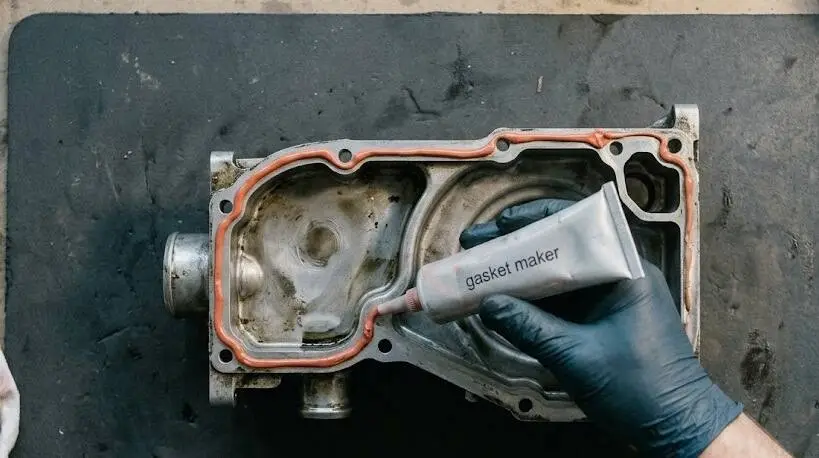
How to Apply Silicone Gasket Maker
A clean surface decides the result. The paste cannot grip wet oil, dried coolant or leftover sealant.
- Scrape off the old material gently. A plastic scraper or brass brush is safer than a steel wire wheel on soft aluminium. A dedicated gasket remover helps with stubborn residue.
- Degrease both faces with a residue-free cleaner and a lint-free cloth. Let them dry completely.
- Cut the nozzle so the bead is about 3 to 5 mm wide, roughly 1/8 inch.
- Lay one continuous bead on one surface only. Circle every bolt hole and leave no gaps.
- Join the parts and tighten the bolts as the product instructions say.
Instructions do differ between brands. Some tell you to assemble while the paste is still wet. Others say to snug the bolts, wait for a skin to form, then apply final torque. Follow the tube in your hand.
Awkward joints sometimes need extra help. A small dab at T-joints, sharp corners and stepped castings fills gaps where the main bead may thin out.
Keep the bead modest and away from the inner edge. Excess that squeezes inside can break loose later and block oil passages.
Curing Time
A skin usually forms in 30 to 60 minutes. Full cure takes about 24 hours, so many makers say to leave the job overnight before adding fluids.
Cold, dry air slows the reaction because the paste needs moisture. Below about 10°C, allow much more time. Never fill an engine or cooling system with a joint that is only partly cured.
Common Mistakes to Avoid
The usual errors with RTV silicone are simple. People apply too much paste, skip degreasing, scrape with steel tools, or start the engine too soon.
Another trap is using an old, half-cured tube. If the paste is lumpy or skins over in the nozzle, replace it. To save a part-used tube, let a little paste cure at the tip as a plug, then cut it off next time.
Safety Tips
Work in a ventilated space, because curing acetoxy products give off acetic acid fumes. Keep tubes out of reach of children and wash your hands after use.
Read the safety data sheet if you work with the product often. It lists first aid steps and handling limits.
Faqs
What is silicone gasket maker used for?
It seals flexible joints between parts, such as oil pans, covers, water pumps and flanges. It can replace a missing gasket or add a thin seal to a pre-cut one.
How long does silicone gasket maker take to cure?
It skins over in about 30 to 60 minutes and cures fully in around 24 hours. Cold or dry conditions can double or triple that.
Can silicone gasket maker replace a head gasket?
No. A head gasket handles intense heat and pressure, and the sealant is not designed for that job. Using it there risks serious engine damage.
Is silicone gasket maker safe for oxygen sensors?
Only sensor-safe products are meant for that. Ordinary acetoxy types give off acetic acid while curing, which can damage electronics. Check the label before you buy.
How thick should silicone gasket maker be applied?
A continuous bead of about 3 to 5 mm is the usual advice. More paste does not seal better and can push into the engine.
Bottom Line
Silicone gasket maker works best when you treat it as a precision product: clean surfaces, a thin bead, patience while it cures and the right type for the job. Pick sensor-safe versions near electronics, and keep it away from head gaskets and fuel.