
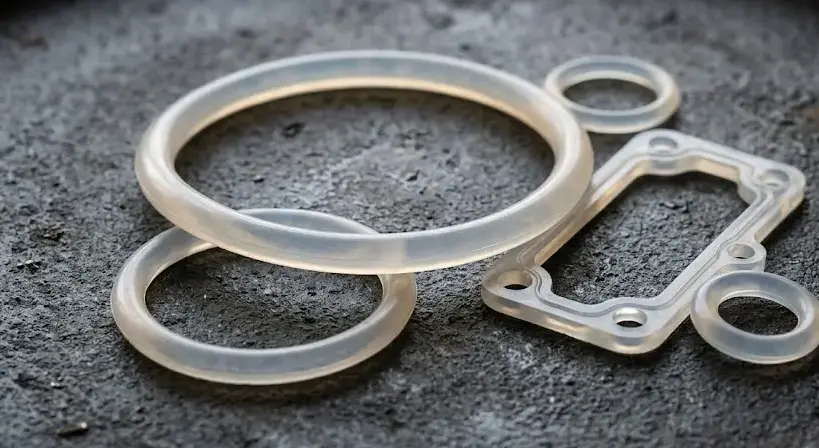
Silicone rubber gaskets are elastomeric sealing elements made from silicone-based polymers designed to maintain airtight and watertight seals under extreme environmental conditions. Their use spans industries that prioritize long-lasting performance, heat tolerance, and chemical stability. How do these gaskets operate effectively while fulfilling compliance requirements?
Key Takeaways
- Silicone rubber gaskets provide durable sealing across extreme temperatures
- Available in multiple forms including sheets, strips, and molded components
- Comply with FDA, ISO, and UL standards for safety and performance
- Widely used in automotive, medical, and industrial sectors
- Manufactured using molding, extrusion, and die-cutting techniques
What are silicone rubber gaskets and how do they work?
By compressing between two contact surfaces, silicone rubber gaskets establish a dependable seal that stops leakage.
Key characteristics:
- High elasticity ensures tight sealing under compression
- Resistance to UV, ozone, and oxidation
- Stable performance across temperature fluctuations
Common applications:
- Automotive engine sealing
- Electrical enclosures
- Food processing equipment
What specifications define silicone rubber gasket performance?
Silicone rubber gaskets are classified based on material composition and mechanical properties.
| Specification | Typical Range/Value |
| Hardness (Shore A) | 20–80 |
| Temperature Range | -60°C to +230°C |
| Tensile Strength | 5–12 MPa |
| Elongation at Break | 150%–700% |
Standards and compliance:
- FDA compliance for food-grade use
- ISO 9001 manufacturing quality
- UL certifications for electrical safety
What are the different forms of silicone rubber gasket materials?
Silicone rubber gaskets are manufactured in various forms to meet specific application needs.
Common formats:
- Silicone Rubber Gasket Sheet: Used for custom-cut seals
- Silicone Rubber Gasket Strip: Ideal for continuous sealing
- Silicone Gasket Tube: Used in fluid transfer and sealing
- Silicone gasket for tap: Designed for plumbing fixtures
These variations allow engineers to select the correct geometry and flexibility for sealing efficiency.
What is the temperature range of silicone rubber gaskets?
Silicone rubber gaskets are engineered for extreme temperature resistance, maintaining flexibility and sealing integrity.
Performance range:
- Low temperature: up to -60°C without brittleness
- High temperature: up to +230°C continuous exposure
- Short-term peaks: up to +300°C in specialized grades
This makes them suitable for high-heat environments such as ovens, engines, and industrial machinery.
How are silicone rubber gaskets manufactured?
Silicone rubber gaskets are produced using precision molding and extrusion processes.
Manufacturing methods:
- Compression molding for high-strength parts
- Injection molding for complex shapes
- Die-cutting from silicone rubber gasket sheets
- Extrusion for continuous strips and tubes
Industry practice:
Manufacturers follow strict quality checks including dimensional tolerance testing and material consistency verification.
Where are silicone rubber gaskets commonly used?
Silicone rubber gaskets are broadly used in applications that require effective sealing in challenging conditions.
Industries:
- Automotive: engine and exhaust sealing
- Medical: sterilizable sealing components
- Electronics: insulation and moisture protection
- Food & beverage: hygienic sealing systems
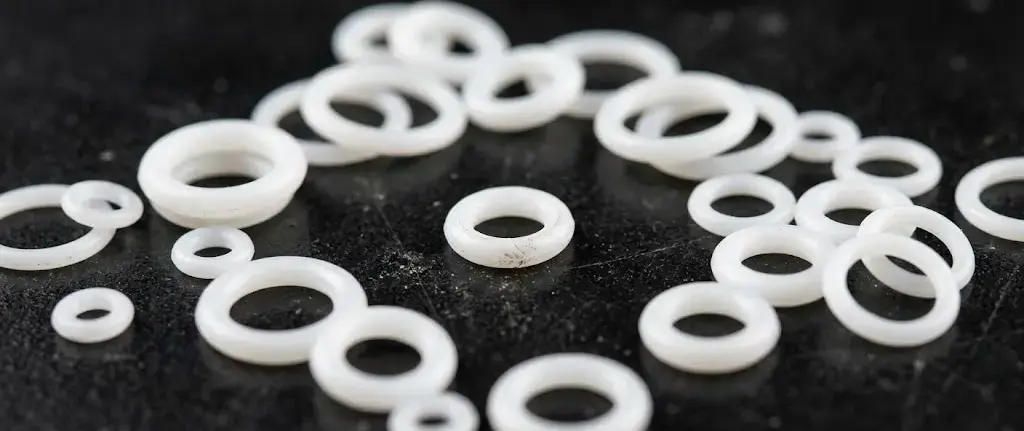
A silicone rubber gasket is often discussed alongside EPDM gaskets, neoprene seals, and PTFE sealing materials used in industrial applications.
Conclusion
Silicone rubber gaskets provide reliable sealing solutions through their thermal stability, flexibility, and compliance with industrial standards. Their classification by form, temperature resistance, and manufacturing method enables precise selection for diverse applications. For specialized requirements, solutions such as custom silicone rubber parts ensure optimal performance and long-term durability.
FAQ
What is a silicone rubber gasket used for?
Silicone rubber gaskets are used to seal joints and prevent leakage of fluids or gases in industrial, automotive, and food-grade applications.
What are the different types of silicone gaskets?
Types include sheets, strips, molded gaskets, tubes, and application-specific designs like tap gaskets.
Is silicone good for rubber gaskets?
Yes, silicone offers excellent temperature resistance, flexibility, and chemical stability, making it ideal for sealing applications.
What is a molded rubber gasket?
A molded rubber gasket is a precisely shaped sealing component produced using compression or injection molding techniques.
What is the temperature range of silicone rubber gaskets?
They typically operate between -60°C and +230°C, with higher limits for specialized grades.
Sources
https://elastostar.com/detailed-guide-on-silicone-gaskets/
https://dir.indiamart.com/impcat/silicone-rubber-gasket.html
https://www.iqsdirectory.com/articles/gasket/silicone-rubber.html
https://www.mercergasket.com/silicone-rubber-gaskets-101/
https://www.amazon.in/00686-Corning-Silicone-Gaskets-2-8-Ounce/dp/B000GF49GA
https://www.surajmetal.com/silicone-rubber-gasket.html
https://therubbercompany.com/gaskets-and-seals/rubber-gaskets/silicone-rubber-gaskets
https://www.rajrubberproducts.com/silicone-gaskets.html
https://www.modusadvanced.com/resources/blog/silicone-vs-rubber-gaskets-complete-material-selection-guide-for-engineers