Integrating silicones in textile manufacturing revolutionizes how mills achieve premium fabric hand-feel, elasticity, and functional performance. In a rapidly evolving textile industry, the quest for materials that effortlessly blend superior fabric quality with peak operational efficiency is relentless.
Silicone has been an integral part of the modern process of textile manufacturing due to the benefits it provides in terms of improving fabric quality as well as the process itself. Regardless of whether the product is used for spinning, dyeing, finishing, or coating, silicone improves the process, fabric performance, and longevity of fabrics. By applying specialized amino-functional and elastomeric finishes, leveraging silicones in textile manufacturing allows producers to enhance fabric drape, improve tear strength, and deliver long-lasting wash durability across natural and synthetic fibers.
Table of Contents
Key Advantages of Silicones in Textile Manufacturing
The physical and chemical properties of silicones make them extremely useful materials for use in the processing and finishing of textiles. Utilizing silicones in textile manufacturing gives cotton and synthetic blends an exceptionally soft, silky hand-feel that lasts through multiple washes.
They are known for their:
- Great flexibility
- Low surface tension
- Thermal stability
- Water repellency
- Chemical stability
- Lubricity
- Resistance to UV radiation and weathering
- Durability
These properties enable silicones to enhance the efficiency of production as well as the quality of the final textile product.
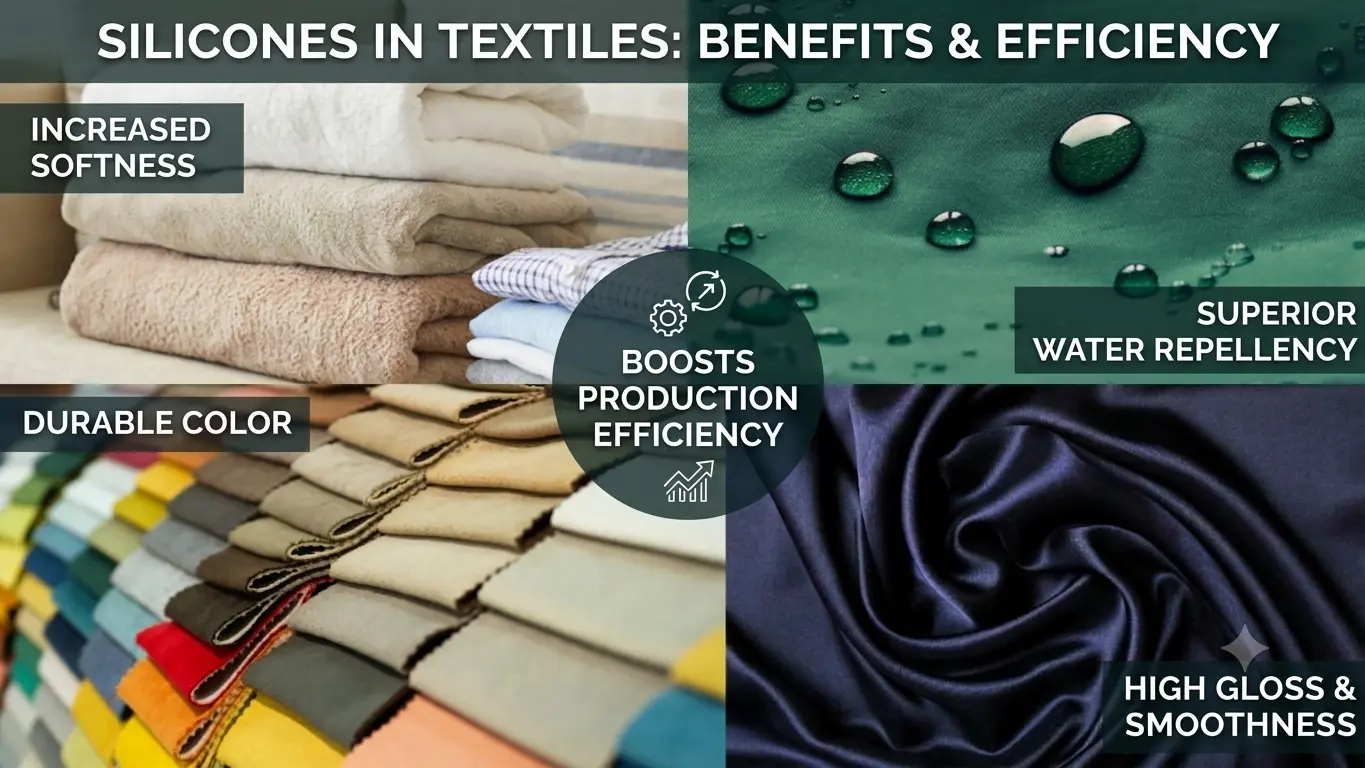
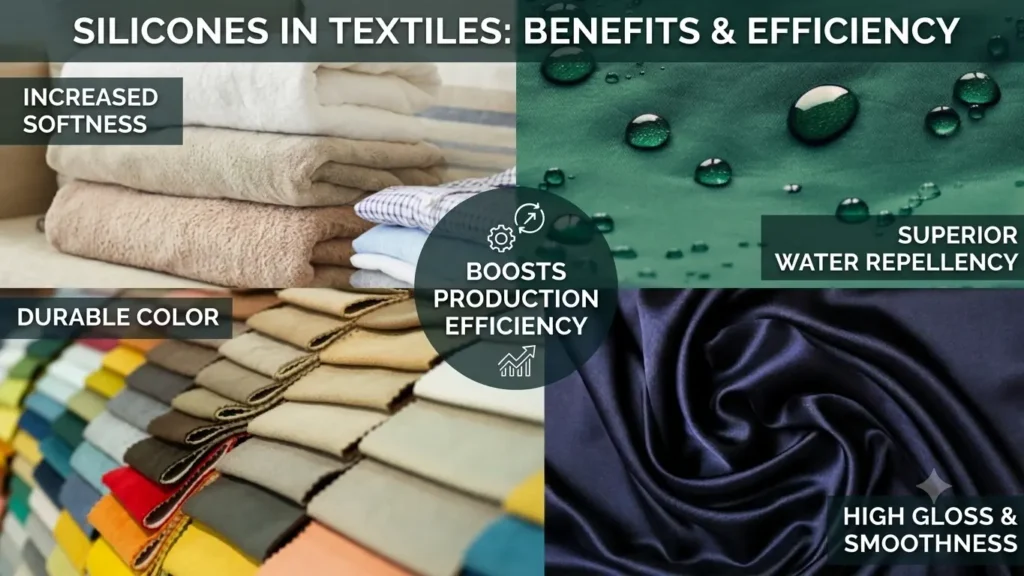
Benefits of Silicone Auxiliaries in Fabrics
Silicone technology contributes to multiple stages of textile production, from fibre processing to final fabric finishing. Incorporating macro and micro-emulsions of silicones in textile manufacturing significantly enhances fabric elasticity and crease recovery.
1. Improves Fabric Softness
Silicone softeners create a smooth surface on textile fibres, giving fabrics a softer feel without significantly affecting their strength. Activewear brands prefer specialized silicones in textile manufacturing to provide hydrophobic water repellency without sacrificing breathability.
Common applications include:
- Apparel fabrics
- Home textiles
- Towels
- Knitwear
- Upholstery fabrics
2. Enhances Fabric Flexibility
Silicones help fabrics retain flexibility even after repeated washing and regular use. Hydrophilic formulations of silicones in textile manufacturing allow towel manufacturers to boost fabric softness while maintaining high water absorption.
This contributes to:
- Better drape
- Improved comfort
- Reduced fibre stiffness
- Easier garment movement
3. Reduces Friction During Manufacturing
Silicone lubricants minimise friction between fibres, yarns, and machinery components.
Benefits include:
- Smoother yarn movement
- Reduced fibre breakage
- Lower machine wear
- Improved production efficiency
4. Improves Water Repellency
Specialised silicone finishes create water-resistant surfaces on fabrics without significantly affecting breathability.
These finishes are commonly used for:
- Outdoor clothing
- Protective garments
- Tents
- Awnings
- Technical textiles
5. Increases Heat and Weather Resistance
Silicones help fabrics maintain their performance under exposure to heat, sunlight, and changing weather conditions.
This makes them suitable for:
- Automotive textiles
- Outdoor furnishings
- Industrial fabrics
- Protective covers
6. Supports Better Dyeing and Finishing
Silicone-based auxiliaries improve several textile finishing processes by enhancing fabric appearance and consistency.
Applications include:
- Fabric finishing
- Printing
- Coating
- Foam control during dyeing
- Surface modification
Key Benefits of Silicone Fabric Conditioners
Mill managers rely on silicones in textile manufacturing to improve sewability and reduce yarn breakage during high-speed garment stitching.
| Benefit | How It Improves Textile Manufacturing |
| Fabric softness | Produces a smooth and comfortable fabric feel |
| Lubrication | Reduces friction during processing |
| Flexibility | Improves fabric drape and comfort |
| Water repellency | Protects fabrics from moisture |
| Heat resistance | Supports performance in demanding environments |
| UV resistance | Helps fabrics withstand outdoor exposure |
| Chemical stability | Maintains consistent material performance |
| Longer durability | Extends the service life of finished textiles |
The combination of these properties enables manufacturers to produce fabrics that perform reliably across a wide range of applications.
Applications of Silicones in Textile Manufacturing
Silicones are incorporated into various stages of textile production rather than being limited to a single process. Chemical suppliers continue to innovate green formulations of silicones in textile manufacturing that minimize environmental impact during finishing.
| Manufacturing Stage | Role of Silicone |
| Fibre processing | Acts as a lubricant to reduce friction |
| Spinning | Improves yarn movement and processing |
| Dyeing | Controls foam and supports process efficiency |
| Printing | Improves finish quality |
| Fabric finishing | Enhances softness and flexibility |
| Coating | Provides water and weather resistance |
| Sewing | Reduces thread friction in high-speed operations |
Choosing the Right Textile Silicone Emulsions
Choosing the correct formulation of silicone will depend upon the end application for the fabric. Applying elastomeric silicones in textile manufacturing helps knit fabrics retain their structural shape and resist stretching over time.
Some considerations should be:
- Type of fabric
- Surface finish desired
- Softness requirement
- Water repellency requirements
- Method of processing
- Heat exposure
- Durability through washing
- Industrial performance specifications
Working with knowledgeable silicone vendors will help to ensure that the right formulation has been chosen.
The Bottom Line
Silicones have transformed the world of textile production with their incredible qualities that ensure maximum softness, flexibility, lubricity, and longevity from the fibers to the final products. With the ever-evolving field of more intelligent and stronger fabrics, silicones are still setting benchmarks in terms of efficiency and quality.
The adoption of advanced silicones in textile manufacturing enables fabric finishers to meet strict global quality standards while lowering overall chemical usage. It’s time to elevate your textile operations. Contact the team at Biopol Chemicals to find the ideal silicone formulation for your manufacturing needs.
Frequently Asked Questions
1. Why is there a high demand for silicones in textile production?
Silicones are preferred because of their ability to make the fabrics softer, more flexible, durable, slippery, and heat- and water-resistant, among other benefits.
2. What textile products are made using silicone finishes?
Textiles that are typically treated with silicone finishes include clothing, sportswear, furnishing fabrics, towels, upholstery fabrics, outdoor fabrics, technical textiles, and industrial fabrics.
3. Is there anything special about the care required of the silicone-finished fabrics?
Not necessarily. Silicone-finished fabrics can be washed and maintained following the directions of the fabric manufacturer.
4. Are silicones exclusively used in fabric finishing?
No. Silicones are used at various stages in the manufacture of fibers such as fiber forming, spinning, dyeing, printing, coating, stitching, and fabric finishing.
Also Read