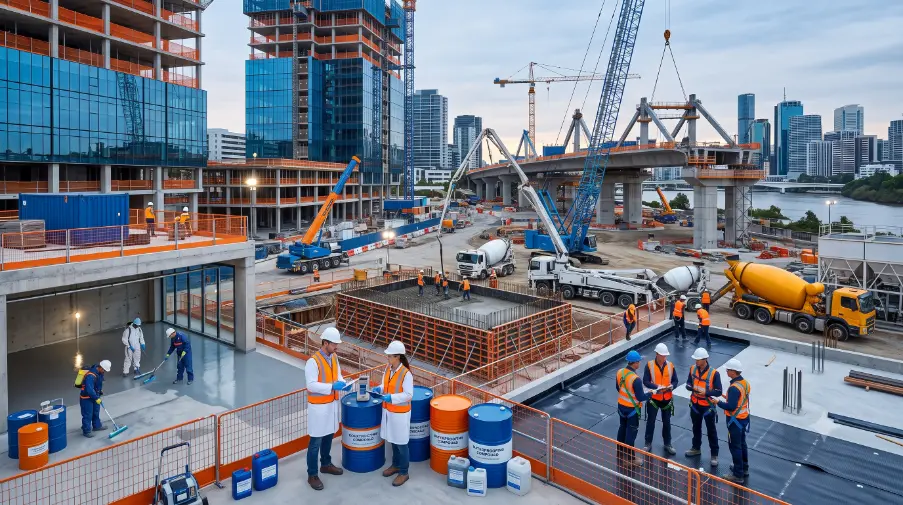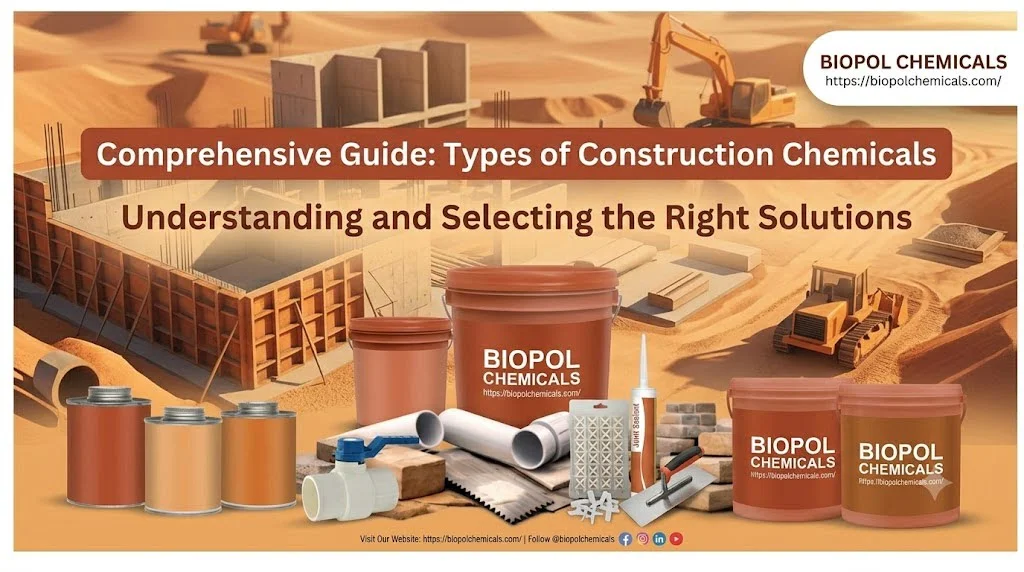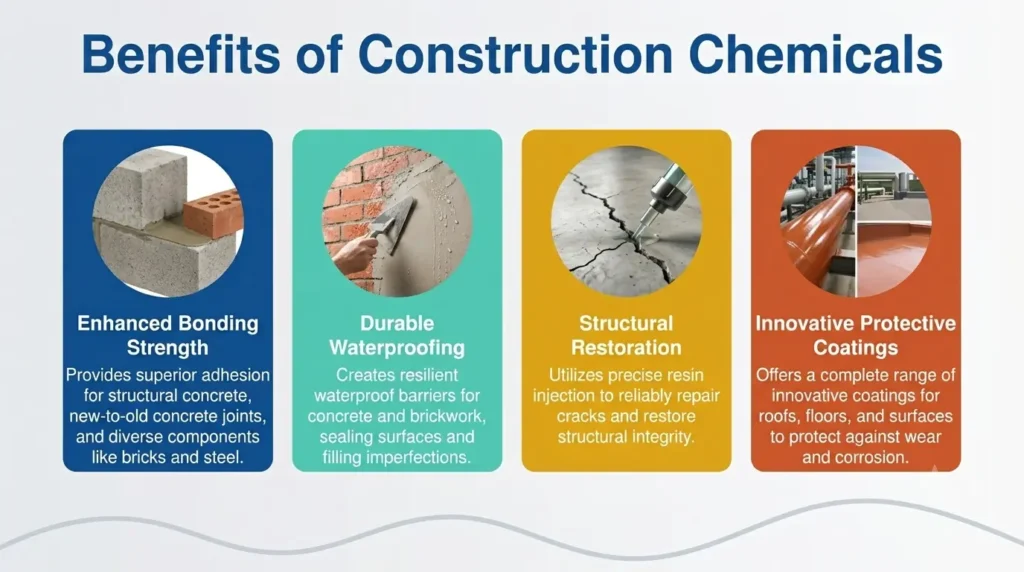
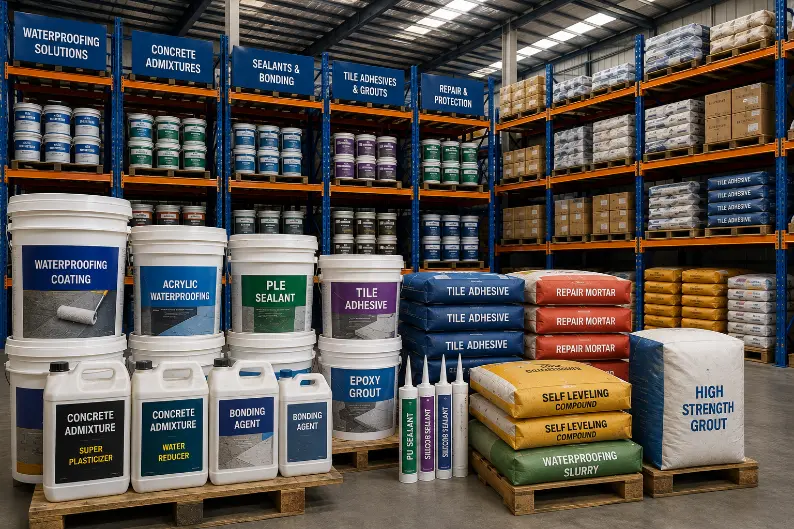
Construction chemicals play a role in a wide range of building and infrastructure work. They improve concrete performance, prevent water leakage, repair damaged surfaces, seal joints, and strengthen the bond between construction materials. Products like concrete admixtures, waterproofing chemicals, tile adhesives, sealants, grouts, repair mortars, and protective coatings are now standard on most construction sites. Because the quality and suitability of these products directly influence the final outcome, selecting the right construction chemical suppliers is a decision worth taking seriously.
Key Takeaways
- Choose suppliers based on quality, specifications, and reliability.
- Construction chemicals help with waterproofing, concrete, tiling, and repairs.
- Check application instructions, storage, and shelf life before purchasing.
- Compare price, availability, delivery, and technical support.
What Are Construction Chemicals?
Construction chemicals are products that are added to or applied onto construction materials to improve their performance or protect a structure over time. They are used at various stages of both new construction and repair work.
Some common examples include: –
- Concrete admixtures
- Waterproofing chemicals
- Tile adhesives
- Tile grouts
- Construction sealants
- Concrete repair products
- Bonding agents
- Curing compounds
- Protective coatings
- Flooring chemicals
Selecting the right product depends on the construction type, surface condition, weather exposure, moisture levels, and the specific demands of the project.
Also Read: Construction Chemicals Market

Common Products Supplied by Construction Chemical Suppliers
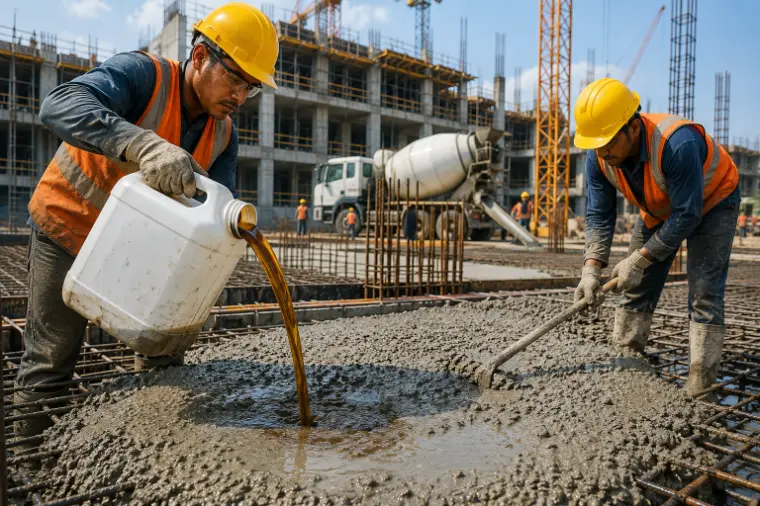
- Concrete Admixtures-Concrete admixtures are added to concrete in small amounts to adjust or enhance specific properties. Depending on the formulation, they can improve workability, control how quickly concrete sets, reduce water content, or increase overall strength. They are widely used in residential buildings, commercial developments, roads, bridges, and other concrete structures.
- Construction Chemical Suppliers are Waterproofing Chemicals- Waterproofing products are applied wherever structures are exposed to water or moisture. Typical application areas include roofs, basements, bathrooms, foundations, balconies, water tanks, and underground structures. Common options include liquid waterproofing compounds, cement-based coatings, membranes, and waterproofing admixtures.
- Tile Adhesives and Grouts- Tile adhesives are used to bond tiles to surfaces such as concrete, plaster, and cement boards. In many applications, they offer stronger adhesion than traditional cement and sand mixtures. Grouts fill the gaps between tiles and help protect tile joints from moisture, dirt, and physical damage.
Construction Sealants- Sealants are used to close gaps and joints between construction materials. They are commonly applied around windows, doors, expansion joints, concrete joints, sanitary areas, and anywhere else where movement or water infiltration is a concern. Concrete Repair- Products Concrete can crack or suffer surface damage over time due to age, weather, water exposure, poor construction practices, or heavy loads. Repair products are used to restore these affected areas. Depending on the extent of the damage, contractors may use repair mortars, crack fillers, bonding agents, or other suitable repair materials.
Why Choosing the Right Supplier?
Matters Construction projects depend on materials arriving on schedule and meeting the required specifications. A supplier that struggles to deliver consistent products or reliable timelines can cause real problems for contractors and project managers. When comparing construction chemical suppliers, the following factors are worth considering.
- Product Quality- Review the product specifications and technical data before purchasing. The product should be appropriate for its intended use and meet the relevant standards.
- Product Range- A supplier that carries a broad selection of construction chemicals simplifies the procurement process. Contractors often need several different products for a single project, including waterproofing materials, admixtures, sealants, adhesives, and repair products.
- Technical Assistance- Many construction chemicals require specific preparation, mixing, or application methods. Suppliers should be able to provide clear product information and practical application guidance.
- Supply and Delivery- Construction schedules are often fixed, and a delay in receiving critical materials can hold up other parts of the work. Confirm whether the supplier can deliver the required quantities within the project timeline.
- Packaging and Storage- Construction chemicals need to be properly packaged and stored. Before placing large orders, ask about storage conditions, shelf life, batch information, and handling requirements.
Price Cost is an important part of any procurement decision, but it should not be the only consideration. A lower-priced product may not perform adequately for a specific application. Compare product specifications, required quantities, expected performance, and application needs before committing to a purchase.
How to Compare Construction Chemical Suppliers?
Before choosing a supplier, put together a list of the products the project requires. Then compare suppliers based on product specifications, availability, pricing, delivery timelines, technical support, and any prior experience working with them. Requesting product samples or technical documents can also be helpful where appropriate. For larger projects, contractors and engineers may carry out product testing before approving a material for regular use. A reliable supplier should also be able to clearly explain how a product needs to be mixed, applied, cured, and stored.
Also Read: Silicones
Construction Chemical Suppliers for Different Projects
Different types of construction projects call for different chemical products. Residential buildings typically require waterproofing products, tile adhesives, grouts, sealants, concrete admixtures, and repair materials. Commercial buildings often have needs that extend to basements, parking structures, roofs, concrete elements, flooring systems, and expansion joints.
Infrastructure projects such as bridges, roads, tunnels, and water treatment facilities generally require concrete admixtures, repair materials, protective coatings, grouting products, and waterproofing systems. Industrial projects may have additional requirements, since surfaces are often exposed to chemicals, heavy loads, temperature fluctuations, or continuous moisture.
Questions to Ask Before Buying Before purchasing from construction chemical suppliers, it is worth asking: –
1. Is the product suitable for my specific application?
2. What are the product specifications?
3. How should the product be applied?
4. What surface preparation is needed?
5. What is the shelf life?
6. What are the storage requirements?
7. Is technical support available?
8. What quantities are in stock?
9. What is the expected delivery time?
10. Are test reports or technical documents available?
Getting clear answers to these questions reduces the risk of using a product that is not right for the job.
Conclusion
Construction chemicals are used across concrete work, waterproofing, tiling, sealing, repairs, and surface protection. Both the quality of the product and the way it is applied have a direct impact on the durability and performance of a construction project. When evaluating construction chemical suppliers, look at product quality, technical information, availability, delivery reliability, pricing, and customer support. A supplier that offers suitable products alongside clear application guidance makes material procurement more straightforward and helps contractors avoid common issues on site.
Also Read: Construction Chemical Products
Frequently Ask Questions
1. What products do construction chemical suppliers offer?
Construction chemical suppliers may provide a range of products for different construction needs. These can include concrete admixtures, waterproofing materials, tile adhesives, grouting products, sealants, concrete repair compounds, bonding agents, curing compounds, and surface coatings.
2. How can I select the right construction chemical supplier?
Compare suppliers based on product specifications, quality, availability, pricing, delivery capacity, technical information, and customer support. It is also important to check whether the supplier has products suitable for your specific construction application.
3. Why are concrete admixtures used?
Concrete admixtures are mixed with concrete to change certain properties. Depending on the type, they may improve workability, adjust setting time, reduce the amount of mixing water needed, or improve the strength and durability of concrete.
4. Where are waterproofing chemicals used?
Waterproofing chemicals are used in areas that may come into contact with water or moisture. Common applications include roofs, terraces, basements, foundations, bathrooms, balconies, water tanks, and underground structures.
5. What are construction sealants used for?
Construction sealants are applied to joints, openings, cracks, and connections between building materials. They can help limit the entry of water, air, and dust while allowing certain joints to accommodate movement.
Also Read: Construction Chemicals Industry