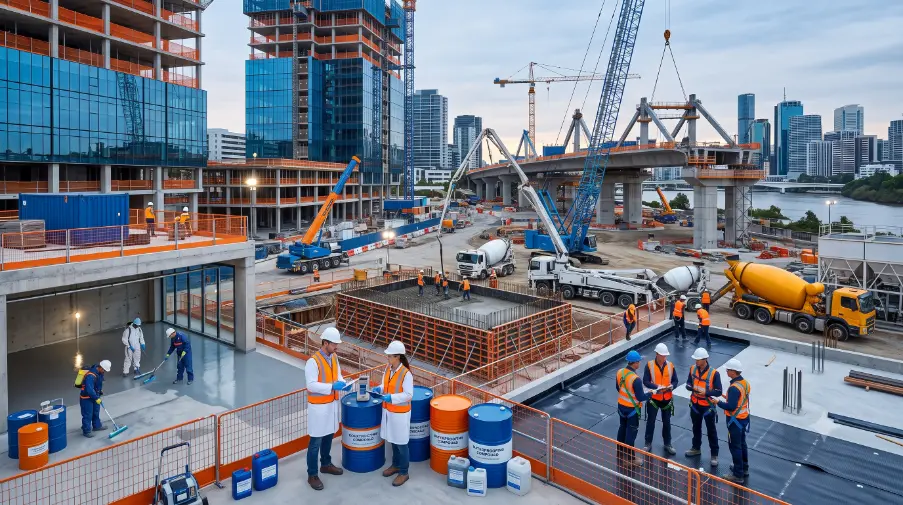
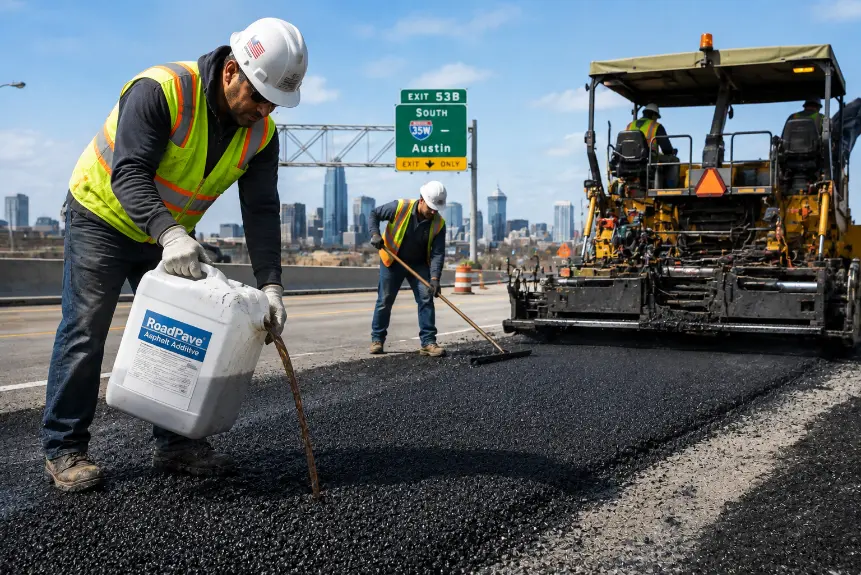
Road construction involves much more than laying asphalt or concrete. A road must withstand traffic loads, rainfall, temperature changes, moisture, and regular wear for many years. To improve the performance of road materials, contractors and engineers use different chemicals used in road construction.
Key Takeaways
- Improve Road Performance: Chemicals can enhance asphalt, concrete, soil, and pavement durability.
- Support Soil Stability: Stabilizers strengthen weak or moisture-sensitive road subgrades.
- Protect Against Water: Waterproofing chemicals and sealants help reduce moisture-related damage.
- Choose Carefully: Proper testing, dosage, compatibility, and site conditions are essential.
These products can improve soil stability, asphalt performance, concrete workability, bonding, water resistance, and surface durability. The right chemical depends on the road design, soil conditions, climate, traffic, and construction method.
What Are Chemicals Used in Road Construction?
Chemicals Used in Road Construction are specialized products during road building, repair, and maintenance. Some are mixed with soil, asphalt, or concrete, while others are applied to pavement surfaces, joints, or cracks.
They are commonly used for:
- Stabilizing weak soil
- Modifying bitumen and asphalt
- Improving concrete performance
- Reducing water penetration
- Strengthening bonds between pavement layers
- Controlling dust
- Sealing cracks and joints
- Protecting road surfaces
Also Read:Specialty Construction Chemicals
Common Road Construction Chemicals
| Chemical | Main Purpose | Common Use |
| Bitumen modifiers | Improve asphalt performance | Flexible roads |
| Soil stabilizers | Increase soil strength | Road subgrades |
| Water reducers | Reduce water demand | Concrete pavement |
| Superplasticizers | Improve concrete flow | High-performance concrete |
| Anti-stripping agents | Improve asphalt bonding | Asphalt mixtures |
| Waterproofing chemicals | Limit water penetration | Bridges and concrete structures |
| Joint sealants | Protect pavement joints | Concrete roads |
| Curing compounds | Reduce moisture loss | Concrete pavement |
| Dust suppressants | Control loose particles | Unpaved roads |
1. Bitumen and Asphalt Modifiers
Bitumen acts as a binder in asphalt pavement. However, conventional bitumen may not always provide enough resistance to heavy traffic, temperature changes, and repeated loading.
Polymer-modified bitumen and other asphalt additives can improve properties such as flexibility, rut resistance, fatigue performance, and temperature stability.
Common materials include:
- SBS polymers
- SBR polymers
- Crumb rubber
- Warm-mix additives
- Specialty asphalt modifiers
The appropriate additive depends on pavement design and expected traffic and weather conditions.
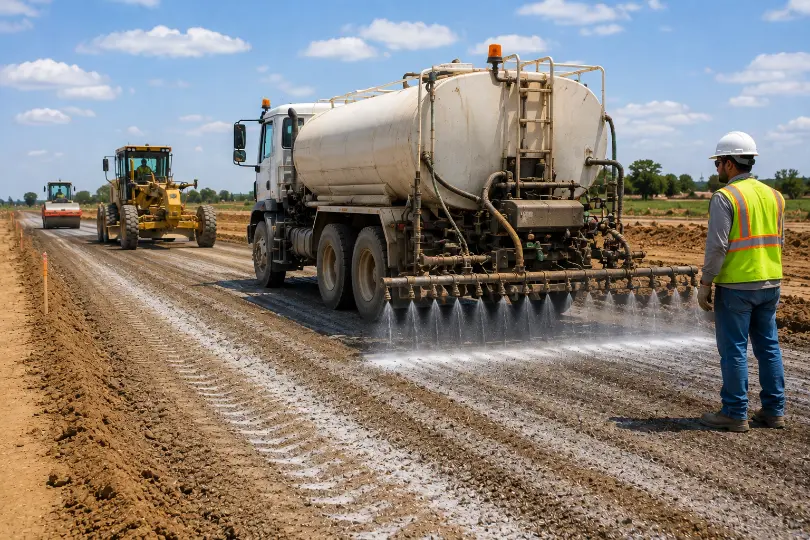
2. Soil Stabilization Chemicals
A stable foundation is essential for a durable road. Weak, expansive, or moisture-sensitive soil can create problems if it is not properly treated.
Materials such as lime, cement, fly ash, and polymer-based stabilizers can be used to improve selected soils. Lime is often useful for certain clay soils because it can reduce plasticity and improve workability. Cement can increase strength and stiffness when used with suitable soil.
Soil testing should be completed before selecting a stabilize Chemicals Used in Road Construction .
3. Concrete Admixtures
Concrete is used for rigid pavements, bridges, drainage structures, curbs, and other road infrastructure. Chemical admixtures can change the way concrete behaves during mixing, placement, and curing.
Common types include:
- Water reducers: Reduce water requirements while maintaining workability.
- Superplasticizers: Provide higher flow and greater water reduction.
- Accelerators: Support faster setting and early strength development.
- Retarders: Extend working time, which can be useful in hot weather.
- Air-entraining agents: Improve resistance to freeze-thaw exposure in suitable applications.
4. Anti-Stripping Agents
Moisture can weaken the bond between asphalt and aggregate. This can lead to stripping and pavement damage.
Chemicals Used in Road Construction performance depends on the materials used in the pavement mix, so compatibility testing is important.
5. Waterproofing Chemicals
Water can cause significant deterioration in concrete and road structures. Waterproofing chemicals are used in bridge decks, tunnels, underpasses, retaining structures, and drainage systems.
Depending on the application, Chemicals Used in Road Construction products may include:
- Cementitious coatings
- Polymer-modified coatings
- Liquid-applied membranes
- Penetrating sealers
These systems can help reduce moisture penetration and protect underlying materials.
Also Read: Construction Chemical Types
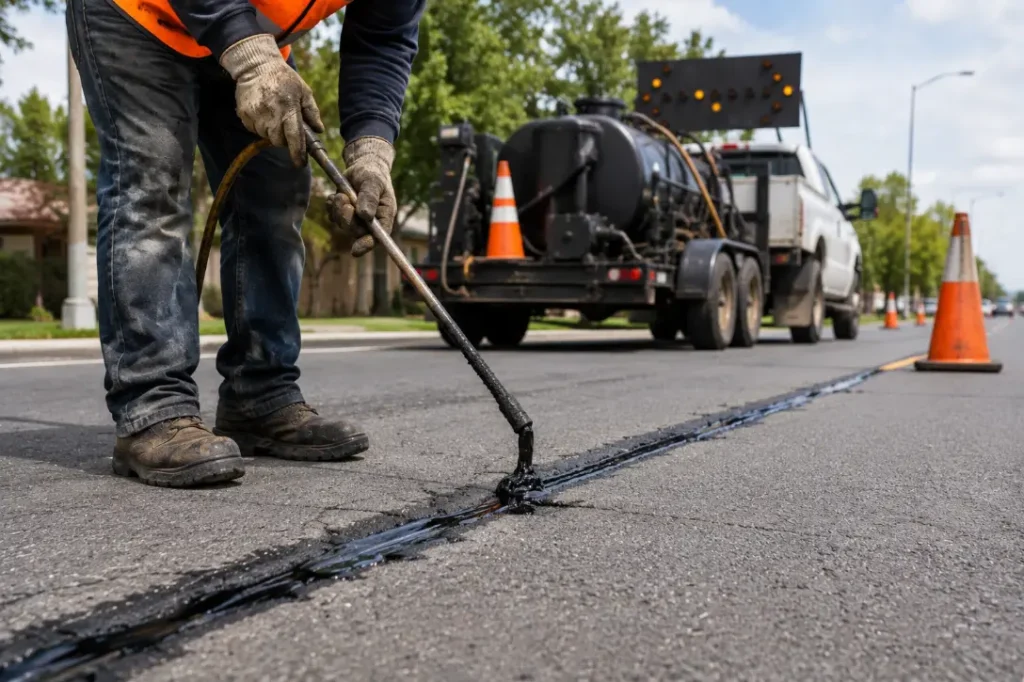
6. Joint and Crack Sealants
Roads naturally develop joints and cracks because of traffic, temperature changes, shrinkage, and pavement movement. Sealants help keep water, dirt, and debris from entering these openings.
Common options include polyurethane, silicone, polysulfide, and rubberized sealants. Product selection should consider movement, temperature, substrate, and expected exposure.
Benefits of Road Construction Chemicals
Chemicals Used in Road Construction Properly selected chemicals can provide several practical benefits:
- Improved pavement durability
- Better soil stability
- Reduced moisture damage
- Improved asphalt performance
- Better concrete workability
- Stronger bonding between layers
- Reduced dust on unpaved roads
- Improved crack and joint protection
- Better resistance to environmental conditions
How to Choose the Right Chemical
Chemicals Used in Road Construction selection should be based on actual project requirements. Consider:
1. Soil and aggregate properties
2. Traffic volume and load
3. Local weather conditions
4. Type of pavement
5. Application and curing requirements
6. Compatibility with other materials
7. Applicable construction standards
8. Recommended dosage
Laboratory testing and trial applications can help confirm whether a product is suitable before full-scale use.
Conclusion
Chemicals used in road construction help engineers and contractors address specific pavement and material challenges. Asphalt modifiers can improve binder performance, soil stabilizers can strengthen weak ground, concrete admixtures can improve workability, and sealants and waterproofing products can protect structures from moisture.
The key is proper selection and application. Testing the product with the actual project materials and following the recommended dosage can help achieve consistent and reliable results.
Frequently Asked Questions
What chemicals are commonly used in road construction?
Common products include asphalt modifiers, soil stabilizers, concrete admixtures, anti-stripping agents, waterproofing chemicals, sealants, curing compounds, and dust suppressants.
Can these chemicals be used for road repairs?
Yes. Chemicals Used in Road Construction are used for pavement rehabilitation, crack sealing, resurfacing, waterproofing, and soil improvement as well as new road construction.
Can chemical additives make roads last longer?
They can help improve resistance to certain forms of deterioration when correctly selected and applied.