The primary construction chemicals benefits revolve around enhancing structural longevity, speeding up completion timelines, and reducing long-term maintenance costs. The construction sector has undergone tremendous changes thanks to the development of superior building materials, which not only improve the performance of buildings but also enhance their efficiency and durability.
In these advancements in construction, one of the key elements is construction chemicals, which are widely used to improve concrete properties, make them waterproof, repair damage, and protect buildings from any form of damage that may result from environmental exposure. Whether in the construction of buildings, bridges or any other structure, construction chemicals ensure that the end product is efficient and reliable. The wide range of advantages of construction chemicals not only improves the strength of buildings but also makes them sustainable. Let’s explore some of the uses of construction chemicals here.
Table of Contents
Understanding Construction Chemicals Benefits
Construction chemicals refer to specific chemicals used in order to modify or add certain characteristics to the building materials such as concrete, mortar, plaster, and masonry. These materials are employed during the construction, maintenance, and repair of structures in order to improve their characteristics. One of the top construction chemicals benefits in fast-track construction is accelerated setting time, which speeds up structural formwork removal.
Uses include:
- Modification of concrete
- Waterproofing
- Protection of surface
- Maintenance
- Joint filling
- Tile installation
- Corrosion protection
Key Advantages of Building Chemicals
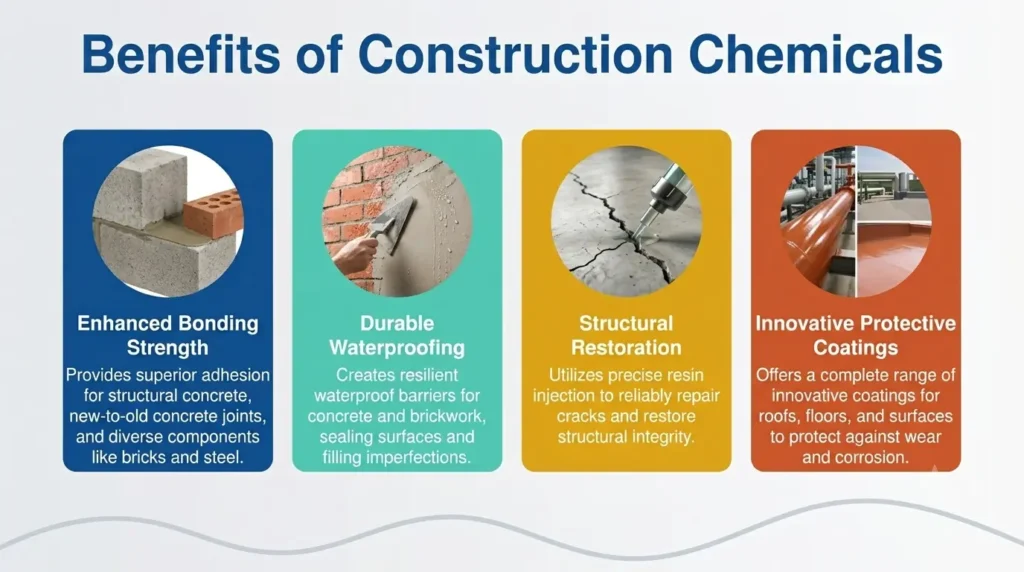
Construction chemicals offer numerous benefits in the course of construction as well as during the operational life of the building. Contractors realize substantial construction chemicals benefits through improved bonding strength between new and existing concrete surfaces.
1. Increases Durability of Building Structures
Construction chemicals make concrete and other building materials resistant to wear and tear and environmental effects.
This results in:
- Increased longevity of the building
- Prevention of degradation
- Improvement of structural efficiency
2. Increases Efficiency of Concrete
Concrete chemicals improve various characteristics of fresh and hardened concrete. Sustainable building design relies heavily on construction chemicals benefits to reduce cement consumption and lower embodied carbon emissions.
Such benefits as:
- Improved workability
- Strength
- Resistance to shrinkage
- Resistance to cracking
- Consistency in quality
3. Increases Efficiency of Waterproofing
Moisture is one of the major reasons for deterioration of the structure. Waterproofing chemicals play an essential role in protecting the building from moisture.
They are widely used for:
- Roofing
- Basements
- Foundations
- Bathroom
- Water retaining structures
4. Increases Bonding Efficiency
Specific adhesives, grouts, and bonding materials result in enhanced bonding between construction materials.
The applications are:
- Tile setting
- Repair of concrete
- Construction reinforcement
- Surface bonding
- Enhanced bonding increases the structural stability and efficiency.
5. Lowers Maintenance Costs
Buildings constructed using the right construction chemicals do not need many repairs during the course of their lifespan.
Benefits include:
- Lower maintenance rate
- Lower repair costs
- Better lifecycle efficiency
- Higher asset protection
While construction chemicals may raise costs at the onset of the projects, they lower the long-term maintenance needs.
6. Encourages Sustainable Construction
Today’s construction practices emphasize efficient use of resources and durability of the structures. Construction chemicals support this practice by increasing efficiency of the materials used and their service life and minimizing the need for repairs and replacements.
Some chemicals are useful for lowering water consumption while making concrete and increasing energy efficiency of buildings. Investing in high-grade formulations maximizes long-term construction chemicals benefits, reducing frequent repair cycles and lifecycle costs.
Concrete Additive Performance Advantages
Architectural concrete projects leverage construction chemicals benefits to achieve flawless surface finishes and uniform color distribution.
| Benefit | How It Supports Construction |
| Improved durability | Extends the service life of structures |
| Better concrete performance | Enhances strength and workability |
| Waterproof protection | Minimises moisture-related damage |
| Stronger bonding | Improves adhesion between materials |
| Reduced maintenance | Lowers long-term repair requirements |
| Surface protection | Shields structures from environmental exposure |
| Increased efficiency | Supports faster and more reliable construction |
| Sustainable performance | Improves resource efficiency and building longevity |
Building Material Enhancement Advantages
Construction chemicals are used throughout different stages of building construction and maintenance. Property developers value key construction chemicals benefits like crack prevention and long-term protection against harsh atmospheric corrosion.
| Application Area | Purpose |
| Concrete construction | Improve strength and durability |
| Waterproofing systems | Protect structures from water ingress |
| Tile installation | Provide reliable adhesion |
| Repair and rehabilitation | Restore damaged concrete |
| Industrial flooring | Improve wear resistance |
| Bridges and infrastructure | Enhance long-term structural performance |
| Protective coatings | Protect surfaces from weather and chemicals |
Choosing the Right Construction Chemical
The right choice of products is made through consideration of several aspects. Major construction chemicals benefits include significantly lower water-to-cement ratios without compromising concrete flow or placeability.
Some of them are:
- Nature of the construction work
- Environmental conditions
- Load-bearing considerations
- Surface material
- Moisture content
- Application method
- Conformity to industry standards
- Performance over time
Experience with knowledgeable suppliers and following manufacturer’s guidelines is essential for proper product selection and application.
Ending Notes
The game-changing effect of construction chemicals can be seen everywhere – offering unrivalled durability, impeccable waterproofing, and unparalleled longevity. Through the minimization of maintenance efforts and optimal use of materials, construction chemicals offer you the opportunity to build intelligently and sustainably. Understanding these construction chemicals benefits enables civil engineers to formulate ultra-durable concrete for bridges and coastal structures.
Make sure that your constructions withstand the test of time. Contact Biopol Chemicals to get your construction projects secured.
Frequently Asked Questions
1. Why are construction chemicals necessary in modern-day constructions?
Construction chemicals provide various advantages to building materials such as increased strength, enhanced durability, improved workability and protection, thus contributing to reliable performance under diverse conditions.
2. Which construction chemicals are normally used in building works?
Popular construction chemicals include concrete admixtures, waterproofing materials, tiling adhesive, grout, sealant, repair mortar, and protective coatings, among others.
3. Do construction chemicals have the ability to increase the lifespan of buildings?
Certainly. Construction chemicals can help increase the lifespan of buildings through increased durability and protection of construction materials from environmental factors.
4. How do construction chemicals aid in sustainable construction?
Construction chemicals promote sustainable construction through increased efficiency of materials and reduced maintenance.
Also Read