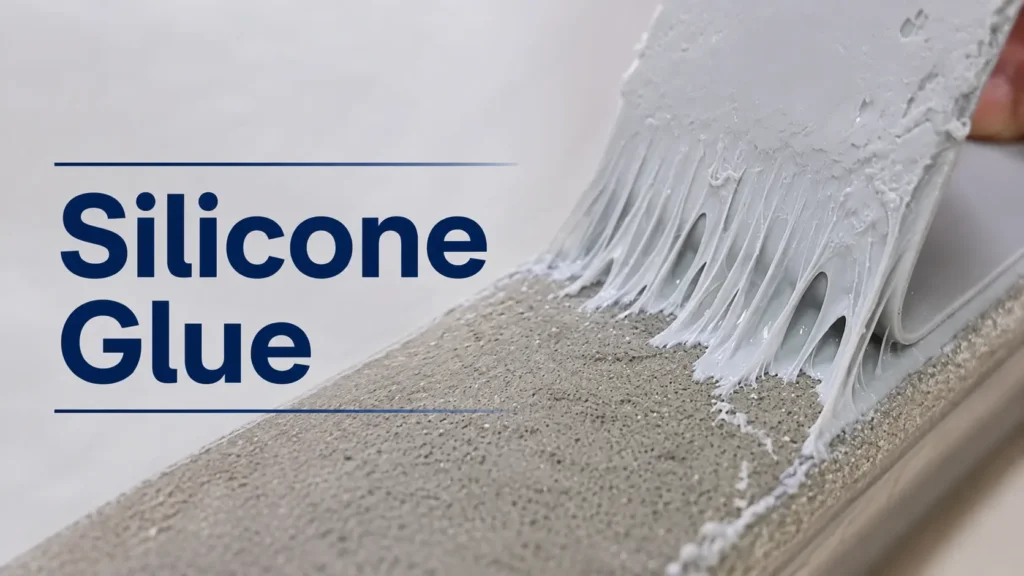
Silicone glue is widely used in engineering and mechanicals industries. An effective adhesive performs more functions than just sticking the surfaces together. In many cases, the adhesive needs to withstand moisture, temperature variations, vibrations, and some degree of movement without becoming brittle. The silicone adhesive has been praised for its ability to provide all of these features simultaneously, making it applicable in various industries.
In contrast to hard adhesives, which tend to crack in case of substrate movement, silicone is quite flexible even after curing. Thus, it becomes an ideal choice in situations where movement must be accounted for.
Table of Contents
What Is Silicone Glue?
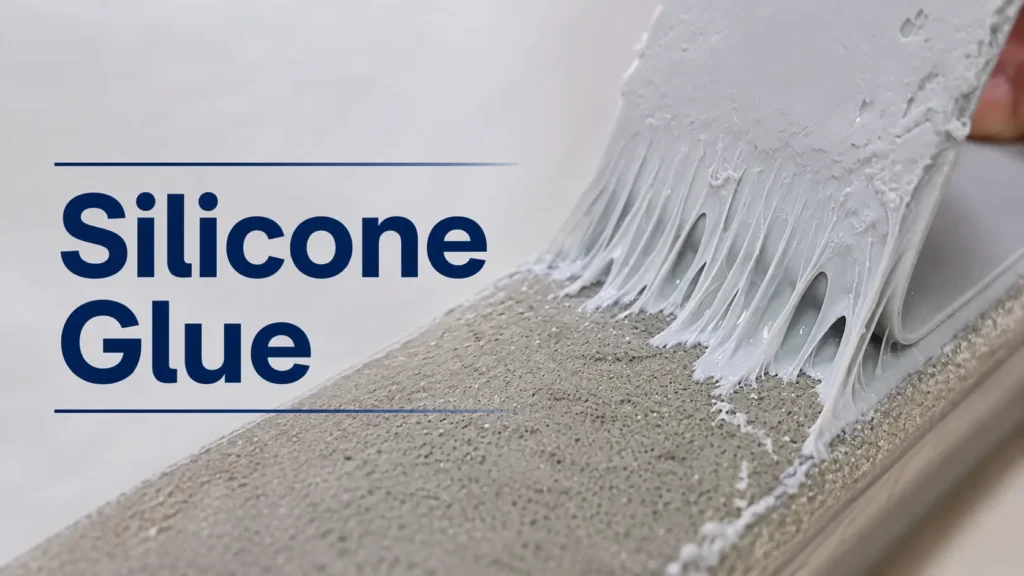
Silicone adhesive is an adhesive based on silicone polymers that cures into an elastic material. Depending on the formulation, it can provide adhesion while also functioning as a seal against moisture and other environmental factors.
| Property | Silicone Glue |
| Texture before curing | Paste or gel-like |
| After curing | Flexible and rubber-like |
| Main function | Bonding and sealing |
| Moisture resistance | Generally high |
| Flexibility | Excellent |
| Temperature resistance | Formulation-dependent |
| Typical applications | Glass, metal, plastics, ceramics and selected construction materials |
Key Benefits of Silicone Adhesive
Some of the features and benefits of silicone adhesives are described below:
| Benefit | Why It Matters |
| Flexibility | Helps accommodate minor movement between bonded surfaces |
| Water resistance | Useful where joints may encounter moisture |
| Weather resistance | Suitable formulations can withstand outdoor exposure |
| Vibration tolerance | Flexible bonds can accommodate repeated movement |
| Sealing ability | Helps create a barrier around joints and gaps |
| Durability | Can provide long-term performance when correctly selected and applied |
| Material versatility | Can be suitable for several substrates, subject to compatibility testing |
Comparison Table: Other Adhesives
Choosing an adhesive depends on the substrate, environmental conditions and required bond characteristics.
| Feature | Silicone Glue | Epoxy | Cyanoacrylate |
| Flexibility | High | Generally low after curing | Generally low |
| Moisture resistance | Good with suitable formulation | Formulation-dependent | Can be limited |
| Vibration tolerance | Good | More rigid | Limited for some applications |
| Sealing capability | Excellent | Limited | Low |
| Best suited to | Flexible bonds and sealing | Rigid, high-strength bonding | Fast small repairs |
| Outdoor suitability | Product-dependent | Product-dependent | More application-dependent |
This comparison is only a general guide because performance varies significantly between individual formulations.
Where Is Silicone Glue Used?
Silicone glue can serve different purposes across several industries.
| Industry | Typical Applications |
| Construction | Sealing joints, glazing-related applications and bonding selected materials |
| Automotive | Gaskets, seals and selected component applications |
| Electronics | Protection and sealing of suitable components |
| Glass | Bonding and sealing applications |
| Home improvement | Bathroom fixtures, household repairs and moisture-prone areas |
| Manufacturing | Assembly and sealing of selected components |
| Aquarium applications | Specially formulated products for suitable glass sealing |
The adhesive should always be selected according to the specific application rather than assuming every silicone product is interchangeable.
Final Thoughts
If you need something beyond merely creating a stiff bond between two surfaces, the combination of flexibility, adhesion, and sealing that comes with silicone glue proves very helpful. The capability of moving and remaining resistant to the effects of the environment makes silicone glue applicable in many different areas.
For companies seeking chemical solutions, having the right chemical product formula is equally important as its application technique. Biopol Chemicals offers specialty chemical solutions for textiles, industrial, and other industries, and their main concern includes high-quality solutions and sustainability.
Discover what Biopol Chemicals has to offer with regard to chemical solutions for tough industrial applications.
FAQs
1. Is silicone glue waterproof?
Many silicone glues are water-resistant once cured but may vary in their degree of water resistance depending on their formulation and use.
2. Can silicone glue bond dissimilar surfaces?
Some silicone glues can be used to bond materials including plastic, glass, ceramics, and metal. Compatibility will depend on the material.
3. How long does it take silicone glue to cure?
The curing time will depend on many factors, including the product itself, the thickness of the bead, and the environment, among others.
4. Is silicone glue suited for outdoor uses?
There are some silicone glues that are made specifically for outdoor use. These glues may withstand various conditions, including exposure to the elements.
Also Read