Is silicone a metal? This is one of the most common questions engineers, manufacturers, and everyday users ask when evaluating synthetic materials for new products. While the name sounds nearly identical to the chemical element silicon, silicone is actually a synthetic polymer made from a silicon-oxygen backbone combined with organic molecules.
Silicone is found in a variety of products, including construction sealants, industrial lubricants, medical components, automobile parts, and electronics insulation. Since the word “silicon” is part of the name, it tends to be confused with the chemical element silicon, which causes another popular question about the nature of silicone: Is silicone a metal?
The answer is no – silicone is not a metal. Silicone is a synthetic polymer based on silicon, oxygen, and organic groups. The molecular structure of silicone includes chains with repeating units of silicon-oxygen bonds and is characterized by properties quite unusual for metals.
Knowledge of the differences becomes crucial in the choice of materials for industrial use.
Is Silicone a Metal? Understanding the Basic Science
These three terms are often confused, but they describe very different things.
| Feature | Silicon | Silicone | Metals |
| What is it? | Chemical element | Synthetic polymer | Elemental or alloy materials |
| Chemical symbol | Si | Not an element | Varies |
| Main structure | Elemental silicon | Silicon–oxygen polymer chains with organic groups | Metallic bonding |
| Classification | Metalloid | Polymer | Metals/alloys |
| Electrical behaviour | Semiconductor | Generally insulating | Generally conductive |
| Flexibility | Brittle in elemental form | Often flexible or rubber-like | Varies |
| Common uses | Semiconductors, electronics | Sealants, lubricants, coatings, medical products | Construction, machinery, electronics, transport |
| Typical appearance | Crystalline/solid | Fluid, gel, rubber or resin | Solid, often rigid |
The distinction is especially important because silicone contains silicon, but it is not the same substance as elemental silicon.
Why Is Silicone Different From Metal?
When evaluating materials for high-temperature insulation, engineers often inquire ‘is silicone a metal‘ or a flexible polymer.
| Property | Silicone | Typical Metal |
| Flexibility | High in many grades | Generally rigid |
| Elasticity | Excellent in silicone rubbers | Usually limited |
| Electrical conductivity | Generally low | Generally high |
| Weight | Often relatively low | Usually higher |
| Water repellency | Generally strong | Varies |
| Temperature resistance | High for many grades | Varies by metal/alloy |
| Corrosion behaviour | Generally resistant to many environmental conditions | Varies significantly |
| Sealing ability | Excellent for many applications | Requires additional design/materials |
| Shock absorption | Good in elastomeric grades | Generally limited |
| Mouldability | Available in many processable forms | Requires different manufacturing processes |
Silicone’s flexibility, moisture resistance, thermal stability, and electrical insulation are among the properties that make it valuable in manufacturing and engineering.
Key Properties of Silicone
If you are wondering is silicone a metal, the simple answer is no, it is a synthetic elastomeric polymer made of silicon, oxygen, and organic groups.
| Property | Industrial Importance |
| Thermal stability | Suitable for components exposed to changing temperatures |
| Flexibility | Useful for seals, gaskets and flexible connectors |
| Water repellency | Helpful for moisture barriers and outdoor applications |
| Chemical resistance | Supports use in demanding environments |
| Electrical insulation | Useful for wires, cables and electronic components |
| Weather resistance | Suitable for selected exterior applications |
| Elasticity | Allows repeated bending, compression and stretching |
| Durability | Helps components maintain performance over extended use |
Some silicone formulations can remain functional across temperatures ranging approximately from −60°C to 200°C or higher, although the actual limits depend on the particular formulation and application.
Types of Silicone Materials
Silicone is not a single material. Different formulations are developed for different requirements.
| Type | Main Characteristics | Typical Applications |
| Liquid Silicone Rubber (LSR) | Flowable and suitable for moulding | Medical, automotive, electronics |
| High-Consistency Rubber (HCR) | Dense and durable | Seals, gaskets, tubing |
| Fluorosilicone | Enhanced resistance to fuels and chemicals | Automotive, aerospace, industrial |
| RTV Silicone | Cures at room temperature | Sealants, adhesives, moulds |
| Silicone Adhesives | Flexible bonding | Construction, electronics, repairs |
| Silicone Oils | Fluid and lubricating | Industrial lubrication and processing |
| Silicone Gels | Soft and cushioning | Electronics and specialised applications |
| Silicone Foams/Sponges | Lightweight and flexible | Insulation, cushioning and sealing |
Applications of Silicone
The versatility of silicone allows it to serve very different purposes across industries. Before specifying materials for food-grade or medical seals, product designers must determine is silicone a metal or a rubber-like compound.
| Industry | Silicone Applications |
| Construction | Sealants, joints, glazing, coatings |
| Automotive | Gaskets, hoses, seals, insulation |
| Electronics | Encapsulation, insulation, thermal-management materials |
| Healthcare | Tubing, selected medical devices and components |
| Industrial Manufacturing | Lubricants, coatings, moulds and seals |
| Food Processing | Tubing, seals and selected food-contact components |
| Aerospace | Insulation, seals and gaskets |
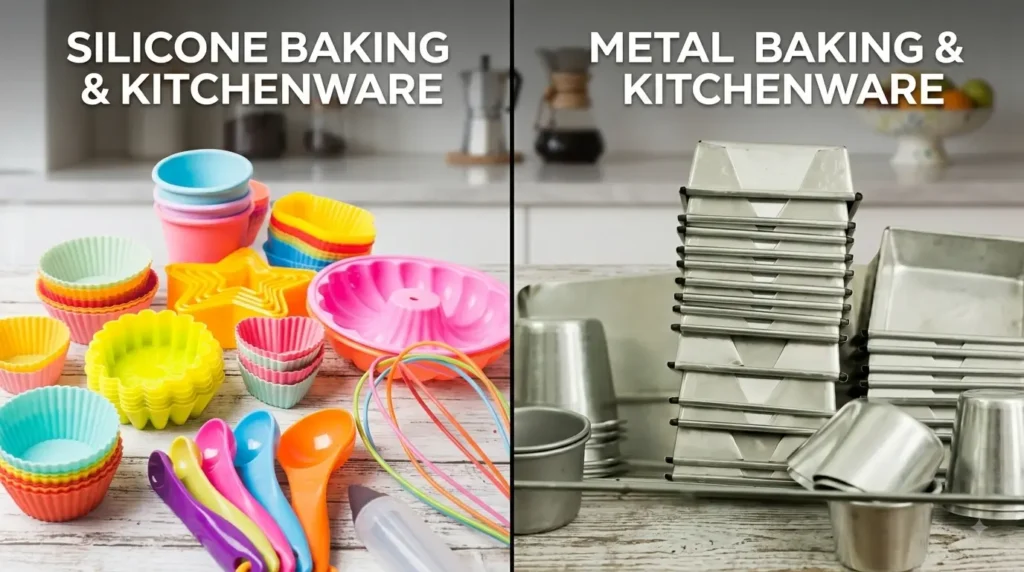
| Consumer Products | Moulds, kitchenware and flexible components |
In construction, silicone can help seal joints and gaps against water, air and dust while also being used for glazing and certain protective applications.
Wrapping Up
Then, is silicone a metal? No, silicone is a synthetic polymer composed of a backbone of silicon-oxygen bonds and organic functional groups, which make silicone unique. However, silicon is a metalloid, and this does not make silicone a metal.
Flexibility, durability, hydrophobic nature, thermal stability, and insulating properties have made silicone very important for construction, automotive, electronics industry, healthcare, and even industrial manufacturing.
For manufacturers and industrial companies, the choice of the right grade will affect the durability, flexibility, processability, heat resistance, and general quality of the product.
Looking for silicone products for your industrial needs? Get in touch with Biopol Chemicals to talk about your application and find a silicone product that would suit your particular needs.
FAQs
1. Is silicone a metal or plastic?
Silicone is not a metal but a synthetic polymer. It is also chemically different from typical carbon plastics, although the generic term “polymer” includes several material types.
2. Why does one use silicone instead of metal?
Silicone is preferred when there is an emphasis on flexibility, elasticity, sealing, insulation, moisture and temperature protection rather than strength or conductivity.
3. Could silicone replace metal in manufacturing?
Sometimes – though not always. Silicone could replace metal parts where there is a need for flexibility, sealing, or insulation. But it would not work well where there is a need for strength or conductivity.
4. Is silicone a conductor?
Silicones usually have excellent insulating properties, which is why silicone products are used for cable insulation, protection of electronics, and encapsulation of electronic devices.
5. Why is silicone important in construction?
Flexibility, water and weather resistance, and adhesion make silicone a good choice for sealant, joint, glazing, and certain coating applications.
Also Read