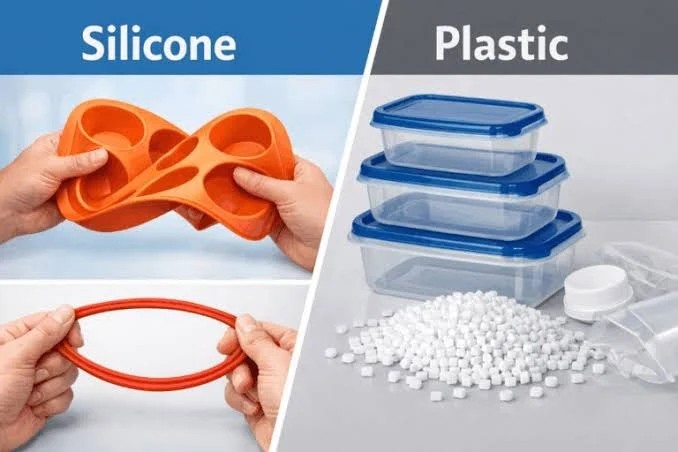
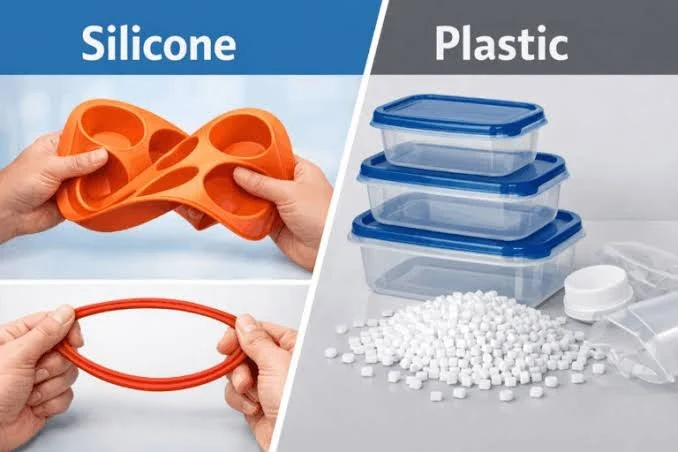
Is silicone plastic? While it looks, feels, and bends like many flexible synthetic polymers, silicone is not a traditional carbon-based plastic. Silicone is an elastomeric polymer built around a silicon-oxygen backbone derived from silica sand, rather than the hydrocarbon chains used to make everyday plastics. This distinct chemical structure gives silicone far superior heat resistance, flexibility, and longevity compared to standard synthetic materials.
Silicone has become an increasingly common material in all sorts of industries. It is used in sealants, lubricants, coatings, molds, fabrics, electronics, medical devices, housewares, and more. Nonetheless, silicone is very distinct from common plastics like polyethylene, polypropylene, and PVC, not only in terms of its chemical composition but physical properties as well. Unlike most common plastics which have a backbone made of carbon atoms, silicone has an alternating silicon-oxygen backbone. If you want to know is silicone plastic, the chemical answer is no; it belongs to a distinct family of synthetic elastomers.
Knowing these differences is crucial for both manufacturers, product developers, and consumers since silicone’s unique properties may prove useful in certain cases but do not make it environmentally friendly and universally safe.
Table of Contents
Is Silicone Plastic? Unpacking the Chemistry
The word “plastic” covers a very broad family of polymeric materials. Silicone belongs to a different chemical family from many familiar plastics.
| Feature | Silicone | Many Conventional Plastics |
| Main polymer backbone | Silicon–oxygen | Primarily carbon-based |
| Flexibility | Often highly flexible | Depends on polymer |
| Temperature resistance | Generally high | Varies considerably |
| Chemical stability | Generally strong | Depends on material |
| Water resistance | Generally good | Varies |
| Rubber-like feel | Common | Usually absent in rigid plastics |
| Durability | Often excellent | Depends on grade and application |
| Common forms | Fluids, elastomers, resins | Films, sheets, fibres, rigid parts, foams |
| Industrial uses | Sealants, lubricants, coatings, textiles, electronics | Packaging, automotive, construction, consumer products |
| End-of-life options | Limited specialised recycling | Depends on polymer and local infrastructure |
The key point is that silicone and conventional plastics should not be treated as identical materials simply because both are polymers.
Why Does Silicone Behave Differently?
Its chemical structure gives silicone a combination of properties that can be difficult to achieve with many conventional polymers.
| Silicone Property | Why It Matters |
| Flexibility | Useful for seals, gaskets, flexible components and medical applications |
| Heat resistance | Supports applications exposed to elevated temperatures |
| Weather resistance | Useful for outdoor construction and industrial applications |
| Chemical stability | Helpful where exposure to selected chemicals is expected |
| Water resistance | Valuable in sealants, coatings and protective applications |
| Low-temperature flexibility | Can help maintain flexibility under colder conditions |
| Durability | Suitable for products expected to withstand repeated use |
| Electrical insulation | Useful in selected electronics and electrical applications |
Where Are Silicones Used?
Silicone is not limited to household products. It is an important material across numerous industrial sectors. Consumers switching to eco-friendly kitchenware often wonder is silicone plastic or a safer alternative to synthetic polymers.
| Industry | Examples of Silicone Applications |
| Construction | Sealants, coatings and waterproofing-related applications |
| Textiles | Fabric softeners, finishing agents and specialty treatments |
| Automotive | Lubricants, seals, gaskets and protective components |
| Electronics | Insulation, protection and encapsulation |
| Medical | Selected medical devices and components |
| Industrial Manufacturing | Release agents, lubricants, mould-making materials |
| Home Care | Silicone fluids and specialty cleaning formulations |
| Agriculture | Silicone-based adjuvants and surfactants |
| Consumer Products | Kitchenware, personal-care products and flexible goods |
Biopol Chemicals’ current silicone portfolio includes products such as PDMS, silicone oil, and other silicone-based materials used across industrial applications.
Why Do Industries Choose Silicone?
For businesses, the question is often less about whether silicone is “plastic” and more about whether its properties match the application’s technical requirements.
| Requirement | Why Silicone May Be Considered |
| Flexible component | Silicone can retain flexibility in many applications |
| Outdoor exposure | Suitable grades can offer useful weather resistance |
| Temperature fluctuations | Silicone can perform across a relatively broad temperature range |
| Moisture exposure | Water-repellent characteristics can be beneficial |
| Smooth movement | Silicone fluids and lubricants can reduce friction |
| Surface treatment | Silicone formulations can modify surface characteristics |
| Long service life | Durable formulations can support repeated use |
However, no material is automatically the best choice. Product specifications, operating conditions, compliance requirements, and cost should all be considered before selection.
Is Silicone More Environmentally Friendly Than Plastic?
This question needs a balanced answer. Product designers assessing raw materials must ask ‘is silicone plastic‘ to understand its unique thermal stability and flexibility limits.
| Consideration | What to Know |
| Reusability | A durable silicone product may replace repeated single-use products in some applications. |
| Durability | Long service life can reduce the frequency of replacement. |
| Biodegradability | Silicone should not be considered readily biodegradable. |
| Recycling | Silicone recycling infrastructure is much less widespread than conventional plastic recycling systems. |
| Manufacturing | Silicone production requires energy and chemical processing. |
| Environmental impact | Impacts depend on production, product lifetime, use, and disposal. |
| Best material choice | Depends on the application and available alternatives. |
The Plastic Pollution Coalition argues that silicone should not automatically be marketed as an environmentally harmless alternative to plastic and highlights concerns around production, disposal, and limited recycling infrastructure.
Environmentalists researching sustainable consumer goods often question ‘is silicone plastic‘ and how its recycling process differs from municipal plastics.
Final Thoughts
But is silicone plastic? Well, that will depend to some degree on the usage of the term “plastics”. Silicone is indeed a synthetic polymer, but its backbone structure, made up of silicon and oxygen, separates it from many other plastics.
When it comes to companies, the better choice would be to move away from the labels and examine the material in the context of the specific application and its demands, the life span of the final product, and the end of its life cycle.
Manufacturing companies, however, should not ask themselves whether silicone is plastic but what kind of silicone material they need for their application.
The same application may require different properties depending on the type of fluid, elastomer, resin, or special formulation of silicone used.
Need a silicone material for your manufacturing or industrial application? Consult Biopol Chemicals and choose the right silicone product.
FAQs
1. Is silicone actually plastic?
Yes, silicone can be referred to as a synthetic polymer among many types of plastics, but its chemical composition differs greatly from regular carbon-containing plastics.
2. Is silicone safer than plastic?
It would be incorrect to state that silicone is generally safer than plastic, since safety criteria differ for various products based on the materials’ properties.
3. Does silicone include plastic?
Silicone is a particular type of polymer that cannot be compared with common plastics, but there are various additives and materials in the finished products made of silicone.
4. Is silicone biodegradable?
It would be a mistake to consider silicone biodegradable because the durability of silicone is the key advantage for its long-term exploitation.
Also Read