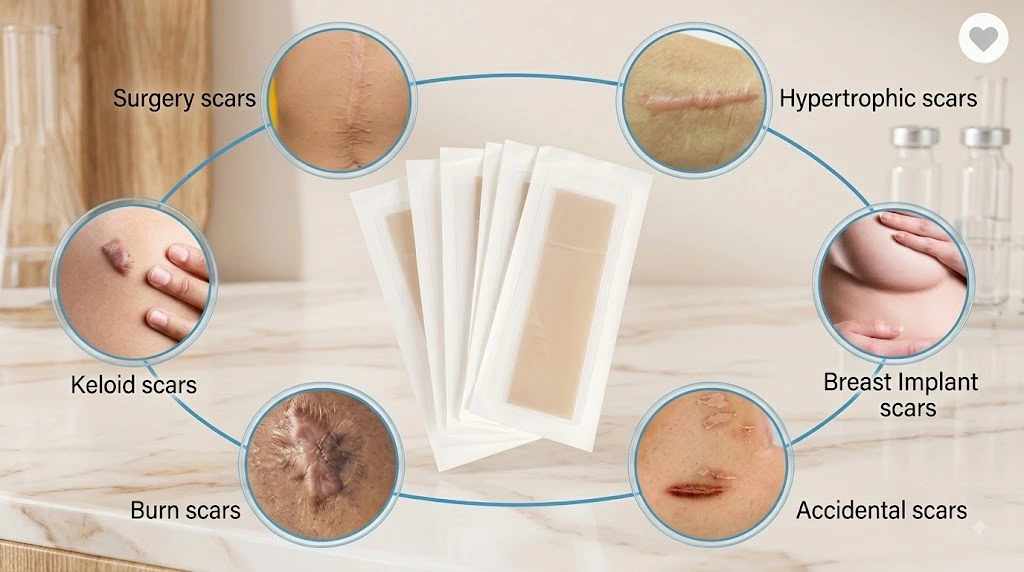
Scarring is an inevitable result of healing wounds, but the appearance, texture, thickness, and color of the scars can be highly visible even after the wound has been closed. Products made from silicone have been commonly used in the management of scars without undergoing any surgical procedures. These include silicone sheets and silicone gel, among others. Although these two products share the same active ingredient, there are differences when it comes to how they can be applied and when they can be used.
Table of Contents
What Are Silicone Sheets and Silicone Gel?
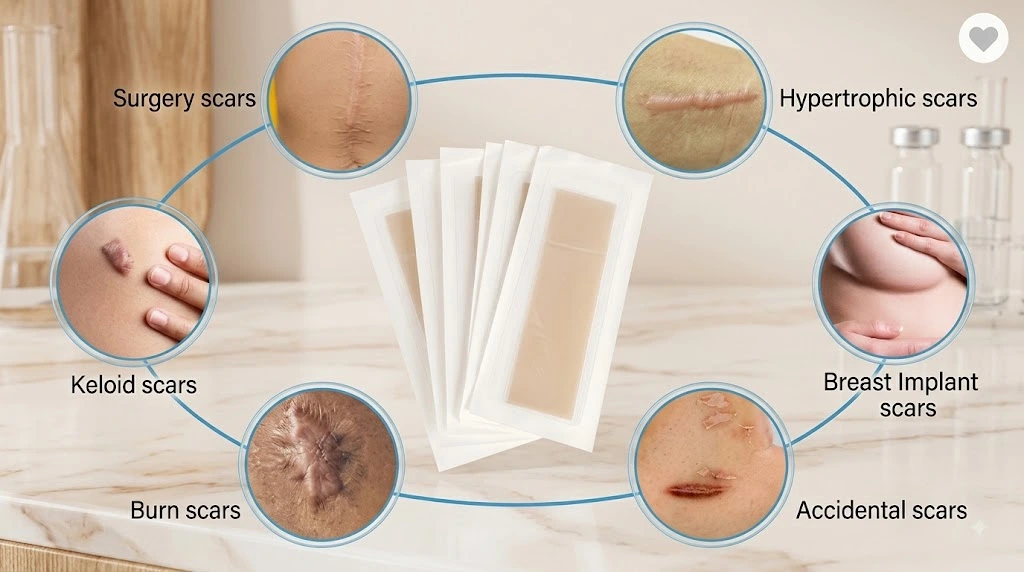
The silicone sheet is a flexible membrane that is put right on top of the scar that has already been healed. It allows continuous contact with the scar, especially for larger or elevated scars.
On the other hand, the silicone gel is applied in the form of a thin layer over the scar, forming a transparent film when dry. This makes them convenient in areas like the face or neck.
| Feature | Silicone Gel | Silicone Sheets |
| Form | Topical gel | Flexible sheet |
| Appearance | Usually transparent after drying | Visible on the skin |
| Application | Thin layer | Placed directly over scar |
| Large scars | Less convenient | Often practical |
| Irregular scars | Easy to adapt | May require cutting |
| Makeup compatibility | Often suitable after drying | Generally less convenient |
| Reusability | Usually not reusable | Many products are reusable |
| Maintenance | Simple | Requires regular cleaning |
How Do Silicone Scar Products Work?
Silicone products create a protective layer over a healed scar. This helps maintain a controlled moisture environment at the skin surface and may influence processes involved in excessive scar formation. Research has investigated silicone gel and sheeting for hypertrophic and keloid scars, although individual results can vary.
Silicone Sheets vs Gel
| Consideration | Silicone Gel | Silicone Sheets |
| Facial scars | Excellent convenience | Can be more noticeable |
| Small scars | Convenient | Suitable if correctly sized |
| Large surgical scars | May require more product | Convenient coverage |
| Raised scars | Can be considered | Often preferred for coverage |
| Irregular shapes | Easy application | May need trimming |
| Active lifestyle | Less restrictive | May need securing |
| Daily routine | Quick application | Requires placement and cleaning |
| Discreet use | High | Moderate |
| Maintenance | Minimal | Wash and store appropriately |
The choice should take into account scar location, size, shape, skin sensitivity and how consistently the person can follow the routine. Evidence reviewed in the referenced guide indicates that both formats can be useful, with practical differences influencing which option suits an individual.
Benefits of Silicone Sheets Vs Gel
| Benefit | Silicone Sheets | Silicone Gel |
| Supports scar management | ✓ | ✓ |
| Convenient for large areas | ✓ | — |
| Suitable for irregular scars | — | ✓ |
| Discreet appearance | — | ✓ |
| Reusable option | ✓ | — |
| Easy to apply | ✓ | ✓ |
| Suitable for visible areas | Sometimes | Often convenient |
| Can become part of a regular routine | ✓ | ✓ |
How to Use Silicone Gel
- Only apply after wound healing is complete, unless recommended otherwise by your health care provider.
- Wash and dry the affected area.
- Apply a thin film of appropriate silicone gel.
- Allow the silicone gel to dry as per the directions provided on the product.
- Use consistently as directed.
How to Use Silicone Sheets
- The scar needs to have healed fully.
- Keep the skin clean and dry.
- Put on the sheet on the scar properly.
- Adhere to the wearing guidelines by the manufacturer.
- Reusable sheets should be cleaned as per instructions.
- Dry the sheet before you store it or wear it again.
Precautions
- Silicone products should only be used on well-healed skin.
- Make sure you follow the directions for that particular product.
- Discontinue use in case there is severe irritation or an allergy to the product.
- Keep the sheets clean to minimize the chances of skin irritation.
- The sheets should not be used on open wounds or active wounds unless directed otherwise by your doctor.
- Consult your dermatologist or a health professional if you have problematic scars.
To Conclude
Silicone sheets vs gel provide two different ways of dealing with scars that may be useful, although not exactly alike. In fact, the gel would be easier to use in case of smaller scars located on the face or if the scar does not have a regular shape, whereas the sheets may prove to be more effective when it comes to larger or elevated scars.
It is better to think not about what technology seems to be more advanced, but rather about the location of the scar, its size, your way of life, and the routine you can follow.
Looking for reliable silicone solutions for your business? Explore Biopol Chemicals and discover products suited to your specific application requirements.
FAQs
1. Is it better to use silicone sheets or silicone gel?
Both can be used for scar treatment, and which one to use would depend on the size, location, looks of the scar, as well as the user’s lifestyle.
2. Can I use silicone gel for treating facial scars?
In the case of facial scars, silicone gel is more convenient as it will dry up, leaving a very thin layer. Make sure you choose products that are meant for scar treatment only.
3. Can silicone sheets be reused?
Most silicone sheets are made to be reused many times after cleaning them, following the instructions provided by the producer.
4. How long do I have to use silicone scar treatment?
Scar treatment often takes several weeks or even months of daily use. How long you need to use it depends on the scar and product.
Also Read