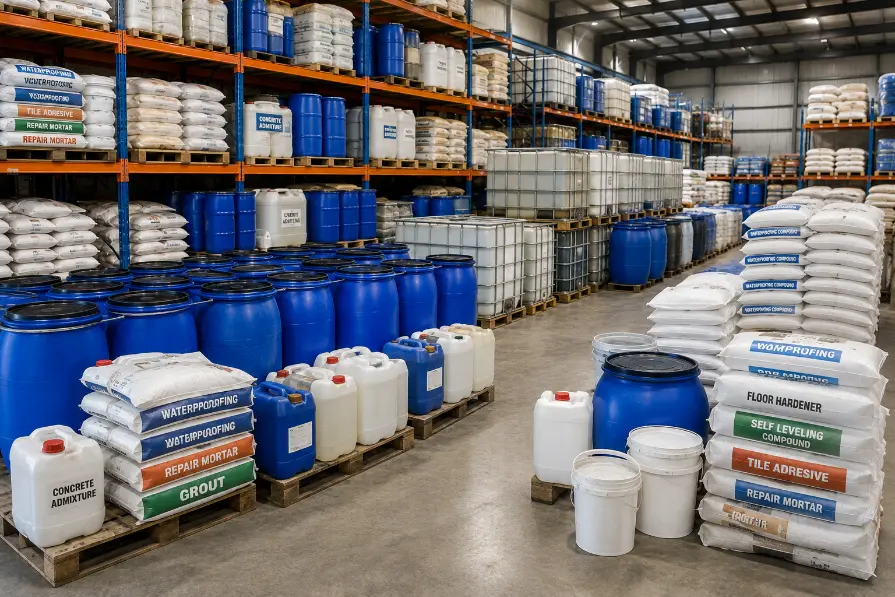
After construction or renovation work is finished, the building may look complete, but there is often a lot of cleaning left to do. Post construction cleaning chemicals are specially designed to help remove stubborn residues such as cement stains, paint marks, adhesive, grout, dust, grease, and other construction debris. These residues can remain on floors, walls, windows, fixtures, and other surfaces. Using the right cleaning chemical for each type of residue can make the final cleaning process easier while helping protect the surface from unnecessary damage.
Also Read: Construction Chemicals Market
Key Takeaways
- Choose chemicals based on the residue and surface.
- Test cleaning products before full application.
- Follow dilution and safety instructions carefully.
- Stronger chemicals are not always better.
Ordinary household cleaners may not be enough for these problems. Post construction cleaning chemicals are made to deal with the specific dirt and residue left behind after construction work. Choosing the right product is important because using the wrong chemical can damage a surface instead of cleaning it.
What Are Post Construction Cleaning Chemicals?
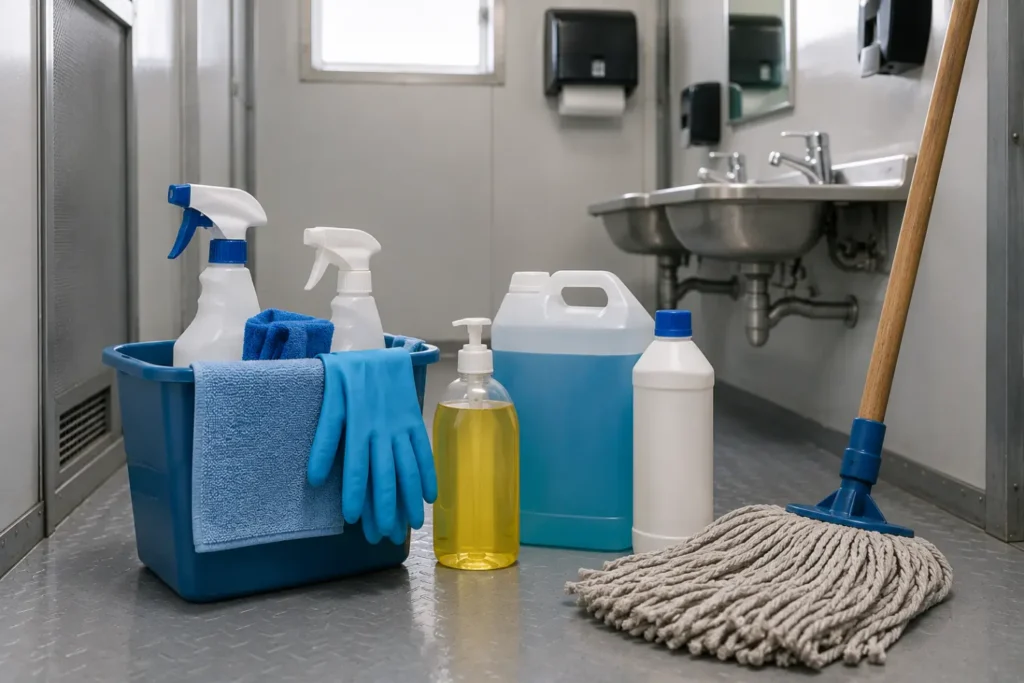
Post construction cleaning chemicals are specialized products used to clean buildings after construction, renovation, or remodeling. They are available in different formulations depending on the type of dirt and surface being cleaned.
Common products include:
- Cement and grout removers
- Heavy-duty degreasers
- Adhesive and glue removers
- Paint stain removers
- Glass cleaners
- Floor cleaners
- Rust removers
- General-purpose construction cleaners
- Disinfectants for final cleaning
The right chemical depends on what needs to be removed and where it is located.
Common Types and Their Uses
| Cleaning Chemical | Typical Use |
| Cement remover | Removes cement, mortar, and grout residue |
| Degreaser | Cleans oil, grease, and heavy dirt |
| Adhesive remover | Removes glue, tape, and sticker residue |
| Paint remover | Helps remove suitable paint stains |
| Glass cleaner | Cleans windows and glass surfaces |
| Floor cleaner | Removes dust and general construction dirt |
| Rust remover | Treats suitable rust and iron stains |
| Disinfectant | Used for hygiene-focused final cleaning |
Not every chemical is suitable for every material. A product designed for concrete, for example, may not be appropriate for marble, wood, painted walls, or delicate metal finishes.
How to Choose the Right Chemical?
The easiest way to choose a cleaning chemical is to first identify the residue and the surface.
For example, cement deposits may require a cement remover, while oily marks may need a degreaser. Adhesive left behind from protective tape may require a specialized adhesive remover.
Before using any product, consider these points:
- Check what type of surface you are cleaning.
- Identify the material that needs to be removed.
- Read the manufacturer’s instructions carefully.
- Check whether the chemical needs to be diluted.
- Test the product on a small, hidden area first.
- Follow the recommended contact time.
- Use the protective equipment mentioned on the label.
This simple approach can prevent unnecessary stains, discoloration, or surface damage.
Safety Tips for Using Cleaning Chemicals
Some post construction cleaning products are stronger than everyday household cleaners. They should be handled carefully.
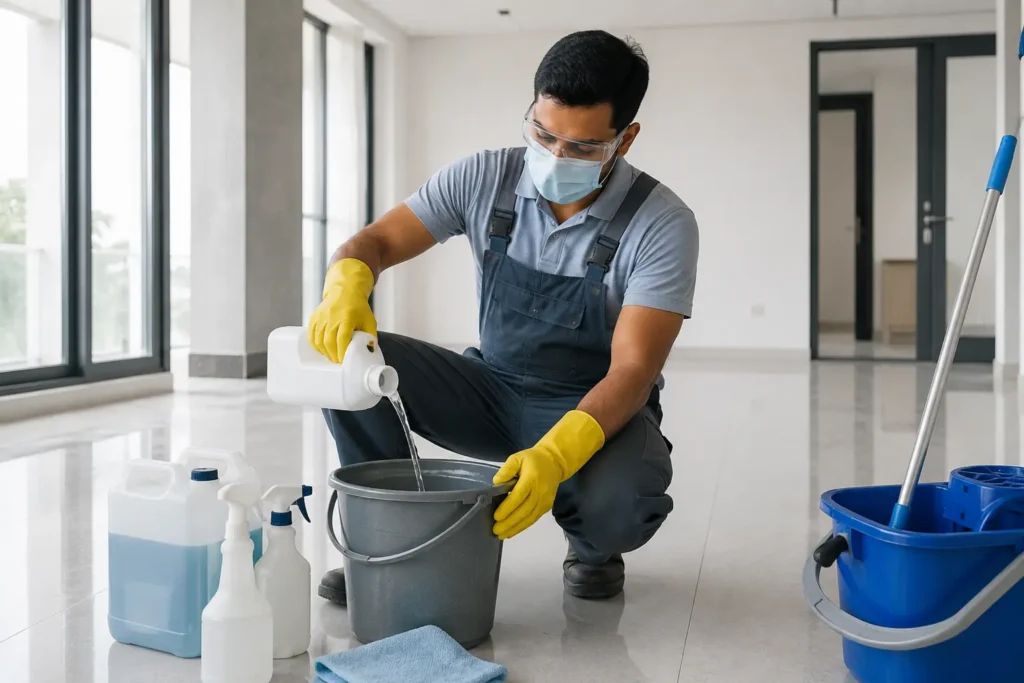
Workers should use suitable gloves, eye protection, footwear, or other protective equipment when required. Proper ventilation is also important, especially when using products with strong fumes.
Never mix cleaning chemicals unless the manufacturer clearly confirms that they can be combined. Some combinations can produce harmful reactions or gases.
Post Construction Cleaning Chemicals should also be stored in their original, clearly labeled containers and kept away from children, food, and incompatible materials.
A Simple Cleaning Process
Post construction cleaning becomes easier when the work is done in the right order.
- Remove loose debris: Collect construction waste, dust, and larger pieces of material.
- Inspect surfaces: Look for cement, paint, glue, grease, and other marks.
- Choose the correct chemical: Match the product to the residue and surface.
- Apply as directed: Follow the recommended dilution and application method.
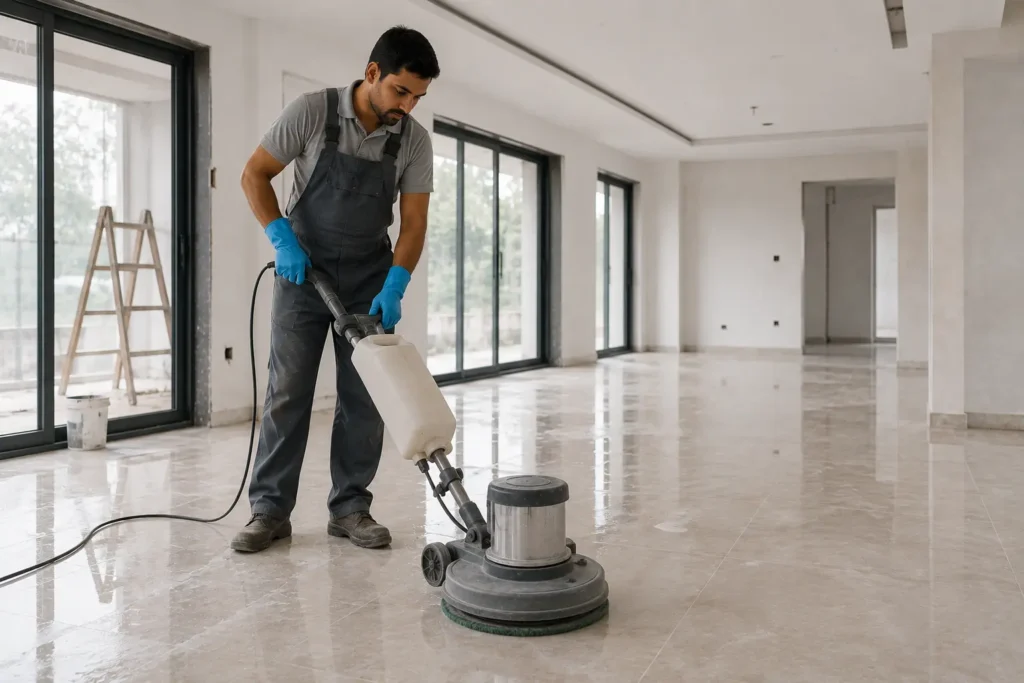
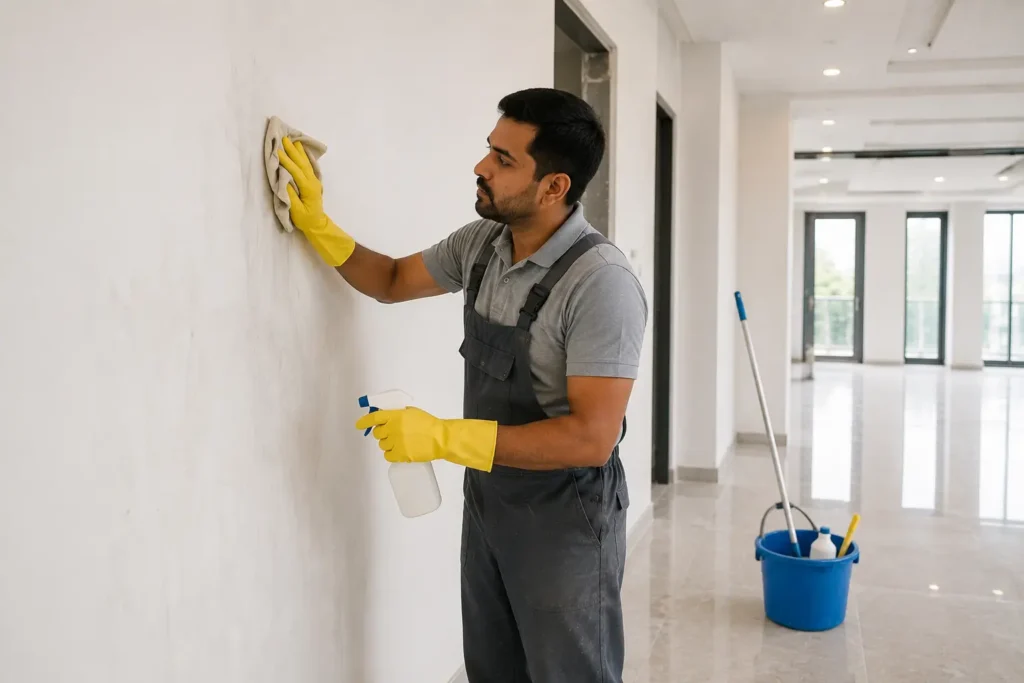
- Clean the area: Use an appropriate cloth, brush, pad, or cleaning machine.
- Remove chemical residue: Rinse or wipe the surface as recommended.
- Perform final cleaning: Clean windows, floors, fixtures, doors, and other areas before the property is occupied.
Why the Right Chemical Matters
A strong chemical is not necessarily the best chemical. Using an unnecessarily harsh product can damage flooring, stone, coatings, fixtures, or painted surfaces.
The goal should be to remove construction residue effectively while keeping the original surface in good condition. Proper product selection and correct application are just as important as the cleaning equipment used.
Post construction cleaning Chemicals is more than simply removing dust. Cement residue, paint, adhesive, grease, and other materials often need specialized products. Post construction cleaning chemicals can make this work easier when the correct product is matched to the surface and the type of residue.
Also Read: Chemical Engineering in Construction
Frequently Asked Questions
1.What chemical is used to remove cement after construction?
Cement and grout removers are commonly used for suitable surfaces. However, some formulations can damage acid-sensitive materials, so always check the product label before use.
2.Can post construction cleaning chemicals be used on marble?
Not all of them. Marble and some other natural stones can be sensitive to acidic cleaners. A product specifically approved for the material should be used.
3.Are these chemicals safe?
They can be used safely when handled according to the manufacturer’s instructions. Proper ventilation, protective equipment, storage, and handling are important.
4.Do all construction cleaning chemicals need dilution?
No. Some products are ready to use, while others are concentrated. Follow the manufacturer’s recommended dilution instead of estimating it yourself.
5.Can one cleaner be used for the whole building?
Usually, one product will not be suitable for every surface and type of residue. Different areas may require different cleaning solutions.