Waterproofing is one of those parts of construction that is easy to overlook until a problem appears. A small leak can gradually turn into damp walls, damaged plaster, peeling paint, corroded reinforcement, or deterioration of concrete. This is why waterproofing should be considered during construction rather than treated only as a repair measure.
Key Takeaways
- Waterproofing reduces water seepage and moisture damage.
- Different areas need different waterproofing chemicals.
- Proper surface preparation improves waterproofing performance.
- Correct application helps extend building durability.
Construction chemicals waterproofing uses specially formulated chemical products to reduce water penetration and protect concrete, masonry, roofs, foundations, bathrooms, basements, and other areas exposed to moisture.
Also Read: Construction Chemicals Industry
What Is Construction Chemicals Waterproofing?
Construction chemicals waterproofing refers to the use of chemical-based materials that help prevent or control water from passing through building surfaces.
Depending on the product, waterproofing chemicals can be:
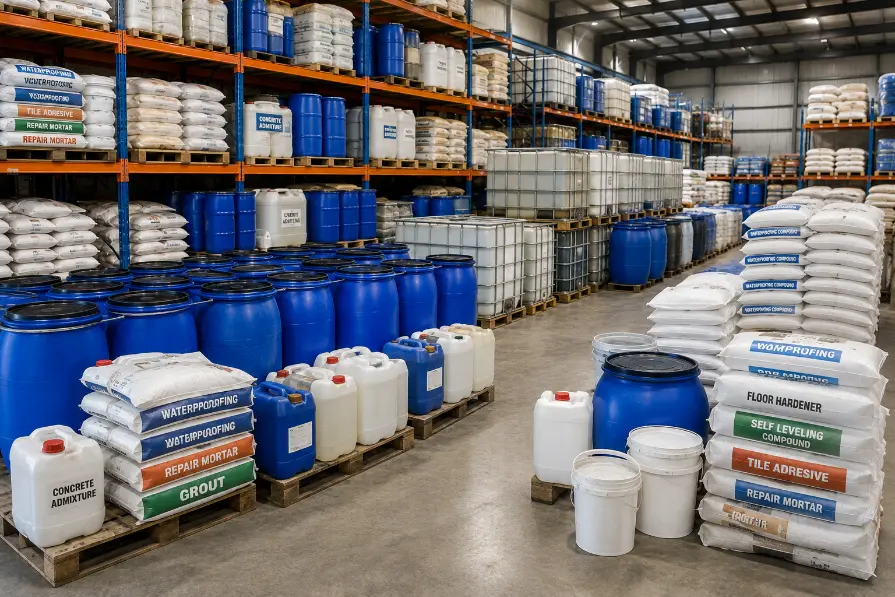
- Mixed with concrete or mortar
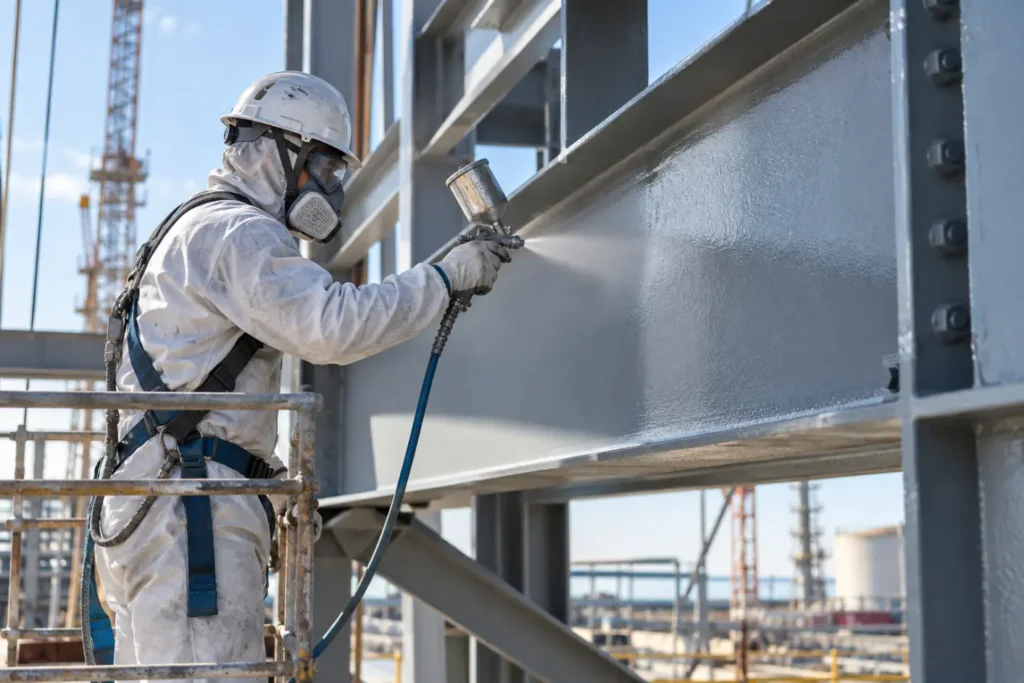
- Applied directly to a surface
- Used to seal cracks and joints
- Formed into protective coatings or membranes
- Used as water-repellent treatments
The right choice depends on the location, surface condition, amount of water exposure, and movement of the structure.
Types of Waterproofing Construction Chemicals
There are several types of Construction Chemicals Waterproofing products available, and each has a different purpose.
| Waterproofing Chemical | Common Application | Main Purpose |
|---|---|---|
| Cementitious compounds | Bathrooms, tanks, basements | Creates a water-resistant coating |
| Polyurethane coatings | Roofs, terraces, wet areas | Provides flexible surface protection |
| Acrylic coatings | Roofs and exterior walls | Helps resist rain and moisture |
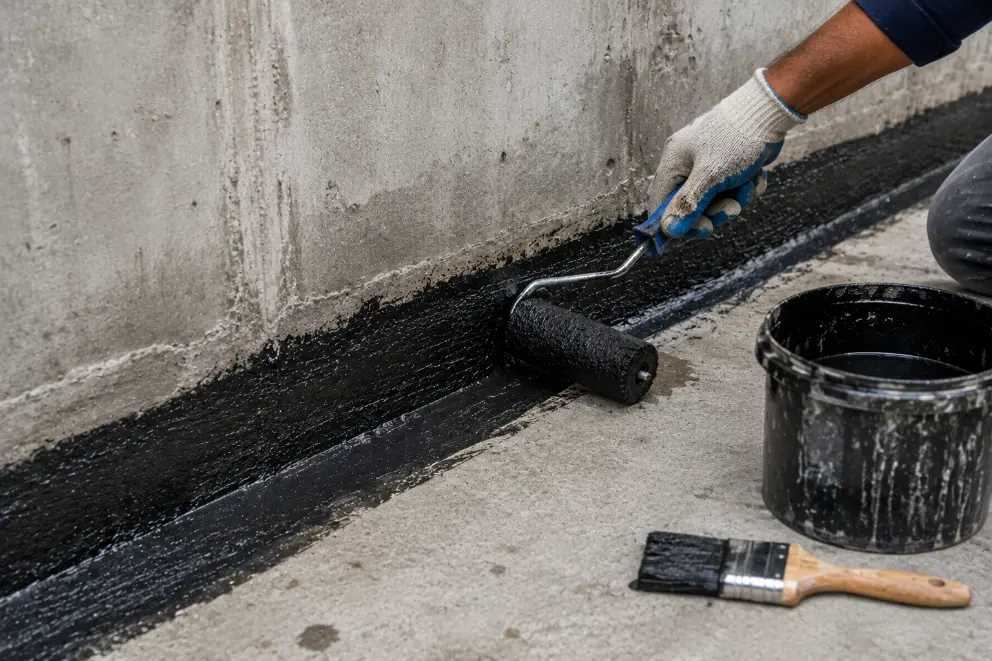
| Bituminous coatings | Foundations, basements | Protects against soil moisture |
| Integral waterproofing compounds | Concrete and mortar | Helps reduce water permeability |
| Waterproofing sealants | Joints, cracks, openings | Blocks water-entry points |
| Epoxy coatings | Industrial floors and tanks | Provides moisture and chemical resistance |
Also Read: Construction Chemicals Market
Where Are Waterproofing Chemicals Used?
Roofs and Terraces
Roofs and terraces are exposed to rain, sunlight, and temperature changes throughout the year. Water can enter through cracks, joints, and porous concrete. A suitable waterproofing coating can create a protective layer and reduce the risk of leakage.
Basements
Basements are particularly vulnerable to groundwater and moisture from surrounding soil. Depending on the site conditions, waterproofing may involve coatings, membranes, sealants, drainage, or a combination of these methods.
Bathrooms and Wet Areas
Bathrooms, kitchens, balconies, and utility areas are regularly exposed to water. Waterproofing the floor and relevant wall surfaces before finishing work can help prevent moisture from reaching adjacent rooms or lower floors.
Foundations
Foundation areas remain in contact with soil for long periods. Waterproofing chemicals can help limit moisture penetration and protect concrete from prolonged exposure to water.
Water Tanks
Water-retaining structures need waterproofing materials that are appropriate for continuous water contact. The selected product should be compatible with the structure and intended use.
Benefits of Construction Chemicals Waterproofing
Proper Construction Chemicals Waterproofing can help protect a building in several ways:
- Reduces water seepage and dampness
- Helps protect concrete from moisture-related deterioration
- Reduces damage to plaster and paint
- Helps protect reinforcement from moisture exposure
- Improves the durability of treated surfaces
- Reduces the need for repeated repairs
- Helps control moisture-related mold growth
- Supports a longer service life for construction components
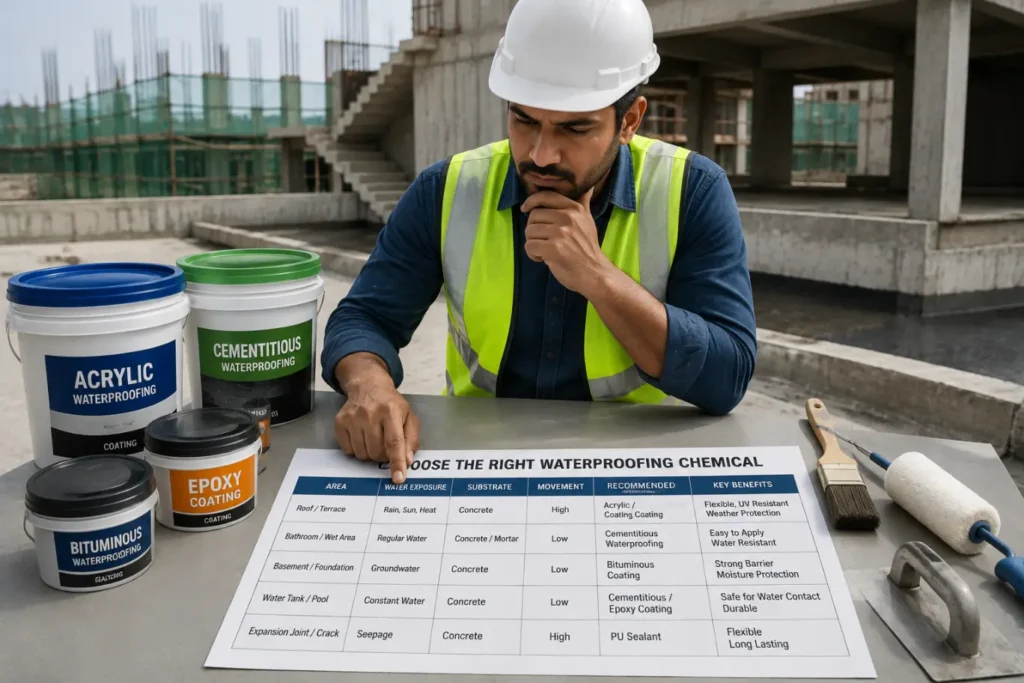
How to Choose the Right Waterproofing Chemical
There is no single Construction Chemicals Waterproofing product that works for every situation. A chemical suitable for a bathroom may not be appropriate for an underground foundation or an exposed terrace.
Before selecting a product, consider:
- Surface: Identify whether the substrate is concrete, masonry, plaster, or another material.
- Location: Different areas have different waterproofing requirements.
- Water exposure: Consider rainfall, surface water, groundwater, or continuous water pressure.
- Movement: Roofs and terraces may require flexible systems because of temperature-related movement.
- Existing damage: Cracks, weak concrete, and damaged joints should be addressed before waterproofing.
- Application: Check whether the product requires brushing, rolling, spraying, or mixing with cement.
- Compatibility: Make sure the chemical is suitable for the substrate and any finishing material applied later.
Also
Why Proper Application Matters
A good Construction Chemicals Waterproofing product cannot compensate for poor preparation or incorrect application. Before treatment, the surface should generally be clean, sound, and free from dust, oil, loose particles, and other contaminants.
Cracks and joints should be treated according to the selected waterproofing system. Mixing ratios, application thickness, coverage, drying time, and curing requirements should follow the manufacturer’s instructions.
For new construction, waterproofing should be planned along with drainage, joint detailing, surface preparation, and other building elements.
Also Read: Global Construction Chemicals Market
Frequently Asked Questions
1. What are construction chemicals waterproofing products used for?
They are used to reduce water and moisture penetration through concrete, masonry, roofs, walls, foundations, bathrooms, basements, and other construction surfaces.
2. Which waterproofing chemical is best for roofs?
The choice depends on the roof surface and exposure. Acrylic, polyurethane, bituminous, and other systems may be suitable for different roof conditions.
3. Can waterproofing chemicals be added to concrete?
Yes. Integral waterproofing compounds are designed for use with suitable concrete or mortar mixes to help reduce permeability.
4. Is waterproofing necessary for bathrooms?
Yes. Proper waterproofing can help prevent water from passing through bathroom floors, walls, joints, and areas around plumbing.
5. Can waterproofing chemicals fix cracks?
Some products can treat minor cracks, but structural or significant cracks require proper assessment and repair before waterproofing.
6. How can waterproofing last longer?
Use the right product, prepare the surface correctly, follow the manufacturer’s application instructions, and ensure proper curing and protection after application.