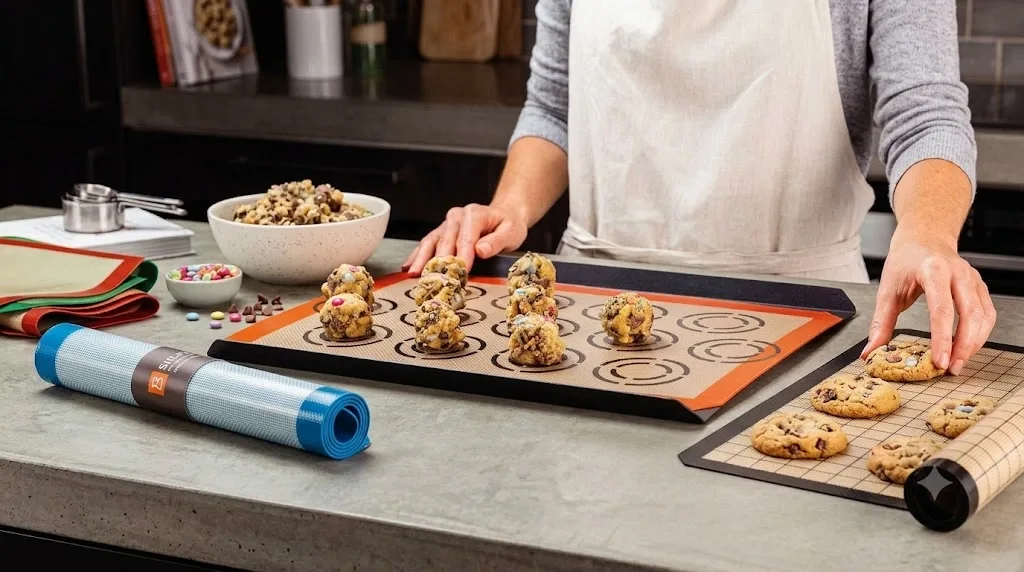
Silicone baking mats are durable, non-stick, heat-resistant sheet manufactured using food-grade silicone with a core of fiberglass mesh. Made to be used in standard baking sheets, this mat serves as a replacement for conventional parchment paper and aluminum foil. In an eco-friendly kitchen, a silicone baking mat ensures an even cooking surface, prevents greasing of baking dishes, and makes cleaning easy after cooking. Using a high-quality silicone baking mat ensures effortless non-stick performance without adding unnecessary oils or sprays.
Table of Contents
Silicone Baking Mats vs. Conventional Options
Eco-Friendly Non-Stick Superiority
Comprising pure and safe-to-cook-with silicone, these mats provide an even distribution of heat to avoid burning the bottom part of foods. The non-stick surface lets delicacies come off easily, thus making cooking oil dispensable.
Comparing Oven Sheet Options
Some of the baking material options are as follows:
| Feature / Metric | Reusable Silicone Baking Mat | Single-Use Parchment Paper | Aluminum Foil |
| Environmental Impact | Eco-friendly (Reusable thousands of times) | Single-use waste | Single-use waste |
| Non-Stick Surface | Superior (No greasing needed) | Moderate (Requires butter/oil occasionally) | Low (Sticks easily without oil) |
| Thermal Resistance | Up to 230°C–250°C | Up to 220°C (Can scorch) | High (Can tear easily) |
| Long-Term Value | High upfront value over time | Recurring ongoing cost | Recurring ongoing cost |
Precautions & Guidelines for Safe Practice
Cleaning your silicone baking mats is simple, requiring only warm soapy water or a quick cycle on the top rack of the dishwasher.
In order to ensure that the surface remains safe and extend the lifespan of your mats, the following guidelines need to be followed:
- Never Use Blades: Do not use sharp blades such as knives to slice pizzas or cut dough because it may cause the blades to cut through the inner layer of fiberglass.
- No Flames: Do not allow your mats to come into contact with fire or direct burners of the stoves.
- Temperature Limitation: Do not cross the recommended temperature range for baking as per the manufacturer’s guidelines (up to 230°C/450°F).
- Use Non-Abrasive Cleaning Methods: When cleaning, only use sponges, as abrasive tools may damage the non-stick surface.
- Storage: When storing, the mats should always be rolled up or laid flat.
- Degreasing: In order to remove oil, clean them with hot water and detergent or a paste of baking soda.
Kitchen Applications & Food Safety
Food-grade silicone mats support clean and non-toxic baking practices. Because high-grade silicone is non-porous and inert, it will not absorb odors, flavor compounds, or bacteria. Its heat stability ensures that no plasticizers, BPA, or harmful synthetic chemicals leach into your food during high-temperature roasting or baking sessions. Every home baker can benefit from food-grade silicone baking mats that withstand both freezer cold and high oven temperatures.
Final Thoughts
For those manufacturing high-quality kitchenware and specialized baking equipment, it is imperative to use certified high-purity material in order to ensure safety and customer satisfaction. High-quality silicone polymers offer excellent heat resistance, toughness, and safety compliance. Swapping disposable parchment paper for reusable silicone baking mats drastically reduces kitchen waste while improving baking consistency.
Being a prominent silicone manufacturer and supplier, Biopol Chemicals offers high-grade silicone polymers specially designed for food contact products and kitchenware. Let us help you improve your production efficiency, adhere to the strict international safety requirements, and provide consistent quality products to your customers worldwide.
Frequently Asked Questions
1. Can silicone baking mats be used for roasting food?
Absolutely, silicone baking mats perform very well when used to roast vegetables, chicken, and roasted nuts under high oven temperatures without staining the pan.
2. Why does my silicone baking mat feel greasy even after cleaning?
The silicone is capable of trapping some oil residue after baking. Soaking the silicone baking mat in hot water mixed with either baking soda or lemon juice should do the trick.
3. Is it okay to put a silicone baking mat in the freezer?
Absolutely, because high-quality silicone can survive extreme freezing conditions and would be perfect for freezing rolled dough, chocolate, or soft foods.
Also Read here