Modern, Durable Alternative for Food Preparation
Choosing a silicone cutting board has become an increasingly popular choice for home cooks and professional kitchens prioritizing food safety, kitchen hygiene, and knife preservation. Traditional cutting boards made of wood or hard plastic often raise concerns regarding deep knife grooves that harbor bacteria, microplastic shedding, or warping in dishwashers. Food-grade silicone cutting boards offer a flexible, non-porous, and heat-resistant surface that combines the softness needed to protect fine knife edges with the high-durability standards required for modern sanitization.
Table of Contents
Silicone Cutting Board: Material Science
The special safety and functionality aspects of the silicone cutting board result from certain properties of the material:
1. Chemical Inertness: Silicone cutting boards are made of chemical-grade food-safe silicone, which is not toxic, does not contain BPA or phthalates, and does not react to chemicals.
2. Temperature Resistance: The high resistance of silicone to temperature extremes makes it possible to sterilize the board by placing it in a high-temperature dishwasher or in boiled water.
3. Elastic Surface: Unlike inflexible boards of plastic, which break away microfragments when cut, the high elasticity of silicone does not lead to flakiness.
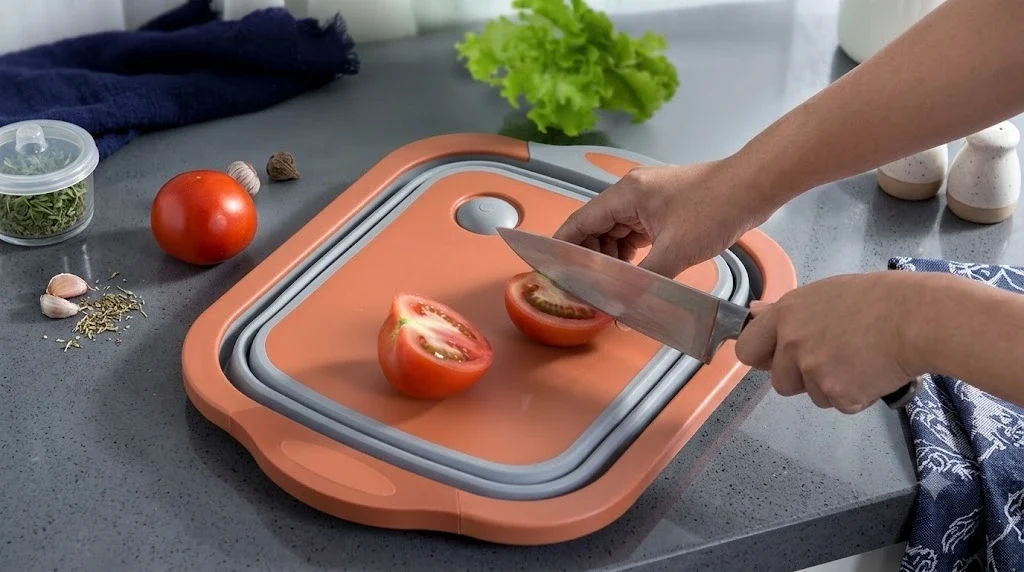
Comparing Silicone, Plastic, and Wooden Cutting Boards
Using a silicone cutting board protects fine chef’s knives from dulling during rapid chopping.
The following table details how silicone cutting boards perform against traditional kitchen materials:
| Feature | Silicone Cutting Board | Rigid Plastic (HDPE) Board | Wooden Cutting Board |
| Bacterial Resistance | High (non-porous & easy to boil) | Moderate (deep grooves trap bacteria) | Moderate (natural antimicrobial, but porous) |
| Knife Edge Protection | Exceptional (soft & forgiving) | Moderate (can dull thin blades) | Good (gentle on knife edges) |
| Dishwasher & Heat Safety | Safe (high heat tolerance) | Limited (warps in hot dishwashers) | Unsafe (cracks and splits in dishwashers) |
| Flexibility & Funneling | Excellent (bends to pour food) | Rigid | Rigid |
| Microparticulate Risk | Minimal (elastic & tear-resistant) | Higher (produces plastic shavings) | Minimal (organic wood fibers) |
How to Use and Maintain Silicone Cutting Boards
Choosing certified silicone cutting boards ensures your food prep surface remains non-porous and easy to sanitize.
- Choose a Board Made from Food-Grade Silicone: Make sure the board is made of platinum-cured, food-grade silicone that is free of fillers, BPA, and heavy metals.
- Place it in a Stable Position: Put the flexible silicone board down on a flat surface such as a countertop; the board will not slip around because it has an excellent high-grip bottom side.
- Color-Coding by Functionality: You can use color-coded silicone boards to separate meats, poultry, fish, and vegetables to avoid cross-contamination.
- Flexible Funnel Effect: Fold the flexible board after cutting your food to move it straight into pans or containers without spills.
- Clean Thoroughly: It should be washed under warm, soapy water, put into a dishwasher, or boiled in water from time to time.
- Storage Options: The hanging loop allows you to hang it or store it flat.
Kitchen Hazards and Hygiene Risks Prevented
Placing a non-slip silicone cutting board on your countertop prevents dangerous sliding while cutting raw meats.
- Cross-Contamination Harboring: Eliminates deep, unwashable knife cuts where foodborne pathogens like Salmonella or E. coli proliferate.
- Microplastic Ingestion: Reduces the risk of consuming tiny plastic flakes shed by traditional soft polyethylene boards during vigorous chopping.
- Cross-Flavor Transfer: Prevents pungent food odors (like garlic, onion, or raw fish) from absorbing permanently into the cutting surface.
- Board Slippage Accidents: Natural non-skid properties eliminate the need to place damp towels under the board to prevent slipping while chopping.
Precautions and Considerations
Home cooks appreciate how flexible silicone cutting boards allows easy funneling of ingredients straight into cooking pots. Follow these measures:
- Don’t Use Serrated Blades: While silicone works excellently with normal chef’s knives and santokus, heavy bread knives with serrated blades may create tears or cuts on the silicone surface.
- Avoid Open Flame: Do not put your silicone boards close to any flames or stovetops because they could cause burning or degradation of the material.
- Avoid Chemical Fillers: Don’t purchase cheaper silicone boards that are made of chemical fillers; apply the “twist test” (if you see white, then fillers are used).
- Prevent Staining with Pigmented Foods: Clean up right after cutting pigmented foods, such as beets or tomato paste.
Hygienic Choice for the Modern Kitchen
Investing in a silicone cutting board offers a practical, highly hygienic, and durable solution for daily meal preparation. By offering superior blade protection, high-temperature sanitization options, and a non-porous surface that resists bacterial buildup, silicone addresses many of the safety limitations found in traditional wood and plastic boards. When crafted from pure, high-grade materials and properly maintained, a silicone cutting board serves as an essential tool for a safe and efficient kitchen environment.
Partnering with Quality Material Suppliers
Are you a kitchenware brand, consumer product manufacturer, or housewares distributor looking to produce durable, food-safe silicone products? Partner with Biopol Chemicals to source raw materials engineered to meet international food-contact safety standards and high-volume production demands.
Frequently Asked Questions (FAQs)
1. Is a silicone cutting board better than a plastic one?
Yes. Silicone cutting boards have non-porous, heat-resistant, and elastic features. They can handle boiling water sterilization without getting deformed and cannot shed any microplastic particles like plastic boards can.
2. Would knives damage a silicone cutting board?
Straight-edge knives such as paring knives, chef’s knives, and utility knives will not ruin your silicone cutting board. However, avoid heavy-duty serrated knives since they could scratch it up because of saw-toothed blades.
3. How can I get rid of stains or odor from my cutting board?
Wash the board with warm water and detergent as soon as you finish using it. If needed, use warm water and soak the board in it with baking soda and lemon juice, or even boil it.
4. Can I wash a silicone cutting board in a dishwasher?
Yes. Professional food-safe silicone material can tolerate both high and low temperatures. This means it can easily pass through dishwasher cycles in your home or professional kitchens.
Also Read