Professional Confectionery at Home
Using a silicone chocolate mold is the secret to creating smooth, glossy, and intricately detailed chocolates right in your home kitchen. Traditional rigid plastic or metal molds often make extraction difficult, frequently causing delicate chocolates to snap, bloom, or lose their fine outer designs. High-grade, food-safe silicone molds offer exceptional flexibility, temperature stability, and a non-stick surface, allowing both hobbyists and professional chocolatiers to pop out flawless pralines, truffles, and decorated chocolate bars effortlessly.
Table of Contents
The Science of Food-Grade Silicone Chocolate Molds
Silicone chocolate molds work seamlessly with tempered chocolate due to distinct physical properties:
- Hydrophobic Non-Stick Surface: Pure food-grade silicone has low surface energy, ensuring that cocoa butter does not bond to the mold cavity walls as the chocolate sets.
- Thermal Resilience: Quality silicone easily withstands temperature swings, making it ideal for rapid cooling in the fridge or freezer.
- Flexible Demolding Stress: When tempered chocolate contracts slightly as it crystallizes, the flexibility of silicone allows you to peel the mold away from the chocolate rather than forcing the chocolate out of a rigid cavity.
Comparing Silicone, Rigid Plastic, and Polycarbonate Molds
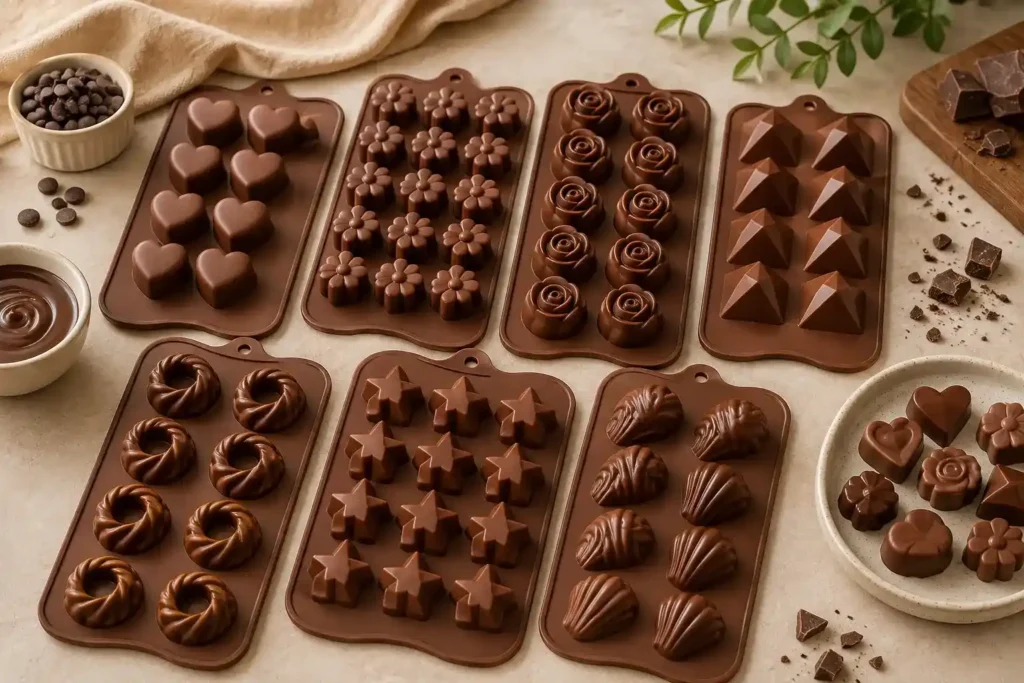
Pours of tempered dark chocolate set beautifully inside silicone molds. The following table details how silicone chocolate molds compare against alternative mold materials:
| Feature | Silicone Chocolate Mold | Rigid Plastic Mold | Polycarbonate Mold |
| Ease of Extraction | Exceptional (peels away easily) | Difficult (requires twisting/tapping) | Moderate (requires perfect tempering) |
| Durability | Long-lasting & shatterproof | Cracks or warps over time | Extremely durable, but rigid |
| Detail Definition | High (captures soft 3D curves & details) | Medium | Very High (crisp, hard edges) |
| Temperature Range | Freezer to oven safe | Limited (can warp with heat) | Not suited for high oven heat |
| Cleaning Effort | Easy (dishwasher/warm water) | Hand wash only (scratches easily) | Requires careful hand drying |
How to Use a Silicone Chocolate Mold Step-by-Step
Choosing durable silicone chocolate molds allows you to create intricate 3D shapes without cracking the chocolate.
- Clean and Dry Thoroughly: Ensure your silicone mold is completely clean and 100% dry; even a single drop of water will cause liquid chocolate to seize up instantly.
- Temper Your Chocolate: Melt and temper your chocolate to the correct working temperature to ensure a glossy shine and firm snap.
- Fill the Cavities: Spoon, pipe, or pour the tempered chocolate into each cavity, filling slightly below the top rim to avoid messy edges.
- Tap Out Air Bubbles: Tap the silicone mold firmly on your countertop several times to bring trapped air bubbles to the surface for a smooth finish.
- Set in a Cool Place: Place the filled mold in a cool room or in the refrigerator for 15 to 20 minutes to allow proper cocoa butter crystallization.
- Unmold Gently: Turn the mold upside down over a clean parchment sheet and gently press the back of each cavity to push the chocolates out cleanly.
Quality Issues Prevented by Silicone Molds
Beginners find that flexible silicone chocolate molds make unmolding delicate confections completely effort-free.
- Broken Shells and Snapped Tips: Prevents delicate praline points and fine details from breaking during extraction.
- Air Bubble Cavities: Flexible walls allow air pockets to escape easily during surface tapping before the chocolate hardens.
- Stuck Confections: Eliminates the frustration of chocolates refusing to drop out of rigid molds.
- Thermal Shock Distortion: High thermal resistance stops the mold from bending or swelling when filled with warm melted chocolate.
Precautions
Tapping your filled silicone chocolate molds against the counter removes hidden air bubbles before setting.
- Verify Food-Safe Quality: Always use food-grade silicone molds free from toxic fillers, BPA, and industrial dyes.
- Avoid Sharp Kitchen Tools: Never use knives or metal picks inside the cavities to remove stubborn chocolate, as minor cuts permanently ruin future molds.
- Do Not Overheat: Keep working chocolate within standard tempering ranges; pouring boiling-hot liquids can degrade non-stick properties over time.
- Dry Completely Before Storage: Store molds flat in a dust-free environment after ensuring they are fully dried to prevent water spot marks on future batches.
Craft Professional Chocolates at Home
Incorporating a silicone chocolate mold into your kitchen lineup turns chocolate making into a fun, stress-free creative process. By pairing well-tempered chocolate with flexible, food-safe silicone, you achieve flawless releases and commercial-quality detail every single time. Proper care and simple preparation ensure your molds deliver beautiful, delicious confections for years to come.
Partnering with Quality Material Suppliers
Are you a bakery supply brand or kitchenware manufacturer looking to produce high-durability, food-safe silicone products? Partner with Biopol Chemicals to source raw silicone materials engineered to meet strict international food-contact safety standards and high-volume production needs.
Frequently Asked Questions (FAQs)
1. Do I need to grease a silicone chocolate mold before filling?
No. Pure food-grade silicone is naturally non-stick. Greasing or oiling the cavity will dull the natural shine of your chocolate and alter its surface texture.
2. Why are my chocolates dull or cloudy after removing them from the silicone mold?
Cloudy or streaky chocolate is usually a result of improper tempering or placing the mold in a freezer that is too cold, causing moisture condensation (sugar bloom) on the surface.
3. How do I clean silicone chocolate molds properly?
Wash them in warm water using mild dish soap and a soft microfiber cloth. Avoid abrasive sponges, and ensure the molds are completely air-dried or wiped dry before pouring fresh chocolate.
4. Can silicone chocolate molds be used for other kitchen treats?
Yes! Food-grade silicone molds are extremely versatile and can be used for making ice cubes, gummy candies, fondants, jelly treats, or small baked goods.
Also Read