
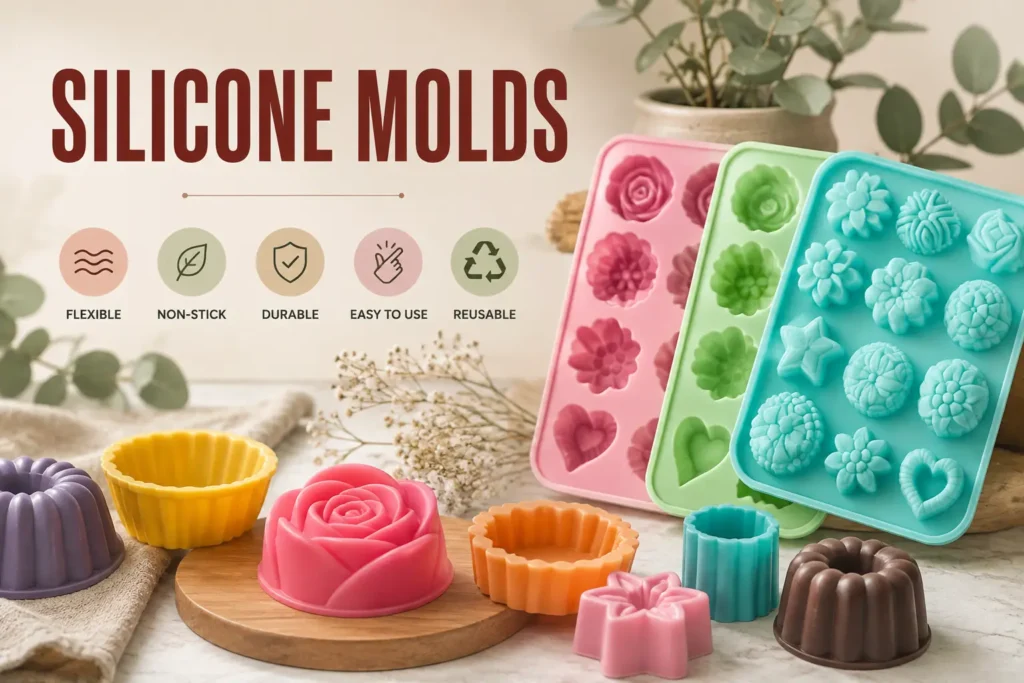
Silicone molds are versatile toolings engineered from flexible silicone elastomers to replicate intricate shapes and complex geometries with extreme accuracy. Remember the last time you saw a perfectly detailed object like a beautiful piece of jewelry with a perfectly intricate texture or an automotive seal, or a perfectly molded piece of chocolate. The reproduction of all these fine lines and detailed structures needs a molding compound that is capable of doing two things at once: retaining precise form and bending in order not to damage the created product. Until recently, people working in manufacturing, creating new products, faced many problems related to hard molds, which could easily chip or crack and ruin the fine details of the products created.
Silicone elastomers brought a revolution to the field. The unique combination of great structural rigidity and high elasticity allowed using this kind of material in the processes of modern manufacturing, prototyping, and design. Thanks to the possibility of varying the parameters of hardness and temperature resistance, every company is able to use the appropriate version of silicone. Flexible molds made of silicone will bend around any complex structure and undercut, ensuring the perfection of the final result. With increasing speed of production and rising quality standards, one needs to know how it works.
What Are Silicone Molds?
Silicone molds refer to flexible molds made from silicone elastomers to replicate a certain shape or part. In this process, the master pattern is put in a mold-making system, followed by the introduction of silicone into the system and curing.
When the mold is set, it is then removed from the master pattern and ready for use in casting or replication.
Properties that make silicone molds preferable include:
- Flexibility and elasticity
- Fine detail replication
- Ease of demolding of many cast parts
- Age resistance in certain formulations
- Several hardnesses available
- Casting compatibility
Formulations vary depending on several factors like mold hardness required, curing methods, and operating temperatures, among others.

How Do Silicone Molds Work?
Beginners love how easily silicone candle molds captures fine 3D details and textures. Even though there can be differences in industrial mold-making methods, the general idea is quite simple:
- Pattern preparation: The original pattern is cleaned and properly positioned.
- Mold preparation: A proper mold container or holding device is prepared for the pattern.
- Silicone preparation: The silicone ingredients are properly mixed based on the manufacturer’s formula.
- Pouring: The silicone is carefully poured onto the pattern.
- Curing: The silicone starts the curing process and becomes an elastic material.
- Pattern removal: After being cured appropriately, the original pattern is removed from the silicone.
- Using the mold: The mold is ready to be used in the desired process.
Note: Mixing ratios, curing time, temperature, and processing requirements differ between silicone systems, so manufacturer instructions should always be followed.
Types of Flexible Silicone Rubber Molds
Different applications require different silicone characteristics. Common categories include:
| Type | Key Characteristics | Typical Applications |
| RTV Silicone Molds | Cure at or around room temperature | Prototyping and general mold making |
| Flexible Silicone Molds | Soft and elastic | Complex shapes and detailed designs |
| High-Temperature Molds | Designed for elevated-temperature conditions | Industrial and specialty applications |
| Food-Contact Molds | Formulated for suitable food-contact applications | Baking and confectionery |
| Custom Silicone Molds | Designed around specific product requirements | Specialised manufacturing |
Not every silicone formulation is suitable for every application. Temperature, chemical compatibility, regulatory requirements, and expected service life should be considered before selection.
Why Use Casting Molds?
The increasing prevalence of silicone as a molding tool has much to do with its flexible and performance characteristics.
- Flexible Demolding: Flexible silicone may undergo temporary deformation while being demolded, and that can prove quite beneficial in cases of products that have complex forms or some undercuts.
- Durable Replication: Properly selected silicone composition will duplicate small details from the master pattern, hence can be used in cases when the appearance and dimensions of the product are essential.
- Different Compositions: Silicone materials have a variety of hardnesses and curing systems and thus are chosen by manufacturers depending on the needs of the particular process.
- Repeatable Moldings: Silicone molds can be used repeatedly for different production runs depending on the silicone composition, mold design, casting material, and other operational factors.
- Resistant Properties: Some silicone elastomers are resistant to high temperatures, chemicals, weathering, and aging processes.
Major Applications of Silicone Molds
Due to its flexibility, silicone molding can be applicable to many different industries.
- Manufacturing: Molding of prototypes, components, and products.
- Automotive: Molding of special components, seals, and prototypes.
- Electronics: Component-oriented molding and protection.
- Healthcare: Specialized manufacturing applications only.
- Construction: Decoration and specialized molding of components.
- Food processing: Food contact molding. Industrial bakeries and chocolatiers rely on food-grade silicone molds to produce detailed confections with flawless demolding. Pours of tempered dark chocolate set beautifully inside silicone chocolate molds.
- Consumer goods: Molding of product prototypes and components. Pours of soy pillar wax set smoothly inside premium silicone candle molds without sticking.
- Arts and Design: Molding of decorations and special pieces.
Tips for Better Mold Performance
There are some practical steps that one could take to increase the lifespan of the mold:
- Ensure that the master pattern is ready for molding.
- Mix the silicone according to the right proportions.
- Ensure proper mixing and minimize entrapped air.
- Support the mold appropriately when in use.
- Give enough time for curing before removing it.
- Use appropriate cleaning materials only.
- Store the finished mold in the right way.
Final Thoughts
Silicone molds bring together an incredible combination of flexibility, perfect replication, and resilience that has a huge range of applications in various industries. Whether for rapid prototyping on the factory floor or the mass production of complicated consumer products, the choice of silicone will make your manufacturing easier and extremely predictable. However, because each line of manufacturing is different, working through all the variables, such as chemical interaction, tear resistance, and thermal limitations, requires unique knowledge.
Getting the best out of your process starts with picking the right chemical composition. For companies aiming for growth and high performance through industrial solutions, Biopol Chemicals provides professional industry experience covering textiles, household care, agriculture, and special industrial chemicals.
Looking to boost your product formulation and manufacturing? Get in touch with Biopol Chemicals now to find out what we can do for you.
Frequently Asked Questions
1. For what purposes are silicone molds used?
Silicone molds can be used for duplicating shapes and parts in industries, prototyping, developing products, food-contact applications if the proper grade is chosen, and special molding techniques. Every home baker appreciates how silicone chocolate molds preserve fine surface details without sticking.
2. Why is silicone material a good choice for mold making?
The fact that this silicone material is flexible, elastic, possesses excellent ability to duplicate details, and comes in various degrees of hardness makes it very versatile for complex molding jobs.
3. What is the life span of a silicone mold?
There is no definite answer. The life span of a silicone mold is greatly affected by the particular formula of this rubber, the geometry of the mold design, aggressiveness of casting material, temperatures, and mold maintenance.
5. How should manufacturers choose silicone for industrial uses?
In addition to choosing the proper hardness of the mold, it is necessary to consider the curing system, tear strength, temperature limits, chemical resistance, dimensional stability, regulations, and expected production run size.
Also Read