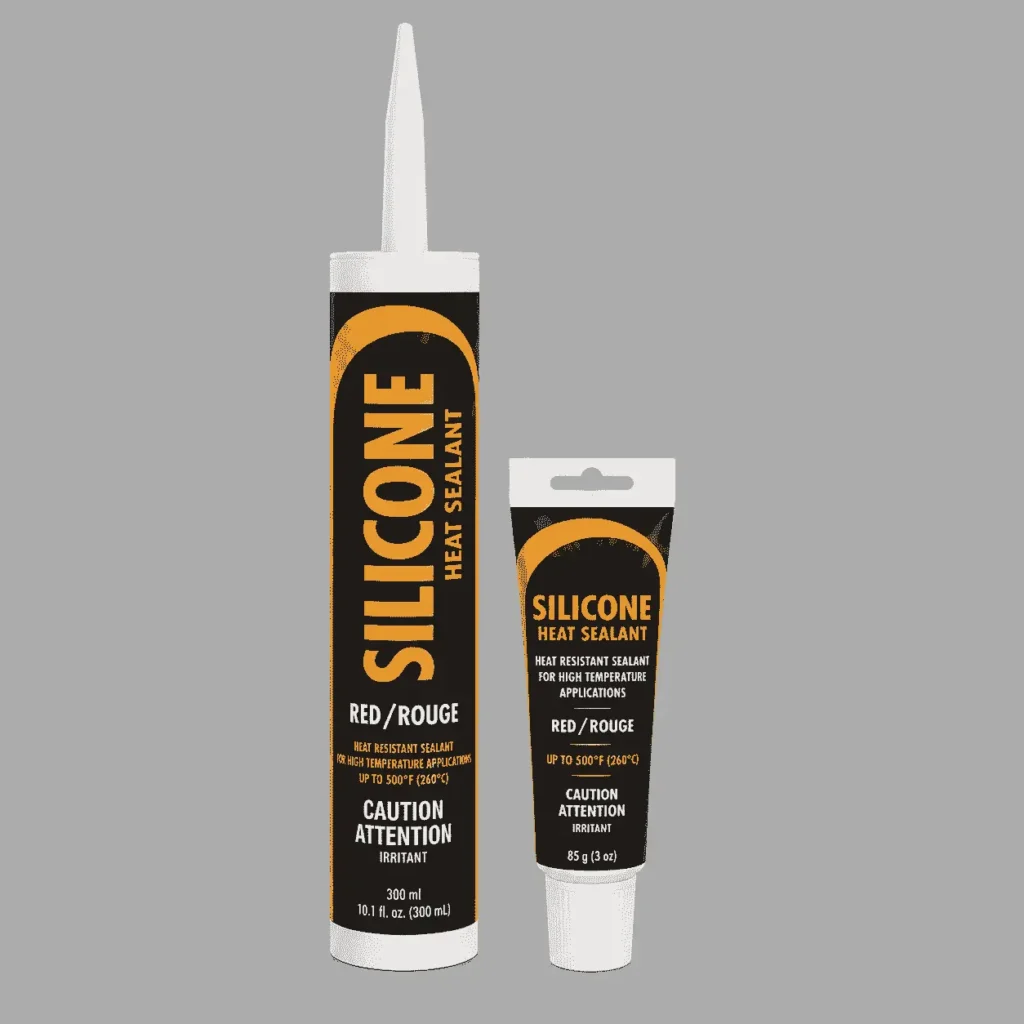
If you’re sealing something that gets seriously hot — an exhaust joint, an oven trim, a piece of industrial machinery — an ordinary caulk isn’t built for the job. High heat silicone sealant is formulated specifically for that environment: it holds its flexibility and its bond at temperatures that would soften, crack, or fail a standard silicone product. This guide breaks down what actually makes it different, where it’s genuinely worth the extra cost, and how to apply it so it keeps performing for years rather than failing after one hot summer or a few engine cycles
Key Takeaways
Withstands 260–315°C continuously, vs. ~200°C for standard silicone.
Brief spikes above 315°C count as a separate peak rating.
Heat tolerance comes from modified siloxane chemistry.
Specialized curing agents boost high-temp performance.
Used in automotive, HVAC, industrial, and electrical work.
Wrong grade or poor prep causes early seal failure.
Tip 1: Understand What Actually Makes It “High Heat”
Not every product labeled for heat resistance is built the same way, and the difference isn’t just marketing. Standard silicone sealants are a blend of silicone rubber and fillers, which gives them flexibility but limits their reliable temperature tolerance to around 200°C (392°F).
High heat silicone sealant uses a modified siloxane chemistry that keeps the material’s molecular structure stable well above that point, along with a specialized curing agent designed to set properly even in warmer conditions. Manufacturers often add further ingredients to improve UV resistance, chemical resistance, or adhesion under thermal stress. In short: it’s a different formulation, not the same product with a hotter-sounding name.
Tip 2: Know the Temperature Range You Actually Need
Temperature ratings on sealant packaging can be confusing because manufacturers sometimes list a continuous-duty rating and a separate, higher short-burst or peak rating without clearly labeling which is which. The table below outlines typical ranges — always check the specific product’s technical data sheet, since exact figures vary by manufacturer and formulation.
| Sealant type | Typical continuous rating | Typical short-burst / peak rating |
| Standard silicone sealant | Up to roughly 200°C (392°F) | Not usually rated for spikes beyond this |
| High heat silicone sealant | Roughly 260–315°C (500–600°F) | Some formulations rated to around 340°C (650°F) briefly |
If your project involves sustained heat — an oven surround, an industrial furnace joint — the continuous rating is what matters. If it only sees brief spikes, such as an occasional hot exhaust surge, the peak rating becomes more relevant. Don’t assume a product handles both equally well.
Tip 3: Match the Sealant to the Application
High heat silicone sealant shows up across a wide range of settings, and the right product often depends on the specific environment as much as the temperature alone.
| Setting | Typical use |
| Automotive | Exhaust joints, engine gaskets, sealing around engine-bay components |
| Industrial | Ovens, furnaces, and machinery with heating elements; flange and joint sealing on process equipment |
| HVAC | Ductwork joints and connections exposed to sustained heat |
| Household | Around stovetops, ovens, fireplaces, and some high-heat appliance seals |
| Electrical | Insulating and protecting components in high-temperature electrical assemblies |
Chemical exposure matters too: automotive and industrial settings often involve oils, fuels, or solvents alongside heat, so a sealant’s chemical resistance is just as important as its temperature rating in those environments.
Tip 4: Prepare and Apply It Correctly
A high-quality sealant applied poorly will still fail early. A few steps make the biggest difference:
- Clean the surface thoroughly, removing dust, grease, oil, and any old sealant residue.
- Let the surface dry completely — trapped moisture interferes with adhesion and curing.
- Apply with an appropriate tool, such as a caulking gun, for an even, consistent bead.
- Account for joint size and expected movement; an undersized bead can crack under thermal expansion and contraction.
- Apply in moderate conditions where possible — very hot, humid, or direct-sun conditions can cause uneven curing.
- Allow the full recommended curing time before exposing the joint to heat, stress, or moisture.
Tip 5: Avoid the Mistakes That Cause Early Failure
- Using a standard or bathroom-grade sealant on a high-heat surface, such as around a stovetop or exhaust — it will soften, slump, or lose adhesion.
- Skipping surface preparation; leftover dust, oil, or moisture prevents proper bonding even with a premium product.
- Applying too much sealant, which can cure unevenly, especially in hot or humid conditions, leaving it soft beneath a set surface.
- Ignoring the joint’s expected movement — materials expand and contract with heat, and a rigid or undersized seal will eventually crack.
- Assuming a peak-temperature rating applies to continuous use, when the two figures usually describe different conditions.
Tip 6: Weigh the Cost Against the Long-Term Value
High heat silicone sealant typically costs more upfront than a standard product, largely because of its specialized formulation. That said, the comparison worth making isn’t the price per tube — it’s the total cost of ownership.
In industrial or automotive settings, a seal failure can mean unplanned downtime, repeat labor, and repair costs that far exceed the price difference between products. In regulated environments, using an appropriately rated sealant can also reduce compliance risk. For a small household project, the extra cost is usually modest, and choosing the correctly rated product still tends to be cheaper than redoing the job after a standard sealant fails.
Frequently Asked Questions
What temperature can high heat silicone sealant withstand?
Most high heat silicone sealants are rated for continuous use somewhere between roughly 260°C and 315°C (500–600°F), with some formulations tolerating brief spikes higher than that. Exact figures vary by product, so it’s worth checking the technical data sheet rather than assuming.
Is high heat silicone sealant the same as regular silicone sealant?
No. While both are silicone-based, high heat variants use a different chemical structure and curing process specifically designed to maintain flexibility and adhesion at temperatures that would cause standard silicone to soften or fail.
Where should I use high heat silicone sealant?
Common uses include automotive exhaust systems and engine components, industrial ovens and furnaces, HVAC ductwork exposed to sustained heat, and household areas like stovetops or fireplace surrounds.
How do I apply high heat silicone sealant correctly?
Clean and dry the surface completely, apply an even bead sized for the joint’s expected movement, and allow the full manufacturer-recommended curing time before exposing it to heat or stress.
Can high heat silicone sealant be used outdoors?
Yes, many formulations are suitable for outdoor use and also offer good UV and weather resistance, but it’s worth confirming this specifically, since not every high heat product is formulated for prolonged sun and moisture exposure.
Does high heat silicone sealant cost more than standard sealant?
Generally, yes, due to its specialized formulation. However, for applications genuinely exposed to sustained heat, it usually costs less overall than repeatedly replacing a standard sealant that keeps failing.
How long does high heat silicone sealant last?
Lifespan depends on the specific product, the temperatures it’s exposed to, and application quality, but a correctly applied, appropriately rated sealant typically lasts several years in continuous high-heat service before it needs inspection or reapplication.
Choosing Between Acetic and Neutral Cure Formulas
Beyond temperature rating, high heat silicone sealant also comes in two different cure chemistries, and picking the wrong one can cause problems even on a project where the heat tolerance is otherwise perfect. Acetic-cure high heat silicone sealant releases acetic acid as it sets, giving off a vinegar-like smell and curing relatively fast, but that acid byproduct can corrode certain metals, including copper, brass, and some coated steels.
if it’s applied directly against them. Neutral-cure high heat silicone sealant, by contrast, releases little to no corrosive byproduct as it cures, making it the safer choice for electrical components, sensitive metals, and enclosed spaces where ventilation is limited.
Ventilation matters regardless of which cure type you choose. Curing high heat silicone sealant in a well-ventilated area speeds up the process and reduces exposure to fumes, which is especially relevant indoors or in an engine bay with limited airflow. Always check the product label before applying it near sensitive metals or electronics, since not every tube of high heat silicone sealant on the shelf is clearly marked as neutral-cure, and assuming the wrong chemistry can undo an otherwise correct installation.
Proper Storage Extends Shelf Life
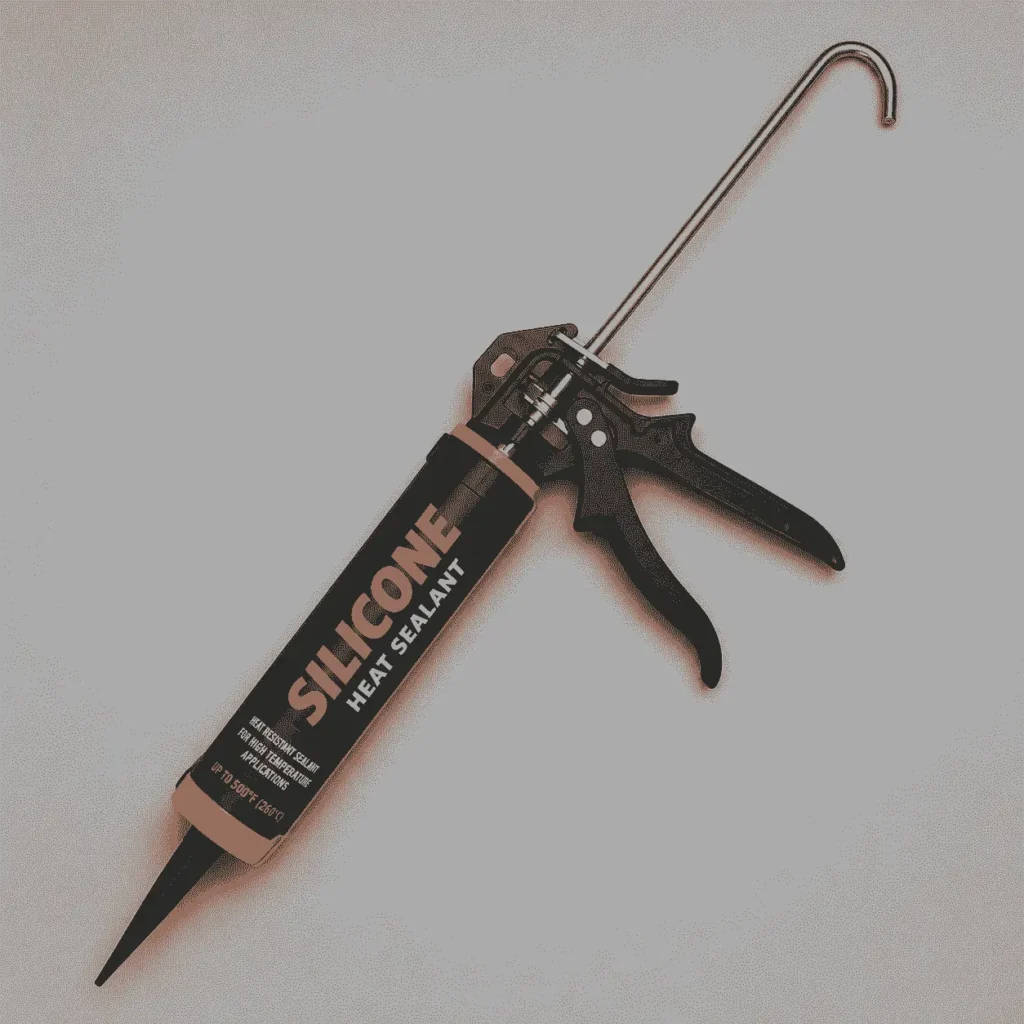
An unopened tube of high heat silicone sealant typically has a shelf life of about twelve to eighteen months, but only if it’s stored correctly in the meantime. Keep the tube upright in a cool, dry location away from direct sunlight and away from any source of ambient heat, since a hot garage shelf or a spot near a furnace can cause the product to begin curing inside the tube before it’s ever applied.
Moisture is just as damaging as heat: a punctured or poorly resealed nozzle lets humidity reach the sealant and can leave a hardened plug at the tip well before the rest of the tube has gone bad.
Once opened, cap the nozzle tightly or use a nozzle plug between applications, and try to use the remainder of the tube within a few months for the most reliable results. Before starting any job, squeeze a small test bead onto scrap material; high heat silicone sealant that has begun to degrade often looks grainy, feels unusually stiff, or fails to lay down a smooth, even bead. Applying an expired or partially cured product is a common, avoidable reason a seal underperforms, even when the surface prep and application technique were otherwise done correctly.
Conclusion
Choosing high heat silicone sealant comes down to matching the product’s actual rating, continuous and peak, to what your project will really experience, and then applying it correctly. It costs more than a standard tube, but in any setting with sustained heat, that cost is usually far smaller than the price of a failed seal. Check the technical data sheet before you buy, prepare the surface properly, and give it the full cure time it needs, and a high heat silicone sealant should hold up for years rather than months.