A new scar can be hard to ignore. It may be red, slightly raised, and itchy, and you naturally want it to calm down as fast as possible. That is often the moment someone suggests silicone strips. These thin, sticky, reusable sheets are among the most commonly recommended ways to care for a healed scar. They are not magic, though, and the research behind them is more mixed than most product pages let on. This guide explains how they work, when to start, how long to wear them, and what kind of result is realistic.
Key Takeaways
- Silicone strips are soft, self-adhesive sheets of medical-grade silicone that you wear over a healed scar, and most can be washed and reused.
- Scar guidelines recommend silicone as a first-line option for raised scars, but the trials behind that advice are mostly small and of low quality.
- Begin only when the skin is fully closed, with no stitches, scabs, or open areas, and check with your surgeon first.
- Trials usually ran for about 12 weeks, with the sheet worn 12 hours or more a day, so steady use matters more than the brand.
- Silicone strips will not erase a scar, and researchers have little evidence for using them on flat old scars or pitted acne scars.
What Are Silicone Strips and How Do They Work?
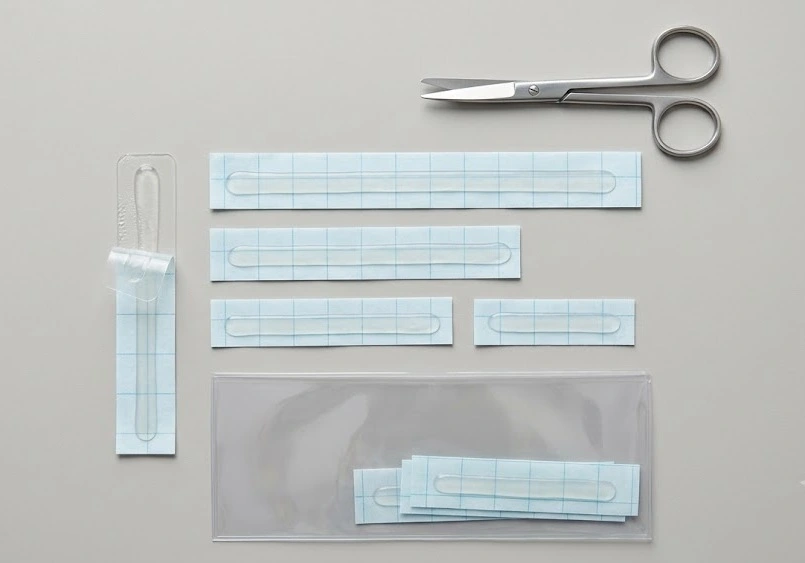
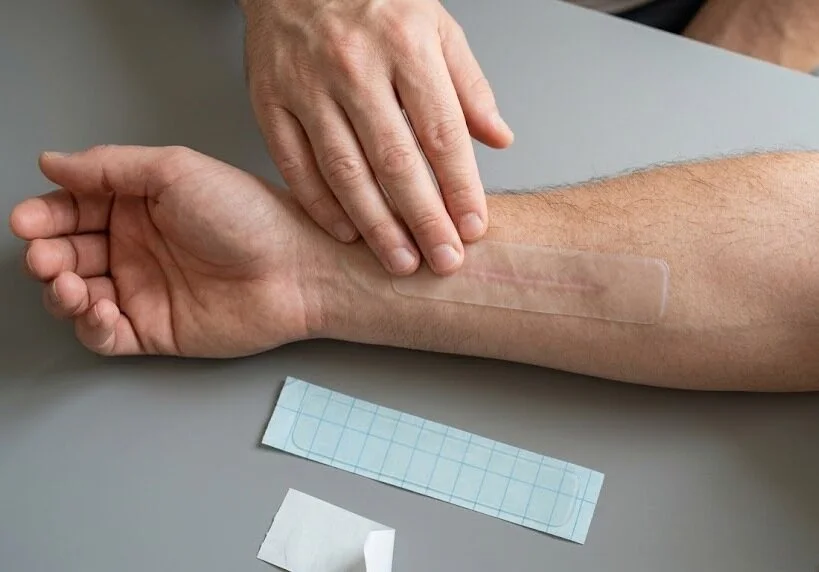
Put simply, they are flexible pads of silicone gel with a mildly sticky side that clings to the skin. You will also see them sold as silicone gel sheets, silicone scar strips, or scar tape. They all do the same basic job: they sit over a scar and stay there for hours at a time.
Doctors have used silicone on scars for decades. Nobody has fully pinned down why it helps, but the most popular explanation is hydration. Newly healed skin loses water quickly, and that dryness appears to encourage cells to churn out extra collagen, the protein that makes raised scars thick and firm. A silicone sheet holds moisture against the skin, which may calm that signal down.
Some experts also believe the sheet takes a little tension off the edges of the scar. That idea is less proven, so treat it as a possibility rather than a fact.
Do Silicone Strips Really Work? What the Research Says
The honest answer is that they probably help a little, mostly with raised scars. A 2013 Cochrane review of silicone gel sheets pooled 20 trials covering 873 people. Among people who tend to form thick scars, those who wore a sheet after the wound healed developed raised scars roughly half as often. In studies of scars that were already raised, sheets also improved color and thickness.
There is a catch, and it is a big one. The review authors rated those studies as poor quality and highly open to bias. Newer Cochrane reviews were just as careful. The 2021 review on treating existing raised scars rated its evidence low to very low certainty, and the 2023 review on keloids found only two small trials. That does not mean silicone fails. It means it has not been tested as rigorously as most people assume.
Even so, a 2014 international scar guideline still lists silicone as a first-line choice. A fair summary is that it is low risk, widely recommended, and modest in effect. Be wary of any claim that calls it a guaranteed fix.
Scars Often Improve on Their Own
Before crediting any product, remember that scars change by themselves. Many raised scars flatten, soften, and fade over the first year or so. In one breast reduction trial, about 64 percent of patients had a raised scar at three months, and about 35 percent still did at one year. Silicone made no difference to that pattern.
This is why before-and-after photos can mislead. A scar that looks better after three months of wear may simply be maturing. Taking a photo at the start, in the same light each month, gives you a fairer picture.
Which Scars Respond Best to Silicone Strips?
Not every scar is a good match, so it helps to know what type you have. A hypertrophic scar is raised and often red, but it stays inside the original wound edges and often settles on its own. A keloid keeps growing and can spread into the skin around it. Keloids are more common in darker skin and usually need a doctor’s plan, because there is very little solid evidence on silicone sheets for them.
Silicone is most often used for:
- New surgical scars in people who have formed raised scars before
- Raised, red, or thick scars after surgery, burns, or injuries
- Scars on flat, fairly still areas such as the chest, abdomen, or limbs
It is a poor fit for:
- Pitted acne scars, which are dents from lost tissue rather than raised scars
- Flat, pale scars that are years old, because no study has tested them
- Open wounds, scabs, or skin that is still healing
If you usually heal with a thin, flat scar, the picture is unclear. One trial found no difference with sheets, another found better scores after foot surgery, and a third found no protection after breast reduction. For that group, the benefit is unproven either way.
Silicone Sheets for Specific Scars: C-Section, Breast, Face, Burns, and Children
C-section scars
One randomized trial compared silicone sheets with paper tape on cesarean scars for three months. Scar scores did not differ, and appearance scores favored silicone only slightly at six and twelve months, a gap the authors judged too small to matter. Little research compares sheets with no treatment after a cesarean, so ask the doctor who did your surgery.
Breast and top-surgery scars
Chest scars sit under constant tension, which makes them prone to thickening. In one trial of women after breast reduction, neither a sheet nor a gel prevented raised scars, and scars supported with paper tape did better than the silicone groups. Products shaped for breast and top-surgery incisions exist, but the evidence for any one of them is thin, so follow your surgeon’s plan.
Facial scars
Faces move all day, and sheets can lift or feel noticeable, so gel is often the easier choice here. No trial has tested silicone on facial surgical closures specifically, so let your surgeon guide the timing.
Burn scars
Silicone has a long history in burn care. In a 2020 trial of deep hand burns treated with skin grafts, both silicone gel and sheets worked better than pressure garments alone, with no clear difference between the two. Larger burn scars usually need a care team’s plan, which may include pressure garments.
Children
Trials included children as young as about 18 months. Even so, a child’s skin, and their ability to leave a sheet alone, are different from an adult’s, so check with a pediatrician or the surgeon before starting.
How to Use Silicone Strips: When to Start and How Long to Wear Them
Timing and routine matter as much as the product itself. Here is a simple routine based on how the trials were run:
- Wait until the wound has fully closed. The skin should be intact, with no stitches, scabs, or open spots. In many trials, treatment began once the stitches came out.
- Clean the skin and let it dry. Skip creams and oils under the sheet, since they make it peel.
- Cut the sheet to fit. Cover the scar and a little of the skin around it, and round the corners so the edges do not catch on clothing.
- Wear it for at least 12 hours a day. Some people wear their scar tape overnight, and some products are made for up to 24 hours before washing.
- Wash it daily. Use mild soap and lukewarm water, then air-dry it with the sticky side up. Wash the skin too, and let it breathe before you reapply.
- Keep going for around 12 weeks, or as long as your surgeon suggests. Stopping after a couple of weeks gives the treatment little chance to work.
Protect the scar from the sun as well. Ultraviolet light can darken a healing scar, and sun protection is a standard part of scar care.
One more thing: these timings come from trials, not from your wound. If you had facial surgery or Mohs surgery, no trial has tested silicone on those closures specifically, so your surgeon’s advice comes first.
Everyday Wear: Showering, Swimming, Exercise, and Sleep
Real life has a way of interfering with scar care. A few practical tips help:
- Showering: Water, soap, and oils can loosen the adhesive, so many people take the sheet off before a shower and reapply it afterward. Check your product label.
- Swimming: Chlorine and salt water can irritate healing skin, and the sheet usually will not stay put, so ask your surgeon when swimming is safe.
- Exercise: Sweat and movement make sheets slip. Wear them during rest, or consider gel for workouts if the scar sits on a moving area.
- Sleep: Overnight wear is a convenient way to reach 12 hours a day, especially on the torso or limbs.
- Not sticking: Dry the skin fully, skip lotions underneath, round the corners, and wash the sheet so the adhesive recovers. If one spot keeps lifting, gel may suit it better.
How Silicone Compares With Other Scar Treatments
Scar tape is only one option. The table below shows how silicone stacks up against other common approaches.
| Option | Best for | What to know |
| Silicone sheets | Raised scars on flat, still areas | Reusable, but they need daily washing and can irritate skin |
| Silicone gel | Faces, joints, and spots where sheets will not stay put | Dries to a thin film and may work about as well as sheets |
| Paper tape | Surgical scars under tension | Low cost; one small cesarean trial found fewer raised scars |
| Pressure garments | Widespread scars, especially after burns | Usually prescribed and fitted by a care team |
| Steroid injections | Thick, itchy raised scars and keloids | Given by a doctor |
| Laser treatment | Lingering redness or texture | A 2022 Cochrane review found the evidence too limited to judge |
Gel deserves a special mention. Experts suggest it works about as well as a sheet, and it is easier to live with on the face, hands, and joints. Sheets tend to suit large, flat areas better.
Other Ways to Support a Healing Scar
Silicone works best as one part of a broader routine. Scar guidelines list several basics that apply to almost every new scar.
- Sun protection: Keep the scar covered, or use sunscreen once the skin has closed.
- Less tension: Avoid stretching the scar while it heals, and ask your surgeon whether paper tape or other support makes sense.
- Moisture: Keeping healed skin hydrated is part of standard scar care.
- Gentle massage: Some clinicians suggest it once the wound has fully healed, but the evidence is limited, so ask your surgeon before trying it.
Patch Testing and Taking the Sheet Off Safely
If your skin is sensitive, try a small piece first. Wear it on the scar for a few hours, then check for redness, itching, or a rash before committing to a full day of wear. This is general practice rather than a trial-tested step, so follow any instructions that come with your product.
When it is time to remove the sheet, peel it back slowly from one edge while holding the skin down with your other hand. Pulling quickly can tear delicate new skin. Wash and dry the area, let it breathe, and look it over for irritation before putting the sheet back on.
Possible Side Effects and When to See a Doctor
Silicone strips are generally safe, and side effects are usually mild. Some people notice itching, redness, a rash, a musty smell, or sore skin under the sheet. Heat and sweat make irritation more likely, especially in warm climates. Washing both the skin and the silicone scar strips every day lowers the risk.
Take the sheet off and call your doctor if you see blisters, broken skin, spreading redness, or signs of infection. Get advice too if the scar keeps getting thicker, more painful, or itchier, since it may need a different treatment. If you suspect a reaction to silicone itself, stop using the product until a professional has checked it.
How to Choose the Right Silicone Strips
Pharmacy shelves and online stores are full of options, and prices vary a lot. A few simple checks make the decision easier.
- Size and shape: Pre-cut silicone scar strips suit straight incisions, while longer sheets suit abdominal or limb scars. Larger pieces can usually be trimmed.
- Material: Look for medical-grade silicone, and read the ingredient list if your skin is sensitive.
- Reusability: Washable silicone gel sheets that stay sticky for a few weeks cost less over a 12-week course. Check the label for how long each piece lasts.
- Body area: Consider gel instead if the scar is on the face, a joint, or anywhere a sheet keeps lifting.
- Cost: Prices vary widely, so compare the cost per week of wear rather than the price per pack. Reusable pieces that last several weeks usually work out cheaper than a pack you replace every few days.
- Honest claims: Avoid anything that promises to erase a scar. No study has shown that.
Your surgeon or dermatologist knows how the wound was closed and how you have scarred before, so a quick question at your follow-up visit can save you money and frustration.
Frequently Asked Questions
Do silicone strips really work on scars?
They can help, mainly with raised, red, or thick scars and with preventing raised scars in people prone to them. The benefit is usually modest, and the studies are not strong. They will not make a scar disappear.
How long should you wear silicone strips on a scar?
Most trials used about 12 weeks, with the sheet on for at least 12 hours a day. Some products allow up to 24 hours before you wash and reapply. Follow the product label and your surgeon’s advice.
When can you start using silicone strips after surgery?
Only after the wound has fully closed and the stitches are out, with no scabs or open spots. Many trials started right at stitch removal, but your surgeon should confirm when your skin is ready.
Can silicone scar strips be reused?
Many can. Wash them with mild soap and lukewarm water, air-dry them sticky side up, and replace them when they stop sticking or start to tear. Always check the label of your own product.
Does silicone work on old scars?
The research mostly looked at raised scars and fresh wounds at risk of becoming raised. Researchers have little evidence for flat, pale scars that are years old or for pitted acne scars. If an old scar bothers you, ask a dermatologist about other options.
Bottom Line
Silicone strips are a sensible, low-risk way to care for a healed scar, especially a raised one, as long as your expectations are realistic. Start on fully closed skin, wear them consistently for about 12 weeks, and keep the skin clean and protected from the sun. If the scar keeps thickening, hurts, or itches, see your doctor rather than waiting it out. Scar tape, gel, and other treatments all work best when your surgeon helps you match them to your scar.