Can silicone go in the microwave? For most everyday kitchen items, the answer is yes. Food-grade silicone tolerates microwave heat far better than many plastics, which is why silicone cups, steamers, lids, and baking molds now sit in so many homes.
The catch is that the word silicone covers a wide range of quality. Fillers, hidden metal parts, wear and tear, and the way you heat your food all decide whether a product is truly safe. This guide explains what works, what does not, and how to microwave silicone with confidence.
Key Takeaways
- Can silicone go in the microwave? Yes, when it is food-grade and labeled microwave-safe.
- Always look for a microwave-safe mark before you heat anything.
- Silicone with metal parts or damage should stay out.
- Silicone does not melt under normal microwave use.
- The food inside gets much hotter than the silicone itself.
- Vented lids and short heating rounds prevent most accidents.
Can Silicone Go in the Microwave? The Short Answer
Yes, but only when the silicone is food-grade and the manufacturer marks it as microwave-safe. That single condition covers most of the risk.
Silicone is a flexible, rubber-like material built on a chain of silicon and oxygen atoms. Once cured, it stays stable across a wide temperature range, often from about -40°C to 230°C (-40°F to 446°F). Exact limits vary by product, so the label always has the final word.
A microwave works by exciting the water, fat, and sugar in your food. Good silicone absorbs very little of that energy, so the container stays far cooler than what is inside it. That is also why silicone can feel cool while the food inside is scalding.
Why Silicone in the Microwave Beats Many Plastics
Thin plastic containers can warp, stain, or soften when hot food touches them. Silicone keeps its shape, bounces back after bending, and does not turn brittle with repeated heating.
Does it matter if the silicone is thin or brightly colored? Color does not matter. Quality does.
Platinum-cured silicone is generally considered the cleaner option, because the curing process leaves fewer by-products behind than peroxide curing. Choose microwave-safe silicone tested to food-contact standards, such as FDA requirements in the United States or LFGB in Germany. Silicone is also not made with BPA, which is a relief if you are trying to cut down on plastic.
Silicone vs Plastic vs Glass in the Microwave
- Silicone: light, flexible, and durable, but floppy and sometimes slow to shake off odors.
- Plastic: cheap, but thin or old containers can warp and stain, so use only pieces marked for microwave use.
- Glass: the most inert and easiest to clean, but heavy, breakable, and hot to hold.
For everyday reheating, silicone and glass are both solid choices. Silicone wins for steaming, collapsible storage, and covers. Glass wins when you want zero questions about the material.
Is Silicone Microwave Safe? How to Check Your Product
Is every silicone product safe to heat? Only if it passes a quick check. Spend ten seconds on these steps before heating:
- Look for wording on the base or packaging that marks the item as microwave-safe silicone.
- Check for food-grade claims backed by FDA or LFGB compliance.
- Do the pinch test: twist a flat section, and if white streaks appear, it likely contains filler.
- Sniff the product, because a strong chemical smell is a warning sign.
- Skip items with no markings, no brand, and no care instructions.
Is silicone microwave safe when it has no label at all? There is no way to be sure, so treat it as unsafe and use a glass or ceramic dish instead.
Which Silicone Items You Can Usually Microwave
The answer depends on the specific item. These are generally fine when labeled microwave-safe:
- Cups and bowls for reheating soup, milk, or leftovers.
- Baking molds for mug cakes, egg bites, and steamed buns.
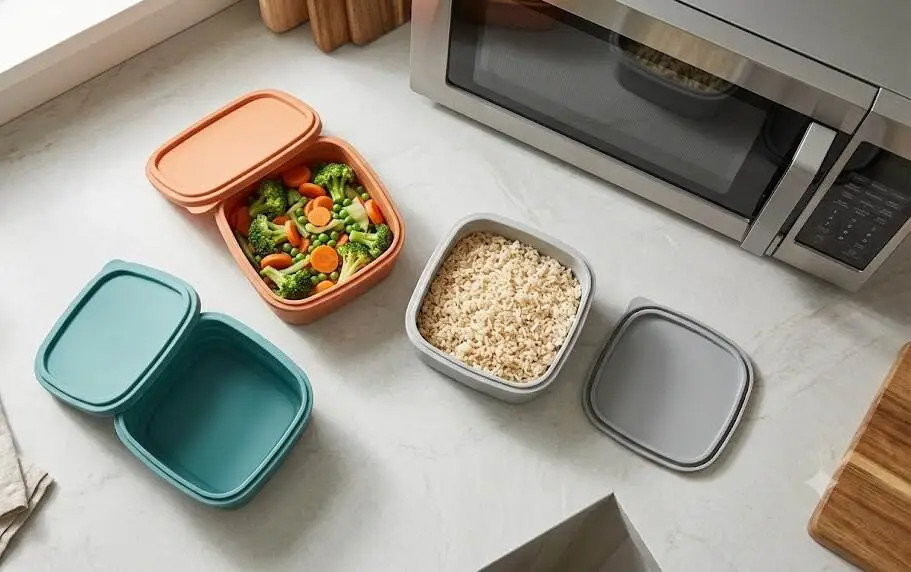
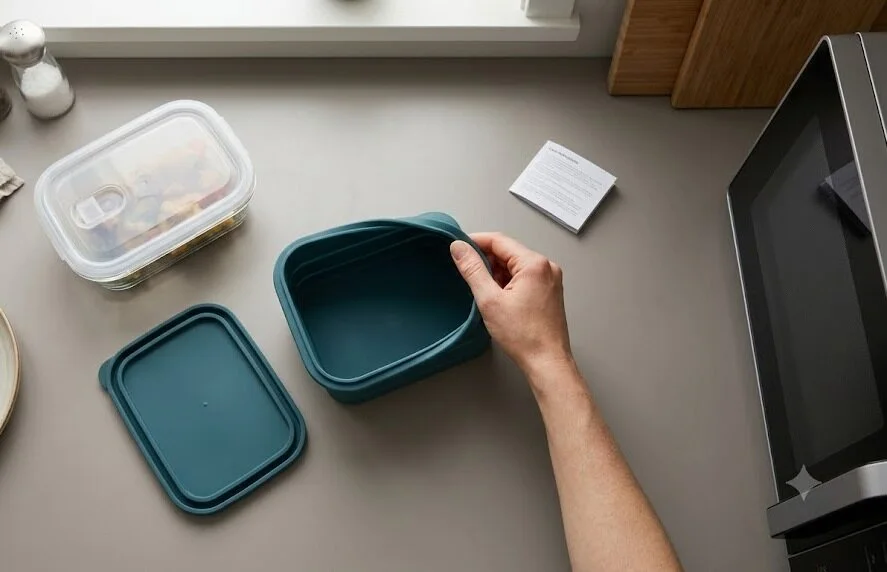
- Collapsible steamers and containers for vegetables, rice, and baby food.
- Vented lids and splatter covers that sit over a plate.
- Trivets, baking mats, and ice cube trays that are labeled safe for heat.
- Popcorn makers with a vented silicone lid.
- Stirring spoons and spatulas that rest in the food.
Silicone Baby Bottles and Baby Food Containers
Parents often ask about bottles and baby food pots. Check the maker’s instructions first, because health guidance generally advises against warming baby milk in a microwave. It heats unevenly and can leave scalding hot spots.
Silicone pots and steamers for solid baby food are different. If they are marked for microwave use, they work well for steaming vegetables. Stir thoroughly, let the food cool, and test the temperature before serving.
Silicone You Should Keep Out of the Microwave
Not every form of silicone is safe to heat. Skip these:
- Anything with metal, such as wire reinforcement, rims, clasps, or metallic trim, which can spark.
- Torn, cracked, sticky, or heavily worn items.
- Unmarked novelty or craft silicone that was never meant for food.
- Silicone sealant, caulk, and other non-food silicone products.
- Items with decorative paint or prints that are not labeled food-safe.
Silicone has limits at the hot end of the kitchen too. Microwave-safe does not mean fire-safe, so never put it on a burner or directly under the oven’s top heating element, and keep it clear of open flames.
What Happens If the Silicone Is Not Microwave-Safe?
Using the wrong product is where most trouble starts. The result depends on what is wrong with it.
- Metal parts can spark and arc, which can scorch the item and damage the microwave.
- Low-quality silicone with heavy filler can give off a sharp smell and stay tacky afterward.
- Thin or worn pieces can warp, sag, and spill hot food.
- Unknown silicone may release more material into your food.
If a piece sparks, stop the microwave right away, let everything cool, and throw out the damaged item.
Does Microwaved Silicone Release Chemicals?
Chemicals are the next worry for most people. Well-made, food-grade silicone is chemically stable and is permitted for food contact by regulators. For normal reheating, the amounts that move into food are generally very small.
Research on silicone bakeware has found that tiny amounts of low-molecular-weight siloxanes can migrate into food, particularly fatty food and after repeated high-heat use. Lower-quality products with fillers tend to release more.
In practice, that points to three habits. Buy from reputable makers, avoid heating oily food at full power for long stretches, and retire any piece that has turned sticky or smelly.
What about oily food? It is fine in good silicone if you heat in short rounds. Oil gets far hotter than water, which makes it the usual reason silicone wears out early.
Can Silicone Melt in the Microwave?
Not in the way wax or thin plastic does. Cured silicone does not liquefy under normal microwave use. Push it far beyond its limits, though, and it can harden, discolor, give off an odor, or even char.
Hot spots are the usual cause. Syrup, sugar, and oil can climb well above the boiling point of water, and silicone touching them absorbs that extra heat. Running an empty silicone dish at full power can also shorten its life.
Common Mistakes With Silicone in the Microwave
Knowing a product is safe is only half the job, because technique matters too. Avoid these slips:
- Running it empty or for too long at maximum power.
- Sealing a lid tightly, which lets steam pressure build up.
- Skipping the plate under a floppy mold, which makes spills likely.
- Grabbing it bare-handed, since the food inside is far hotter than the silicone feels.
- Cutting food inside it with a sharp knife.
How to Microwave Silicone Safely, Step by Step
Once you know your product is microwave-safe, follow this routine:
- Check the label and inspect the item for cracks or residue.
- Set it on a microwave-safe plate for support.
- Vent the lid, or leave a small gap for steam.
- Heat in short bursts of 30 to 60 seconds, stirring between rounds.
- Let it rest for a minute so the heat spreads evenly.
- Use oven mitts, and lift lids away from your face to avoid steam burns.
- Wash it soon afterward with warm, soapy water.
From Freezer to Microwave
Good silicone handles the jump from freezer to microwave, which is handy for frozen leftovers and portioned meals. Put a plate under floppy pieces, and stir or flip the food halfway so the frozen core thaws evenly.
Caring for Silicone and Knowing When to Replace It
Silicone can hold on to grease and odors if it is washed lightly. A soak in hot soapy water usually fixes that. For a stubborn film, rub on a paste of baking soda and water, and for lingering smells, soak the piece in warm water with a splash of white vinegar. Dry it fully before storing.
Even microwave-safe silicone wears out over time, so replace any piece that turns tacky, tears, stays smelly after cleaning, or shows deep discoloration. These are signs the material is wearing out, and a fresh piece is cheap insurance.
Faqs
Can silicone go in the microwave without melting?
Yes. Food-grade silicone does not melt under normal microwave use, and it handles far more heat than a microwave usually produces. Problems start only when it is damaged, heated empty, or exposed to superheated sugar or oil for too long.
Is silicone microwave safe, and how can I tell?
Look for a microwave-safe mark on the product or box, check food-grade compliance such as FDA or LFGB, and run the pinch test. If the item has no markings, use glass or ceramic instead.
Does silicone release toxins when microwaved?
Quality food-grade silicone is stable and BPA-free. Tiny siloxane traces can migrate from some products, mostly with fatty food and heavy wear, so choose reputable brands and replace worn items.
Can you microwave oily foods in silicone?
Yes, in good silicone, but go gently. Oil gets much hotter than water, so heat in short bursts and stir. Long stretches of oily food at full power are the main way silicone wears out early.
Can you microwave baby bottles made of silicone?
Check the bottle maker’s instructions first. Health guidance generally advises against warming baby milk in a microwave because it heats unevenly and can leave scalding spots. Silicone pots made for solid baby food are fine if marked for microwave use, as long as you stir and cool the food before serving.
Bottom Line
So, can silicone go in the microwave? Yes, as long as it is food-grade, clearly marked microwave-safe, undamaged, and free of metal. Buy microwave-safe silicone from a reliable brand, vent your lids, heat in short rounds, and replace tired pieces.
Follow those habits and silicone in the microwave becomes one of the safest, most convenient tools you can use to reheat and cook in the microwave.