How can I clean silicone without damaging it or leaving a strange taste behind? Silicone is a favorite in kitchens, nurseries, and gadget cases for good reason. It handles heat, bends without breaking, and wipes clean far more easily than most plastics. Still, anyone who has sniffed a spatula that smells like last night’s dish soap knows it has a stubborn side. The good news is that the fix is gentler and simpler than most people expect.
This guide shows how to clean silicone for everyday use, deep cleaning, and odor removal. It also covers what to avoid and how to care for kitchen tools, baby products, and accessories, so every piece stays fresh for years.
Key Takeaways
- Warm water, mild soap, and a soft sponge are enough for most daily cleaning.
- A vinegar soak, a lemon rub, or a short low-heat bake can lift smells that regular washing leaves behind.
- Acetone, steel wool, and long soaks in harsh cleaners can permanently harm silicone.
- Unscented soap and a very thorough rinse prevent most soapy-taste problems.
- Silicone that stays sticky, cracked, or smelly after several attempts is better replaced, especially baby and food items.
Why Silicone Needs a Gentle Touch
Silicone looks perfectly smooth, but some grades have microscopic pores. Those tiny gaps can hold on to cooking oil and the perfumes in scented soap. Over time, that trapped residue creates lingering smells, odd flavors, and a tacky feel.
Quality matters too. Purer silicone with fewer fillers tends to shed residue more easily, while cheaper blends attract grease and dust. And because the material is soft, rough scrubbing leaves tiny scratches that collect even more grime.
Not all silicone is equal, either. Platinum-cured silicone is a higher grade and tends to hold on to fewer smells and flavors than standard food-grade silicone cured with peroxide. It costs more, but it is worth it for things you use daily, like baby products and cups. Packaging may not say which type you have, so check the maker’s product details if odor keeps coming back.
Cleaning silicone is therefore different from cleaning glass or steel. Knowing how to clean silicone safely starts with gentle tools and mild products.
What You Need Before You Start
You can put together a simple silicone cleaning kit from things you probably already have in your kitchen:
- Warm water and mild dish soap (unscented is best)
- A soft sponge, cloth, or soft-bristled brush
- An old toothbrush for seams and textured spots
- White vinegar and baking soda
- Isopropyl alcohol for greasy or sticky patches
- A lint-free towel for drying
How Can I Clean Silicone in My Daily Routine?
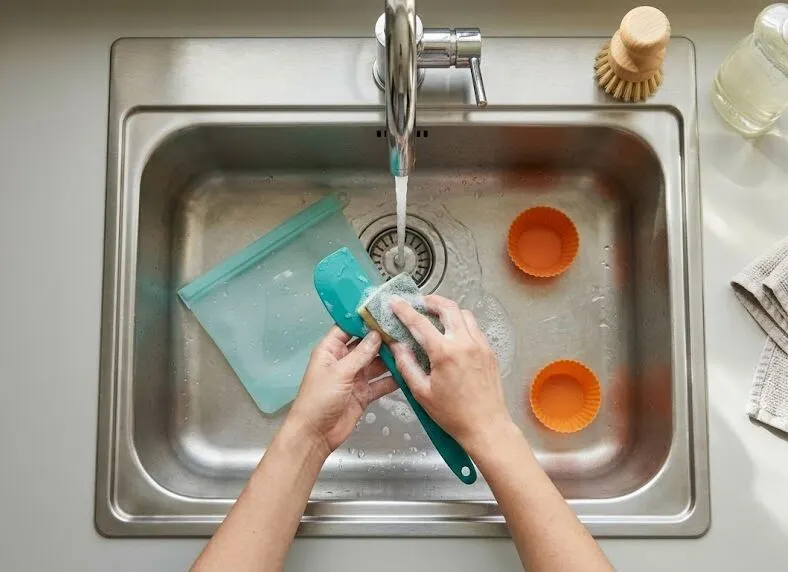
For everyday items, a quick and careful wash does the job. Follow these steps:
- Rinse off food and dirt as soon as you can, before it dries on.
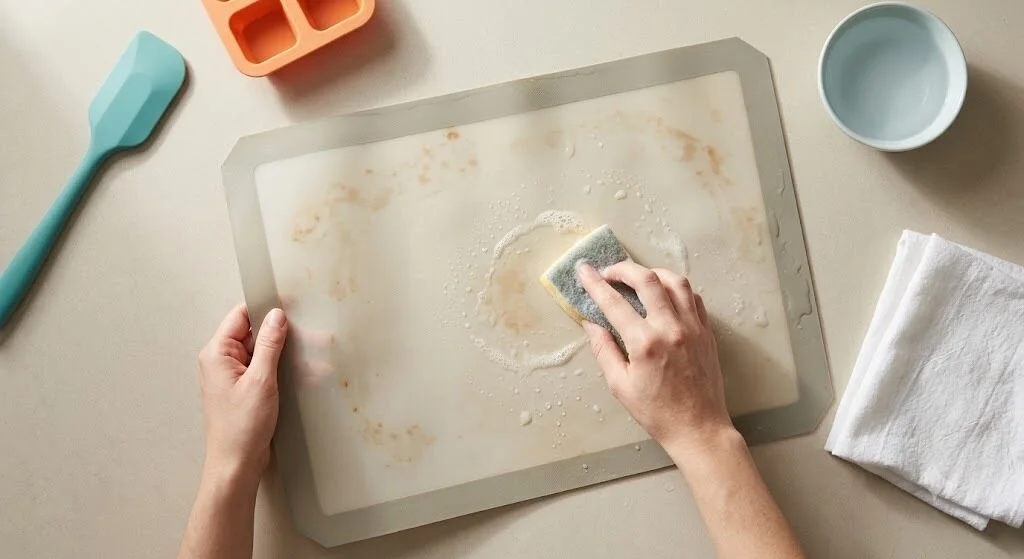
- Wash with warm water and a few drops of mild soap, using a soft sponge or cloth.
- Work a soft brush or old toothbrush into grooves, seams, and textured areas.
- Rinse until the water runs clear. Leftover soap is the biggest cause of strange smells and tastes.
- Dry completely with a lint-free towel, or let the item air-dry in a clean spot.
If the item touches food, such as a baking mat or a spatula, choose an unscented soap. Fragrance can linger in silicone and show up in your next meal.
Deep Cleaning Silicone: Dishwasher, Hot Soak, and Boiling
Every few weeks, your silicone cleaning routine should go beyond a quick wash. Grease, moisture, and bacteria settle into lids, seams, and parts that snap together. Items with lots of tiny seams need extra attention, so take apart anything that comes apart before you start.
The dishwasher is a handy option for many food-grade items. Place them on the top rack, away from knives and sharp tools, and skip the harshest cycle. Small pieces can slip through the rack or warp, so use a basket for those.
Always check the product label first. Items that combine silicone with metal, wood, or other plastics may not cope with the heat.
For a greasy film, try a hot soak. Fill a basin with very hot water and a spoonful of grease-cutting dish soap, then let silicone tools sit for 30 minutes to an hour before scrubbing gently. This works well on spatulas, trays, and molds that see a lot of oil.
Heat-resistant, food-grade or medical-grade pieces, such as pacifiers, can also be boiled in plain water for about three to five minutes. Check the maker’s instructions before you try it.
How Can I Clean Silicone That Smells or Tastes Strange?
Smell and taste are the most common complaints, and no single method fixes every case. Try these in order, starting with the gentlest:
- Switch to an unscented dish soap and rinse for longer than usual.
- Soak the item in equal parts white vinegar and water for about four hours, then rinse and dry. Use a stronger mix if the smell remains.
- Rub the surface with a cut lemon or lime, leave it for 15 minutes, then wash in hot, plain soapy water.
- If the piece is 100 percent silicone and oven-safe, wash it first, then bake it at about 250°F (120°C) for 20 to 30 minutes. Let it cool before handling.
Be realistic, though. A smell that has soaked deep into low-quality silicone may never leave completely. If three or four attempts fail, replacement is usually the better call.
Removing Stains, Grease, and Sticky Spots
Different problems need different tools. Here is how to handle the usual suspects.
Stains. Mix baking soda with a little water to make a paste, spread it over the mark, and let it sit for a few minutes. Then scrub lightly with a soft brush and rinse well.
Grease. Wipe the surface with a cloth dampened with isopropyl alcohol, then wash with soap and rinse. Keep the contact short, because long alcohol soaks can leave silicone hard or tacky.
Sticky surfaces. A tacky feel often comes from an oil film, but it can also mean the silicone has touched PVC plastic or is wearing out. Degrease it first. If the stickiness keeps returning, the material is breaking down.
Discoloration. Tomato sauce and turmeric can tint silicone. After a baking soda paste, dab a little 3 percent hydrogen peroxide on the spot, let it sit briefly, then rinse well. Test a hidden area first. Yellowing from age or sun exposure is different, because that change is in the material itself and will not wash out.
Cloudy film. Hard water and soap can leave a white, chalky layer. Soak the piece in half white vinegar and half water for 30 minutes to an hour, then rinse and dry.
Quick Cleaning Cheat Sheet
This table sums up the most common silicone cleaning problems and the fixes that work.
| Problem | What works | What to skip |
| Everyday grime | Warm water, mild soap, soft sponge | Hard brushes and scouring pads |
| Lingering smell | Vinegar soak, lemon rub, low-heat bake | Scented soap |
| Greasy film | Hot degreasing soak, alcohol wipe, then wash | Long alcohol soaks |
| Stains | Baking soda paste and a soft brush | Bleach and harsh scrubbing |
| Sticky surface | Degrease, then check for contact with PVC | Acetone and other solvents |
How to Clean Silicone Baby Items, Kitchen Tools, and Phone Cases
The basic method stays the same, but each type of product has its own quirks.
Kitchen tools and bakeware. Wash baking mats, molds, and ice trays soon after use so oil never gets a chance to set. Turn silicone food bags inside out and stand them open to dry. Roll mats instead of folding them, and never cut on them.
Baby products. Wash pacifiers, teethers, and bottle nipples in warm soapy water, rinse thoroughly, and sterilize them only in the way the manufacturer recommends. Avoid soaking them in alcohol, and check often for cracks, tears, or sticky patches. Replace worn items right away.
Straws, cups, and menstrual cups. Push a thin cleaning brush through straws right after use, and wash cups in warm water with a fragrance-free soap. For menstrual cups and similar personal items, follow the manufacturer’s sterilizing instructions exactly, and replace them if they turn sticky or cracked.
Phone cases, keypads, and wearables. A damp cloth with a drop of mild soap removes dust, lint, and skin oils. Use a light alcohol wipe for stubborn grime, then dry completely.
Medical and industrial parts. Follow the manufacturer’s instructions exactly. Some parts are rated for steam or autoclave sterilization, while others are not, so never assume.
Cleaning Silicone Sealant and Caulk Around Sinks and Showers
Many people searching for cleaning help are really dealing with the silicone sealant around tubs, sinks, and windows. It needs a different approach, because the main enemy is mold and mildew rather than odor. Start with the gentlest option and work up:
- Wipe the sealant with a damp cloth to remove soap scum and surface dirt.
- Spray white vinegar, straight or mixed half and half with water, and let it sit for several minutes.
- Scrub with baking soda and an old toothbrush, then rinse and dry.
- For stubborn spots, try hydrogen peroxide for 10 to 15 minutes before scrubbing and rinsing.
- Use diluted bleach only as a last resort, with a window open or the fan on.
Never mix bleach with vinegar or other cleaners, because the fumes can be dangerous. Keep bleach away from your soft silicone kitchen and baby items.
If dark stains remain after a few rounds, the mold is probably growing behind the sealant. At that point, cutting out the old bead and applying fresh sealant is the only real fix.
To lift leftover cured silicone from glass or tile, scrape gently with a plastic scraper. Then use a silicone sealant remover or rubbing alcohol on the thin film, following the product directions.
Prevention helps too. Wipe or squeegee wet surfaces after showers, run the exhaust fan, and wipe the sealant down regularly.
What You Should Never Use on Silicone
Cleaning silicone with the wrong product is the fastest way to shorten its life. Even tough silicone has limits, so avoid these:
- Acetone and strong solvents, which can swell silicone and strip out the additives that keep it flexible.
- Gasoline, petroleum-based products, and some lubricants, which silicone absorbs.
- Bleach, strong acids, and strong alkaline cleaners, which can discolor or weaken it.
- Steel wool, scouring pads, and stiff brushes that scratch the surface.
- Knives, forks, and other sharp tools that nick or cut it.
- Long soaks in alcohol or any harsh cleaner.
- Heat beyond the product’s rated limit.
If you are trying a new cleaner, test it on a small hidden spot first, especially on colored or printed silicone.
Storage Habits That Keep Silicone Fresh
Clean silicone stays clean longer when it is stored well. Make sure every item is completely dry before you put it away, since trapped moisture invites mold and bacteria.
Keep silicone out of direct sunlight, away from heaters, and away from fuels, oils, and solvents. Store pieces flat or loosely rolled instead of sharply folded, and do not stack heavy objects on top.
Keep silicone away from PVC too, because plasticizers can transfer and turn it sticky. A box or bag also keeps dust off, since silicone attracts it. With good storage habits, you will need deep cleans far less often.
When to Replace Silicone
No cleaning method can repair worn-out silicone. Replace the item when you notice:
- Cracks, tears, or deep scratches
- A sticky or oily film that returns after degreasing
- Smells that survive several deep cleans
- Stiffness, brittleness, or lost stretch
- Heavy discoloration along with a change in texture
For baby products and anything that touches food, replace sooner rather than later. Sometimes silicone that still smells after repeated cleaning simply cannot be saved, and it is time for a new one. Knowing how to clean silicone also means knowing when to stop.
Faqs
How do you get the smell out of silicone?
Start with an unscented soap and a long rinse. If the smell stays, soak the item in a half-and-half mix of white vinegar and water for about four hours, or rub it with a cut lemon and leave it for 15 minutes. As a last resort, bake 100 percent silicone at about 250°F (120°C) for 20 to 30 minutes. Keep in mind that deep-set smells in cheap silicone sometimes never leave.
Is silicone dishwasher safe?
Most food-grade silicone does fine on the top rack, but the product label always has the final word. Keep it away from sharp utensils, skip the hottest cycle, and hand wash anything that combines silicone with metal, wood, or other plastics. Very small pieces are safer washed by hand.
How can I clean silicone with vinegar or rubbing alcohol?
Use both in short, controlled bursts. For odors, soak the item in white vinegar diluted 1:1 with water for a few hours, then rinse well. For greasy or sticky spots, wipe with a cloth dampened with isopropyl alcohol, then wash with soap and rinse. Never leave silicone soaking in alcohol for long, because it can turn hard or tacky.
Why does silicone feel sticky or greasy after washing?
Most of the time, it is leftover oil that ordinary washing misses, especially after cooking spray or fatty foods. A hot, grease-cutting soak or a dishwasher cycle usually fixes it. If the tackiness keeps coming back, the silicone may have touched PVC plastic or may simply be aging.
Can you boil silicone to sanitize it?
You can, but only if the piece is heat-resistant, food-grade or medical-grade silicone and the manufacturer allows it. A few minutes in plain boiling water is the usual approach for items like pacifiers. Do not boil anything with glued or non-silicone parts.
The Bottom Line
So, how can I clean silicone the right way? Use warm water, mild unscented soap, and soft tools for everyday washing. Reach for a vinegar soak, a lemon rub, or a gentle bake when smells linger, and keep acetone, bleach, and abrasive scrubbers far away.
Store silicone clean and dry, and replace it when cleaning no longer helps. Build these small habits into your routine, and your silicone will stay fresh, flexible, and safe to use for a long time.