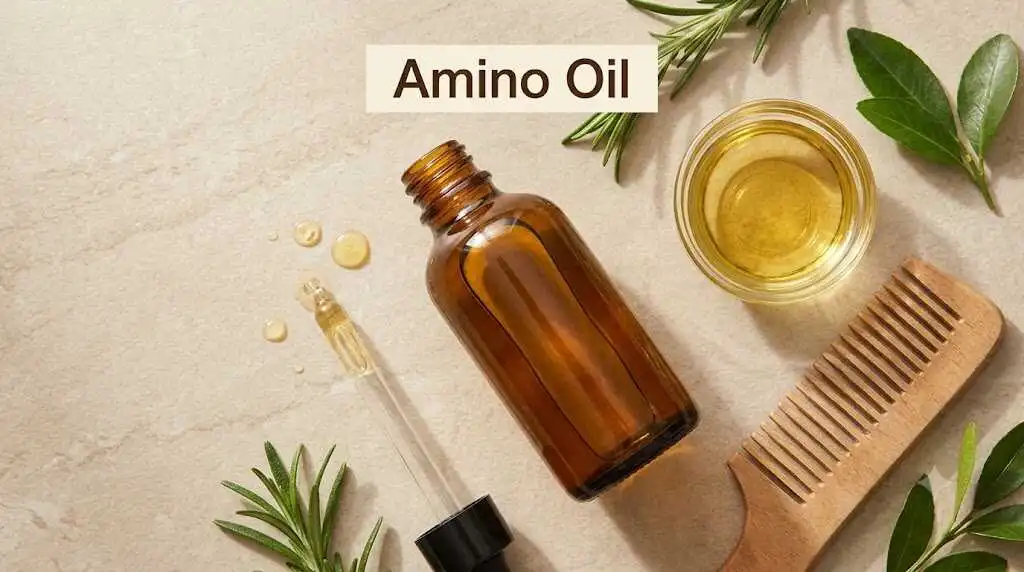
Amino oil sounds like one product, but it is really a name shared by several very different ones. Search it and you will find silicone conditioners for hair and fabric, amino acid face oils, a savory liquid aminos seasoning, and even crop and oil-field chemistry. This guide sorts them out in plain English, so you can tell which amino oil you are dealing with, what it does, and what to check before you buy or use it.
Key Takeaways
- Amino oil is not one product. The phrase covers silicone conditioners, skin oils, a food seasoning, and even farm and oil-field chemistry.
- Aminosilicones are silicone fluids with amino groups attached, used to soften hair, fabric and leather.
- Skin versions blend plant oils with amino acids for moisture and gentle makeup removal.
- Only the seasoning is food. Silicone, fertilizer and lab versions should never be eaten.
- Check the label, the intended use and the ingredient list before you buy or apply anything.
What Does Amino Oil Really Mean?
The words come from two different worlds. Amino acids are the small units that build proteins. Oil is a fat, or sometimes a slick synthetic fluid. They do not merge into one standard recipe, so each industry uses the phrase in its own way.
These are the five meanings you are most likely to meet:
- Hair and fabric care: silicone fluids with amino groups.
- Skincare: face and cleansing oils that include amino acids.
- Food: a savory seasoning that resembles soy sauce.
- Farming: amino acid based fertilizers for oil crops.
- Industry: an amino acid ionic liquid tested for enhanced oil recovery.
Amino Oil for Hair and Fabric: Amino Silicone Oil
This is the meaning that shows up most often in product searches. Amino silicone oil, also called aminosilicones, is a silicone fluid built on a polydimethylsiloxane backbone, with amino groups added along the chain.
Those amino groups do the clever work. They grip hair and natural fibers such as cotton, wool and silk, then leave a thin, flexible film that feels soft, smooth and slightly glossy.
In hair care
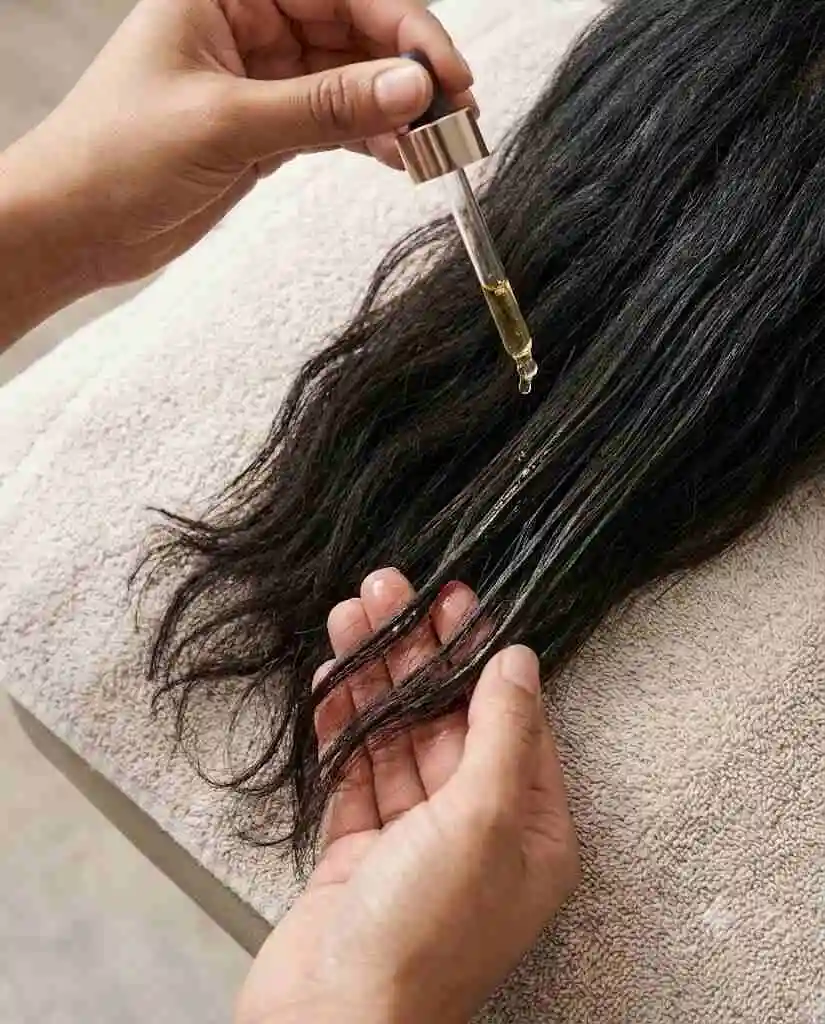
Formulators add aminosilicones to cut tangles and frizz, boost shine and shield strands from styling heat. Thinner fluids suit spray-on products, while thicker ones give conditioning that lasts longer.
In textiles and leather
Mills use it as a fabric softener that adds a silky feel, better stretch and less static. In leather finishing, it helps with flexibility, gloss and wear resistance. Water-dispersible emulsions make it easy to apply in a finishing bath.
Choosing and handling it
- Match thickness to the job: thinner for sprays, thicker for long-lasting conditioning.
- Pick an emulsion if you need to mix it with water.
- Balance softness against stability. Amino types feel very soft, but they often need a stabilizing formula, so ask your supplier.
- Store it sealed in clean containers and keep it away from strong acids and alkalis.
- Remember it is a cosmetic and industrial ingredient. It is not food.
Amino Oil for Skin: Face and Cleansing Oils
Skincare brands pair plant oils with amino acids. Common bases include jojoba, sweet almond, apricot kernel, sunflower and squalane, while labels often list amino acids such as arginine, glycine and serine.
Cleansing oils in this group are made to lift makeup, sunscreen and excess sebum without leaving skin tight. Leave-on face oils aim to give light moisture that lasts overnight.
A word of caution. Anti-aging and barrier-repair promises usually come from the brands themselves, not from independent trials. Think of these as moisturizing products, not treatments.
When you shop, scan the ingredient list, patch test a small spot on your inner arm first, and start with just a few drops. Fragrance-free formulas are a safer pick for reactive skin.
Amino Acids in Plain English
Your body uses amino acids to build muscle, pass signals between cells and support immunity. Some are essential, so food has to supply them. Others are non-essential because the body can make them.
For a quick refresher, the MedlinePlus guide to amino acids covers the three groups: essential, nonessential and conditionally essential.
That shared building-block idea is why a skin oil, a seasoning and a lab chemical can all borrow the same word.
The Edible Meaning: Liquid Aminos
Liquid aminos are savory seasonings that look like soy sauce but taste milder and a touch sweeter. One type comes from soybeans treated with an acidic solution. The other, coconut aminos, comes from fermenting coconut sap with salt.
Both are vegan and wheat-free, so people on gluten-free diets often use them in place of soy sauce. Their umami taste comes from natural glutamate. Studies on umami-rich broths suggest they may help you feel satisfied sooner, yet nothing shows they cause weight loss.
- Sodium: the soy type has roughly 300 mg per teaspoon, close to regular soy sauce. Coconut aminos have about 60 percent less. If you have high blood pressure or kidney disease, ask your doctor how much salt suits you.
- Allergies: soy bottles are not for a soy allergy, and coconut bottles are not for a coconut allergy.
- Protein claims: brands often say a bottle holds 16 or 17 amino acids, but independent research has not confirmed it, and you use too little to count as protein.
Amino Acid Foliar Fertilizers for Oil Crops
Oil crops such as oilseed rape, sunflower, mustard and flax need steady micronutrients like boron, zinc, manganese and iron.
Some foliar fertilizers deliver these nutrients bonded to glycine, the smallest amino acid. Because it moves easily inside a plant, makers argue the nutrients travel faster than simple mineral salts. Real results still depend on the crop, weather and timing.
One product guide for winter oilseed rape lists four spray windows: autumn at four to eight leaves, early spring growth, bud formation and petal fall, at 0.5 to 0.75 kg per hectare each time. Follow your own label, and run a mixing test before combining it with other agrochemicals. Some products also hold EU organic approval, which varies by product and region.
Amino Acid Chemistry in Oil Recovery
After normal drilling and water flooding, plenty of crude still sits trapped in rock. Engineers use chemicals to free it, a process called enhanced oil recovery.
A 2025 Scientific Reports study tested a proline-based amino acid ionic liquid for this job, and describes it as a greener option because it starts from a natural amino acid. In sand-pack tests, water flooding recovered about 60 percent of the oil, and adding the liquid lifted that to around 71 percent. It also shifted the rock from oil-wet to water-wet and stayed stable in salt solutions up to 1.0 M NaCl.
The authors admit the limits: lab-scale work, unproven long-term stability, higher cost than standard surfactants, and no field trials yet.
Which Meaning Fits Your Search?
| Type | What it is | Main use | Edible? | Check first |
| Amino silicone oil | Silicone fluid with amino groups | Hair conditioning, fabric and leather softening | No | Thickness, stability, supplier safety sheet |
| Face oil | Plant oils with amino acids | Face moisture, makeup removal | No | Ingredient list and a patch test |
| Liquid aminos | Soy or coconut aminos seasoning | Cooking, dressings, marinades | Yes | Sodium and allergens |
| Fertilizer | Amino acid foliar fertilizer | Foliar spray on oil crops | No | Label rate and timing |
| Oil recovery | Amino acid ionic liquid | Enhanced oil recovery research | No | Still at lab stage |
Smart Safety and Buying Tips
- Read the ingredient list or product label before anything else.
- Never eat silicone, fertilizer or lab products. Only the seasoning is food.
- Patch test skin oils, and keep industrial fluids off your skin.
- Treat big claims with care. A figure such as “up to 60 percent better” comes from a company’s own data, so look for independent trials.
- Ask the right expert: a dietitian for food, a dermatologist for skin, an agronomist for crops, and the supplier’s safety data sheet for silicone fluids.
FAQ
What is amino oil?
It is a loose phrase, not a standard product. It most often points to silicone conditioners used on hair and fabric, or to skin oils with amino acids. It can also mean the soy or coconut seasoning, amino acid fertilizers or oil-recovery chemicals.
Is amino oil the same as amino silicone oil?
Often, but not always. That silicone type is the most common meaning in hair and textile products. Skin oils and the food seasoning are different things, so check the product type first.
Is amino oil good for hair?
If the product uses aminosilicones, they can smooth tangles and frizz, add shine and give some heat protection. Results depend on the formula and your hair, and some people find silicone-rich products feel heavy, so start with a small amount.
Is amino oil safe to use on skin?
Cosmetic skin oils with amino acids are made for the face, but anyone can react to an ingredient, so patch test first. Never put industrial silicone fluids, fertilizers or lab chemicals on your skin.
Can you cook with amino oil?
Only if you mean the savory seasoning, which is not a cooking oil. Use it like soy sauce, choose coconut aminos for sauces that simmer down, watch the sodium, and avoid the soy type if you are allergic. Silicone and skin oils are not food.
Bottom Line
Amino oil is a name that many products share, so the right meaning depends on where you meet it. On hair and fabric it usually means a silicone conditioner, on skin it is a plant oil with amino acids, in the kitchen it is a savory seasoning, and on farms and in labs it points to amino acid chemistry for crops and enhanced oil recovery.
Identify the type, read the label, and eat only the seasoning. When health, skin or crop decisions are at stake, ask a dietitian, dermatologist or agronomist.