
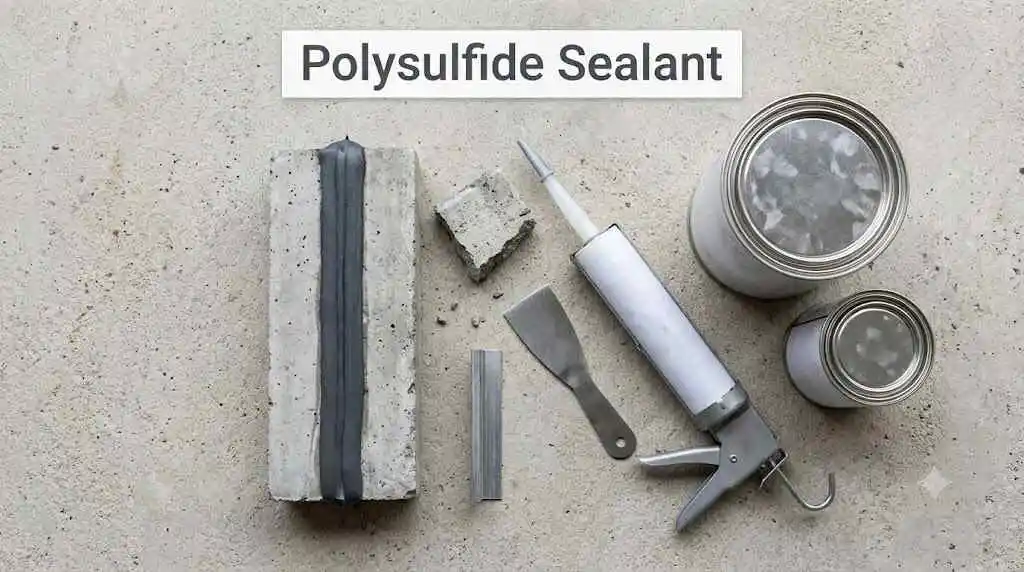
Polysulfide sealant is an elastomeric material used to close joints and gaps that need to remain flexible while resisting water, fuels and selected chemicals. It is valued in construction, glazing, infrastructure and industrial settings where a seal must tolerate movement or contact with demanding substances. The right formulation, joint design and installation method are essential to achieving reliable performance.
Key Takeaways
Polysulfide sealants are made from sulfur-containing polymers that cure into flexible rubber-like materials.
They are often selected for resistance to fuels, oils, water and a range of chemicals, but compatibility must be checked against the exact substance and product data.
Movement capability, adhesion, weathering performance and cure time vary by formulation and grade.
Two-component products are common in demanding applications because the components react after mixing; accurate proportioning and thorough mixing matter.
Good results depend on clean, sound substrates, correct joint dimensions, suitable backing materials and compliance with the manufacturer’s instructions.
What Is Polysulfide Sealant?
Polysulfide sealant is a synthetic elastomer based on polymers containing sulfur linkages in their molecular structure. Many traditional formulations use liquid, thiol-terminated polysulfide polymers. During curing, reactive end groups form a crosslinked network, changing the workable compound into a flexible solid that can stretch and recover as a joint opens and closes.
The material is sometimes referred to as Thiokol, a historical name associated with polysulfide polymers. Formulations are not all identical: ingredients, curing chemistry, hardness, movement rating and intended substrates differ between products. For that reason, the technical data sheet and safety data sheet for the selected product should always take precedence over general descriptions.
At the molecular level, the sulfur-containing links form part of the polymer backbone. In many conventional liquid polysulfide systems, terminal thiol groups (-SH) react during cure and help connect polymer chains into a three-dimensional network. The finished sealant is not made from polymer alone: depending on its purpose, the formulation may also include fillers, plasticizers, pigments, curing agents and adhesion-related additives. These ingredients influence handling, flexibility, strength, colour and bonding. The exact chemistry differs between products, so a description of one formulation should not be treated as a rule for every polysulfide sealant.
How Does It Cure?
Many construction and industrial grades are supplied as two components. One part contains the base polymer and formulation ingredients; the other contains the curing agent. The parts are mixed in the specified ratio, starting a chemical reaction that gradually builds the elastic network. Because the reaction is initiated by mixing, cure is generally less dependent on atmospheric moisture than a moisture-curing sealant.
Some products are supplied in other formats or use modified curing systems. Working time, skin formation, handling strength and full cure are product-specific. Temperature, batch size, mixing quality, joint depth and the age or storage condition of the material can all affect the result. Do not assume that a surface that feels dry is fully cured throughout.
It is useful to distinguish pot life from the later cure stages. Pot life is the period after mixing during which the material remains workable in its container. Tack-free or skin time describes a surface condition, while handling time indicates when limited movement may be possible. Full cure is the point at which the product has developed the properties stated by its manufacturer. These milestones are not interchangeable, and the values can change with temperature, batch size and joint dimensions.
Types and Grades of Polysulfide Sealant
Polysulfide products can be described in two different ways: by how they are supplied and cured, and by their consistency during application. These descriptions are related but are not interchangeable.
One-component products are supplied ready to use and cure according to the chemistry specified by the manufacturer. Their cure behaviour should not automatically be described as moisture-activated; check the product instructions for the actual mechanism and conditions.
Two-component products contain a base and a curing component that must be combined in the stated proportion. Mixing starts the curing reaction, so the installer must prepare only an amount that can be applied within the stated pot life.
Pour-grade products are generally formulated to flow into suitable horizontal joints and level within the joint. Gun-grade or non-sag products are thicker and are designed to stay in place on vertical or overhead surfaces when used as directed. A product may be both two-component and pour-grade, or two-component and gun-grade; confirm both the curing system and application grade before specifying it.
Important Properties of Polysulfide Sealant
Chemical and fuel resistance: A key reason for choosing this material is its resistance to many hydrocarbons, oils, fuels and selected industrial chemicals. This can make it suitable for fuel-handling areas, tank-related joints and industrial facilities. Resistance is not universal, however. Concentration, temperature, exposure duration and the exact chemical can change performance, so obtain written compatibility information for the intended service.
Elasticity and movement accommodation: Once cured, the seal remains rubber-like and can accommodate a defined amount of joint movement. This is useful where concrete slabs, building components, glazing assemblies or infrastructure elements expand, contract or vibrate. The movement capability is expressed by the product’s classification or technical data; it should not be guessed from the word “flexible.”
Adhesion to suitable substrates: Depending on formulation and preparation, polysulfide products can bond to concrete, glass, aluminium, steel and other specified materials. Adhesion depends on surface condition, porosity, contamination, primers and compatibility. Some substrates require a primer, while others may need a different sealant technology.
Water and liquid tightness: A correctly designed and installed joint can provide a durable barrier against water and certain liquids. Low permeability to water vapour is also useful in some glazing and insulating-glass applications. The sealant alone cannot compensate for poor joint geometry, gaps, weak substrate or incorrect installation.
Weathering and temperature behaviour: Many grades are designed for outdoor exposure and retain useful flexibility over a broad service-temperature range. Actual ultraviolet resistance, colour stability and temperature limits vary. Prolonged sunlight may cause surface changes in some formulations, so confirm whether the chosen grade is suitable for exposed exterior use.
Mechanical durability: A cured seal can resist repeated movement and normal service stresses when the joint is properly designed. Tensile strength, elongation, hardness and recovery are formulation-dependent values. Compare published test results for the actual product rather than relying on generic figures for the polymer family.
Common Applications
Construction and expansion joints: Polysulfide products are used in selected building joints where movement and exposure to water or chemicals are concerns. Applications may include floor joints, precast concrete connections, façades and other specified building interfaces. The product must be rated for the joint’s movement, traffic and exposure conditions.
Roads, airports and parking structures: Movement joints in transport infrastructure experience repeated loading, temperature changes and weather exposure. Suitable grades may be used in traffic-bearing or non-traffic joints, provided the product classification, joint design and installation conditions match the project requirements.
Fuel stations and chemical facilities: At fuel dispensing areas, storage locations and industrial sites, a compatible seal can help limit liquid migration through joints. Chemical resistance should be checked against the actual fuel or process chemical, including any cleaning agents and expected spill conditions.
Glazing and insulating glass: Certain polysulfide formulations are used as secondary seals in insulating-glass units because they can provide adhesion and a barrier to gas or vapour transmission. Not every joint sealant is suitable for this purpose; glazing-system design and the insulating-glass manufacturer’s requirements must be followed.
In an insulating-glass unit, the secondary edge seal works with the spacer and primary seal as part of a complete edge-seal system. Its role can include helping retain the insulating gas and limiting moisture-vapour entry through the edge assembly. The sealant must be specifically approved for the unit design and compatible with the glass, spacer, primary seal and any coatings. Factory processing and quality-control requirements apply; a general-purpose site-applied polysulfide sealant should not be substituted for a qualified insulating-glass system.
Tanks, marine and transport equipment: Specialist grades may be used for joints exposed to fuels, oils, water or vibration in tanks, marine environments, vehicles and aircraft. These are application-specific uses: aerospace or fuel-tank work requires qualified materials, approved procedures and traceable product documentation, not a general-purpose construction sealant.
Advantages and Limitations
Advantages include durable elasticity, useful resistance to many hydrocarbons and chemicals, good liquid-sealing capability in suitable designs, and the ability of some grades to perform in joints exposed to movement. Two-component systems can also offer a predictable chemical cure when accurately mixed.
Limitations should be considered before specifying the material. Two-component products require careful proportioning, mixing and attention to pot life. Some formulations have a noticeable odour during application or curing, and uncured components may present health or environmental hazards. Certain grades can be less convenient to apply than ready-to-use cartridge products. UV exposure, chemical contact, temperature extremes and substrate compatibility must be assessed for the specific product.
Polysulfide is not automatically the best choice for every joint. Silicone, polyurethane, hybrid and other sealant chemistries may be more suitable where the main requirement is, for example, exceptional UV stability, paintability, rapid installation or compatibility with a particular substrate. Selection should be based on the service conditions rather than on a single headline property.
Polysulfide vs. Other Sealant Types
Compared with silicone sealants, polysulfide formulations are often considered where fuel, oil or chemical resistance is important. Silicone products commonly offer strong weathering and UV performance and are widely used in exposed façade and glazing joints, but chemical and fuel compatibility differs by grade.
Compared with polyurethane sealants, polysulfide may offer advantages in selected hydrocarbon-exposure situations, while polyurethane products are available in many construction grades with useful abrasion resistance, paintability and movement capability. Neither chemistry is universally superior; the exact formulation and test classification matter.
Acrylic sealants are generally used for lower-demand interior joints and paintable gaps, rather than continuous exposure to fuels or aggressive chemicals. Always compare the product’s movement rating, adhesion requirements, immersion resistance, weathering data and intended use before choosing between technologies.
How to Select the Right Grade
Start by identifying the material being sealed and the service conditions. Record the substrate types, joint width and depth, expected movement, exposure to water or chemicals, traffic, cleaning methods, temperature range and whether the joint is continuously immersed or only exposed to occasional splashes.
Next, check the product’s technical documentation. Look for the permitted substrates, primer requirements, movement capability, application temperature, service-temperature range, chemical-compatibility data, cure profile, shelf life and any relevant standards or approvals. For traffic-bearing joints, confirm that the grade is designed for the expected loading.
Where the project is governed by a specification, verify the required classification and test method. ASTM C920, for example, sets out classifications for cured, cold-applied elastomeric joint sealants used in specified building and related applications. It does not mean every polysulfide product is automatically compliant; confirm the manufacturer’s declared classification and the project’s scope.
ASTM C920 classifications include Type S for single-component and Type M for multi-component sealants; Grade P for pourable products and Grade NS for non-sag products; movement classes; and use designations that identify specified service or substrate conditions. These labels help compare products, but they do not replace the full project specification or chemical-compatibility review. The standard has a defined scope and should not be presented as covering every pavement, bridge or specialist industrial application. Confirm the current standard edition, the required class and uses, and the exact product declaration before approval.
For example, a manufacturer may publish a movement capability such as ±25% for a particular grade. This is a product-specific classification, not a universal value for polysulfide materials. The joint must be sized for the expected expansion and contraction, including installation temperature and the movement range over the service life. If movement demand exceeds the sealant rating, the joint may fail through cohesive cracking or loss of adhesion.
Surface Preparation and Application
Read the product instructions before opening or mixing the material. Check the batch number, expiry date, storage history and recommended application conditions. Do not use material that has exceeded its shelf life or shows signs of deterioration.
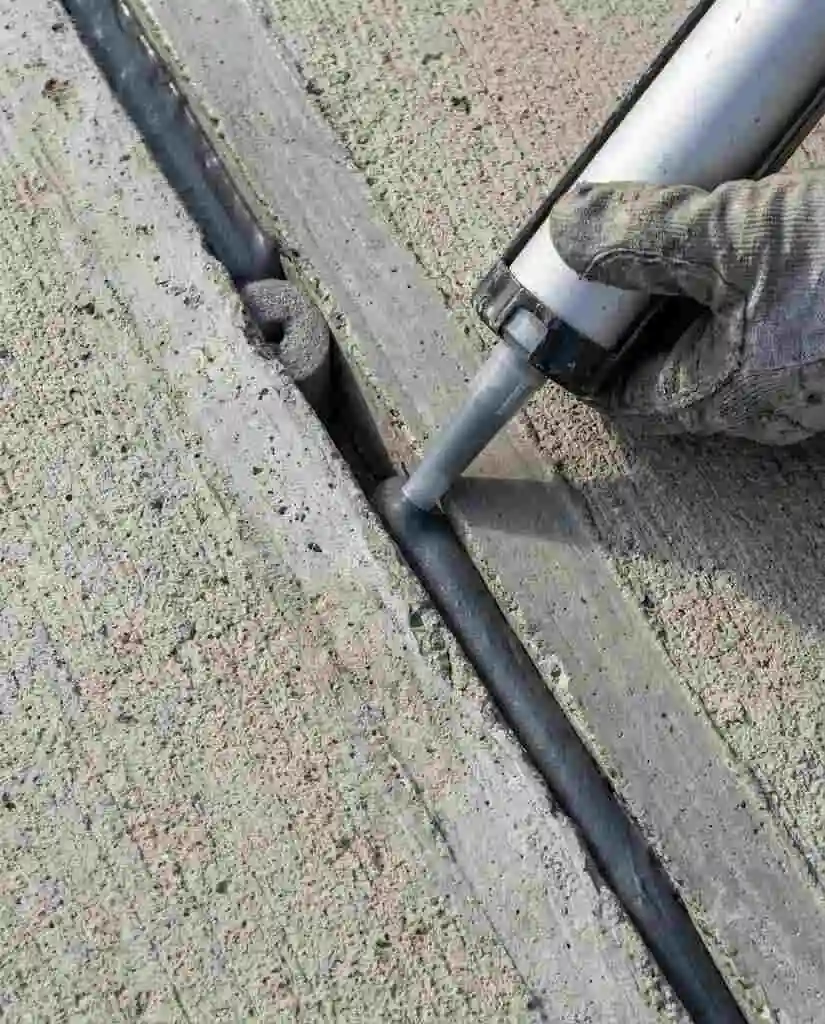
Prepare the joint by removing dust, laitance, loose particles, old sealant, oil, grease and other contaminants. Substrates should be sound and in the condition specified by the manufacturer, often clean and dry. Repair weak edges and confirm that the joint has the required width and depth. Use a compatible backer rod or bond-breaker where specified so the sealant bonds to the intended joint faces rather than the bottom of the joint.
Apply primer only when required, and allow it to reach the stated condition before sealing. For a two-component product, measure and mix the components in the exact specified ratio. Scrape the sides and base of the mixing container if the instructions require it, and continue until the colour and consistency are uniform. Avoid introducing excessive air. Observe the stated pot life; do not attempt to restore material that has begun to cure by adding solvent or extra curing agent.
Place the sealant so it makes continuous contact with both joint faces. Tool it within the permitted working time to achieve the specified profile and remove trapped air. Protect the joint from traffic, water, dust or disturbance for the period stated in the product instructions. Do not expose it to service until the required cure has been achieved.
Joint Design and Quality Checks
Joint design is as important as the sealant itself. Width and depth should be selected to suit expected movement and the manufacturer’s recommendations. A suitable backer rod helps control sealant depth and can provide the correct shape. Avoid three-sided adhesion unless the system specifically requires it, because it can restrict movement and increase stress within the seal.
Movement capability describes how far a sealant can extend or compress relative to its original joint width while meeting the relevant test requirements. It is not permission to use any joint width or depth. Designers should calculate expected movement, allow for construction tolerances and temperature at installation, and follow the product maker’s dimensional guidance. Some product data sheets recommend a width-to-depth relationship such as approximately 2:1 for certain moving joints, but the correct geometry and minimum dimensions depend on the product, substrate and exposure. Do not copy a dimension from another brand’s data sheet.
Before the work is accepted, inspect the joint for gaps, bubbles, poor tooling, edge separation and contamination. Where required, carry out adhesion checks or project-specific quality tests. Record the product name, batch, mixing ratio, ambient conditions, preparation steps and installation date. These records help investigate defects and support maintenance planning.
Common Polysulfide Sealant Problems and Their Causes
Poor adhesion or edge separation may result from dust, laitance, oil, moisture, weak joint edges, an unsuitable primer or an incompatible substrate. The corrective action is to identify the cause, remove failed material, restore sound surfaces and follow the approved preparation and priming procedure before resealing.
Soft areas or uneven curing can point to an incorrect component ratio, incomplete mixing, expired material, poor storage or application outside the permitted conditions. Bubbles and pinholes may be associated with air introduced during mixing, unsuitable application technique or trapped air in the joint. Follow the manufacturer’s repair guidance rather than trying to patch uncured or contaminated material with an unrelated product.
Cracking or cohesive splitting can occur when the joint is asked to move beyond the product’s capability, has unsuitable dimensions, or is exposed to conditions outside its rating. Premature deterioration may also follow repeated chemical exposure, excessive temperature, ultraviolet exposure or traffic beyond the specified use. A repair should address the underlying design or exposure problem; simply applying a fresh surface layer may not resolve the failure.
Safety, Storage and Maintenance
Consult the product safety data sheet before handling. Depending on the formulation, uncured components may irritate skin or eyes or contain substances that require specific controls. Use the recommended gloves, eye protection, protective clothing and ventilation. Avoid skin contact and inhalation of vapours or aerosols, and follow workplace procedures for spills, waste and empty containers. Do not assume that cured material and uncured components have the same hazard profile.
Store sealed components within the manufacturer’s stated temperature range, away from direct sunlight, moisture and sources of heat. Keep components correctly identified and do not mix parts from different products or batches unless the manufacturer explicitly permits it. After installation, inspect joints at intervals appropriate to the exposure and project requirements. Look for cracking, loss of adhesion, surface damage or chemical attack, and repair defects using a compatible system.
FAQ
What is the difference between one-component and two-component polysulfide sealant?
A one-component product is supplied ready to use and cures according to its specified formulation. A two-component product requires the base and curing agent to be mixed in a set ratio before application. The latter has a defined pot life after mixing. Always follow the individual product instructions rather than assuming all one-component products cure in the same way.
Can polysulfide sealant be used in expansion joints?
Yes, selected grades are designed for expansion and movement joints in buildings and other specified structures. The joint width, depth, expected movement, traffic and exposure must all fall within the product requirements. Check the declared movement class and joint-design guidance before use.
Is polysulfide sealant suitable for insulating glass units?
Some specially formulated polysulfide sealants are used as secondary edge seals in insulating-glass units. They must be approved for the specific glazing system and shown to be compatible with the glass, spacer, primary seal and other components. A general construction-grade sealant is not automatically suitable.
Why does polysulfide sealant fail or lose adhesion?
Common causes include contaminated or weak joint faces, incorrect primer use, poor mixing, an incorrect component ratio, unsuitable joint dimensions, excessive movement and chemical exposure beyond the product rating. The cause should be identified before repair; otherwise, the same failure may recur.
How should a concrete joint be prepared before application?
Remove dust, laitance, loose concrete, old sealant, oil and other contaminants. Repair weak edges and make sure the joint dimensions are correct. The required moisture condition and primer depend on the product, so follow its technical data sheet and carry out adhesion checks where the project requires them.
Conclusion
Polysulfide sealant can be a dependable option for joints that need elasticity alongside resistance to water, fuels or selected chemicals. Its performance depends on choosing a grade suited to the substrate and exposure, designing the joint correctly and following the application and curing instructions. Reviewing product data and relevant project standards before installation helps ensure that the seal performs as intended.